One of the best parts about the Blossom community is how open everyone is sharing knowledge and experiences. To make things easier for anyone just starting their investing journey, here’s a simple glossary to help understand and simplify various terms. Common Terms: Dividend: A share of a company’s profits paid to shareholders, usually quarterly. Ex-Dividend Date: The cutoff date by which you must own a stock to receive its next dividend. ETF (Exchange-Traded Fund): A fund that holds multiple stocks or bonds, traded like a single stock. Covered Call ETF: An ETF that owns stocks and sells call options to generate extra income (higher yield, limited / capped upside). Earnings Report: A company’s quarterly financial performance summary. EPS (Earnings Per Share): A company’s profit divided by its number of shares. Market Cap: A company’s total value (share price × number of shares). ACB: The total amount you’ve paid for an investment, including the purchase price plus any fees or commissions. Book Value: The value of a company according to its financial statements (assets minus liabilities). Yield: Annual dividend as a percentage of the stock/ETF price. Liquidity: How easily an asset can be bought or sold without impacting its price. Volatility: The degree of price fluctuations in a stock or market. Index: A benchmark of stocks (e.g., S&P 500, Nasdaq, TSX). Bull Market: A period of rising stock prices and optimism. Bear Market: A period of declining stock prices and pessimism. False Breakout: When a stock’s price moves above (or below) a key level, making it look like a new trend is starting, but then quickly reverses back. P/E Ratio: Price-to-earnings ratio (stock price ÷ EPS), used to assess valuation. Blue Chip: Well-established, financially strong companies with a track record of stability. Diversification: Spreading investments across assets to reduce risk. Broker: A platform or firm that facilitates buying and selling investments. Limit Order: An order to buy/sell a stock at a specific price or better. Market Order: An order to buy/sell a stock immediately at the current market price. Bid/Ask Spread: The difference between the highest price buyers offer and the lowest price sellers accept. Dollar-Cost Averaging (DCA): Investing a fixed amount regularly to reduce the impact of market swings. Capital Gain/Loss: Profit or loss from selling an investment for more/less than its purchase price. IPO: When a company first sells shares to the public. Index Fund: A fund designed to mirror the performance of a market index. Short Selling: Selling borrowed shares, hoping to buy them back cheaper. Margin: Borrowing money from a broker to buy investments, which amplifies gains and losses. Margin Requirement: The minimum amount of your own money (equity) you must maintain in a margin account to open or keep a leveraged investment position. Margin Call: A demand from your broker to deposit more funds or sell assets because your account equity has fallen below the required margin level. Time Horizon: The length of time you plan to hold an investment before needing the money. Short horizons = more risk-sensitive, long horizons = more room to ride out volatility. Stock Split / Reverse Split: A split increases the number of shares (e.g., 2-for-1) while lowering the price per share. A reverse split reduces the number of shares (e.g., 1-for-10) while raising the price per share. Your overall value doesn’t change just the math. Long (Being Long): Buying a stock or asset because you expect the price to go up. Short (Being Short): Selling a stock you don’t own because you expect the price to go down, so you can buy it back cheaper later. TER: The total yearly cost of owning a fund, including the management fee plus other costs like administration, audits, and legal fees. MER: The annual cost that a fund charges for management (includes any leverage costs if used). Management Fee: A portion of the MER that goes directly to the fund managers for running the fund. Withholding Tax: A tax deducted on dividends/distributions from foreign investments (e.g., U.S. dividends to Canadian investors face a 15% withholding in TFSA/Non-Registered accounts). Total Returns: The full picture of an investment’s performance, including both price gains and dividends/distributions. CAGR: The average yearly growth of an investment over time. NAV: The price of one share of a fund (stock or etf) NAV Depreciation: When the fund’s share price goes down over time. Mutual Fund: A pool of money from many investors used to buy a mix of stocks, bonds, or other assets. Bond: A loan you give to a company or government, and they pay you back with interest. Asset: Anything valuable you own that can generate money. Portfolio: Your collection of investments. Option: A contract that gives you the right (but not the obligation) to buy or sell a stock at a set price. Future: A contract to buy or sell something at a set price on a future date. REIT: A company that owns real estate and pays investors income from rent. Alpha: A measure of how much better (or worse) an investment did compared to the market. Beta: A measure of how much an investment moves compared to the market. Sharpe Ratio: A way to see if returns are worth the risk taken. Hedging: Protecting your investments from risk. Rebalancing: Adjusting your portfolio back to your target mix of assets. FCF: Free Cash Flow Understanding these terms makes investing far less intimidating. If anyone feels other terms should be included, please share in the comments. I’ll update this post so we can build a complete beginner-friendly resource together! *Sorry tagged a few etfs for reach 🫣read more
(Reposting / testing as my posts seem to be blocked) Original: https://www.blossomsocial.com/posts/Evolve-ETFs-Distribution-November__POST-1792450675135-s20BDAMt_8ZzPjptL13xirOdy Let me know if you can see the one above. 👆🏻 Kicking off the monthly distribution announcements, we have Evolve ETFs! And in consistent Evolve fashion like usual, there are no changes this month. 😄 Ex-Dividend Date: October 30th Pay Date: November 6th — Monthly — 🔵 BANK stays the same at $0.152 🔵 BASE stays the same at $0.27 🔵 CALL stays the same at $0.125 🔵 CARS stays the same at $0.025 🔵 CFIN stays the same at $0.20 🔵 CUTE stays the same at $0.234 🔵 CYBR stays the same at $0.01 🔵 DATA stays the same at $0.01 🔵 DIVS stays the same at $0.076 🔵 EBNK stays the same at $0.145 🔵 ESPX stays the same at $0.225 🔵 ETSX stays the same at $0.188 🔵 LEAD stays the same at $0.21 🔵 LIFE stays the same at $0.19 🔵 OILY stays the same at $0.147 🔵 QQQY stays the same at $0.32 🔵 TECH stays the same at $0.0016 🔵 UTES stays the same at $0.138 ---------- 1st Ex-Dividend Date: October 30th 1st Pay Date: November 6th 2nd Ex-Dividend Date: November 13th 2nd Pay Date: November 20th — Semi-Monthly — 🔵 BIGY stays the same at $0.20 🔵 CANY stays the same at $0.21 🔵 SIXY stays the same at $0.27 🔵 INTY stays the same at $0.26 🔵 EASY stays the same at $0.255 🔵 TECY stays the same at $0.18 Consider giving a follow if you don't want to miss a future post, as this is a recurring monthly summary. Thanks and I'll see you soon with more distribution announcements in the coming week(s)! 😄🍻 https://evolveetfs.com/2026/10/evolve-announces-october-2026-distributions-for-ultrayield-etfs-and-certain-evolve-funds/read more
I've been really MIA on Blossom since the passing of my sister... It's given me a lot of time to reflect on things. I still enjoy everything about finance and check my portfolio often, but I really want to stress the importance of realizing why we are doing this. What is the end goal of all of this? Seeing a loved one go in their early 30s is difficult, and it's made me realize that the time we have on this planet is really, really short. I have come to the realization that staring at numbers and watching them grow isn't as important as spending some of that time with loved ones. I want to start taking the kiddos on more vacations, buy the van that the wife wants, and try to see my parents more. The key for me will still be to be responsible with my finances, but instead of waiting for that next portfolio goal, waiting for the kids to grow older, or waiting to retire... why not live now? The whole point of becoming wealthy is to USE THE WEALTH, not to stash more and more so we can become so rich that we never actually enjoy the short time we are given on Earth. When the drunk driver went head on with her Uber vehicle, I truly believe she had no clue, could've just been chilling on her phone in the back then dead the next second...goes to show our life could end at any second and we might not even realize it. This post isn't saying we shouldn't be financially responsible, but that we should also enjoy life today... Tell your loved ones you love them, and use your finances to better your life. Willread more
Personally, growing up, life wasn’t so easy for me. There were zero handouts. There was an ugly divorce between my parents that shattered us further financially. And by no means would there ever be a trust fund. But here’s the deal, I am forever grateful for all of it. Why? It built me into a machine. By 31, I hit coast FIRE and now I spend most of the year traveling and living what I call my rich life. I’m sharing this with you all because it wasn’t ever and will never be about the money. Yesterday evening, I walked into a restaurant here in Montenegro overlooking the sunset. The waiter asked me what I wanted upon entering the restaurant as he held a menu up. My reply: “give me your best, no menu needed.” I had fresh sea bass paired with a tasty Greek salad and a glass of local wine. Investors, please do yourself a favor and stop living for money. Live life and experience it all. Money is merely a tool to allow you to experience. Now I’m here to just document my journey to $1M and share how I will be 100% work optional by 35: https://www.instagram.com/ari.gutman?xtok=MTZlYW1ldjNqaHM2bA%3D%3D&utm_source=qrread more
🔒Ex-date Tuesday💰Pay date Wednesday $ATCL$0.2812⬆️ $DACL$0.1438⬆️ Last month : $ATCL$0.2781⬇️ $DACL$0.1384- 1st distribution 2 months ago : $ATCL$0.2825⬆️ 3 months ago : $ATCL$0.2813⬇️ 4 months ago ; $ATCL$0.2851⬇️ 5 months ago : $ATCL$0.2853⬆️ 6 months ago : $ATCL$0.2821⬆️ 7 months ago : $ATCL$0.2798read more
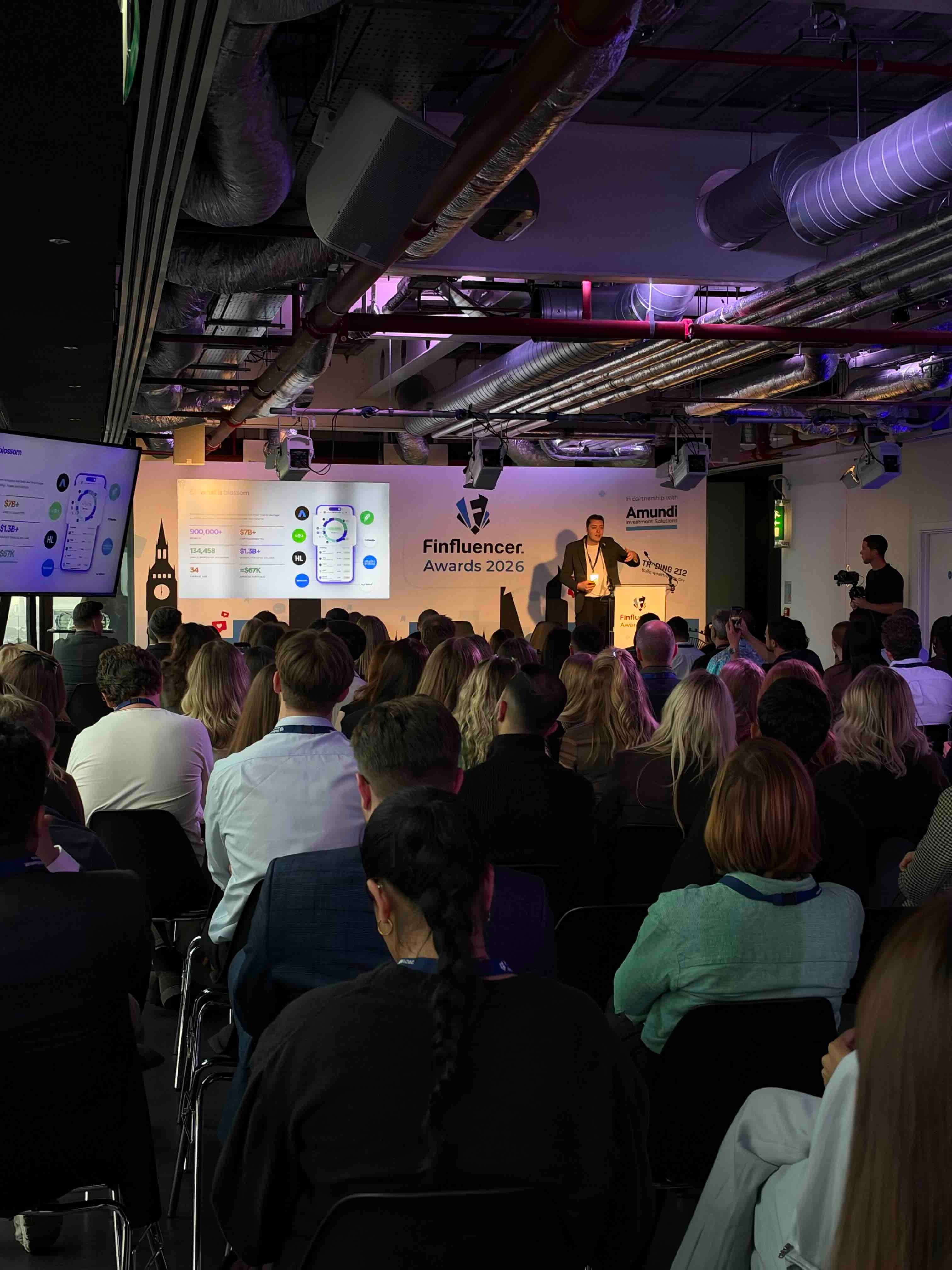
Just arrived home from a quick trip to London - it was my first time visiting. What a cool city. Full of friendly people. And so much character! Found it super interesting to learn that there’s still very much a ‘saving’ mentality in the UK. But that seems to be changing. Shoutout to Max for delivering an incredible speech (as usual) about Blossom. He presented our platform and mission in a great way and it was very well received by the Brits!
Market News: Good buying opportunities created during Oct 2026.. I brought more $TSM, $GOOGL & $AVGO This is just want I am buying. I am not telling anyone to buy these stocks
What’s the most important thing you look for when researching a stock and finding a winner? What are the things that a stock must have in order for you to own it? Let me know below, i’m super curious!
TOP 8 STOCKS TO TAKE ADVANTAGE OF THIS DRAWDOWN: 1. $NBIS Nebius Group 2. $ASTS AST SpaceMobile 3. $RKLB Rocket Lab Corp 3. $AEHR Aehr Test Systems 4. $AVGO Broadcom 5. $GOOGL Alphabet 6. $VRT Vertiv Holdings 7. $CRDO Credo Technology 8. $NVDA Nvidia Corp Anything else a must add?read more
$KO had a crazy year already for the ones that held. hats go off to yall truly 35% in a year hitting all time highs is crazy work congrats for the ones holding!!🙌
Today, I’m taking a moment to appreciate how far God has brought me. This car means a lot to me because I know the work, patience, and sacrifices that go into building the life you want. It hasn’t always been easy, but I’ve learned to keep going, trust God, and stay focused on my goals. I’ve also learned that you can’t please everybody. Some people will celebrate your progress, while others will question your decisions. That’s life. At the end of the day, you know what you’ve worked for and what it took to get here. I’m grateful for how far I’ve come, and I pray God continues to give me the wisdom to keep growing. Never forget where you started, and don’t be afraid to appreciate how far you’ve made it. ❤️🙏 All thanks and glory to God for this blessing, and special thanks to $SPCX for last week’s trade with my trading community. I’m grateful for the opportunities, the lessons, and everyone who’s been part of the journey. 📖 ECCLESIASTES 3:12–13 “I know that there is no good in them, but for a man to rejoice, and to do good in his life. And also that every man should eat and drink, and enjoy the good of all his labour, it is the gift of God.” To me, this verse is a reminder that it’s okay to enjoy what you work hard for. Sometimes we’re so busy chasing the next goal that we forget to appreciate what God has already blessed us with. Not everybody will understand your choices, and that’s okay. I’m just thankful for what God has allowed me to accomplish. All glory belongs to Him. 🙏 🙏 MY PRAYER FOR EVERYONE READING THIS ❤️ Heavenly Father, I pray for everyone reading this post. You know what each person is going through, even the things they don’t share with anybody. You know their worries, their struggles, and the things they’ve been praying for. Lord, please give them strength when life gets hard, peace when their minds are troubled, and hope when things don’t go as planned. Bless their families, provide for their needs, and open doors of opportunity for them. For those who have been working hard and waiting for their prayers to be answered, please give them the patience to keep going and the faith to trust in You. Father, guide their steps, protect their homes, and surround them with people who genuinely want to see them do well. Remind them not to give up just because things are taking longer than they expected. Help them appreciate the little blessings along the way and give You thanks through both the good days and the difficult ones. My prayer is that everyone reading this finds a reason to smile, receives good news, and sees better days ahead. May God bless you and your family, provide for your needs, and give you the strength to keep moving forward. In Jesus’ mighty name, AMEN! 🙏❤️ read more
All weekend, the warnings were everywhere. Crash incoming. AI stocks about to get crushed. Sell before it's too late. Then the market opened and did the opposite. This is exactly why you should be careful about making big decisions off market headlines. Headlines are built for clicks, not for your portfolio. Remember that. The headline: "Markets are steady and there's nothing to see here" doesn't get attention. The headline: "Black Monday incoming" does. Fear gets shared by the masses. So as a result, fear gets published. Predictions are just guesses with confident voices. Nobody knows what the market will do tomorrow. Not the analysts, not myself and not you. A forecast delivered with certainty is still nothing but a forecast. The market doesn't owe anyone the move they predicted. By Sunday night, a lot of the fear was already priced in. What matters is what happens when real buyers and sellers show up. Reacting emotionally is expensive. Say you panic-sold on Monday morning. You may have locked in a loss, missed the bounce, and then had to decide when to get back in. That's a tough Monday if you ask me. So what should you do instead? ✅ Have a plan before the headlines hit. Know why you own each position. ✅ Focus on business fundamentals: earnings, cash flow, dividends, balance sheets. ✅ Zoom out. One day, one week, or one scary weekend rarely changes a long-term thesis. ✅ Keep cash and risk in line with your comfort level, so you're never forced to sell at the worst time. ✅ Treat headlines as information, not instructions. None of this means risk isn't real. It is very real. Markets can and do fall, sometimes by a lot, and sometimes by a little. But the lesson isn't "ignore everything". It's don't let a headline make the decision for you. The best investors I know aren't the ones who predict every move. They're the ones who stay disciplined when everyone else is panicking. Were you tempted to sell this weekend? Be honest 👇 read more
These aren’t rules, facts or anything definitive; just some of the many opinions I’ve built over nearly 30yrs of stock investing. Take em' or leave em', it's all good to me because they're accurate. 🤷♂️ Here goes, in no particular order. Far too many investors… … have a gambling mentality when it comes to investing. ... focus on where a stock once traded to determine 'fair value’. ... think their pain threshold for unrealized losses is far higher than reality. ... risk far too much for a potentially very small win. ... create a lot of bad habits during bull markets. ... fail to acknowledge mistakes, so they fail to learn from them. ... under-estimate how can be lost going all-in on high or no P/E growth. ... rely on 'wishful thinking' over an actual 'investment thesis'. ... ignore anything negative about their stocks due to confirmation bias. ... will jump into day trading and/or margin usage at worst possible times. ... make blindly 'buying the dip' they're primary investing strategy. ... consider bullish "what-ifs" , while ignoring bearish "what-ifs". … equate every bit of news as a catalyst, while it's just ‘business as usual’. .*. spend too much time on small positions & not enough on large positions. .*. fall prey to "how much lower can it go" thinking, and later learn A LOT! ... underestimate 'company specific risk' and invest too much in one stock. ... worry about how they rank against others instead of focusing on self. … don’t understand what ‘the market is forward looking’ truly means. ... fail to factor 'we don't know what we don't know' in investment thesis. ... confuse getting lucky with having a sound investment thesis. ... will eventually get kicked in the throat by an unexpected margin call. .*. own too many individual stocks complicating things for no reason. … don’t spend enough time trying to break their bullish investment thesis. … scream "manipulation", when wrong about their favorite stock. ... spend too much time on social media telling others their stocks are best. ... think 'time in the market' guarantees profits, which isn't true for stocks. ... fall for recency bias when projecting future returns. … think they know more about a stock/company, than they actually do. ... sell their winners early and hold their losers indefinitely. ... willingly pay high expenses on ETFs that don't deliver. .*. happily DCA to lower cost basis, but won't do it to raise cost basis. ... turn a blind eye to dilution from rampant share issuance. ... ignore importance of long-term diversification. ... assume any ETF or mutual fund is safer than a stock. .*. get caught up believing the hype of a highly speculative stock. ... don't bother researching balance sheet & other key metrics.. ... under-estimate what's needed to retire 'comfortably', incl. fire/coast fire. .*. over-estimate what's needed to retire 'comfortably' (opposite of above). ... are far too quick to give advice while being ill-equipped to do so. ... over-estimate their true returns by failing to offset deposits. ... get cocky during bear markets & ultimately lose years of gains because of it. I think I've shared something similar to this in the past, so if I'm being honest, not really sure why I'm sharing... As with most of my posts, it's likely driven by what I'm seeing in my Blossom feed. And full disclosure, I've been guilty of a few of these (.*.) myself. Maybe you're guilty of some too. ** Wanted or not, I'll add to this list as more come to mind. **read more
📊 Traders moved back into tech after last week’s AI rout. The Nasdaq rose 1.11% to 26,430.89, the S&P 500 added 0.41% and the Dow slipped 0.07%. The S&P lost nearly 2% last week, its worst since late June, while the Nasdaq tumbled 4.5%. 💻 Intel ($INTC) advanced 2% on a JPMorgan upgrade, part of a broad chip bounce that snapped a nine-day losing streak. The iShares Semiconductor ETF ($SOXX) gained 3.7%, with Sandisk up more than 6%, Marvell nearly 7% and Micron ($MU) about 3%. ☁️ CoreWeave ($CRWV) fell 0.4%, reversing early gains despite a Goldman Sachs upgrade to buy. Goldman cut its target to $106 from $139, still implying 73% upside. The stock dropped more than 25% last week, its worst since November 2025, and its credit default swaps have reached distress levels. 🗄️ Oracle ($ORCL) bonds are sitting close to junk territory as the AI trade cools. A downgrade would push its debt below investment grade, with knock-on effects across the financing that funds the buildout. 📉 Gartner is standing by its call that $3.5 trillion in AI investment is at risk on profitability concerns. Chief forecaster John Lovelock told CNBC compute capacity currently exceeds demand, with a lot of tokens being given away free, and expects most AI markets to collapse into a duopoly. 🏠 Homebuilder confidence fell to 29 in October, its lowest since June 2012, as mortgage rates topped 7%. NAHB’s Robert Dietz said buyer traffic is the weakest since April 2012 outside the pandemic. The iShares Mortgage Real Estate ETF hit $16.71, a six-year low. 🛢️ Oil split as Ukraine struck a St. Petersburg oil terminal and ship attacks picked up in the Persian Gulf. WTI settled up 2.22% at $103.66 while Brent fell 0.28% to $109.55. Longer-dated futures are rising on expectations the disruptions run well into 2027. 👨🏻💻 Researched and written daily by @timeminoread more
📊 Investors rotated out of AI and into value as another hot inflation print landed. The Dow jumped 1.08%, the S&P 500 added 0.33% and the Nasdaq edged up 0.08% after being down 1.4% at its low. September PPI rose 1.3% on the month and 6.3% on the year, the biggest gains since 2022. 🤖 Anthropic’s third quarter revenue grew to $16.8 billion from $11.6 billion in the second, sources told CNBC, a slower sequential climb than the jump from $4.7 billion in Q1. Some traders read it as too slow to justify the run in chipmakers, though the Financial Times reported the company turned cash flow positive in the quarter. ☁️ CoreWeave ($CRWV) rebounded 5.94% to $69.69 after sinking as much as 9.5% in the morning. Deutsche Bank’s Brad Zelnick called Wednesday’s 15% drop a buying opportunity, arguing the company is scaling responsibly with near-term liquidity in decent shape. 🐊 Crocs ($CROX) spiked 6.15% to $124.77 after Barclays upgraded it to overweight and lifted its target 18% to $139. Analyst Adrienne Yih pointed to direct-to-consumer strength, promotional discipline and growth coming from newer franchises rather than the Classic Clog. 🏦 Bank of America ($BAC) got an upgrade to outperform from Baird, which kept its $62 target for 21% upside. The firm called Wednesday’s selloff overdone and likes the 2027 net interest income outlook, despite yesterday’s earnings miss and higher expenses. 💾 Chip stocks fell for an eighth straight session, the longest slide for the iShares Semiconductor ETF since 2015, down more than 15% over the stretch. Seagate ($STX), Western Digital ($WDC) and SK Hynix extended losses on memory glut fears, with Elon Musk posting that China will be making a lot of RAM in 2028. 📉 The Russell 2000 fell into correction Wednesday, ending 11% below its August 14 record close. Breadth improved elsewhere though, with more than half of S&P 500 names back above their 200-day moving averages, up from about 40% in late September. 👨🏻💻 Researched and written daily by @timeminoread more
How does a 16-year-old build a six-figure stock portfolio? In this episode of the Retail Rundown Podcast, 16-year-old Charan from New Jersey shares how he went from a 7th grade stock market competition to running a six-figure portfolio, while building 240K+ followers on Instagram and a 30,000-member Discord community along the way. That journey has included some huge swings, including a nearly $100K win on $PENG options and a $60K options loss on $AAOI that completely changed how he sizes trades, takes profits, and cuts losses. Charan explains how he researches stocks using AI and social media, why he’s bullish on memory stocks like $SNDK and $MU, why he bought $NBIS after Michael Burry went short, and why he thinks dropping out of high school to day trade is a mistake https://youtu.be/ZZ_PetTNbBo?si=QSEmMhrjwRYQ9Alw
Is it okay to pause investing when life gets expensive? And how much does having kids really change your family budget? Welcome back to Episode 24 of Financial KarMoe! This time, @karyungtom and I talked about the financial realities of raising a family. We share our experiences with slowing down investments, the impact of parental leave on household income, preparing for major home repairs, and why paying down your mortgage can also be part of building your net worth. We also discuss whether it's worth continuing to invest small amounts when you need to focus on other financial priorities. 📈 We get into covered-call ETFs, investment fees, and why comparing portfolio returns isn't always as straightforward as it looks. Kar explains why it's important to distinguish between comparing investment strategies and trying to isolate the impact of fees. We also touch on why covered-call ETFs may lag during a rapid Bitcoin rally. 🧸 And because we're both dads, we talk about the expenses that come with raising kids, from daycare and extracurricular activities to toys, family vacations, and airfare. We even share some thoughts on buying secondhand to save money and the challenges of finding time for a date night when you have little ones at home. Shoutout to @matt.41, @cjs033, @noviceadvisor whose questions/comments we featured. 💬 We'd love to hear from you: What's the biggest expense that has increased since you had kids? Let us know in the comments! https://www.youtube.com/watch?v=W1MRpfzzoxQread more
3 sectors are leading on BOTH the 1-week and 1-month view Staples $XLP +5.0% Energy $XLE +4.9% Health Care $XLV +3.5% All 3 are above their 50-day average. Boring is beating exciting.read more
Tony retired in 2024 in his 30s with a portfolio size of just over $850,000. Can Income Investing Fund Early Retirement?! In this interview I talk to him to better understand what it took for him and his wife to walk away from their job in their 30s and live off their investments. We'll see hportfolio built around covered-call ETFs and investment income actually sustain early retirement? Tony, better known as @onemadtony on YouTube and Blossom, is a Vancouver-area investor who left the workforce in 2024 with approximately $850,000 invested. His portfolio has since grown to around $1.23 million, even after withdrawing more than $100,000 over roughly two and a half years. Tony shares his unconventional journey from early trading and dividend investing to covered-call ETFs, income investing, and financial independence in his late 30s. We explore how he structures his portfolio, manages retirement withdrawals, and balances investment income with long-term growth. In this interview, we discuss: 🟣How Tony's upbringing shaped his relationship with money and investing. 🟣 Why his mother's cancer diagnosis changed his perspective on work, retirement, and time with family. 🟣How he and his wife decided they could afford to leave their jobs. 🟣 His three-part portfolio strategy: living expenses, long-term core holdings, and a more flexible investing account. 🟣 Covered-call ETFs, distributions, and why a high yield doesn't automatically mean a sustainable return. 🟣 His real-life experiment comparing his income portfolio against $XEQT , $VFV , $QQC , and $HYLD under the same withdrawals. 🟣 Retiring with an approximate 5–7% annual withdrawal rate, keeping a cash reserve, and managing risk. 🟣 The psychological appeal of investment income versus selling shares to fund retirement. 🟣 Why understanding the risks of income investing is just as important as understanding its benefits. 🟣 What financial independence has taught Tony about enjoying the journey instead of waiting until you reach your goal. One of Tony's biggest takeaways is that financial independence isn't just about reaching a portfolio target. It's about having the freedom and flexibility to spend time with loved ones when it matters most. Tony also offers a thoughtful perspective on the income-investing debate: the strategy that works best on paper isn't necessarily the one that helps you feel comfortable enough to stick with it. But before relying on high-distribution ETFs to fund retirement, it's essential to understand where the distributions come from, the potential trade-offs, and what could go wrong. 🍿Fun Facts: Tony shares how @mr.financial is one of his most favorite Blossomers with his detailed, in-depth videos/posts which create good engagement. 😃 Also similar to @karyungtom, he plays and is a big fan of Magic: The Gathering! 💬 I'd love to hear from you: If you were financially independent today, would you prefer to live off investment distributions or sell a small percentage of your portfolio each year? Why? ... For me personally, I am comfortable enough to sell a small portion of my portfolio, as that way I could have more control over how much money I can withdraw and could potentially lower tax implication based on a more optimized drawdown strategy. https://youtu.be/GmRSZ-v4BO8read more
$VXUS holds 8,790 stocks.. That’s EIGHT THOUSAND, SEVEN HUNDRED and NINETY….. To some, that sounds like diversification on steroids, over kill… HOWEVER, those 8,790 stocks are actually equivalent to owning only about 239 equally weighted stocks. That’s its effective number of stocks. It's a lot more than the S&P 500... but not as much as I personally thought! And that’s just ONE of the things I found digging into VXUS, Vanguards Total International Stock Index ETF. I also found some pretty surprising differences between VXUS and the S&P 500 ($VOO / $VFV ) that made me rethink what “international diversification” means to your portfolio. I broke down the performance, valuation, holdings, sectors, countries and risk in my latest VXUS deep dive. I’d love to know your perspective on this! https://youtu.be/NcafSSVfMXs It’s definitely more complicated than the “US is expensive, international is cheap” .... Would you include international stocks in one ETF as part of your portfolio? Why or why not? Let's get this conversation going guys!!! read more
I am currently 47 years old. Unfortunately in that time frame I have lost a lot of family members. Some (most) were accidents, some to age, some to cancer, and one to suicide. That’s 11 deaths total. Only 1 person out of 11 had a will. When you are grieving the last thing you want to do is close an estate up. It’s even harder if nothing has been prepared in advance. After the initial shock of the death settles (the phase where everyone is usually nice), greed comes through in a most alarming manner. I’ve watched people turn into monsters. Make sure you have a will!!!! or people will fight. I know most people hate thinking about their death or their spouses death but honestly it’s just a fact of life. I’ve personally been the executor of 2 estates now. This is my advice: 1. If your young get life insurance. If you’re retired it’s not worth it. 2. Make sure you have a will. 3. Make sure you have a personal directive. 4. Make sure you have a power of attorney set up. 5. If your married make your spouse the beneficiary of your TFSA and RRSP(has to be done through the account not the will), they will roll into the spouses account without taxation. 6. If you’re married, and you own a house, make sure both names are on the title, joint tenant, NOT tenant in common. This activates right of survivorship on property and doesn’t have to go through the estate. 7. If you’re married, both people should have their name on all the vehicles, joint, otherwise it’s a headache after death. 8. Buy a file folding system. I have a plastic one that has a clasp and handle. 9. Put EVERYTHING in this file folder that would be needed if you died tomorrow. a) all land titles B) information on house insurance so it can either be eventually canceled or name changed over. C) your will (or the location of your will), power of attorney, and personal directive D) the information for your car, car insurance, and registration on vehicles. E) information on life insurance. F) all current year papers needed for filing your taxes. Because the survivor will have to do it and will need that information. G) where your household bills are. ALL OF THEM, electricity, gas, Netflix, magazine, subscriptions everything you can think of that is in their name. Because you are going to have to cancel them. H) their credit card information where to contact to cancel the cards I) birth certificate, SIN numbers, marriage, license, etc. J) information on all your investments accounts, bank accounts, etc. K) anything else you can think of for your situation If you’re married, I’d have one box per person. When you die, the funeral home will issue many death certificates. And your lawyer will give you copies of the will. These will be needed to change over any accounts. Everything else goes through the estate which is taxed and the lawyers take their fees so I’d avoid this as much as possible especially if you’re married. This is why having property in both people‘s names is so important because it doesn’t have to go through probate. I am widowed now and I have my black file folder and my two remaining children know if something happens to me, all they have to do is grab the folder. Everything they need to take care of my estate will be located in this folder. At the beginning of every year, I open this file up and go through everything to make sure it’s up-to-date. If you are young and do not own much or can’t afford a will, you can draft one up but it must be handwritten to be classified as a legal document. You cannot type it out!! If you’re not worth much, everything will most likely be sold to pay your bills and cover your funeral expenses. But you can state who your executor will be in your handwritten will. Disclaimer I’m not a lawyer or an accountant and this is not legal advice. Talk to a lawyer and talk to an accountant. Make sure everything is set up for you and your situation. These are situations that I personally ran into. Good luck Also I’ll add in. IF you have a lot of assets make an appointment with your accountant first. They will tell you how to properly set things up. Then take that information to your lawyer. read more
Here are 🚩3 big flags🚩that signal a company might not be a good investment, and I'll walk you through how to check for each one. (Free Stock Checklist at the end) --- 1️⃣ Declining Revenue or Earnings📉 🛑 Why it’s a red flag:A company with falling revenue or earnings may be losing market share, dealing rising costs, or the overall industry is shrinking. ✅ How to Check for This: A) Look at the Income Statement📊 - Find the company’s total revenue and net income in its latest financial report. Top-line & bottom-line, respectively. - Compare revenue and net income across multiple quarters/years. 3 years or 12 quarters is more than enough to indicate a trend - If both are consistently declining, it’s a warning sign. B) Check Earnings Reports🗂️ - Look at the company’s quarterly earnings reports to see if they’ve missed expectations multiple times. C) Compare to Competitors🔍 - Is the entire industry struggling, or just this company? 📚Website for financial reports: https://www.marketwatch.com/ --- 2️⃣ High Debt Levels 🛑 Why it’s a red flag:Companies with a capital structure heavily debt-reliant are more vulnerable in economic downturns and might struggle to repay obligations. ✅ How to Check for This: A) Find the Debt-to-Equity Ratio (D/E)📊 - Go to the company’s Balance Sheetin its latest report. - Find Total Debt and Total Equityand calculate: Debt-to-Equity Ratio = Total Debt ÷ Total Equity** - A D/E ratio above 2.0 (varies by industry) is usually risky. B) Check Interest Coverage Ratio🔍 - Look at the Income Statement for EBIT (Earnings Before Interest & Taxes). - Find Interest Expense and calculate:Interest Coverage Ratio = EBIT ÷ Interest Expense - If this ratio is below 1.5, the company may struggle to pay interest. 📚 Resources: https://www.investopedia.com/terms/d/debtratio.asp#:~:text=Key%20Takeaways&text=A%20company's%20debt%20ratio%20can,has%20more%20assets%20than%20debt --- 3️⃣ Poor Cash Flow 🛑 Why it’s a red flag:A company can be profitable on paper but still run out of cash to fund operations. ✅ How to Check for This: A) Find the Cash Flow Statement📜 - Look at Operating Cash FlowOCF). - If OCF is negative for multiple quarters, the company may be in trouble. B) Check Free Cash Flow (FCF)💰 - Free Cash Flow = Operating Cash Flow - Capital Expenditures - A company with negative FCF can’t reinvest in growth without taking on debt. 📚 Read more about Cash flow: https://www.investopedia.com/articles/stocks/07/easycashflow.asp ___________________________________________ Thanks for reading, I am open to engage in friendly conversations so I encourage you to leave a comment!💬 Access my free stock checklist at the link below⬇️ https://investingwithcole.gumroad.com/l/stockchecklist read more
110K views
Join the conversation with 500,000+ other investors 💸
Create an account to get access to everything Blossom has to offer!
📊 Personalized algorithm based on your investing style, experience level and interests
📈 Powerful portfolio and dividend tracking tools
👀 See what top creators and others in the community are investing in