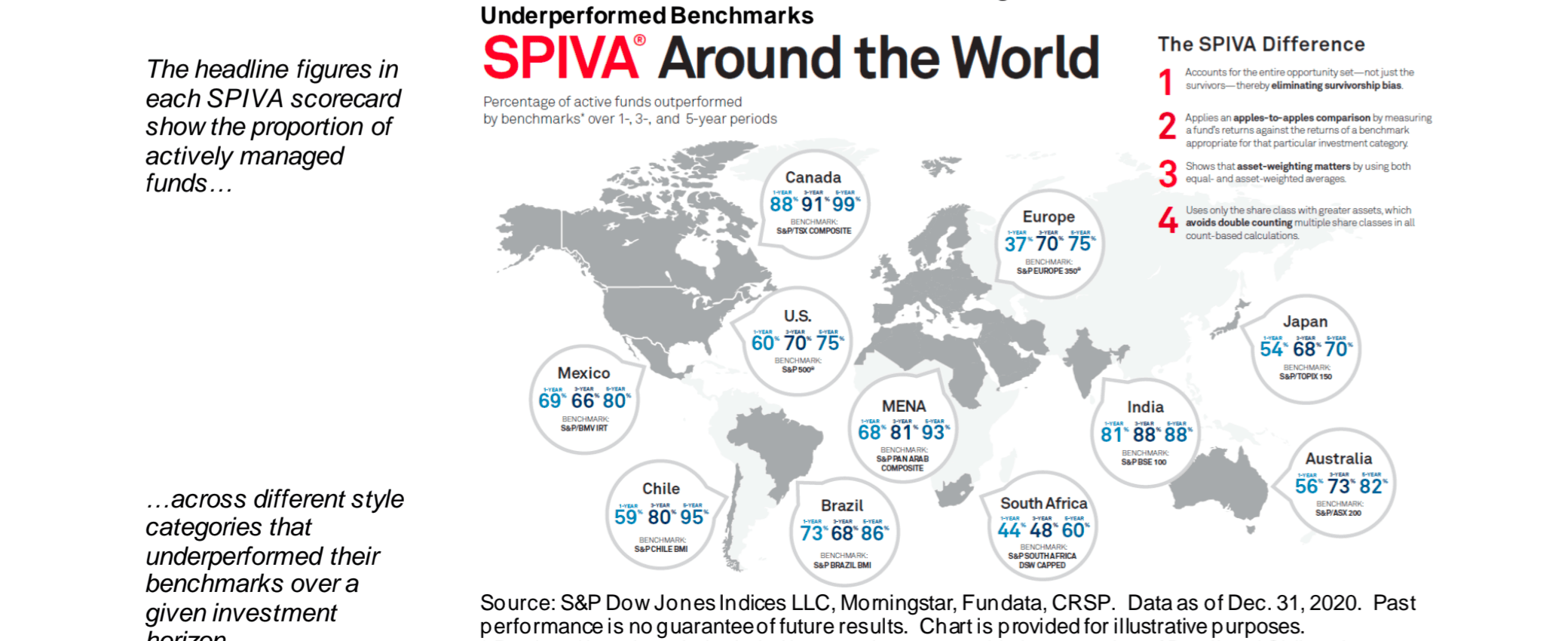
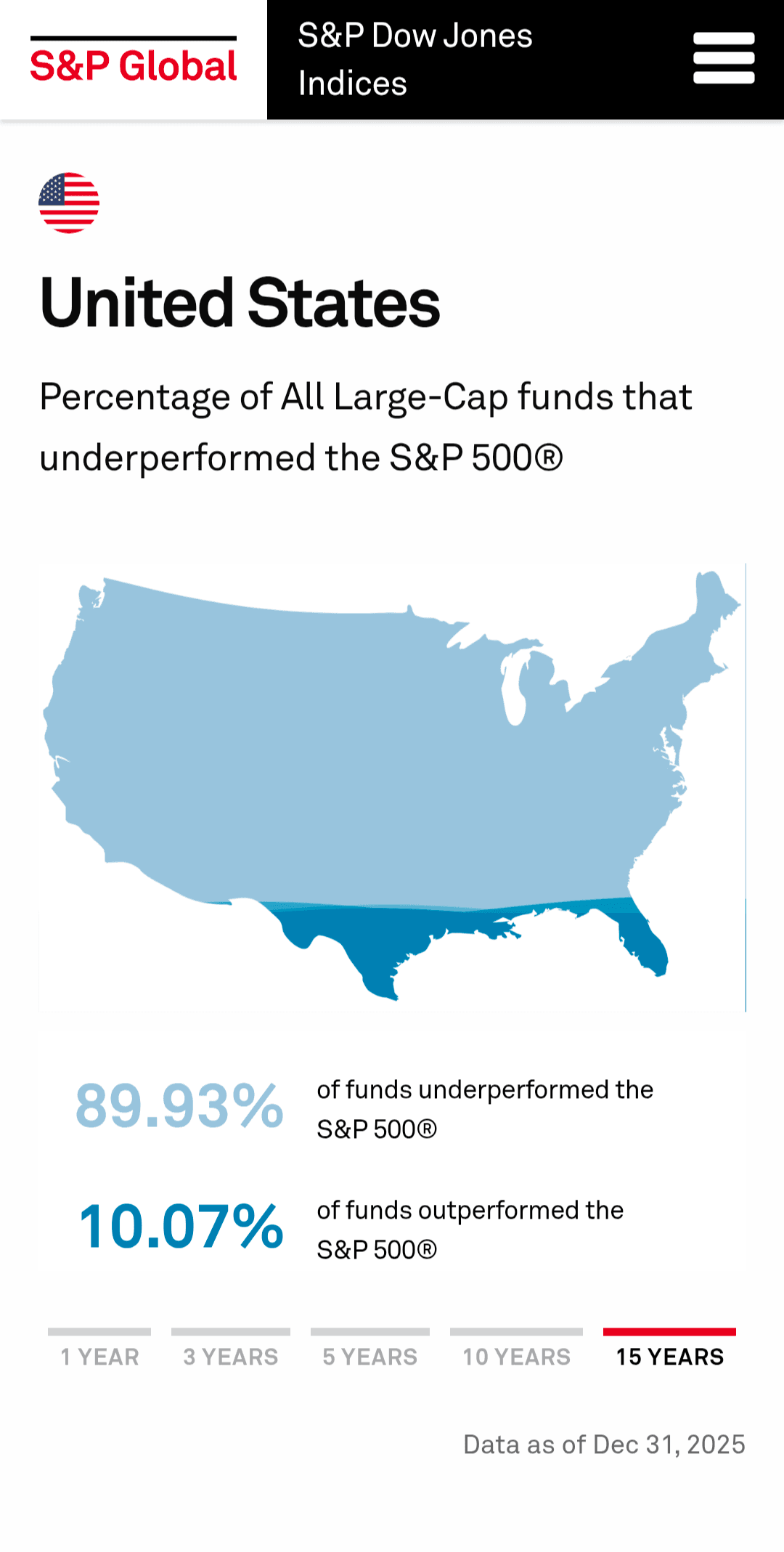
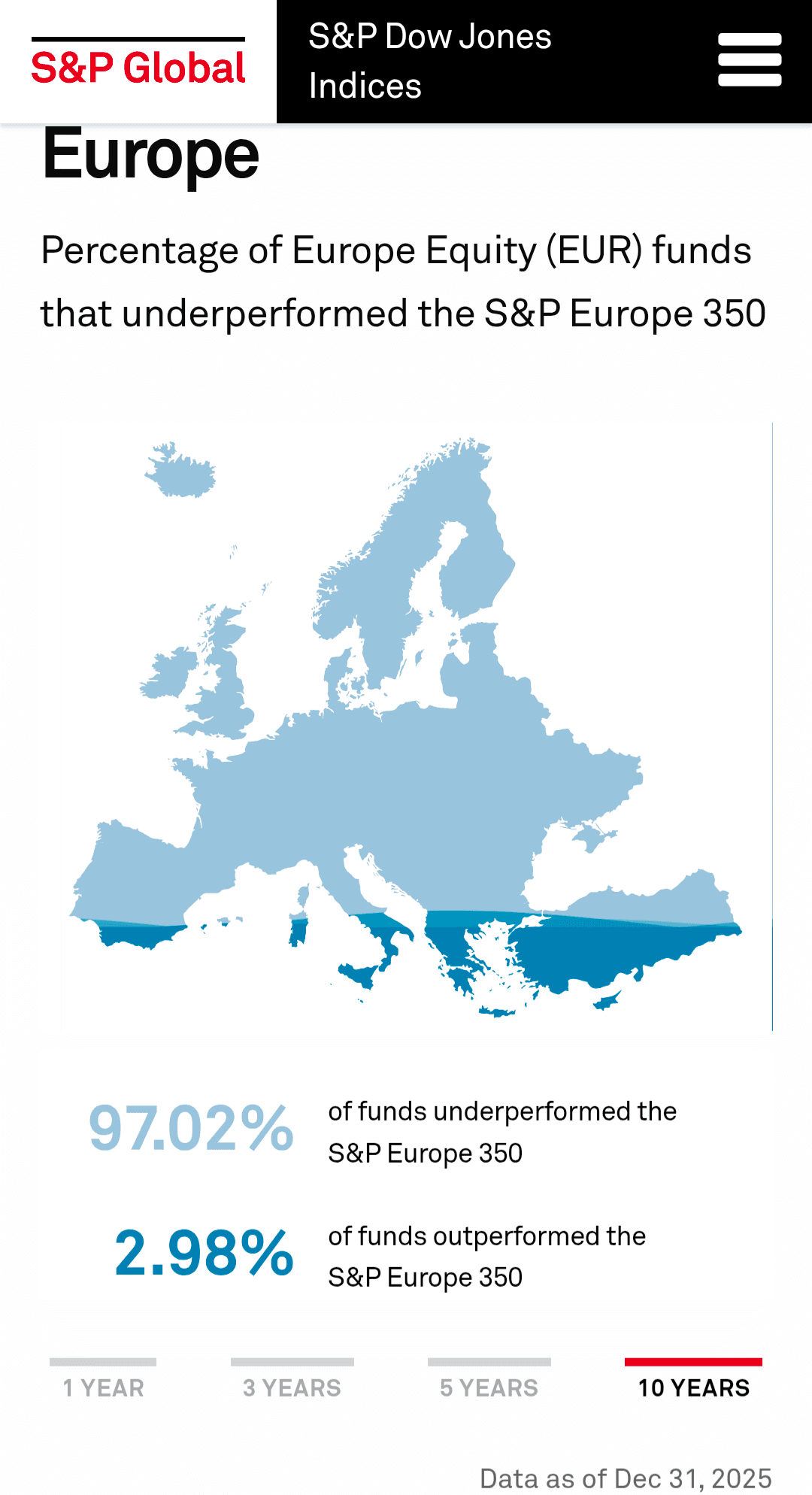
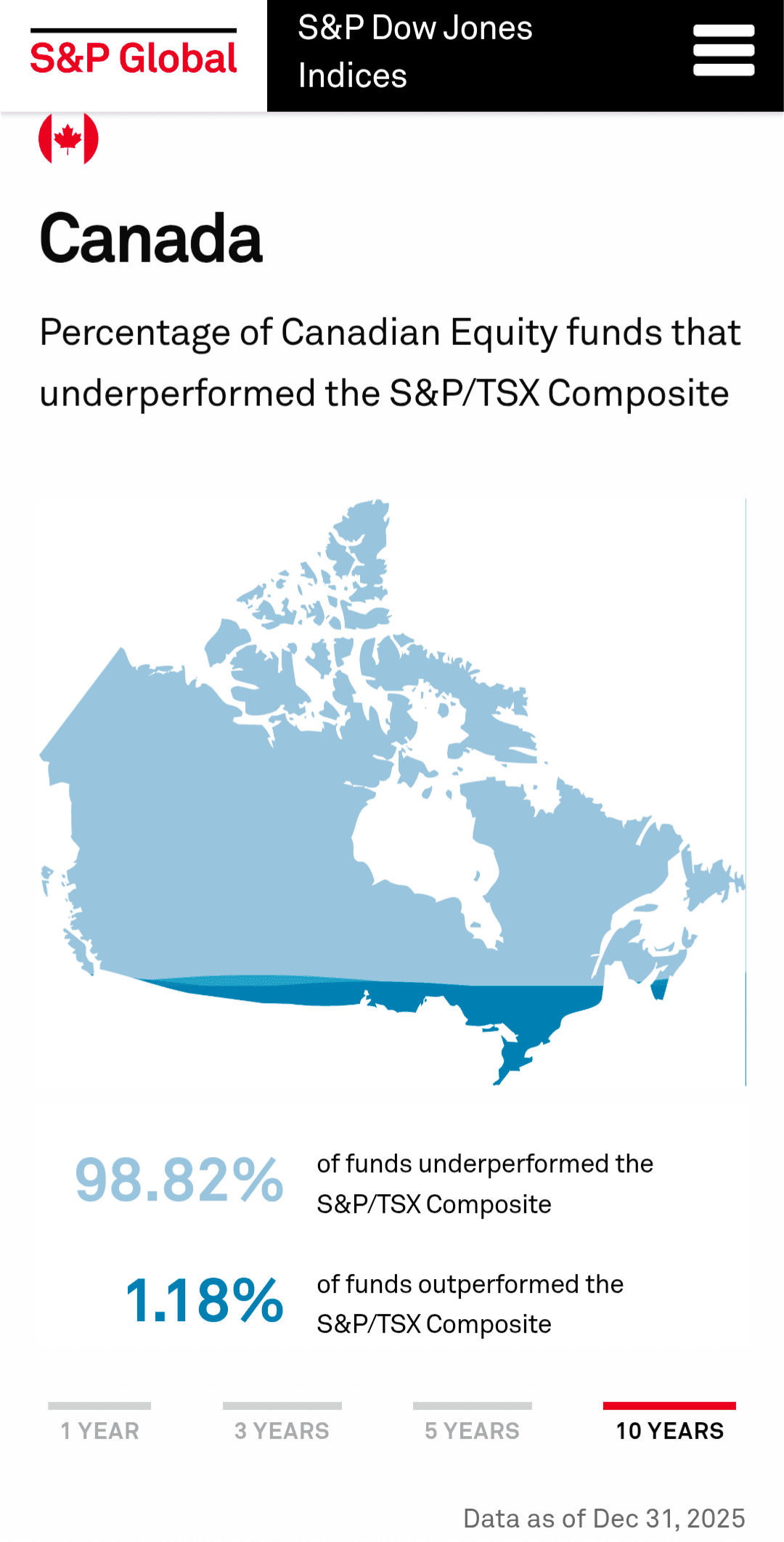
There’s a powerful myth among DIY investors that sucks new(er) investors in: if you just pick the right stocks and/or time the market relatively well, you’ll 'beat' the market. You don't need to be perfect, just better than average. It sounds intuitive... buy low, sell higher, repeat; the data tells us very different story that is more nuanced and complicated. Even some very intelligent individuals may even start talking about 'the market' as a very ignorant and unintelligent entity that always gets things wrong and gets 'corrected'. Here's some facts we all need to accept eventually. Academic finance ...dating back to Eugene Fama’s work on the Efficient Market Hypothesis, aka EMH, shows that stock prices quickly reflect ALL available information. If new data impacts value, prices adjust INSTANTLY. What this means is that outperforming markets consistently is extremely hard on a risk adjusted basis! Also, past price patterns RARELY predict future returns. If anything, this gives investors a false sense of comfort. How do most professional active managers perform compared to their benchmarks? Large datasets, especially from the S&P Dow Jones SPIVA scorecards, consistently show that.... Over long horizons (10-15+ years), the majority of actively managed equity funds underperform their benchmarks after fees. These managers are very intelligent and work in a highly competitive market. In US large cap equity funds, roughly 90% underperform the S&P 500 index ($vfv, $voo) over 15 years and even at 5 years... 75% do so... This of course is after management fees and trading costs. The net returns of most active managers lag passive indexes. The simple reason? Markets are HIGHLY competitive with some of the smartest people on earth. Then comes the timing factor. Why is market timing your enemy, not your friend? Avoiding down days sounds smart, but most “best days” happen in clusters with the “worst days.” Likely you saw this in March of this year and April of last year with the tariff wars. Missing just a FEW of the highest return days can drastically shrink your overall performance... Research on market timing shows that if an investor missed just a handful of the best trading sessions over a long period (20+ years), their lifetime return would be cut in half! That's even if they avoided many down days too. If you look at the returns in some indexes, it's not uncommon to have months of plus 10-20% and ones of negative 10-20%. That's why the adage, time in the market beats timing the market, is commonly repeated. To be clear, this applies to being in the broad stock market... Not any general stock, sector, commodity, thematic ETF etcs. Why is this the case? Here's the math behind this fact. Market returns are driven by a SMALL number of BIG winners and LONG TERM compounding. $nvda is a massive gainer, not from 1 year returns or five year returns.... It's from decades of good returns compounding. So again... A few stocks in any broad index, like the S&P 500, are responsible for a disproportionate share of overall gains, a high dispersion rate. Active stock pickers often miss these big winners... They don't hear about the best stock to own until they have already exploded. And active traders usually have high turnover... meaning higher taxes, transaction costs and worse yet... Miss out on the massive gains that long term holding provides. That cannot be overstated. Mathematically speaking, variance, plus high costs, equals lower expected return for active strategies. So what works? Why invest if I'm bound to fail? Empirical evidence and data underscores what many nobel laureates and professional economists have concluded long ago. A large body of evidence says this... Diversification is the ONLY free lunch in investing... it reduces idiosyncratic risk. Low-cost passive broad index funds capture market returns efficiently and market average returns are GREAT historically (recency bias makes 15% annualized returns seem normal). Staying invested over decades compounds growth. Regular, disciplined contributions add more to returns than picking the hottest stock. This isn’t theory... it’s backed by decades of fund performance and academic research using empirical data. To all my fellow DIYers, outperforming the market occasionally might happen, I did it, many others have done it and right now many are doing it... but doing it consistently over DECADES is SO rare that passive, low-cost investing works better for the vast majority of investors. That's likely you. Beating the market isn’t about being smarter... It’s about being realistic. Acknowledging our human limitations. Markets are EXTREMELY competitive, prices are efficient, and luck & tax drag matter. Instead of chasing the next hot pick, or pretending that you know a company as well as the CEO or worse yet, better, focus on what you CAN CONTROL... Keep within your risk tolerance Prioritize low costs Stay well diversified And keep a loooooong time horizon So stop trying to outsmart the collective intelligence of the market! Start designing a portfolio that works with it. Don't get caught in ETF gimmicks ($ROBO, $mste etc ) or ETF slop ($HHIS, etc) The market rewards patient investors, not coffee cup prediction, and definitely not pompous arrogance. Happy investing everyone and enjoy the ATHs!!
7,534 views
51 Comments
Ian S
@ian_s · 5mo
Love the post! My 2cents is the market is efficient at pricing stocks, but it’s also efficiently pricing in human behaviour. and humans consistently avoid uncomfortable, unloved, distressed looking companies. That’s where the value premium lives. It’s also where you layer in a profitability lens. So maybe the real distinction isn’t active vs passive. It’s intentional vs unintentional risk taking.
Richard Verhaeghe
@ravonar · 5moEdited
Few Remember the Nifty-Fifty, American Blue Chip, Too Big To Fail. Sears Polaroid. The 50 traded at +40x their P&E ratio. The Nifty 50 dominated 45% of the S&P500. Now the Mag 7 control 40% of the S&P, they trade +28 to +120x their P&E Ratio. This time will be different everyone says. Sunshine Charlie said the same thing, trade on Margin, bet on America. He single handedly caused the Great Depression. 5000 banks failed. 1 in 4 Americans lost their jobs. FDR made it illegal to own gold. All the protections preventing another Wall Street Crash or Nifty 50 Bubble Pop have been removed, money is being printed with no regard. People are trading on margin. This time will be different they say.
Simon R
@simon66 · 5mo
I don't need to beat the market. What i aim to do is meet my finacial goals and yearly benchmarks i set for myself. I don't know and care very little for what the market is doing.
TheBullCollector @thebullcollector · 1mo
Hi
See the full comment section 👀Sign up for the full Blossom experience!