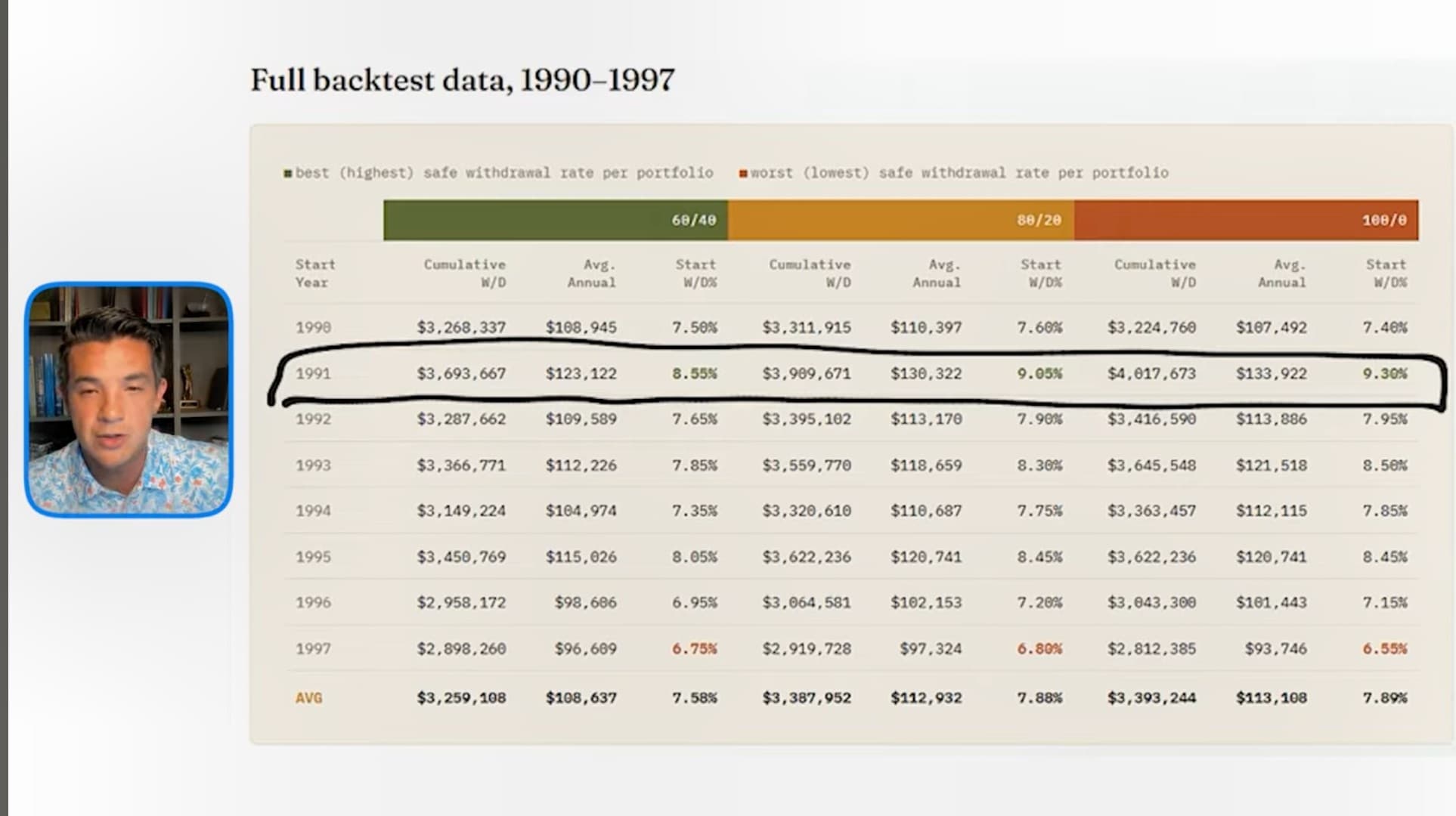
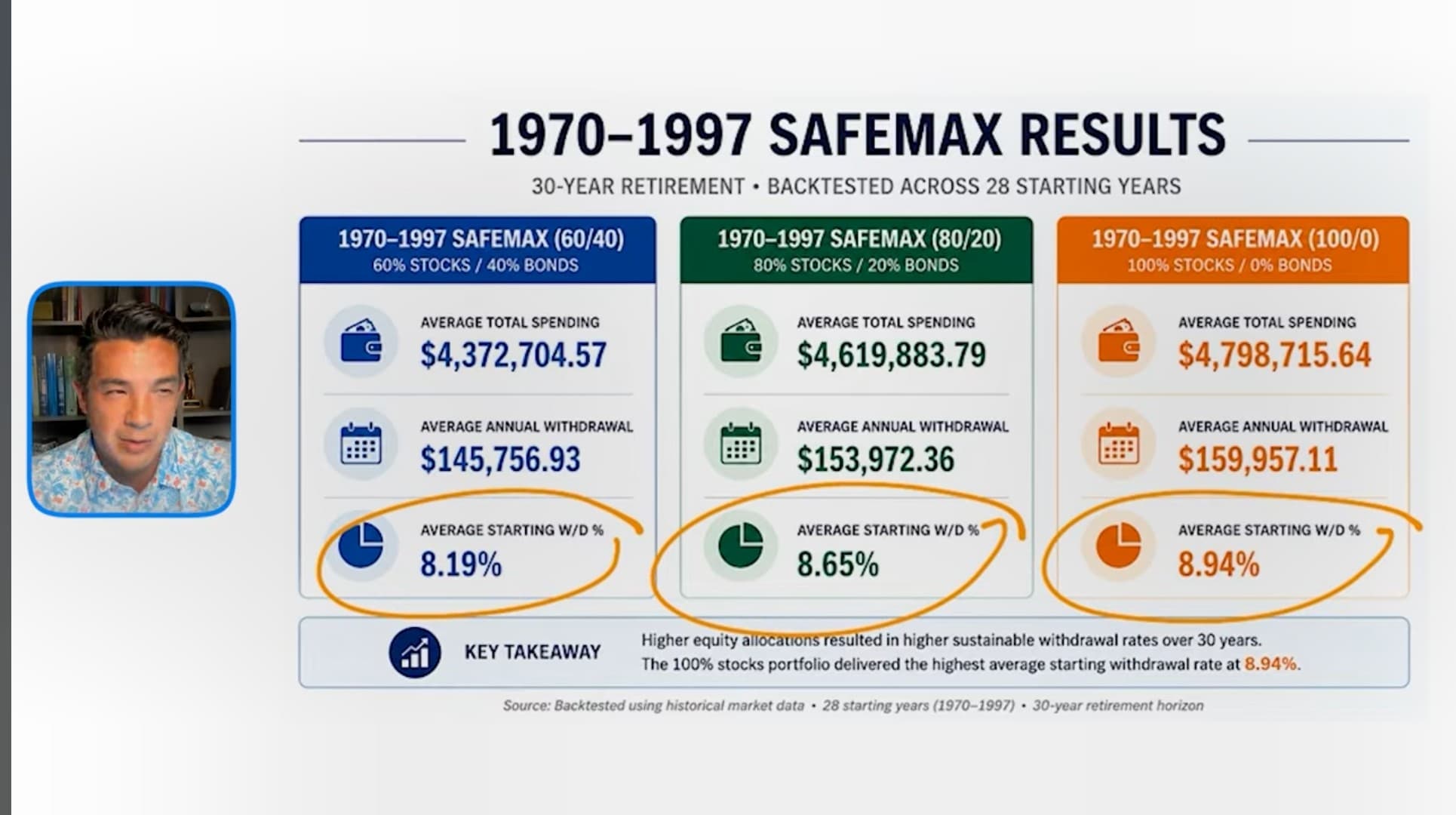
In the Bengen's study, 4% safe withdrawal rate was based analyses done with static 30 year windows going back to 1926 to 1996. I previously posted my critique of it not including the 3 down years after 2000 and recent M2 money supplies. If you use 4% today, you will leave a lot of money on the table. A video from this financial planner uses the same analysis on the most recent 30-year windows. I was surprised to learn that even your humble but reckless cc ETF investor is withdrawing less than his findings (7.2%). For retirement started in 1990's, the average Safemax rate is 7.9%. In these analyses, the mechanism behind running out of money is asset depletion. In my own retirement roadmap, no shares is ever sold for daily expenses. The share count increases with each re-investment. I pick cc ETFs with very stable distributions. My takeaway? I will splurge for business class tickets in our next bucket list trip. https://youtu.be/4O4Vlm6W_FU?si=pYkavDCYJYadwoVq
268 views
5 Comments
Ed @edsam · 7d
ETF Go@etf.go · 5d
Great video! Thanks for sharing. 🙏 I agree with your comments on the other post that ‘longevity is nearly impossible to predict’ and that it’s a ‘really tough to balance longevity and spending’. I think challenging the 4% rule is definitely one of the more productive exercises and discussions we can have. I think this is our/everyone’s common goal. ✅ Ultimately we need to decide how far we want to push our own withdrawal limits and to understand that we need to understand the research that’s been done on the topic. The result shown in the video is definitely encouraging but has to been seen as applicable to that specific timeframe and not necessarily transferable to future time periods. Combined with other articles/research that suggest retirees may be better off holding higher equity percentages than previously recommended (beyond 60/40) I think we start gaining comfort on expanding our upper withdrawal limit. I think this does actually align with the snapshot/research I’ve shared before that still shows ‘some probability’ (albeit low) of survival at higher rates. All of that said I think people need to be careful no to expand their withdrawal limit too far for too long. Anything above 10% (or even 8%) for extended time periods still lower those probabilities past what most people should be willing to consider. Definitely one of the most important retirement topics so thanks again for sharing! 👍
marco @marcouch · 6d
@edsam nice one, but I feel some “yeah but…” coming! 😂
See the full comment section 👀Sign up for the full Blossom experience!