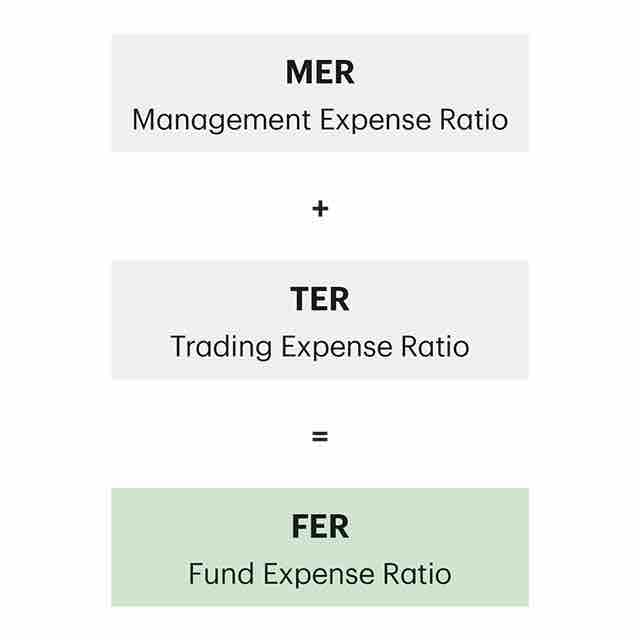
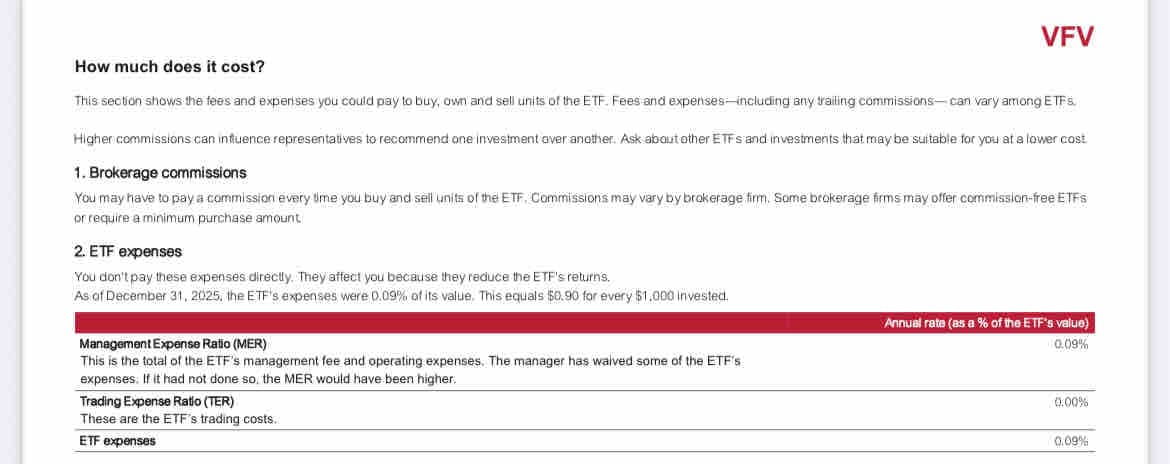
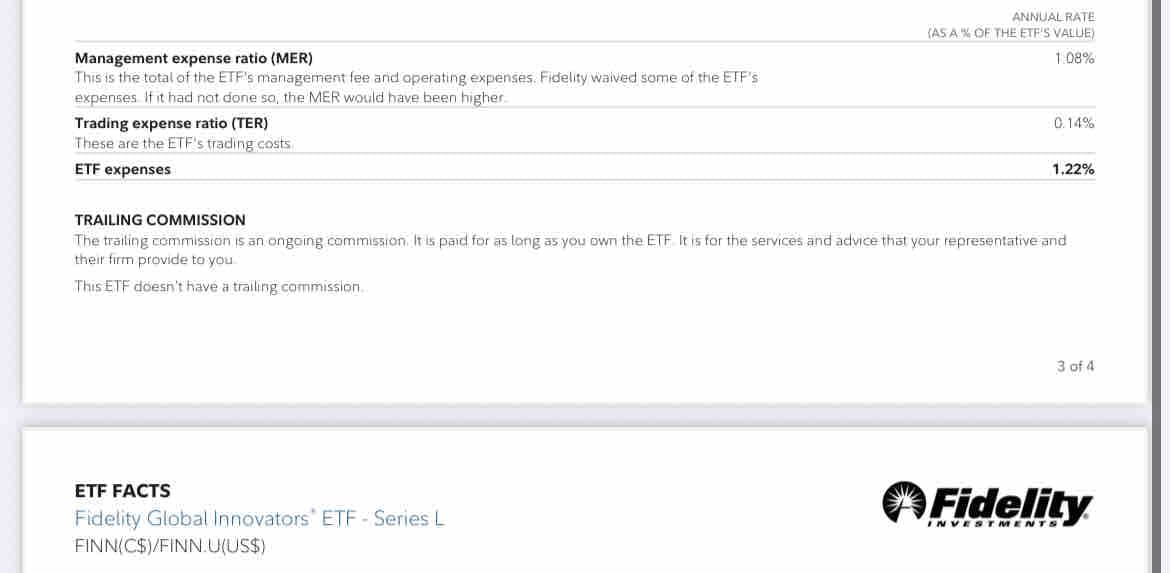
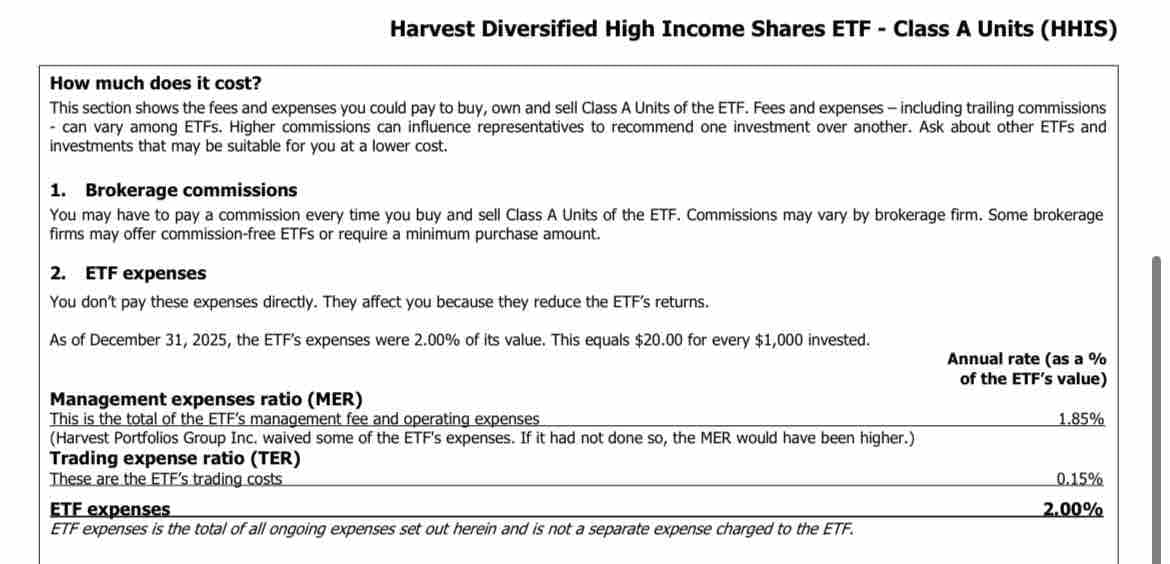
Buying an ETF is how almost every investor gets started, but are you aware of the COST to buy an ETF? One of the most important pieces of information is the “Fees” that are charged to hold an ETF. Let’s take a look at what those hidden fees might be! The total fees of any product is what’s taken off an ETF’s return before you get any of those returns. These fees are usually 2 major categories: MER and TER. MER is fairly known and understood. It stands for “Management Expense Ratio” and encapsulates the Management Fee and all other taxes/operating expenses. In other words, all the costs of running the ETF and how much the management team gets paid to run the ETF. This is standard across all ETFs, and will vary depending on the kind of product. The MER is taken off of the total return before you as an investor receive the rest of the return. If an MER is 0.5% and a fund returns 8% in a year, the investor will only receive 7.5% return NET of fees. This doesn’t seem like much, but look at the difference compounded: $10,000 at 8% over 30 years: $100,626.57 $10,000 at 7.5% over 30 years: $87,549.55 That $10,000 went from a 906% return to a 775% return over 30 years. Thats an extra 131% return you don’t get just for 0.5% of your yearly return! For most low cost funds, the MER is less than 0.2% or even 0.1% and has much less of an impact on your returns. It’s also usually the only fee charged and you can’t really escape it. However, there’s another hidden fee most investors won’t look for: The TER. The TER or “Trading Expense Ratio” is a fee that is commonly used in actively managed funds. This fee encapsulates the costs of trading that the management does to rebalance the fund or make investment decisions. For most low cost funds this will be 0% or 0.01%, but in same cases it can add an extra 0.1% or more to your total fees! You will almost NEVER find this fee advertised on the front page of an ETF site. You’ll have to go to a document called the “ETF Facts” to find this fee. As an example, we’re going to look at the fees for 3 different funds each with more added complexity: $VFV$FINN and $HHIS (All fees are shown in the pictures on this post) Starting with $VFV, this ETF is what we call a low cost index fund. All the ETF does is track the S&P 500. According to their ETF facts page they only charge a 0.09% MER and a 0% TER. This is understandable and straightforward, they make no trades and they simply track an index. The fee is reasonable and there’s nothing more to explain. Moving onto our next fund $FINN, we have some more things to go over. First of all, the fund is now actively managed meaning the management team is making decisions on trades and rebalancing the holdings. As you can see, our MER is now 1.08% and our TER is 0.14%! That brings our total fees to 1.22% annualized. That’s more than 10x the fees of $VFV previously. Now $FINN has been around for a decade previously in mutual fund form, but when you’re charging a fee so high the justification has to be that the fund provides added value/returns over its lifetime. The fund up until this point has performed considerably well, however only your investments going forward are what matter if you choose to buy the fund. Moving onto our last fund $HHIS, we have an even more complicated strategy. The fund is a basket of other funds by Harvest that all consist of single stock covered call “income” funds. The fund now uses trade, options, AND leverage in its active management. Guess what that means? You guessed it: Higher fees. Taking a look at our fee page we can see the MER jumps up to 1.85% and the TER up to 0.15%. That puts our total fees at an even 2%. Almost double what $FINN is charging. Now again, the perceived value for such absurd fees must be that the fund provides value in some way to investors. In this case, the added layers of “income”, leverage and proclaimed diverse growth are what investors decide is worth the 2% fee. Before you decide if that’s even worth it, let’s look at the fees alone: Starting with a base of 8% yearly return over 30 years we can use each of the 3 total fees as a comparison. The fees are 0.09%, 1.22% and 2% and we will deduct the fees from our total return yearly. $100,000 at 7.91% yearly for 30 years: $981,410.67 $100,000 at 6.78% yearly for 30 years: $715,644.76 $100,000 at 6% yearly for 30 years: $574,349.12 See the huge difference? Just from that 0.09% to 2% over 30 years has made almost HALF the amount of return. Whether you like it or not, fees will be one of the most significant changes to your portfolio. Now of course this isn’t taking historical returns of the fund into account, BUT if you choose to buy these funds going forward you’re only looking at the return you make from here on out. Not even to mention the risk of the actual underlying holdings. Funnily enough as the fees get higher, the funds get more concentrated and provide less of an OPEN explanation and information for investors to see 🤔 All of these funds have essentially only seen GOOD market returns, just wait until a guaranteed time in your investing career where everybody is losing money. If the market goes down, is it worth being charged 1-2% in fees extra to just lose money? That’s up to you as an investor to make an informed decision about. Remember, don’t be negligent when it comes to your investing. Research these ETFs and get the whole picture before you make any big decisions. Hopefully you’re going to look at both these fees in all of your products if you haven’t already. As always, do your research and happy investing!
9,486 views
37 Comments
Crazy Canuck Investor
@crazycanuckinvestor · 1mo
Excellent post as usual Ronan This is the type of content that folks, including myself need to take the time to read and understand. As you said - this will add up overtime and we don’t know how the fund will perform. You could hit it big but will some of those gains be lost to the fees. Thanx for the post. It was a good read.
Will W
@williamwang23 · 1mo
This was a great post Ronan, most investors need to be aware of the fees they are paying...thanks for posting
Akif
@iamakif · 1mo
Worth adding a third one for Canadians: foreign withholding tax on the US and international holdings sitting inside an all in one ETF. It never shows up in the MER or the TER, but it comes out of your return exactly the same way. Small next to a bad MER, though it's the cost nobody prints on the fact sheet.
ETF Go
@etf.go · 1mo
Most of my vacations are paid for by the MER/TER that I didn’t pay an Active Manager. 🙌 Pay for their vacations. Or pay for yours. 🤷♂️ The choice should be fairly easy. 👍
See the full comment section 👀Sign up for the full Blossom experience!