📚 OPTIONS 101: The Foundations You NEED to Know‼️‼️
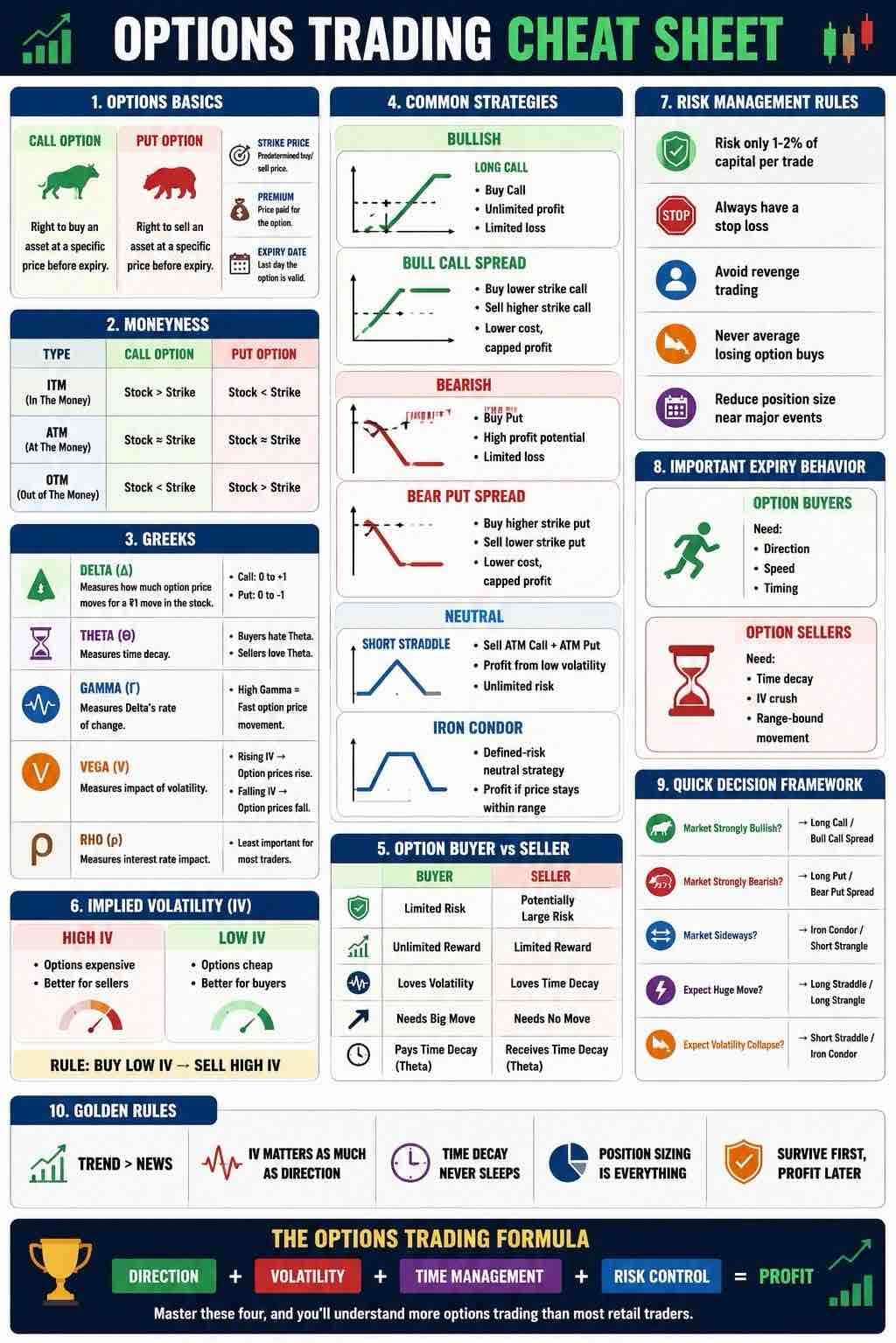
📚 OPTIONS 101: The Foundations You NEED to Know Before Touching the Greeks 📈 You asked for the whiteboard version… here it is! 🧠✍️ We’ve officially wrapped up the foundations of options. Before we jump into the Greeks, let’s recap the basics in a way that actually makes sense. 👇 🔹 WHAT IS AN OPTION? An option is simply a contract between a buyer and a seller. Every contract has 3 key terms: 📌 Underlying — What stock or ETF is involved? 📌 Strike Price — The agreed-upon price where the deal was “struck.” 📌 Expiration Date — How long the contract remains valid. Then you have two types: 🟢 CALL = Right to BUY 🔴 PUT = Right to SELL 🟢 BUYER = OWNS THE RIGHT When you buy an option, you own the right to act on the contract. You are LONG the option and you pay a DEBIT. Your goal? 👉 You want the option to become more valuable. 🔴 SELLER = WRITES THE CONTRACT When you sell an option, you write the contract and take on an obligation. You are SHORT the option and receive a CREDIT. Your goal? 👉 You generally want the option to lose value or expire worthless. 💰 WHAT IS THE PREMIUM? The premium is simply the price of the option. It consists of: 🔹 Intrinsic Value — the option’s executable/in-the-money value 🔹 Extrinsic Value — value influenced by things like time and implied volatility And an option can be: ✅ Exercised ✅ Allowed to expire worthless ✅ Bought or sold in the market before expiration ⸻ 📈 THE 4 BASIC OPTIONS POSITIONS 🟢 LONG CALL You buy the right to BUY. You want the stock to 🚀 RISE significantly. Potential gain: Unlimited Maximum loss: Premium paid 🔴 LONG PUT You buy the right to SELL. You want the stock to 📉 FALL significantly. Potential gain: Substantial Maximum loss: Premium paid 🔴 SHORT CALL You sell the right to BUY. You want the stock to stay below the strike or decline, depending on the position. Potential gain: Limited to premium received Potential loss: Unlimited 🟢 SHORT PUT You sell the right to SELL. You generally want the stock to stay above the strike or rise. Potential gain: Limited to premium received Potential loss: Substantial ⸻ ⏳ HERE’S THE PART MANY BEGINNERS MISS… TIME MATTERS. ⏰ Time generally hurts long options because extrinsic value can decay as expiration approaches. ⏰ Time generally helps short options because the option can lose extrinsic value. And then there’s IMPLIED VOLATILITY (IV) 👀 📈 Higher IV → generally increases option premiums ➡️ Helps long options ➡️ Hurts short options Finally, direction matters. 🚀 A sharp move in the expected direction can dramatically increase the value of a long option. But for short options, that same sharp move can create significant risk. That’s why options aren’t simply about predicting whether a stock goes UP or DOWN. You also need to understand: ⏳ TIME 📊 VOLATILITY 🎯 STRIKE PRICE 📅 EXPIRATION 💰 PREMIUM And that brings us to the next chapter… 🔥 THE GREEKS. Delta. Gamma. Theta. Vega. If you understand these, you start understanding WHY an option’s price moves the way it does. 👇 SAVE THIS POST if you’re learning options, and follow along for the Greeks breakdown. ⚠️ Options involve substantial risk and are not suitable for everyone. This content is for informational and educational purposes only and is not financial advice. Do follow my account for more educative investment tips 🔥🔥🔥