Paycheque to Portfolio: Did Wealth Grow?
I have been watching a few videos about the paycheque-to-portfolio model. Instead of getting paid, covering expenses, and investing whatever is left over, the strategy attempts to front-load the investing. The entire paycheque is deposited into investment assets, and margin is then used to cover the bills.
I wanted to take a closer look at one of these accounts from October 2025 through the end of July 2026. One of the best parts about many of these creators is the level of transparency they provide. They are sharing deposits, withdrawals, margin balances, income, and account values in a way that is rarely seen in traditional finance. That gives us the opportunity to evaluate the strategy as it unfolds in real time.
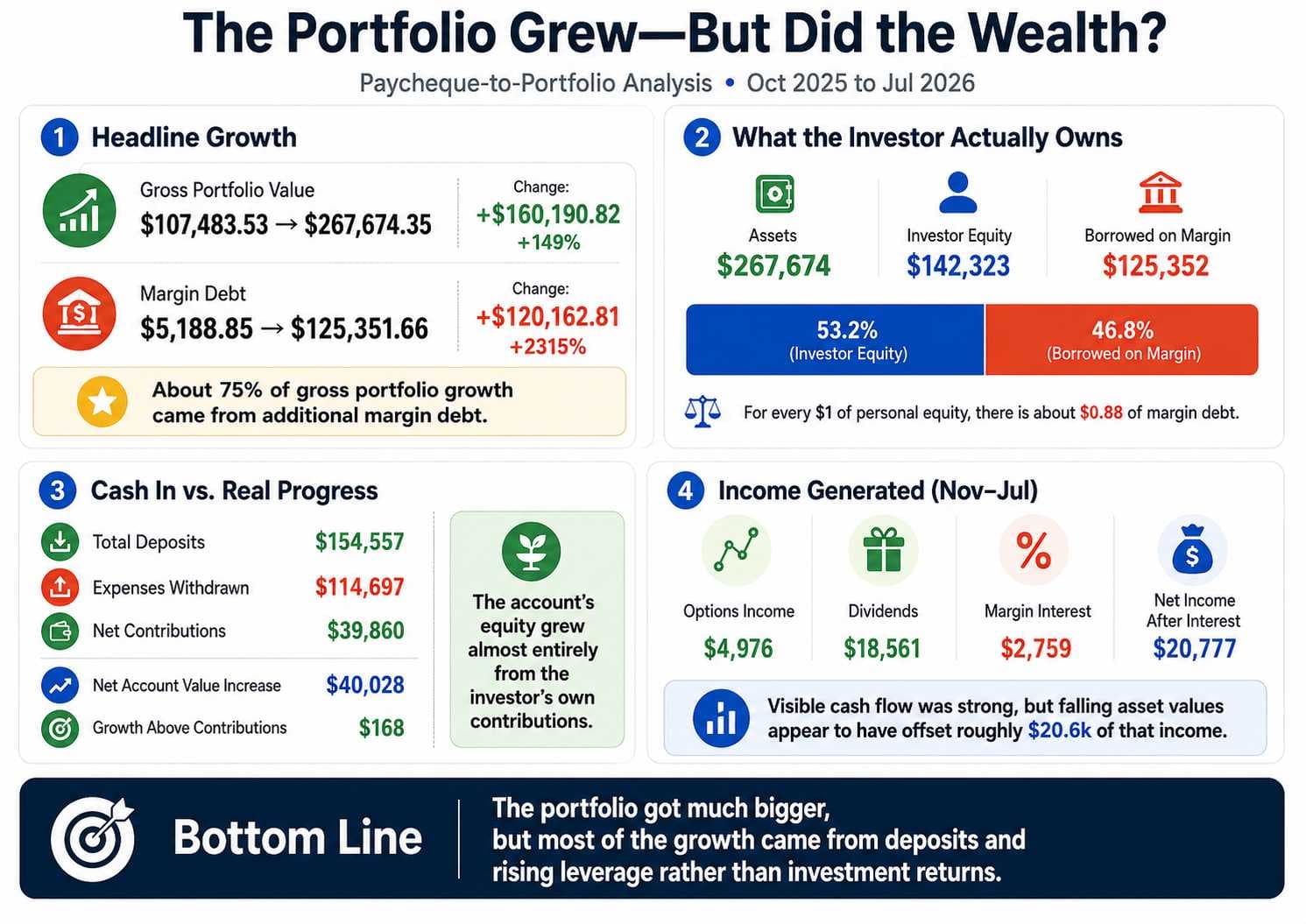
The gross portfolio value increased from $107,483.53 to $267,674.35, an increase of $160,190.82, or approximately 149%.
Growing an account from roughly $107,000 to almost $268,000 in less than a year looks tremendous.
However, the margin balance also increased from $5,188.85 to $125,351.66. That is an increase of more than $120,000, or approximately 2,315%.
This means roughly 75% of the increase in the gross portfolio value came from additional margin debt. The investor currently owns approximately $267,674 of investments, but only $142,323 represents their own equity. The remaining $125,352 is borrowed money.
Another way to look at it is that for every $1 of personal equity, there is now approximately $0.88 of margin debt invested alongside it. Between the end of October and the end of July, the person deposited approximately $154,557 into the account and withdrew approximately $114,697 to cover living expenses.
That leaves net external contributions of approximately:
$154,557 − $114,697 = $39,860 During the same period, the net account value increased from $102,294.68 to $142,322.69, an increase of approximately $40,028.
That means the growth above the person’s net contributions was only around: $40,028 − $39,860 = $168.
Based on the spreadsheet, the investor’s equity has essentially grown by the amount of money they contributed. The investments themselves appear to have produced almost no net total return over this period after accounting for margin interest and changes in the value of the holdings.
From November through July, the account generated approximately:
$4,976 in option income
$18,561 in dividends
$23,537 in total portfolio income
$2,759 in margin interest
$20,777 in net income after interest
That sounds like strong income generation.
However, the account only grew by approximately $168 beyond the person’s net contributions.
This suggests that roughly $20,600 of capital depreciation or other investment losses offset the dividends and option income being generated.
The cash flow is real, but it does not necessarily represent new wealth. In this case, the portfolio paid out more than $20,000 after interest, while declining investment values appear to have absorbed almost all of that income.
The strategy has successfully created a much larger portfolio, but the increase in account size can be misleading. Most of the growth came from additional deposits and rising margin debt rather than investment returns.
The portfolio is getting bigger, but based on these numbers, the investor’s actual wealth is not growing at nearly the same rate.
I am not sure how successful a strategy like this would be over a much longer period, especially through a prolonged bear market or a stretch of rising borrowing costs. But it does provide an interesting glimpse into a fully functioning paycheque-to-portfolio strategy and gives us the opportunity to watch the benefits, risks, and trade-offs play out in real time.