I’ve been getting a lot of private messages on this account again, and I really appreciate everyone reaching out. Unfortunately, I’m still unable to reply from this account. After I accept a private message and try to respond, the message simply doesn’t go through. I honestly don’t know why, and I’ve been experiencing this issue since the beginning of this year, but it still hasn’t been fixed. If you’ve messaged me and haven’t heard back, please send me a message on my backup Blossom account: @realestevezjorgemario That is my account as well, and I’ll be able to respond to you there. If you’re waiting for a reply from me, please message me there so I don’t miss you. I appreciate your patience and continued support.
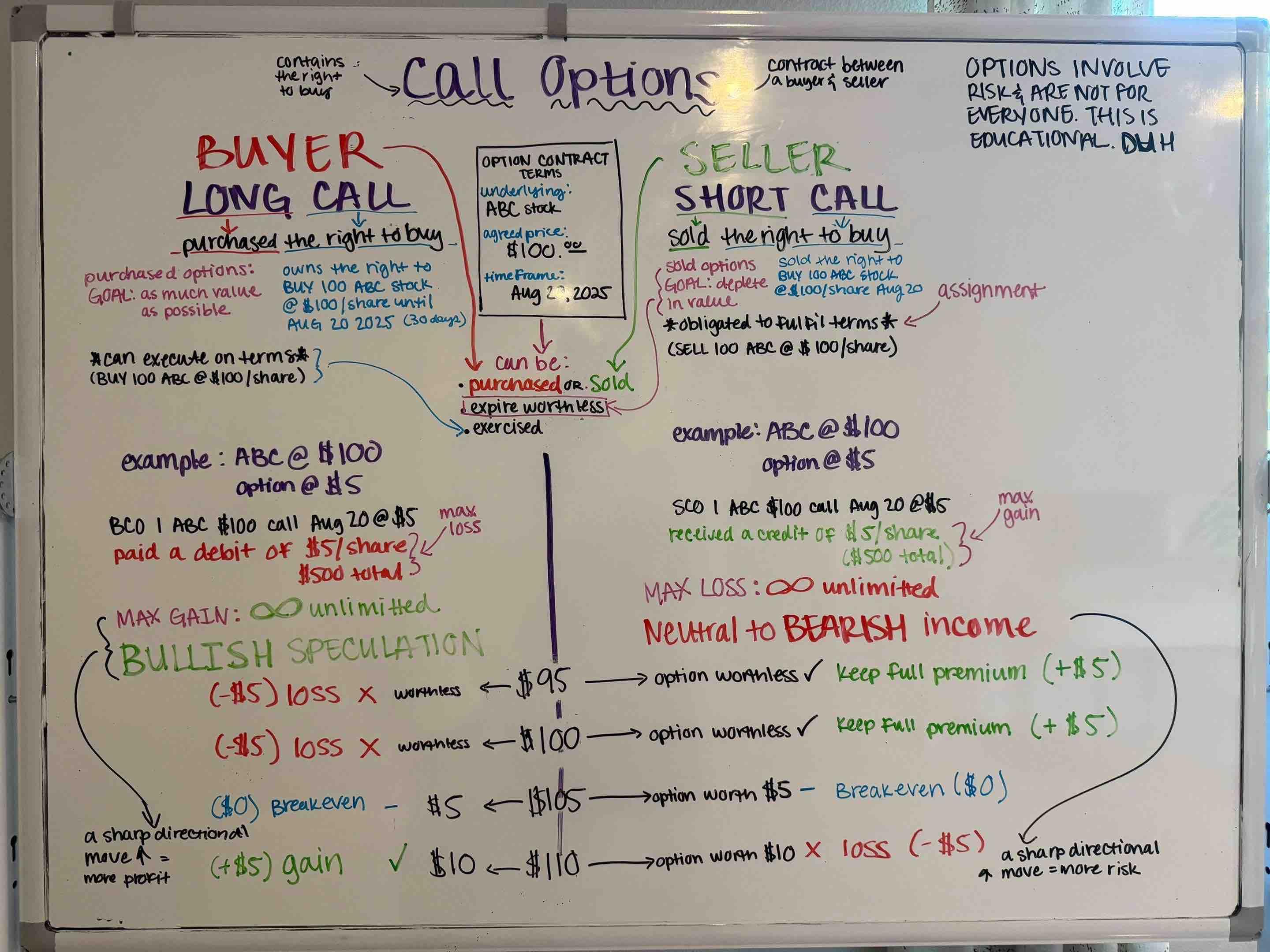
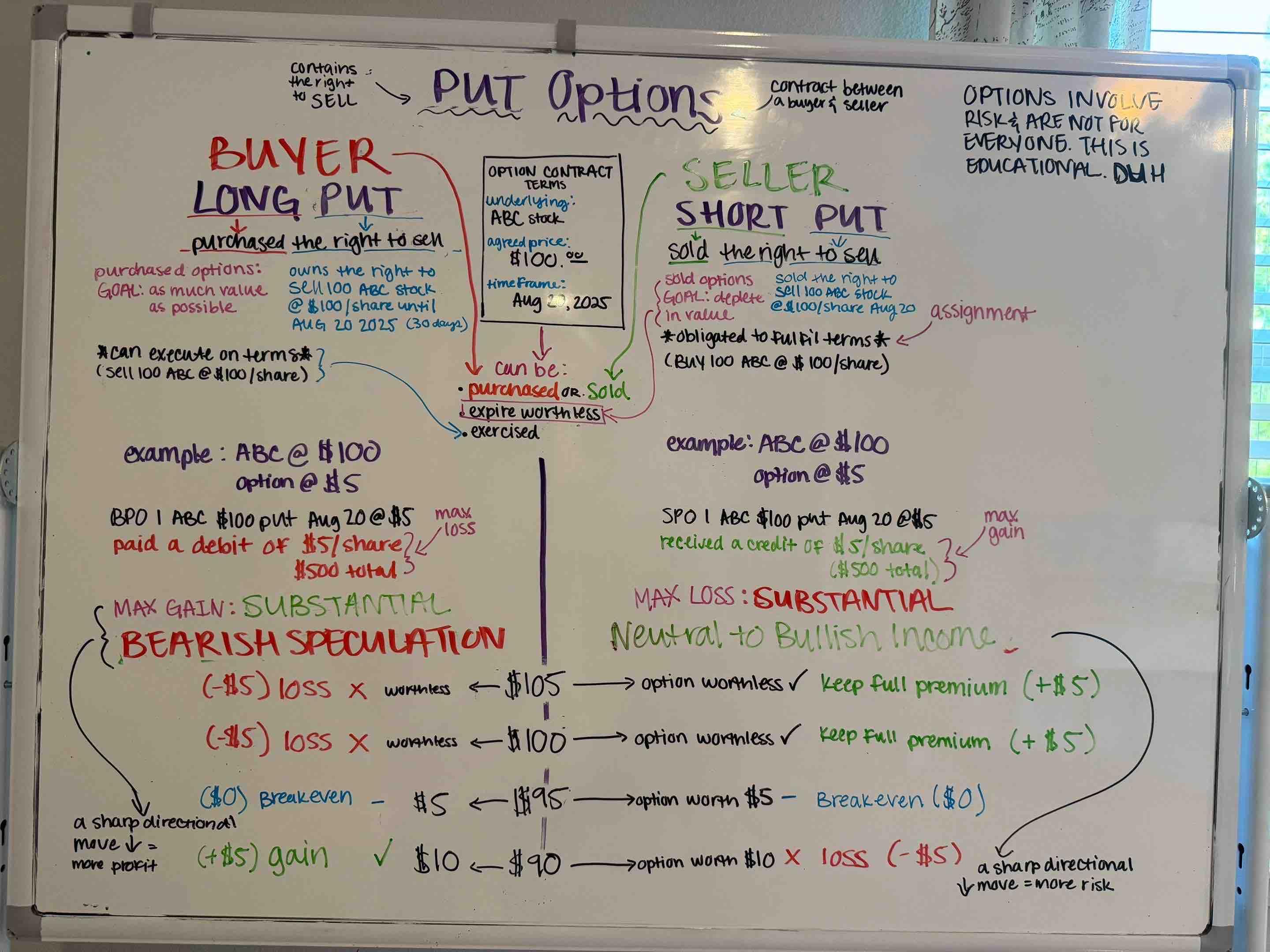
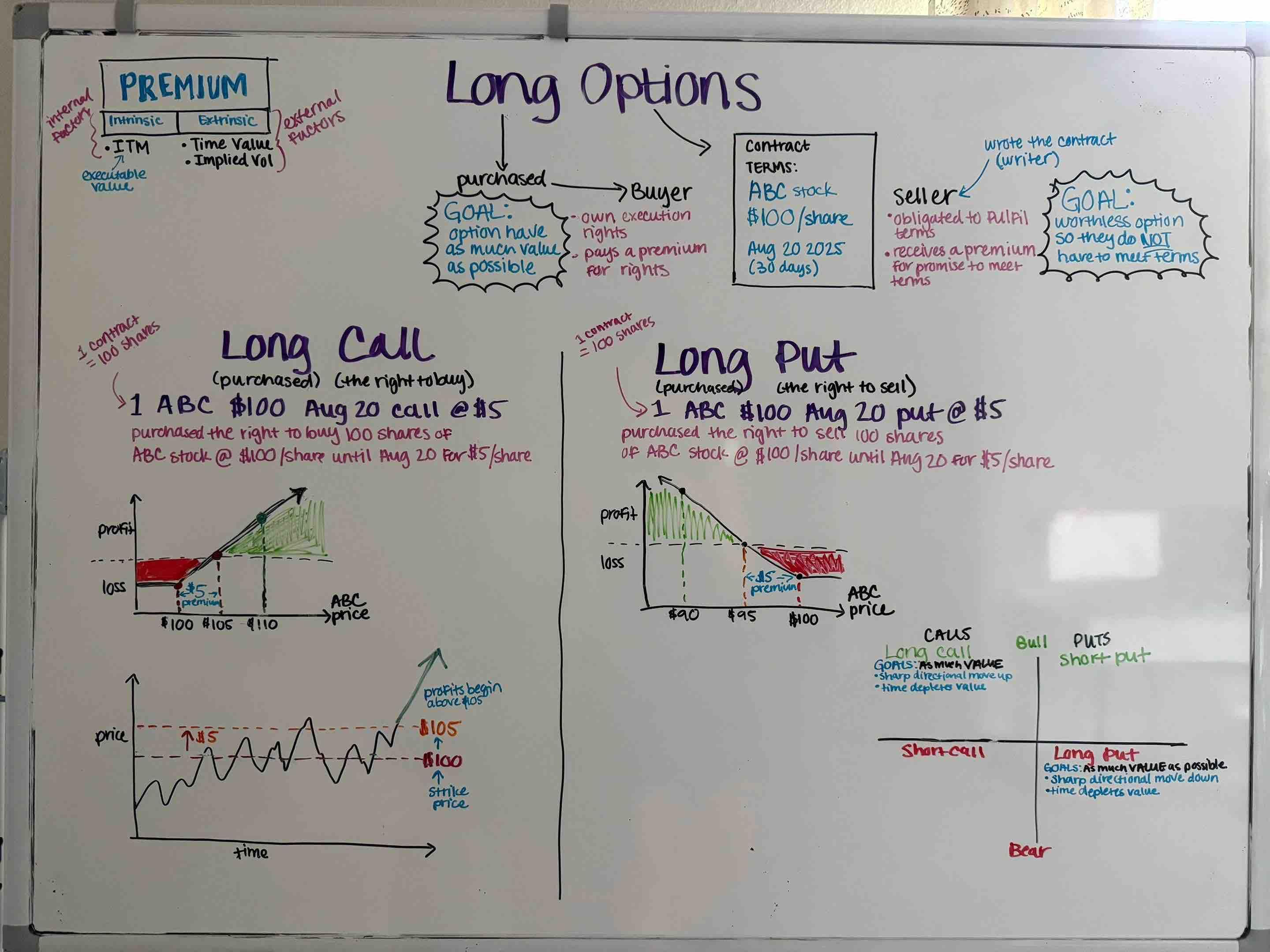
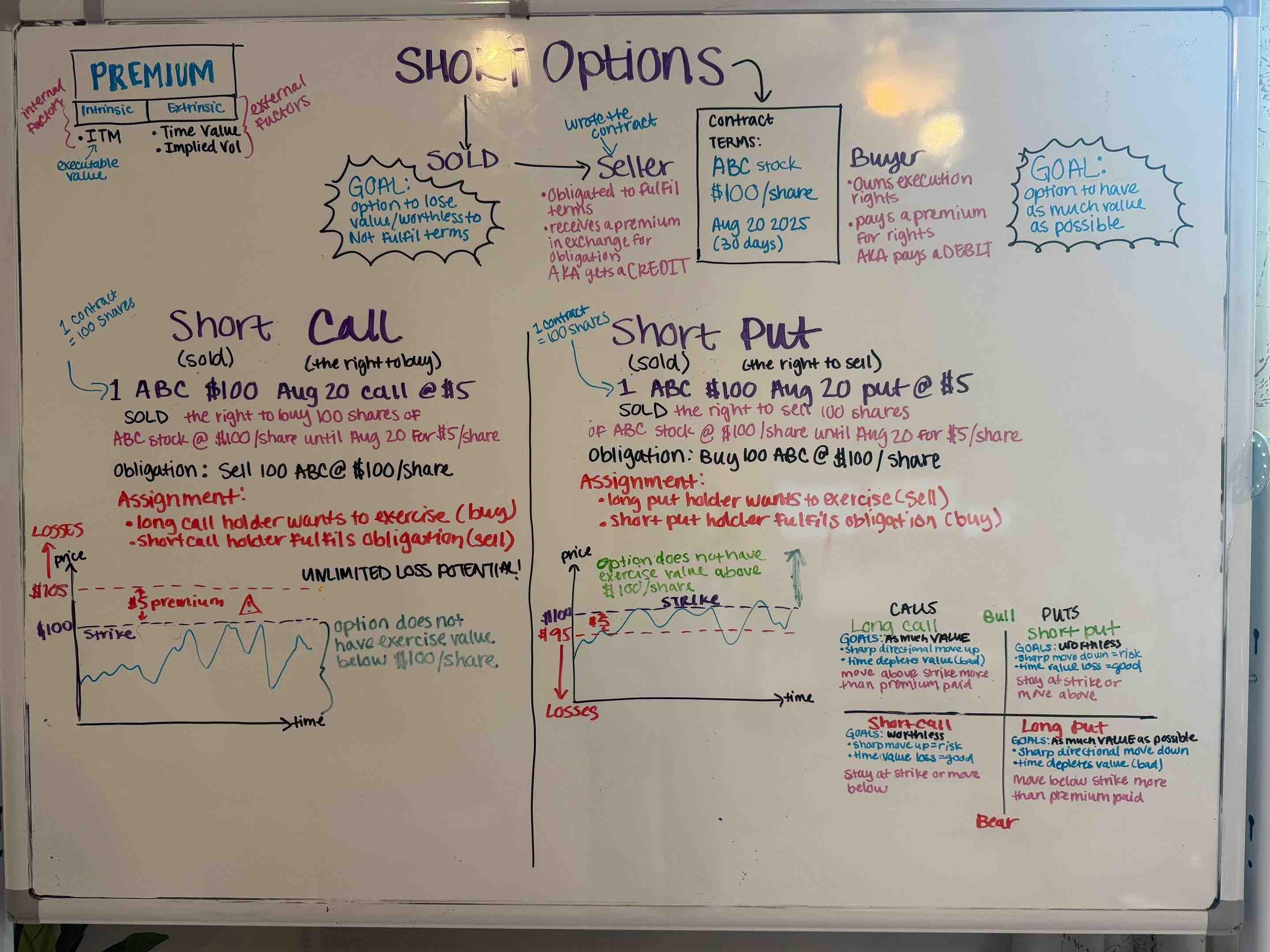
You asked for the whiteboard versions of the options content! Here it is! We finalized the options foundations, will do a recap and then move on to the Greeks! Here are the key takeaways: What is an option? An option is contract between a buyer and seller, every contract has terms associated with it like: - The underlying (what stock or ETF?) - The strike price (the agreed upon price where we STRUCK the deal) - The expiration date (how long is this contract good for?) The option is then issued as a call our a put which tells you if it contains the right to buy or sell. Call = the right to buy Put = the right to sell Buyers of the option contract OWN the option, they OWN the right to execute upon the terms of the contract. They want the contract to go up in value as much as possible. Buyers are consider long and pay a debit. Long = purchased. Sellers of the option contract WRITE the contract. They are obligated to fulfill the terms of the contract. They do not want the contract to have any value. Sellers are considered short and receive a credit. Short = sold. An option can be exercised, expire worthless or purchased and sold (traded) on the market for a premium. A premium is literally the options price. A premium is made up of intrinsic value and extrinsic value. Intrinsic value really means executable value, we call this in the money value. Extrinsic value is external factors, like time and implied volatility. Long call = purchased the right to buy. You want the stock to go UP in value by way more than the premium you paid. (unlimited gain potential, loss limited to the premium paid) Long put = purchased the right to sell. You want the stock to go DOWN in value by way more than the premium you paid. (Substantial gain potential, loss limited to the premium paid) Short call = sold the right to buy. You are obligated to sell the stock at the agreed upon price (strike price). You want the option to not have any value, you want the stock to go DOWN. (Unlimited loss potential, gain limited to the premium received) Short put = sold the right to sell. You are obligated to buy the stock at the agreed upon price. You want the option to be worthless, you want the stock to go UP. (Substantial loss potential, gain limited to the premium received) Time hurts long options and helps short options. Because as time goes by, the option loses value. An increase in implied volatility helps long options and hurts short options. Because an increase in implied volatility makes the option more expensive. A sharp directional move helps long options and is a risk for short options. Because a sharp directional move makes long options have more value. This is a risk for short options. Short options need the stock to stay at the same price or move up or down slightly to make max profit potential. Options involve risk and are not for everyone this is for informational and educational purposes only. YAYYYYYY FINANCIAL LITERACYread more
66K views
See all of @estevezjorgemario posts! 👀Sign up for the full Blossom experience!