Are you Rich?
I frequently see on Blossom posts or comments on being rich, with little regard to any quantitative or qualitative definition.
What does it really mean to be rich?
I would argue, being rich is relative, but of lesser importance than being secure to one’s needs.
I have strived my entire career to build financial security, sustainability AND resilience of my businesses in the face of unknown challenges and duration in a comprehensive manner based on technical soundness of definition both quantitatively and qualitatively.
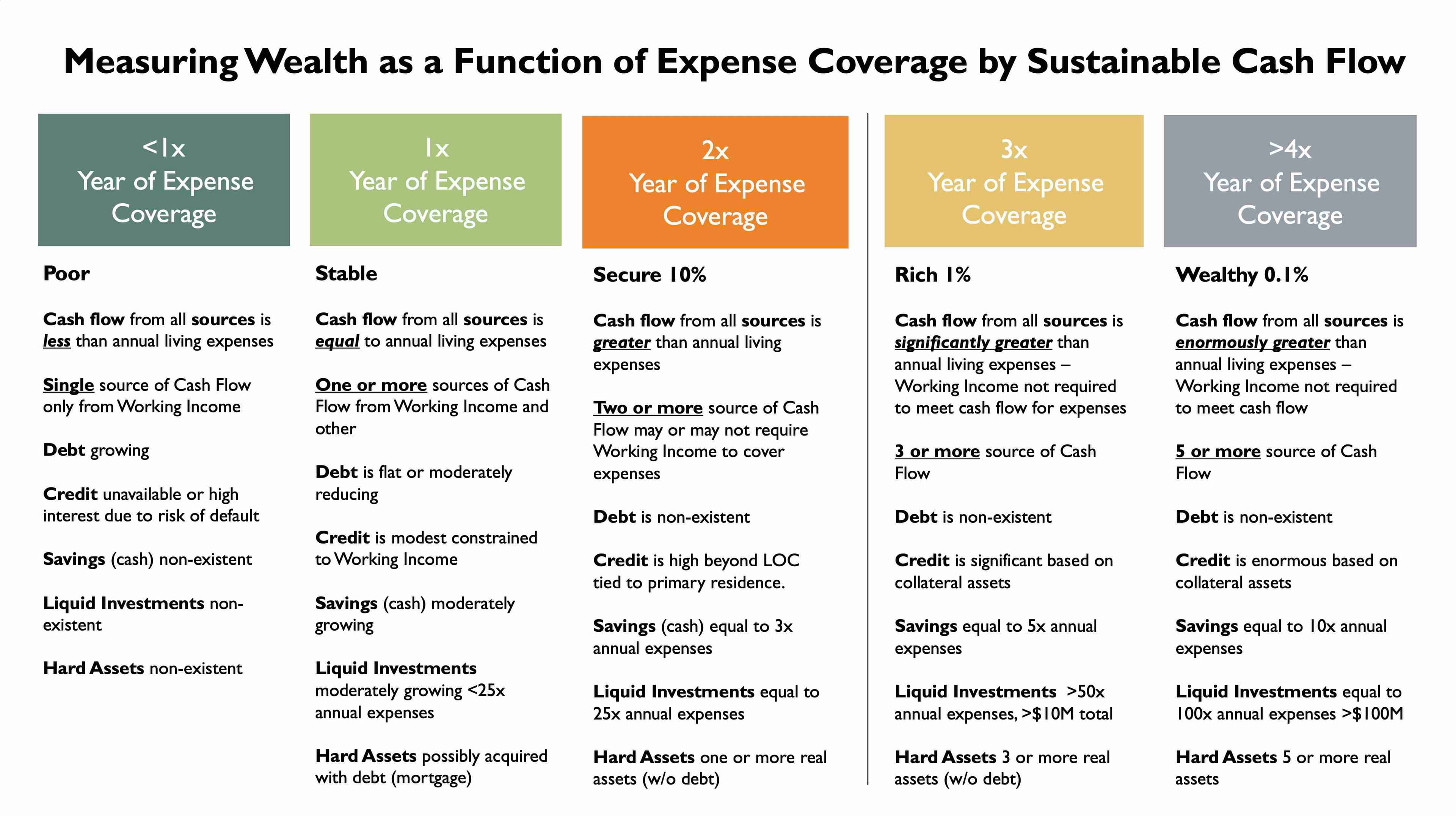
So I have assembled a slide diagram to capture the concept of wealth and define being rich in a far more structured way then I’ve seen to date.
Here’s an approach to working towards wealth building, but more importantly is security, and sustainability of your cash flow to “cover” your expenses.
Wealth and defining if you’re rich is RELATIVE to your Expenses, and the ability to PAY for them over TIME with security, sustainably and with resilience in the face of challenges and setbacks.
---
Understanding Financial Resilience — A Practical Guide
- Wealth is RELATIVE. What matters most is not how much money you make, but whether your cash flows can comfortably cover your lifestyle over time.
- The measure of stability is simple: how many years of expenses are covered by your safe, recurring income.
- When cash flow is less than expenses, you are consuming capital or going into debt — this is financial stress.
- When cash flow equals expenses, you are just breaking even — secure for now but vulnerable to any shock.
- When cash flow is greater than expenses, you are saving, investing, and moving toward independence.
- True wealth starts when your money and assets can pay your living costs without you having to work for it.
---
Building Real Wealth Step by Step
- KEEP EXPENSES UNDER CONTROL. Every dollar saved increases how long your money lasts.
***The one thing you can CONTROL to some degree is your expenses and lifestyle.***
- DIVERSIFY CASH FLOWS. Add more "pipes" of income — wages, rents, dividends, interest, small side businesses.
- BUILD SAVINGS FIRST. Cash buffers protect against short‑term shocks like job loss or emergencies.
- INVEST SMARTLY. Convert savings into investments that generate passive and reliable income or income via capital gains.
- ACQUIRE HARD ASSETS. Homes, land, or lasting assets provide long‑term security and stability and diversification of wealth.
- REDUCE OR ELIMINATE DEBT. Borrowing can help grow assets, but uncontrolled debt cuts resilience.
- GROW RELIABLE INCOME SOURCES. Favor cash flows you can count on year after year — pensions, leases, diversified investments.
- INCREASE INDEPENDENCE. Aim for income that does not depend on daily labor or active effort.
- PLAN FOR UNCERTAINTY. Hold reserves and insurance for the unexpected — redundancy adds safety.
- MEASURE PROGRESS IN TIME, NOT MONEY. Ask “How long could I live well if all work stopped?” — each extra year is true wealth.
***This last point I can not emphasize enough!***
---
Reading the Slide
- The slide shows stages of financial strength by “Years of Expense Coverage.”
- Less than 1 year of coverage means you are spending more than you earn — wealth is shrinking.
- Around 1 year of coverage means stability but little buffer — one setback can create stress.
- 2 years or more means genuine security — some flows may already be passive.
- 3 years or more means significant independence — work becomes optional, not required.
- 4 years and beyond represents lasting wealth — multiple income streams, no debt, strong assets, and continuous cash flow.
---
The Goal
- The real goal is not just being “rich” but being “RESILIENT.”
- Financial freedom happens when reliable, sustainable cash flows cover your life indefinitely, allowing choices, not obligations.
- Managing expenses, expanding income sources, growing savings and investments, and protecting against shocks create that resilience over time.
- Everyone, at any level of income, can move up the ladder by focusing on control, consistency, and time.
---
Spend less than you earn → build savings → invest → create reliable and independent income streams → gain time freedom..
Nothing new, but understanding a structure can dictate the right behavior that leads to the desired end result.
Best of luck.