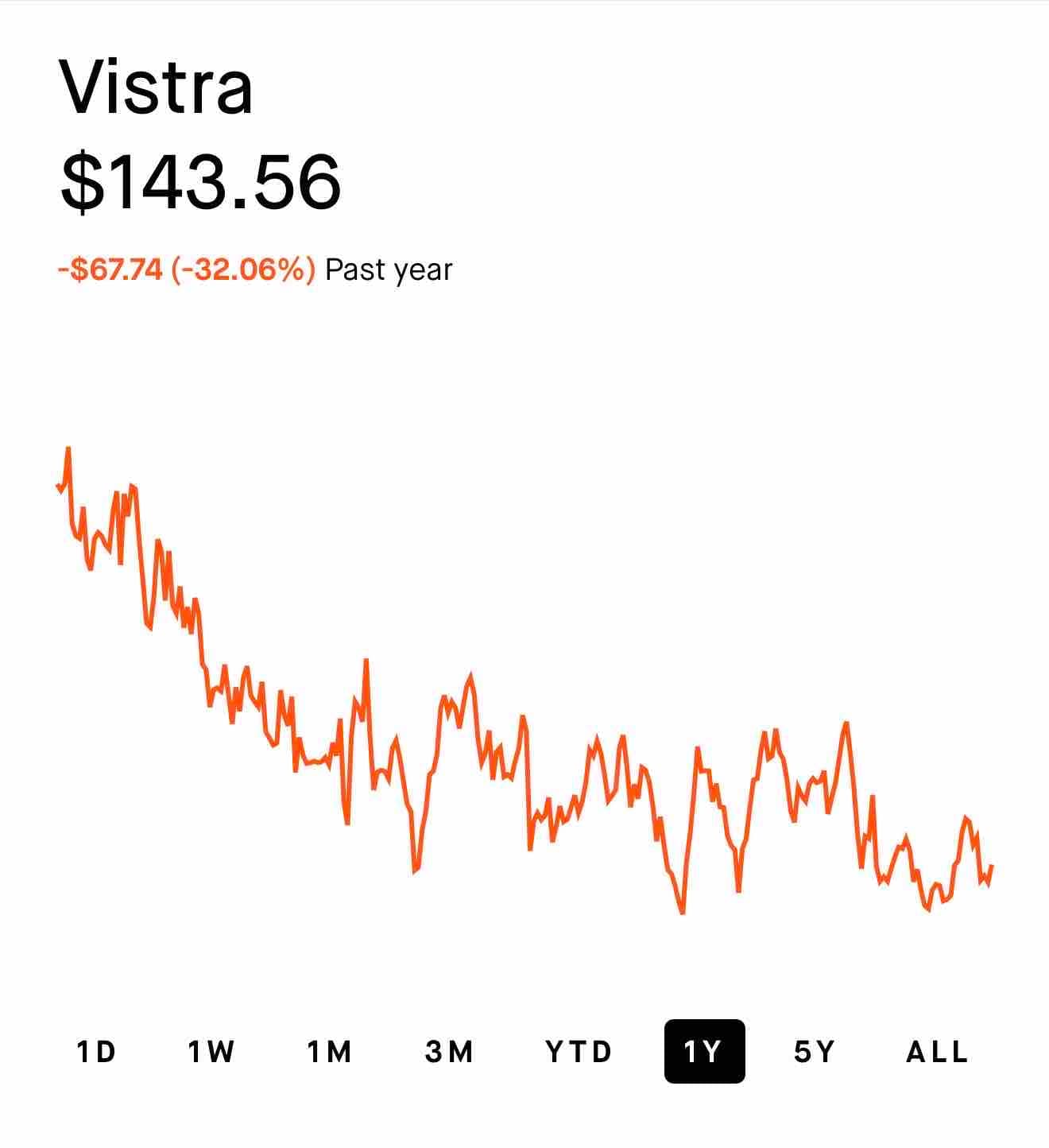
So let me get this straight: Vistra $VST is down 32% past year Nancy Pelosi bought around $180 Peter Thiel made it a large holding in his fund Vistra CEO bought $1m worth around $135 And other big investors have been buying Probably nothing, right? read more
Looking at the latest wealth per capita numbers across major economies, the US leads the pack at over $503k per person, with Canada holding a strong 6th place spot at around $324k per person. As investors, seeing where wealth is concentrated helps us decide where to put our hard-earned money for long-term growth. If you want exposure to these top wealth-generating economies, here are a few simple ways to capture them depending on which currency you trade in: For US 🇺🇸 Dollar Investors (USD) * US Market Exposure: $VOO (Vanguard S&P 500 ETF) or $VTI (Vanguard Total Stock Market ETF) give you direct access to top US powerhouses like Apple ($AAPL), Microsoft ($MSFT), and Amazon ($AMZN). * International 🌎 Wealth Exposure: $VEA (Vanguard FTSE Developed Markets ETF) covers developed markets outside the US, including Australia, Denmark, the Netherlands, and Canada. For Canadian 🇨🇦 Dollar Investors (CAD) * US Market Exposure: $VFV (Vanguard S&P 500 Index ETF) lets you invest in top US corporations directly in CAD. * All-in-One Global Portfolios: $XEQT (iShares Core Equity ETF Portfolio) or $VEQT (Vanguard All-Equity ETF Portfolio) hold broad exposure to Canada (like Royal Bank $RY and Shopify $SHOP), the US, and top global developed markets all in a single fund. Did You Know? 🧐 Despite having a much smaller population than total wealth giants like Germany ($23 Tn) or Japan ($22 Tn), Australia ranks #2 globally in wealth per capita at $444,872 per person, driven largely by high homeownership rates and their mandatory superannuation retirement system! — This is for informational and educational purposes only and should not be considered financial or investment advice. read more
SPACEX EXPLORES BUYING STARTUP DATA TO TRAIN GROK $SPCX has held internal discussions about purchasing customer and operational data from troubled or defunct startups to help train its AI models, per Bloomberg.
Fed hiked 25bp, first in 3 years, unanimous 12-0. Stocks were higher pre-decision, then fell hard once Warsh's hawkish press conference began — $DIA -1.21%, $SPY -0.45%, $QQQ nearly flat. Dot plot shows at least 1 more hike expected this year. This morning: real relief rally — $QQQ +1.1%, $SPY +0.8% — as oil retreats and the hawkish outcome is now priced in and behind us. Margin still coasting down toward the low 30s. Full breakdown — link in bio. Not financial advice — simply my journey in margin.
📊 Stocks clawed back Wednesday's Fed-driven losses as yields and oil both retreated. The Nasdaq jumped 1.69%, the S&P 500 rose 1.14%, the Dow added 0.61% and Canada's S&P/TSX Composite climbed 1.08%. Tech led, with Nvidia and Amazon each up more than 2% and Intel gaining 7%. ⚡ Generac ($GNRC) soared 33% in premarket trade on a deal to supply Amazon with backup generators for its data centers. Initial deliveries total $2.4 billion between 2027 and 2028, and Generac granted Amazon the right to buy up to $340 million of its stock. 🔋 Fluence Energy ($FLNC ) tumbled 22% premarket after slashing full year guidance. The battery storage maker now sees $2.4 billion in 2026 revenue against a prior $2.9 billion to $3.1 billion, and a $200 million EBITDA loss versus earlier guidance ranging from a $30 million loss to $10 million positive. 🏠 Lennar ($LEN) slipped 1.2% on a third quarter miss. Earnings of $1.19 per share came in under the $1.28 FactSet consensus and nearly half of last year's level, with revenue of $8.05 billion against $8.23 billion expected. ⏱️ SiTime ($SITM) rallied almost 10% after Morgan Stanley started coverage at overweight with a $730 target, implying 33% upside from Wednesday's close. 🛢️ The 10-year Treasury yield dropped more than 7 basis points to 4.93%, back below the 5% line it crossed after the Fed hike. WTI closed down 0.51% at $101.91 and Brent slid 0.95% to $104.82 as Saudi Arabia freed up more cargoes for Asian refiners. The Bank of England held at 3.75% in a 6-3 vote but flagged a hike as increasingly likely. 👨🏻💻 Researched and written daily by @tim_emino read more
The Fed raised rates yesterday for the first time since 2023, a quarter point to 3.75-4.00%, and the vote was unanimous. Warsh opened his press conference with a line that left little room for interpretation. “The plain fact is that inflation is too high and has been for too long.” He said summer readings showed no meaningful improvement in underlying inflation and that the hike supports a timelier return to the 2% target. The dot plot did most of the work. Twelve of the eighteen members project an average rate of 4.125% for 2026, which is one more quarter point this year. Four see a full 50 basis points more. Two think the job is done. Beyond that, the committee expects to hold through 2027. About the reaction The Dow fell 1.07%, roughly 600 points. The S&P gave up 0.45%. The Nasdaq closed all but unchanged, down 0.06%, and the Russell 2000 finished slightly green. Underneath that, breadth was poor, with 60.8% of issues declining against 36.3% advancing. So this was not a calm session in which nothing happened. It was a session in which two things happened at once and roughly cancelled at the index level. Three reasons the headline damage stayed contained. The hike was 92% priced going in, so the decision itself carried no information. The dots then delivered exactly the one additional hike that futures had already discounted, which meant there was nothing to reprice at the front end. And the money that left equities went into the dollar rather than out of risk entirely, which is why the dollar hit a seven-week high and the euro slipped to $1.146. A dollar bid on a hawkish Fed is a rotation signal. A bid in gold and Treasuries at the same time would have been a fear signal, and that is not what happened. There is a fourth reason specific to this week. The AI de-rating from Monday has been quietly reversing since Huang and Zuckerberg refused the slowdown, and that reversal put a bid under the Nasdaq at the same moment rates were pressuring it. Two opposing forces, one flat index. Nebius is up almost 9% in premarket this morning at around $228 after closing at $209.37. I could not find a company-specific announcement behind that move, which if anything supports the reading that this is the sector unwinding a narrative rather than pricing news. What actually broke J.B. Hunt fell 12.6% yesterday, one of its worst sessions since the company listed in 1983. It warned that third quarter earnings will come in 5% to 10% below the second quarter. The reason was fuel. The national average diesel price has reached $6.31 a gallon, an all-time high and roughly 70% above a year ago, with California already above $8. The finance chief described it as some of the most radical and abnormal swings in fuel prices the company has ever seen. That is the number I would take away from yesterday, not the Dow. Two weeks ago diesel was $5.90 and I wrote that the pass-through into freight was the thing to watch. It took eleven days to show up in a profit warning from the largest name in the sector. The Dow Jones Transportation Average fell more than 2%. A Norfolk Southern executive said high diesel would be a drag on the consumer. Transport is over 6% of US output. Lennar reported after the close and told a version of the same story from the housing side. Revenue slipped to $8.0 billion. New orders fell 9%, deliveries fell 3%, and the average selling price dropped 3%. Gross margin compressed to 15.8% from 17.5%, which was the number I said to watch, and it came in below Q2’s 15.6% benchmark only in the sense that incentives are still doing the damage. Management cut full-year deliveries citing continued pressure on interest rates and deterioration in market conditions. Stuart Miller noted mortgage rates rose through the quarter and consumer confidence fell, while arguing the housing environment remains constructive given the structural shortage. So within six hours of the Fed raising the cost of capital, the two most rate-and-energy-sensitive parts of the physical economy both reported that the squeeze has arrived. The equity index did not reflect that. The companies did. This morning European markets opened higher, with the Stoxx 600 and Euro Stoxx 50 both up more than 0.6% and the FTSE leading at 1%. US futures rose overnight. The dollar is holding its seven-week high. The two-year has moved up to about 4.72% from 4.67% and the ten-year is sitting near 5%. Oil has come off. West Texas fell 1.8% to $103.90 and Brent 0.9% to $107.80 after Saudi Arabia offered additional crude through Oman, routing around the shut East-West pipeline and pushing more volume through Hormuz. That is a genuine de-escalation in crude supply. It does nothing for diesel, because the bottleneck there is refining capacity rather than barrels, and diesel is what is showing up in earnings. Today’s data comes at 7:30. Building permits are forecast at 1.400 million against 1.433 million prior, jobless claims at 207,000 against 206,000, and housing starts at 1.320 million against 1.239 million. The one to watch is the Philadelphia Fed manufacturing index, forecast at 31.3 after 47.4 last month. A drop of that size in a regional survey, if it lands, is the first real evidence of the industrial slowdown that higher fuel and higher rates together are supposed to produce. Pending home sales follow at 9:00. Trump, and the fight that matters more than the hike Trump’s response was immediate and not subtle. “Interest Rates in the United States should be 1%, or less, because we are the Best Credit in the World BY FAR,” followed by “LOWER THE INTEREST RATES FOR THE UNITED STATES OF AMERICA, AND FAST!” He said he had spoken to Warsh and told him “you might as well vote with the board because it’s not going to matter. The board is very hostile. They’re very political. They’re doing the wrong thing.” He also said he still has confidence in Warsh, whom he appointed this year. Warsh declined to discuss any contact with the President. The significant fact is what Warsh did rather than what Trump said. An appointee of this President, on his first genuine test, voted to hike, brought the entire committee with him unanimously, and signalled more. That is a stronger statement of independence than anything in the prepared remarks. It also sets up a confrontation that has more capacity to move the long end over the next year than any single meeting does. A market that believes the Fed is independent tolerates 5% on the ten-year. A market that starts to doubt it does not. The wider implications Domestically, the US is now applying two forms of pressure to the same economy simultaneously. Energy is taxing the physical economy through fuel and freight, and the Fed is raising the cost of capital on top of that. Housing and trucking have both reported the effect within a day of each other. The case for doing it anyway is the one I set out yesterday, that supply shocks become inflation regimes when policy accommodates them, but the transition is going to be visible in earnings before it is visible in the inflation data. Globally the transmission runs through the dollar, and that is the part most people will underweight. A seven-week high in the dollar makes oil, gas and every other dollar-priced commodity more expensive for everyone who does not earn dollars. Europe is importing an energy shock and a currency shock at the same time, which is precisely why the ECB has already hiked twice and markets price roughly 88 basis points more. The Bank of Japan is expected to raise to 1.25% tomorrow with the yen near 40-year lows. Three major central banks are therefore tightening into the same supply shock in the same week. That is unusual, and the risk is not any one of those decisions. It is that the combined withdrawal of liquidity meets Friday’s record options expiry with dealer gamma decaying into it. Micron on 30 September still settles the memory question. Between now and then, the thing to watch is whether more companies follow J.B. Hunt. One profit warning is a company. Three is a trend, and it would arrive well before the Fed’s next meeting. https://cycledesk.substack.com/p/fed-hiked-index-held-mix-changed?r=7unzzg&utm_campaign=post&utm_medium=web&showWelcomeOnShare=trueread more
$OSCR just had 5 price target upgrades! Barclays - $49 Piper Sandler - $48 Goldman Sachs - $34 Robert Baird - $33 UBS - $30 Another +50% for Barclays from current levels. +112% YTD. read more
A volatile week for investors. Markets reacted to a mix of higher oil prices, geopolitical tensions, inflation concerns and the Federal Reserve’s interest-rate decision. The Fed raised rates by 0.25%, while Treasury yields moved above 5% before easing as oil prices pulled back. The major U.S. indexes were still showing weekly losses after Wednesday’s sell-off, but Thursday brought a strong rebound as oil prices and bond yields cooled. What I’m watching in my portfolio: 🟢 NVDA — AI demand and semiconductor momentum 🟢 META — advertising strength and continued AI investment 🟢 MU — memory demand linked to AI infrastructure 🟢 MRVL — data-center networking and custom silicon- sold and get more of XEI 🟢 XEI — Canadian dividend exposure 🇨🇦 This week reminded me that even strong companies can move sharply when macro conditions change. I’m learning to separate: Market noise → business fundamentals → long-term conviction. Not every red day is a problem, and not every green day is a signal to buy. Still learning. Still building. 🌱 #Investing #WeeklyMarketRecap #PortfolioUpdate #NVDA #META #MU #MRVL #XEI #CanadianInvestor #ETFs #Stocks #LearningInPublic #Blossomread more
Get ready for $LUNR x $NVDA… Something I discussed on Blossom a couple of days ago just as speculation, but today at a space conference in Paris, $LUNR confirmed that they are examining how it can leverage satellite capabilities it gained from the acquisition of a major manufacturer into the emerging market for orbital data centers. My speculation remains that they will acquire Starcloud, the first entity that launched a $NVDA H100 into orbit🤞 https://spacenews.com/intuitive-machines-eyes-orbital-data-center-opportunities/
$BIAF — bioAffinity Technologies announces grant of Hong Kong patent for its CyPath® Lung noninvasive lung cancer diagnostic. 🔥 $TURB — SQUEEEEEZING on the news again! NHOD: $3.96 👀🔥 $AEMD — Aethlon Medical & North Immunology announce merger to advance a novel IL-13 × IL-18 bispecific antibody for atopic dermatitis. 🚀 $DTSS — Datasea’s AI Agent digital marketing services enter scaled commercial deployment, with five agreements representing potential annualized service volume of up to approximately $89.4M. 🤖🔥 Watching these closely for volume, momentum & potential setups. Not financial advice.read more
The September dip is creating some buying opportunities…but I’m definitely NOT buying every dip. 📉 Here are three areas I’m watching right now and the stocks that stand out. [Full video linked below] 🔐 CYBERSECURITY Cybersecurity continues to be one of my highest-conviction themes. AI spending is exploding, and whether AI becomes the productivity revolution we’ve been promised or creates an entirely new generation of cyber threats, companies simply can’t afford to cut security spending. I’m not trying to pick one winner here. I own the group: • CrowdStrike (CRWD) • Fortinet (FTNT) • Zscaler (ZS) • Okta (OKTA) • Palo Alto Networks (PANW) These stocks aren’t cheap, but the growth and long-term spending theme are why I continue to hold them. 🛡️ 💻 SOFTWARE Software is getting much more complicated. AI could pressure traditional subscription revenue for some companies, and recent earnings have shown why investors need to be picky. But that same disruption is creating opportunities in companies positioned around AI agents, cloud infrastructure and orchestration. Four I’m watching on the dip: ServiceNow (NOW) Snowflake (SNOW) Datadog (DDOG) Cloudflare (NET) ServiceNow is still down sharply this year, while Cloudflare is positioning itself as an important middleman between AI agents and model usage. These are the kinds of software names I want to watch as the market separates AI winners from potential losers. 🤖 ✈️ TRAVEL & THE CONSUMER This is where I’m much more cautious. Travel stocks have been falling, but I’m less interested in buying the dip than in what that weakness may be telling us about the U.S. consumer. We’ve already seen warning signs from retailers, and weakness spreading into travel could be another signal that consumers are finally feeling the pressure. That’s why consumer-related stocks—especially travel and retail—are the major area I’m avoiding right now. ⚠️ And the next big test comes next week: Costco earnings. Costco could give us another important read on consumer spending and whether recent weakness is isolated…or becoming something much bigger for the economy. There are plenty of dips worth buying. The trick is knowing which dips might keep dipping. Check out Wednesday's video here for full analysis into each of these trends and what I'm buying https://youtu.be/IjYr5acuBT4read more
I think we are approaching a short-term peak in Treasury yields. The 10-year pushed through 5%, tested levels we have not seen in years, and the market is getting pretty frothy around that big psychological number. Could we be building a double top up here this past week testing the highs from 2023? We can all hope, right? My longer-term view there is still the potential that the 10-year could ultimately trade toward 5.20% or potentially higher as this cycle develops. There are so many risk factors. I pray that we do not see that. Short term, I think the next move could be LOWER. With the Iran war, oil shock and extreme volatility, predicting the exact path is anyone’s guess. But tactically, I think we may be setting up for a couple months of reprieve. My range to watch is 4.75%–4.85% on the 10-year. If we get there, THEN we reassess whether the economy and markets can settle into something resembling a soft landing after this spike above 5%. Stocks are getting a BIG bounce this morning after I said yesterday that I thought we could see exactly that following the Fed hike. Lower oil and easing long-term yields are helping that move this morning. Stay sharp! US10YR 🔻 4.94read more
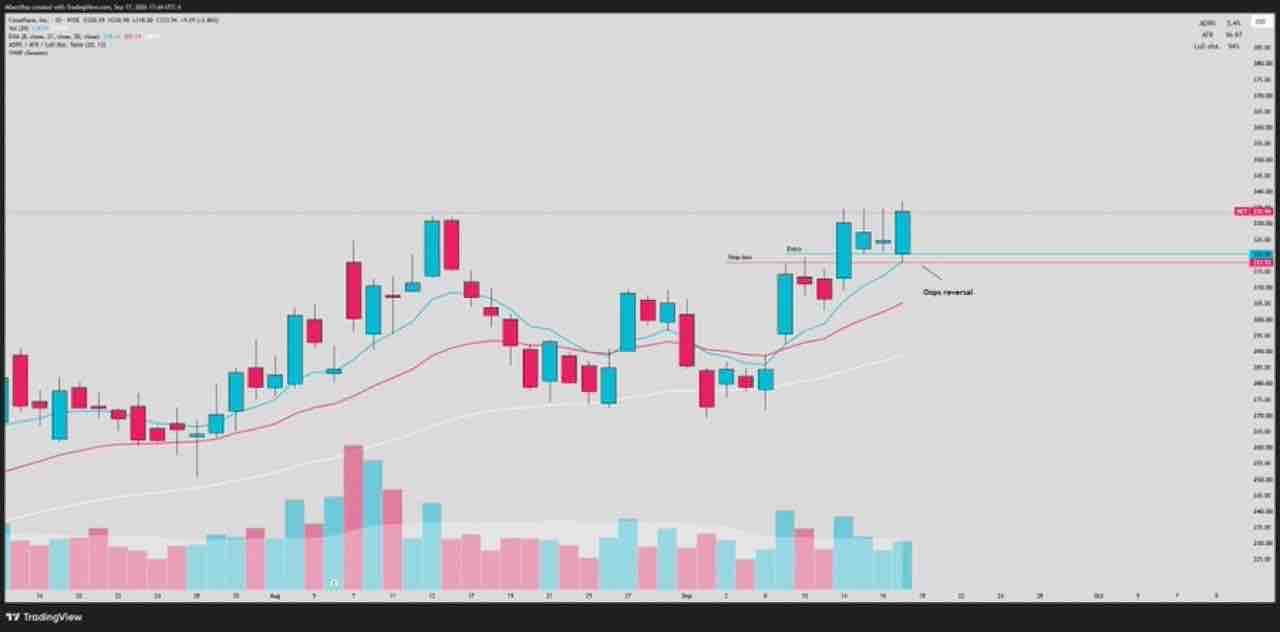
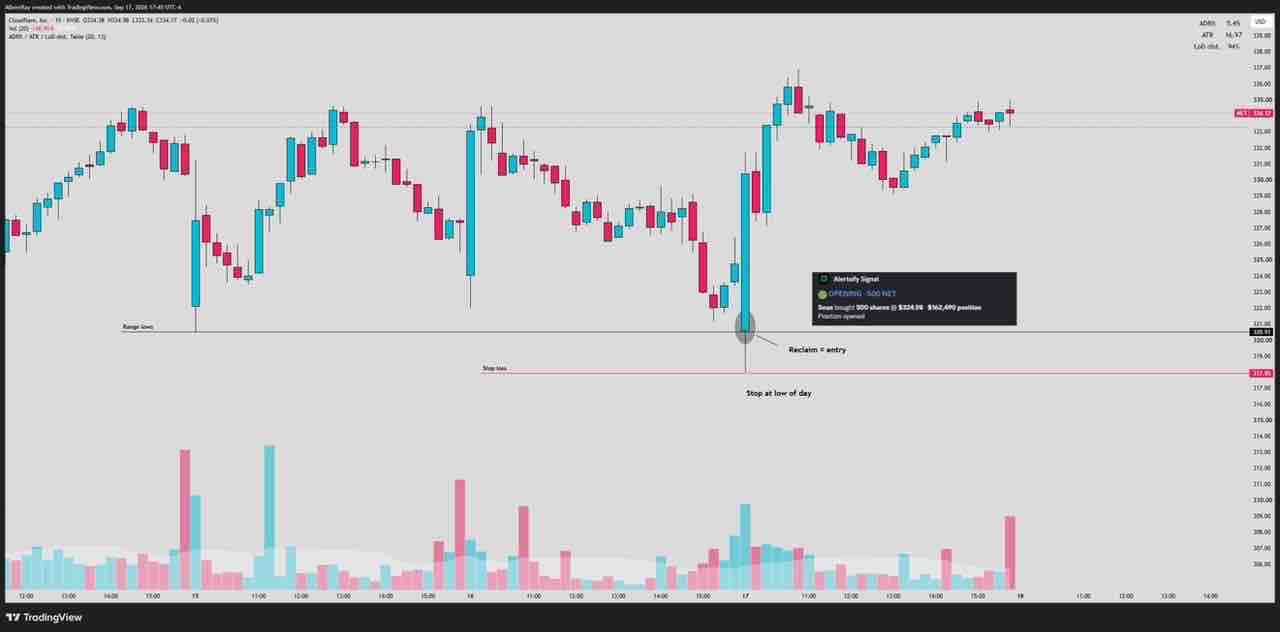
If you haven't added the oops reversal to your toolbox now is the time to do This is probably one of the most powerful entries in the market As you get to buy low, near a key level with very tight risk... The Oops Reversal: -Strong stock gaps down under key level(8 EMA, Previous days low, range lows) -Stock then reclaims the level with volume off the open -Late shorts get trapped, early longs get stopped out and forced to re-add the position -Stock reclaims key level and rallies back to high This sets you up for an incredible entry opportunity Today I bought $NET using this exact concept: -Gap down at the open -Tapped the 8 EMA -Reclaimed the previous days low + range lows -Triggered entry Strong recovery into close This is how you get into the best stocks in the market on weakness. read more
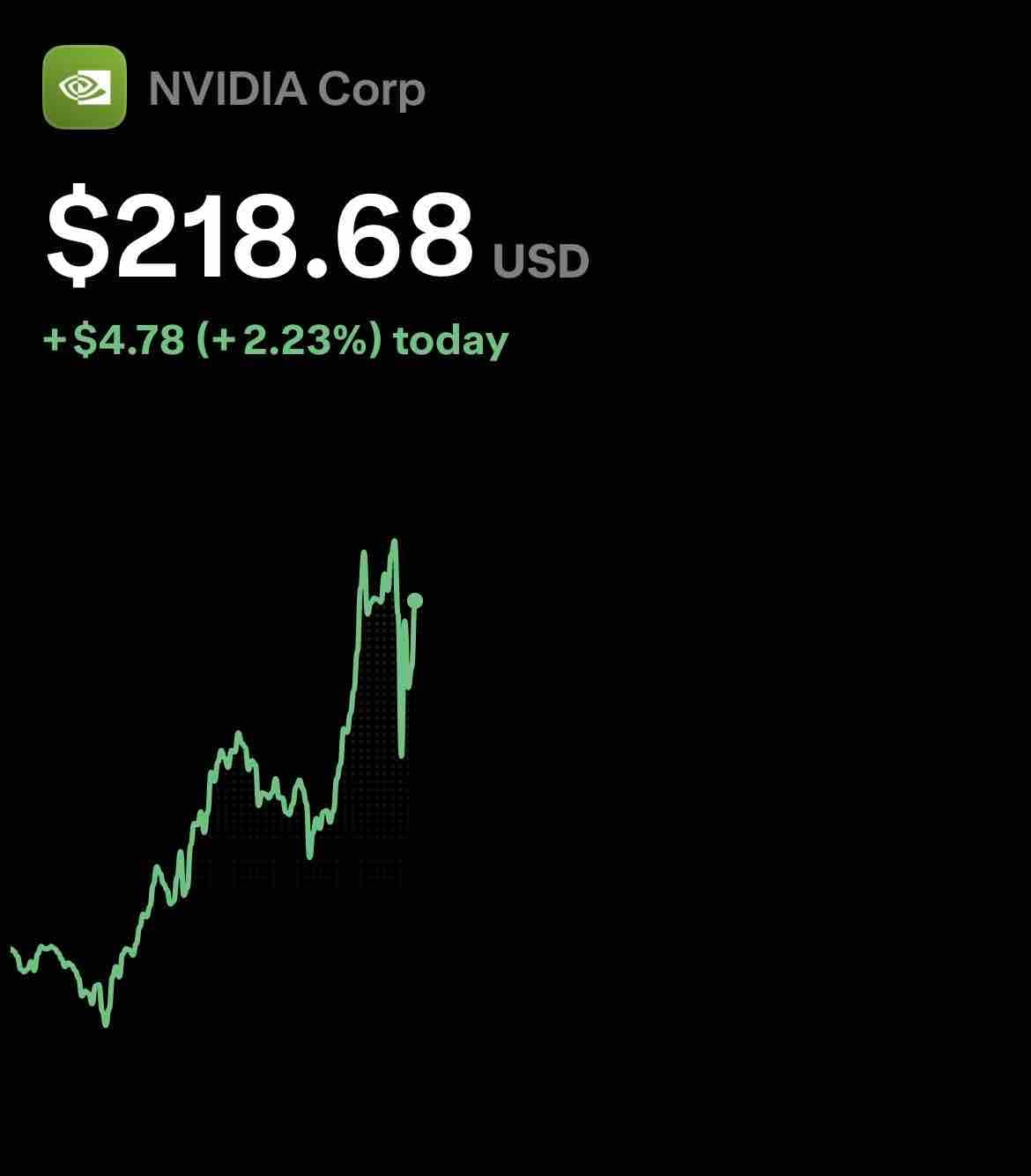
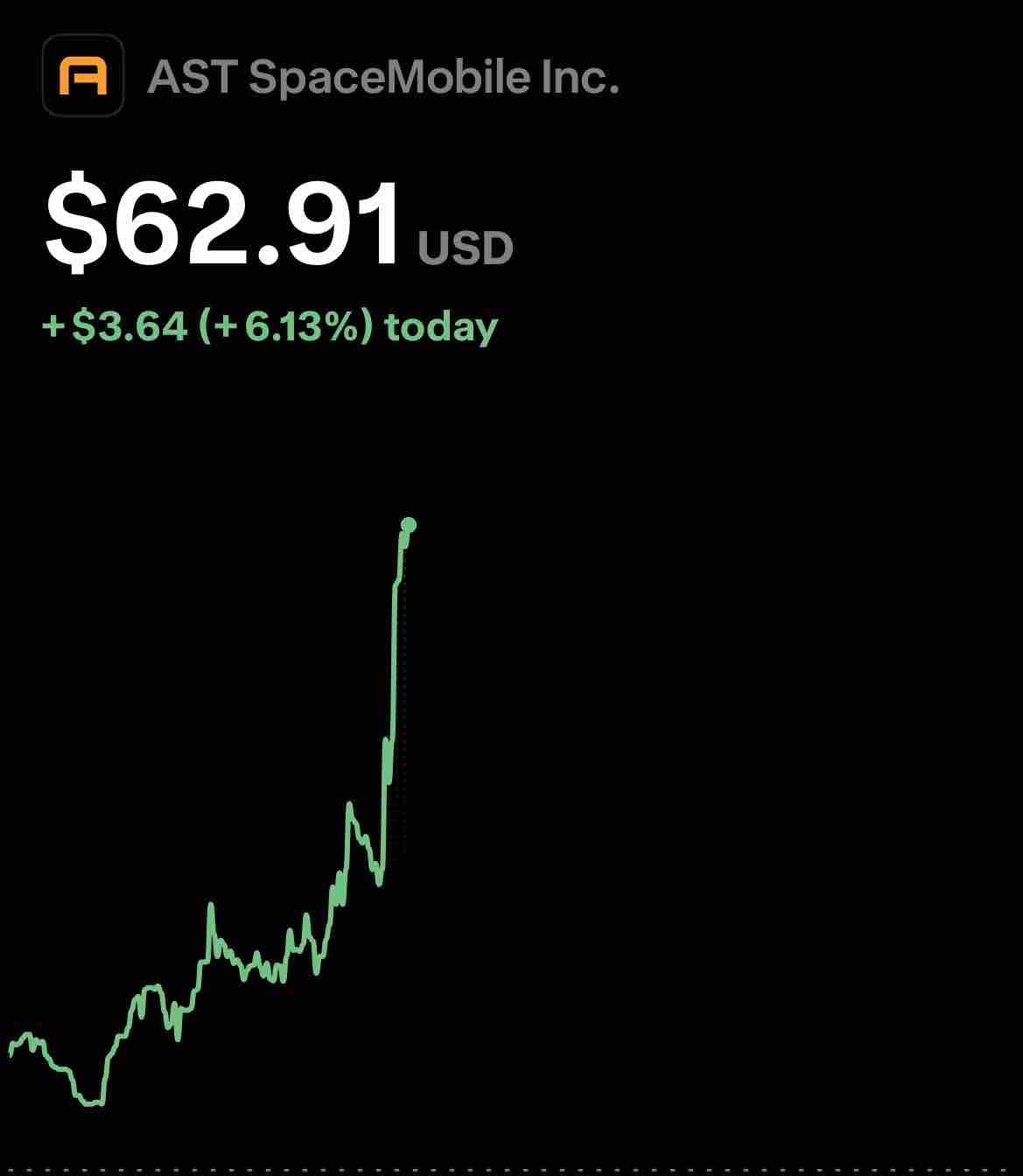
- $NVDA Nvidia’s Jensen Huang says the company expects to sell twice as many chips next year.. 🔥 - $HOOD +5% after SEC approved a temporary exemption to forbid limited onchain trading of tokenized equities. - $ASTS +6% on no news 🫡 Some stocks are erasing gains from pre-market, some are gaining.
Goooooood morning! Nasdaq nearly +2% pre-market 😮💨 Growth stocks are soaring: $NBIS +10% $AEHR +7% $CRDO +5% $BE +5% $AAOI +5% $VRT +5% $COHR +4% $AMD +4% $ASTS +4% I can’t lie, this was not on my radar, but seems like JPMorgan was correct!read more
I've been going through these names lately, and what really catches my attention isn't just the potential upside. It's what these companies are actually building. $SOFI is trying to build a bigger financial ecosystem. $CRWV is riding the demand for AI computing. $CRDO is working on the connectivity that keeps AI infrastructure moving. $APP has built a strong business around mobile advertising and monetization. $ORCL keeps becoming more important as cloud and AI infrastructure expand. $ASTS is taking a very different approach with satellite connectivity. $NBIS is another AI infrastructure name I'm keeping an eye on. $VST gives me exposure to something the AI boom can't avoid: power. And $XPEV is a completely different story, with EVs and intelligent driving at the center. I'm not looking at these numbers and assuming every stock is going to hit the targets in the graphic. That's not how I see investing. I'd rather understand the business first, then think about the valuation, the opportunity and what could go wrong. Some of these companies are already established. Others still have a lot to prove. But that's what makes the research interesting to me. I'm keeping these on my radar and letting the businesses, not the hype, do the talking. Which one would you research first?read more