Financial Lesson: The Income Statement
I’d like to go back to more informative posts, so today we’re going to take you through the basics of the Income Statement. It’s important to understand how to read these documents because they display how well a company is doing financially. As always, these posts are simplified for the sake of max character count and for beginners to understand. There’s always much more to go into with these topics.
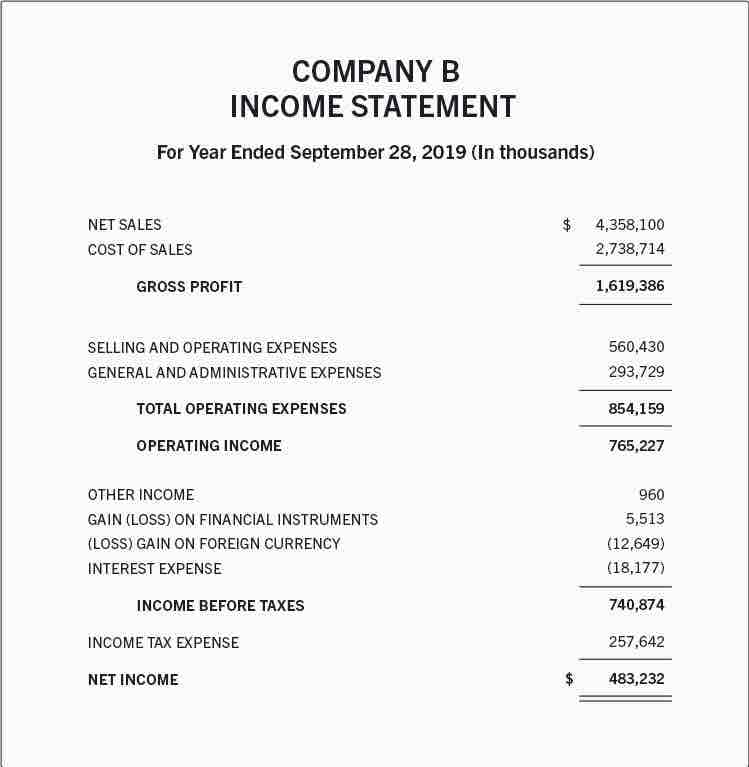
First of all, how do we define an income statement? Simply put, the statement of income shows the company profit or loss and details how they got to that situation. This statement includes 4 major ideas:
- Revenues
- Expenses
- Gain/Losses
- Net Income/Earnings
It’s important to remember not every financial statement will look the same for each type of business, and some may be longer than others.
Revenue - This section details how the company makes their money. This will be different for each type of business. For a product based business (a retail store or any store that sells physical items) for example might have “Product Sales” as their main source of income. This is the money they earned from selling store products. A service company however (something that sells a service like a haircut) might have “Services” as their main income. This is when something like a hair salon will receive payment for cutting your hair. Adding up the total received for your product or services will give you the total revenue. For products there’s also a Cost of Goods Sold section we won’t get into, however it’s simply how much the products costed before you sold them for (hopefully) a profit.
Expenses - Once we have the revenue, we have to take off the expenses. These are anything that cost the business money. There can be a wide variety of costs in this section such as rent, hydro, internet, gas, maintenance, taxes, debt, insurance, fees, utilities and more. All of these things costs the business money to continue operating and therefore are taken off of the revenue. Once you combine your expenses you will receive the total amount of expense to the company.
Gains/Losses - This section you may not see on every income statement however it can occur. These are any extra transactions that occur at the company that have an abnormal gain or loss. This is usually an extra expense or revenue that would not always take place such as an emergency payment or the sale of a company vehicle after years of use. These are deducted or added at the end after revenue and expenses were listed, and could be found under a different name such as “non-recurring items”.
Net Income/Earnings - Once you have your revenue and expenses from the company you will subtract any expenses from revenue to receive your companies net income or earnings. There is usually a pre-tax and post-tax number listed as well to see your profit before and after paying government tax. Your post-tax number is how much money the company is left over with after all expenses have been paid and accounted for. This is what money is left in the bank for the company to use for future endeavours or purchases. This isn’t always a positive number however, from an accounting standpoint there may be reasons to have negative income such as tax purposes. However overall, the general idea is you want a company to increase its income year-over-year to show its generating a profit and increasing sales volume.
This covers the basics of the income statement for those who are new to financial documents. Like I mentioned, there’s more to go into such as corporate vs non-corporate statements, and especially for investing things such as EPS for investors I didn’t cover here. I plan to continue more posts on topics like this and you can always request something if you want more detail into other areas. Listed below is also a picture of a very basic income statement I found online to get an idea of how they look. As always do your research, and happy investing!