Financial Lesson: The Statement of Cash Flows
Today we’re going to be covering the third and major financial document for a company; the Statement of Cash Flows. Check out the other two posts if you haven’t already. Also with DMs now available, feel free to message if you have questions or need help.
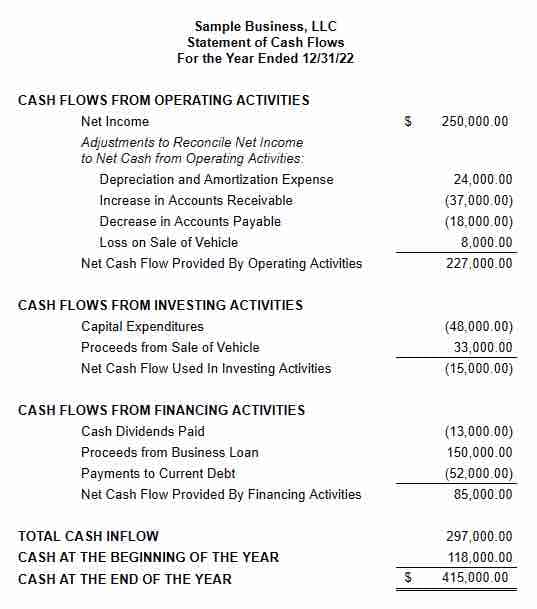
What is the statement of cash flows? The statement of cash flows tells us all the ins and outs of the company involving its cash. It tells us how they receive all of their cash, and how they spend all of their cash. This statement has three main sections:
- Cash Flows from Operating Activities
- Cash Flows from Investing Activities
- Cash Flows from Financing Activities
These 3 sections tell us how the company uses its money each year and how they receive it as well. The different with this statement is you’ll often find that some of the sections have negative balances while others have positive. This is common and not necessarily a bad thing, since some sections may include paying off debt or other payment activities. The statement includes both inflows and outflows of cash, and therefore you will have a mix of positive and negative numbers (which are separated by brackets to declare it’s a negative number).
Operating Activities - This first section describes how the company uses cash for everyday activities. Operating activities included things like net income, accounts payable, accounts receivable, depreciation, inventory, etc. When the company does things like making money from customers, paying off other businesses, depreciating vehicles, they are all listed under this section to show how much they’ve earned and sent out based on business activities. You’d usually want this section to be positive overall and growing year over year.
Investing Activities - This section is as you’d imagine, it’s the cash inflows and outflows of a company’s investments. This isn’t necessarily what you’d think as investments such as stocks, but rather things that help the business grow such as land, equipment, payments for acquisitions, sale of major items, etc. These are all items that help the business either grow, or receive cash from the sale of an investment. These are usually long-term sales or buys and are used for company expansion. This section does not necessarily have to be positive as the company could be buying useful investments, however it’s important to understand if these investments are actually useful or just a waste of cash.
Financing Activities - This final sections details the cash that comes in and out from anything related to the financials of the company. This might include payment of long-term debts, paying dividends, company stock, interest, lines of credit, bonds, etc. This is usually helpful to investors to see the dividends they pay out, if the company buys back shares, or other ways the company might receive cash. Once again, this section does not have to be positive as they could be paying off long-term debts or buying back shares of the company. As always, you should instead see if they are using their cash effectively and if the negative number on the statement is justified.
After those sections, you will usually find a final area that dictates the change in cash from other periods, and how much the company is leftover with. A good rule of thumb is that you want the company to increase its cash on hand each year, and if they don’t it should be for a solid reason such as buybacks or debt payoff.
That sums up the final major statement of a company, and if you haven’t already check out the other two posts on the Balance Sheet and the Income Statement. Hopefully these have been insightful to you, and I will continue making more informative posts all the time. As always, do your research and happy investing!