Have Dividend Stocks Peaked?
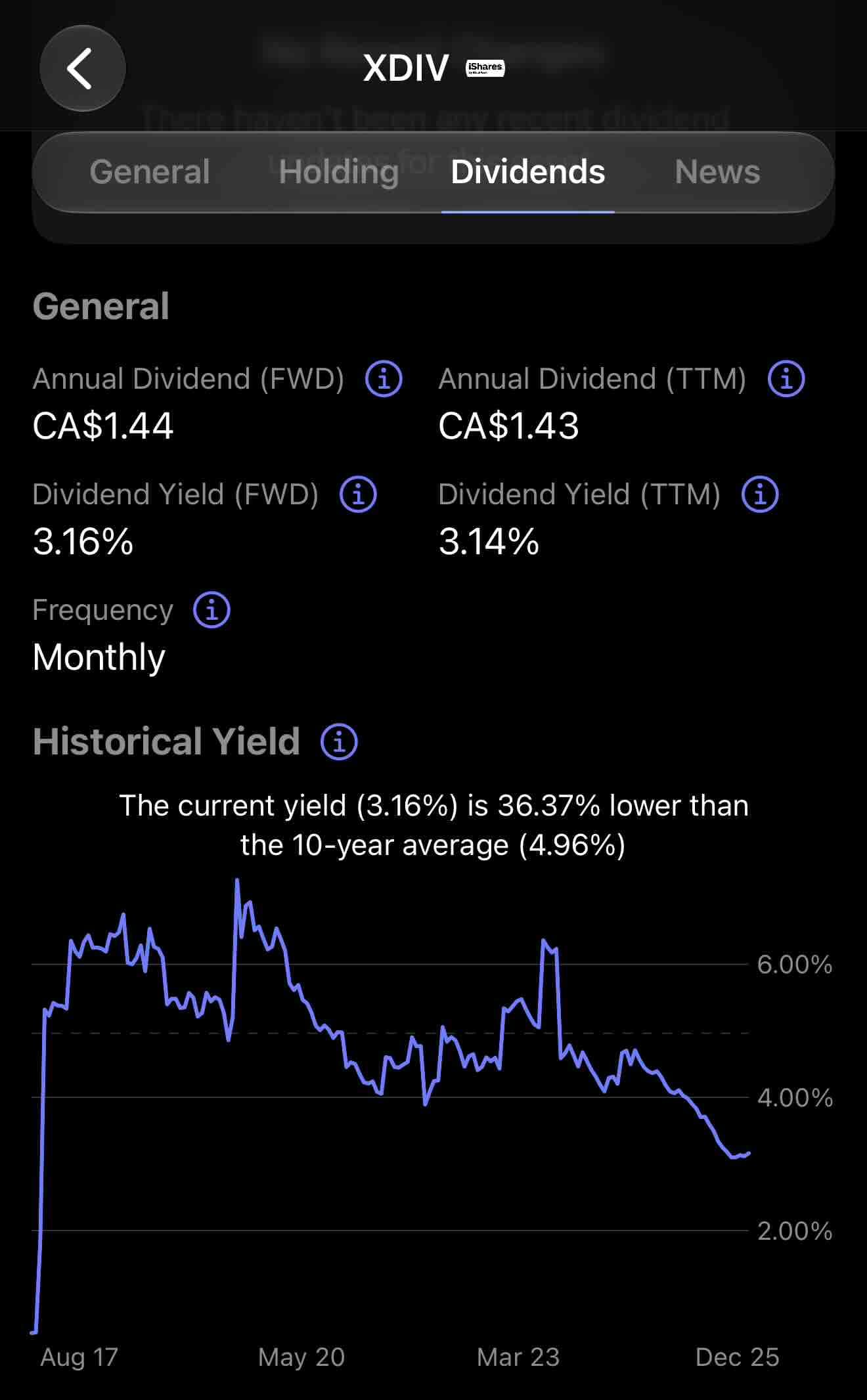
I use the iShares Core MSCI Canadian Quality Dividend Index ETF — XDIV as one of my favourite broad indicators for the health, valuation, and price appreciation of Canadian dividend stocks.
It is not a perfect indicator. But because XDIV owns many of the classic Canadian dividend sectors — banks, pipelines, telecoms, utilities, energy, insurance, and other mature cash-flow businesses — it gives a useful real-world view of where Canadian dividend valuations are trading.
The important thing I will argue with dividend stocks is that yield is not just income.
Yield is valuation.
When the yield is historically high, the market is usually pricing in fear, recession risk, higher rates, earnings pressure, or some combination of all of the above. When the yield is historically low, the market is usually pricing in optimism, lower risk, higher valuations, or future growth.
That is why I watch XDIV closely.
At the 2020 COVID panic low, XDIV traded down to roughly $13.74 CAD per unit in March 2020. At that time, the ETF’s annual cash distribution for 2020 was $0.864 CAD per unit.
That means the yield on that panic-level price was 6.29%.
That was the opportunity.
Not just a cheap price.
Not just a high current yield.
But a chance to buy quality Canadian dividend stocks at a historically depressed valuation and lock in a very attractive yield on cost.
Since then, XDIV’s annual distributions have grown substantially.
Actual annual distributions per unit were approximately:
2020 - $0.864
2021 - $0.984 +13.9%
2022 - $1.032 +19.4%
2023 - $1.120 +29.6%
2024 - $1.274 +47.5%
2025 - $1.452 +68.1%
So someone who bought XDIV in 2020 at panic-level prices did not just get capital appreciation.
They also saw their annual income per unit rise from about $0.864 in 2020 to about $1.452 in 2025.
That is an increase of 68.1%.
That is the power of buying dividend stocks when yields are historically high vs their average long-term yield.
You are not just buying income.
You are buying future income growth at a much better starting valuation.
---
Example: $1 Million CAD Invested in XDIV Near the 2020 Panic Low
Assume an investor bought $1,000,000 CAD of XDIV at approximately $13.74 CAD per unit in March 2020.
The number of units purchased would have been approximately 72,780 shares.
Annual income in 2020
Using the actual 2020 annual distribution of $0.864 per unit, the investor would have collected approximately $62,882 CAD in annual distribution income based on the 2020 distribution rate.
Annual income in 2025
Using the 2025 actual annual distribution of $1.452 per unit, the annual income would have grown to producing approximately $105,677 CAD in annual income.
That is an increase of $42,795 more annual income than in 2020.
---
Capital Appreciation
The income growth is only half the story.
If that same investor bought XDIV at approximately $13.74 CAD in March 2020 and the ETF is now trading around $45.82 CAD, the capital value of the position would be the original $1,000,000 CAD investment now worth approximately $3.34 million CAD, excluding dividend reinvestment.
The capital gain would be approximately $2.34 million CAD.
So from the March 2020 panic low to today, the ETF price alone has appreciated by roughly 233%, before counting distributions.
That is why buying dividend stocks at historically high yields can be so powerful.
You get paid well to wait.
Then, if the cycle turns, you get both:
1. Rising income
2. Capital appreciation
That is the magic combination.
---
But That Also Creates Today’s Problem
The same math that made XDIV attractive in 2020 makes me more cautious today.
In 2020, and again in 2022 the market was handing investors historically high yields because prices had collapsed.
Today, after a massive recovery in price, yields have compressed.
When yields compress, investors have already captured a lot of the upside.
That does not mean XDIV or Canadian dividend stocks must crash. But it does mean future returns are now much more dependent on continued earnings growth, dividend growth, lower interest rates, or further valuation expansion.
And that is where I am becoming much more careful.
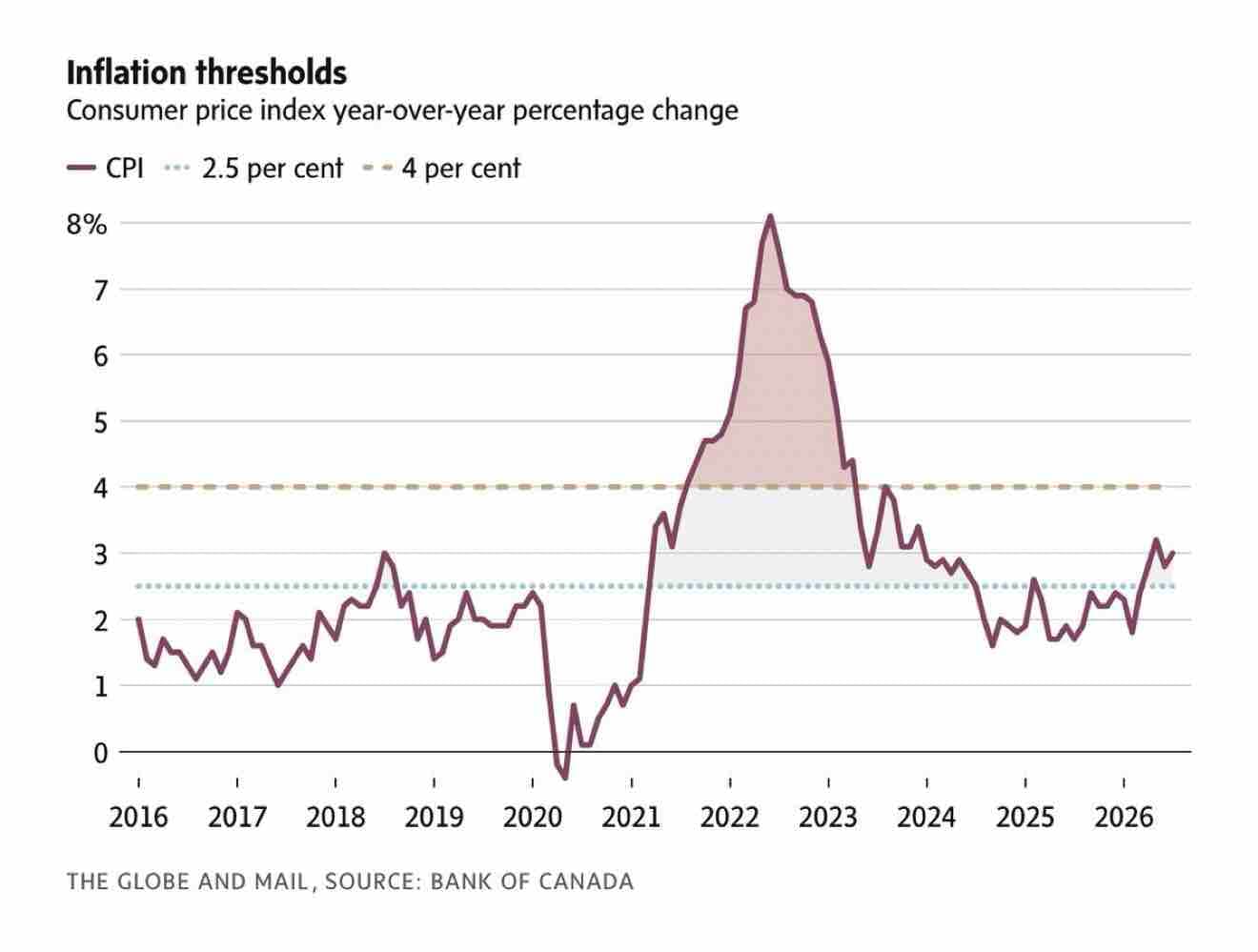
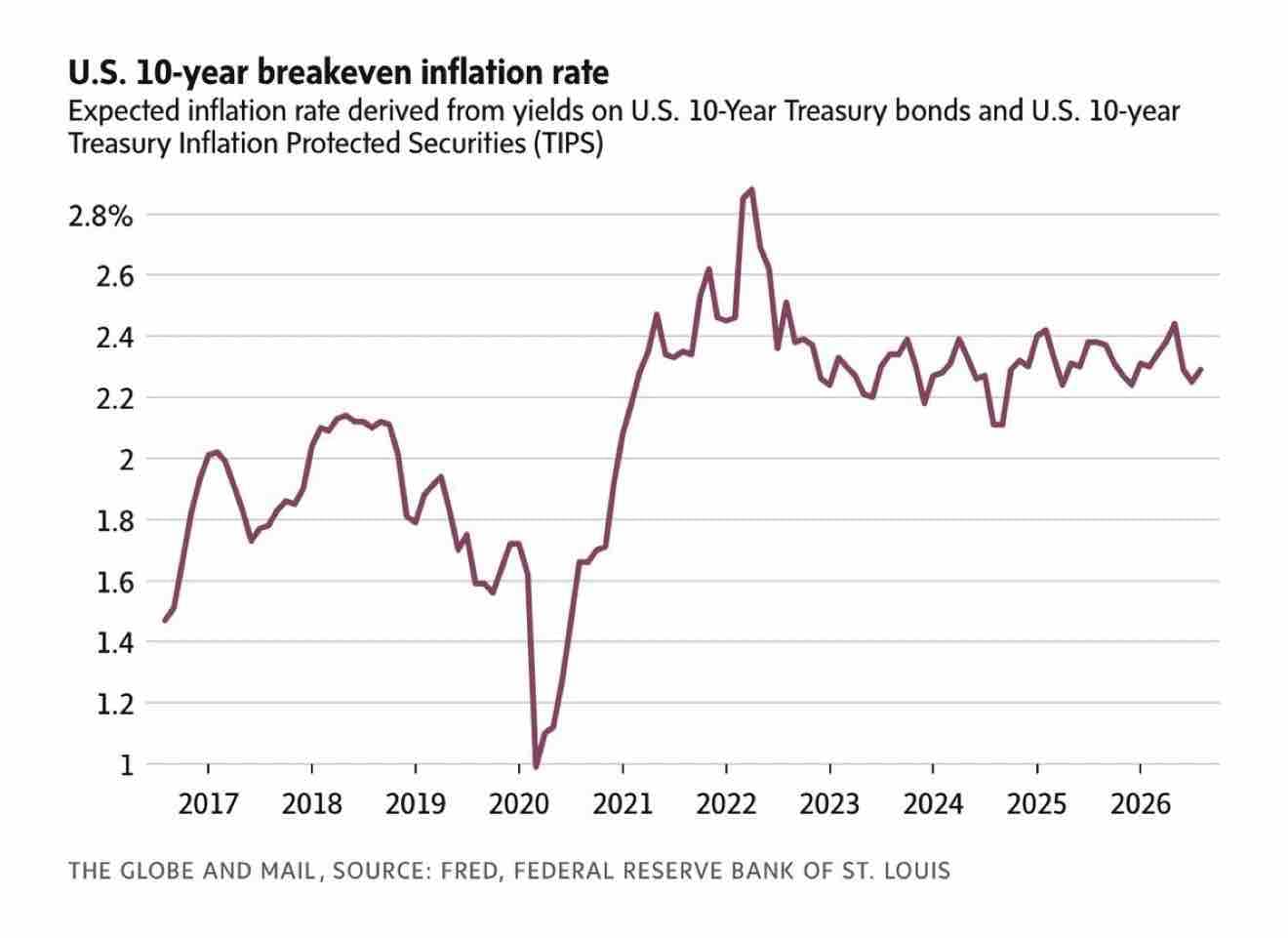
We are no longer in a world where interest rates are pinned near zero. We are in a post-COVID world of larger government deficits, persistent inflation risk, higher refinancing costs, and a long end of the bond market that can still reprice violently.
Dividend stocks do not trade in a vacuum.
Telecoms, utilities, pipelines, banks, REITs, and other dividend-heavy equities compete directly with the risk-free rate.
When 10-year, 20-year, and 30-year government bond yields rise, highly astute professional investors naturally ask:
Why take equity risk for a 3% to 4% dividend yield if safer bonds are offering competitive returns?
That is especially true for interest-rate-sensitive dividend stocks and “bond proxy” sectors.
- Telecoms.
- Utilities.
- Pipelines.
- REITs.
- Infrastructure.
These are wonderful take or pay businesses when bought at the right price. But they can become vulnerable when valuations are high and long-term bond yields rise as they have done recently.
---
My Investing View
I do not pretend to be able to time the market on any given day, week, or month.
But I do believe investors can make intelligent medium- to long-term decisions over 3, 5, 10-year cycles.
That is where yield matters.
That is where valuation matters.
That is where patience matters.
Dividend stocks should be analyzed like bonds: what yield am I getting today, what growth am I likely to receive, and what risk am I taking to earn it?
When dividend stocks trade at historically high yields, I want to be a buyer.
When they trade at historically low yields after a major price run, I want to be much more cautious.
This is not day trading.
It is cycle awareness.
And the XDIV example shows exactly why.
A $1 million investment near the 2020 panic low could have grown to roughly $3.34 million in capital value, while annual income rose from about $62,882 to over $105,000 at the 2025 distribution rate.
That is an extraordinary outcome.
But it happened because the starting yield was high, the price was depressed, and fear was everywhere.
Today feels much closer to the other side of that cycle.
I have made good money having converted my portfolio in the aftermath of 2022 and inflationary impact to dividend stocks completing the transition at the end of 2024. That was 2 years of painfully waiting for inflation and interest rates to fall.
But I earned incredible dividends along the way.
But when yields compress materially, prices rise substantially, and the macro environment becomes less forgiving, I think it is prudent to take some profits.
Not sell everything.
Not abandon dividend investing.
Not abandon Canada.
But trim.
Rebalance.
Raise cash.
And keep only the highest-conviction names.
For me, that means holding a core of the strongest, most regulated, most systemically important Canadian businesses — companies with essential services, durable cash flows, wide moats, strong balance sheets, and sustainable dividend growth.
The “too important to fail” type businesses.
- Banks
- Energy
- Pipelines
- Utilities
But even great companies can become expensive.
Even great dividend stocks can underperform if bought at the wrong yield (note I didn’t say price).
If I have learned one thing over 30 years of investing, it is that having a strategy matters — but patience matters even more.
Markets can stay irrational for a while.
But over full cycles, valuation still matters.
Dividend yields mean-revert.
Bond yields matter.
Inflation matters.
The cost of capital matters.
And eventually, markets self-correct back toward long-term valuations.
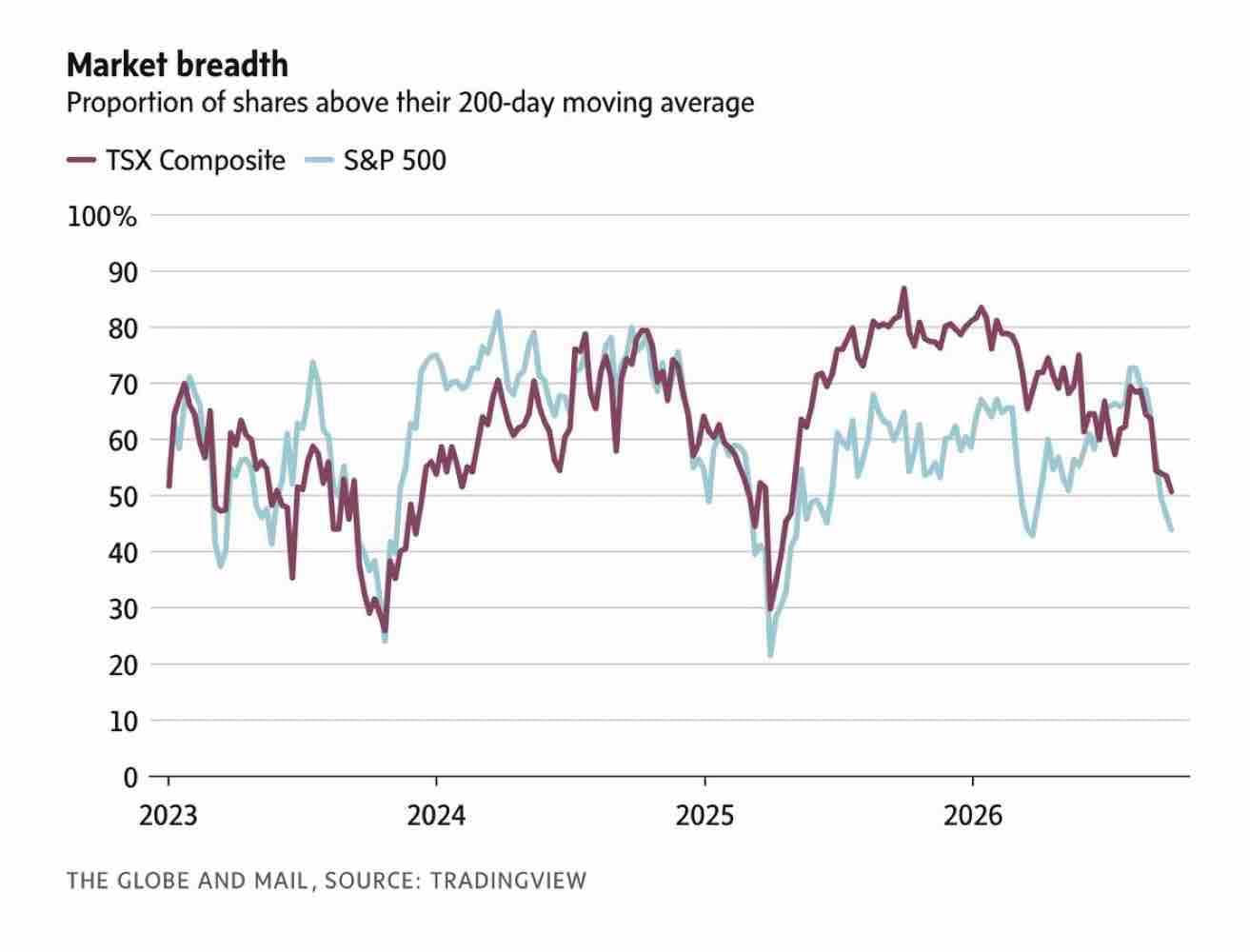
For that reason, I am now looking to trim some dividend stocks that have had tremendous outperformance versus the S&P 500 and the TSX, while keeping a core position in the highest-quality names I still want to own for decades.
I am not bearish on dividends.
I am not bearish on Canada.
I am not bearish on dividend investing.
I am simply recognizing that the best time to buy dividend stocks is usually when nobody wants them — when yields are historically high, prices are depressed, and fear is everywhere.
Today feels much closer to the other side of that cycle.
So I am taking some profits, staying patient, and waiting for the next opportunity when yields once again tell me the odds are back in my favour.
Note: This is not investing advice, but my personal experience and views on dividend stocks. Do your own research and due diligence.