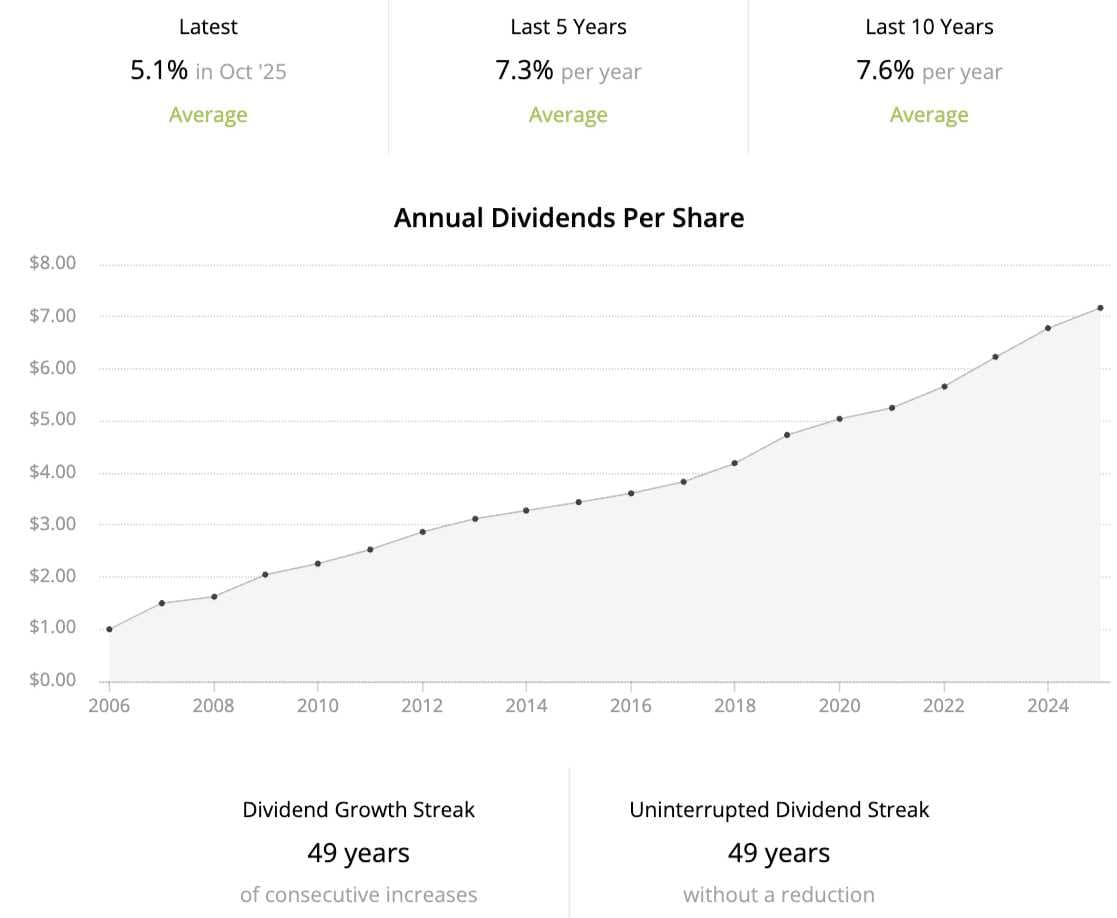
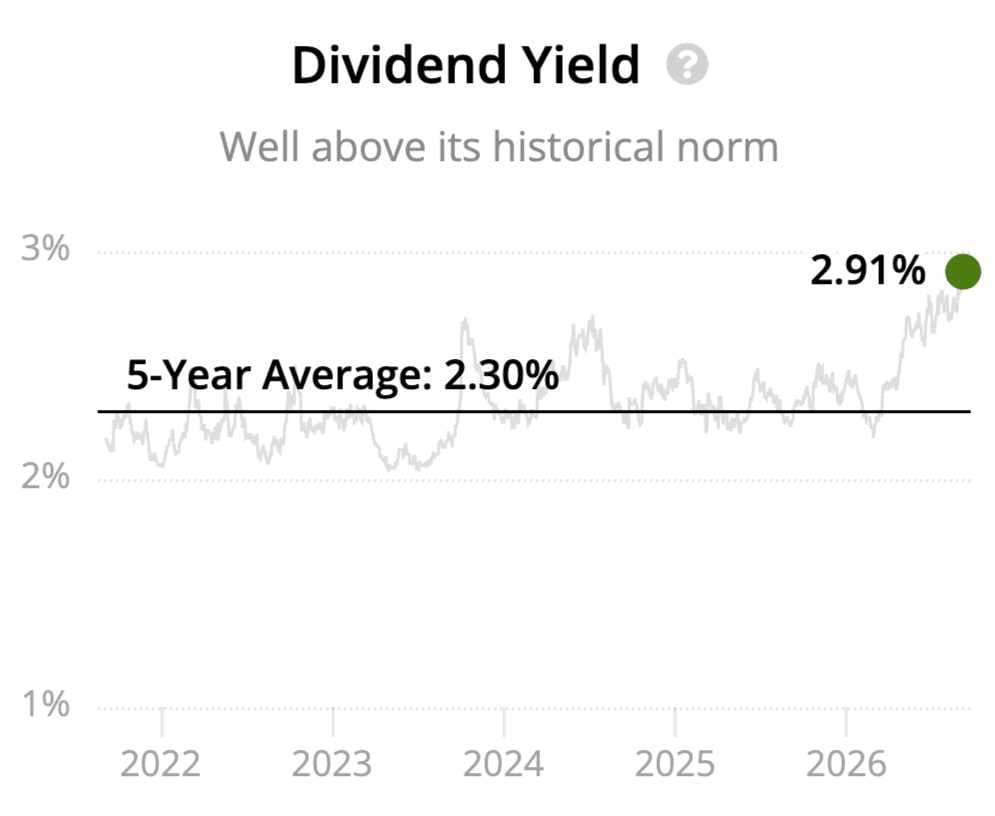
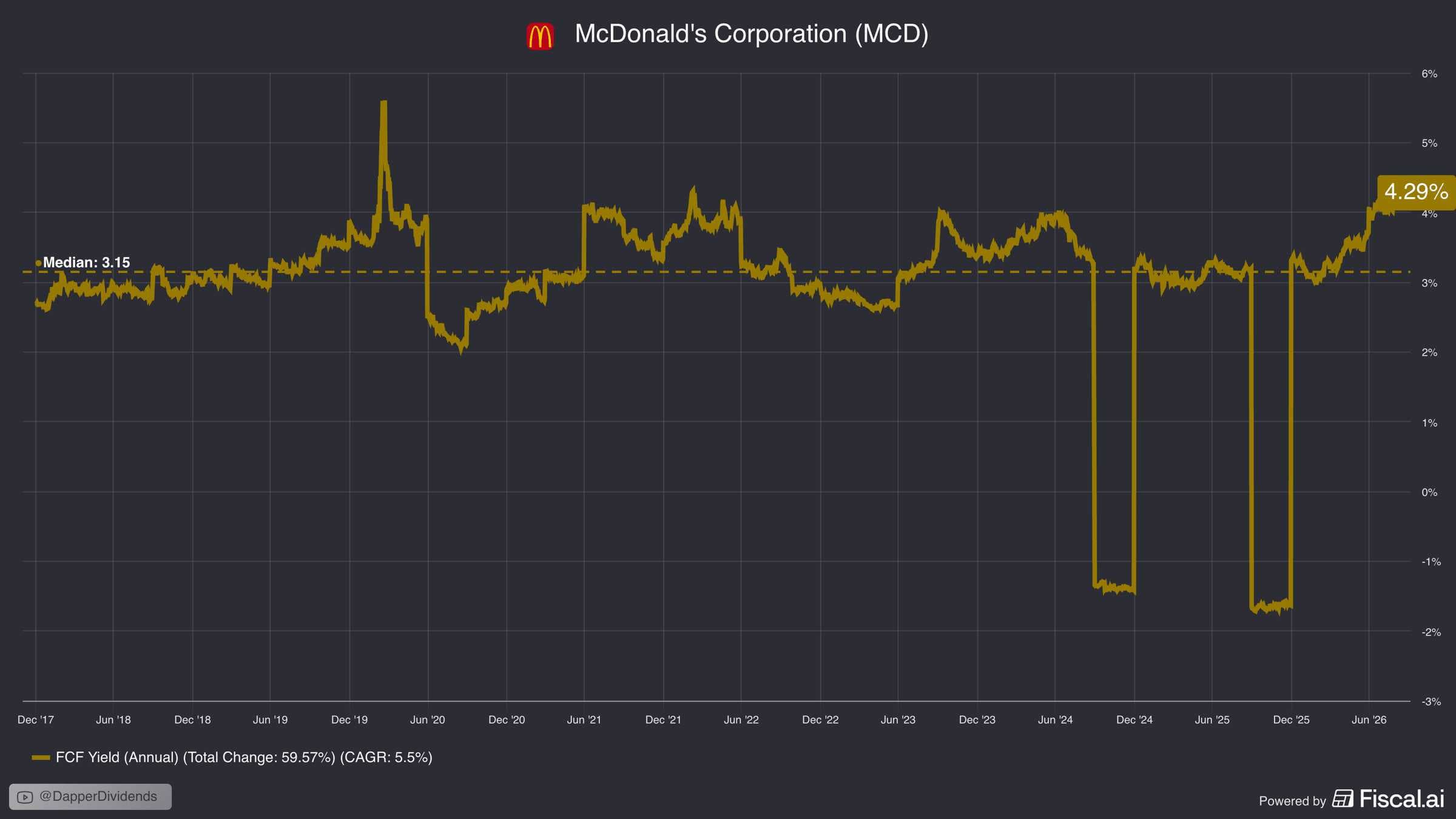
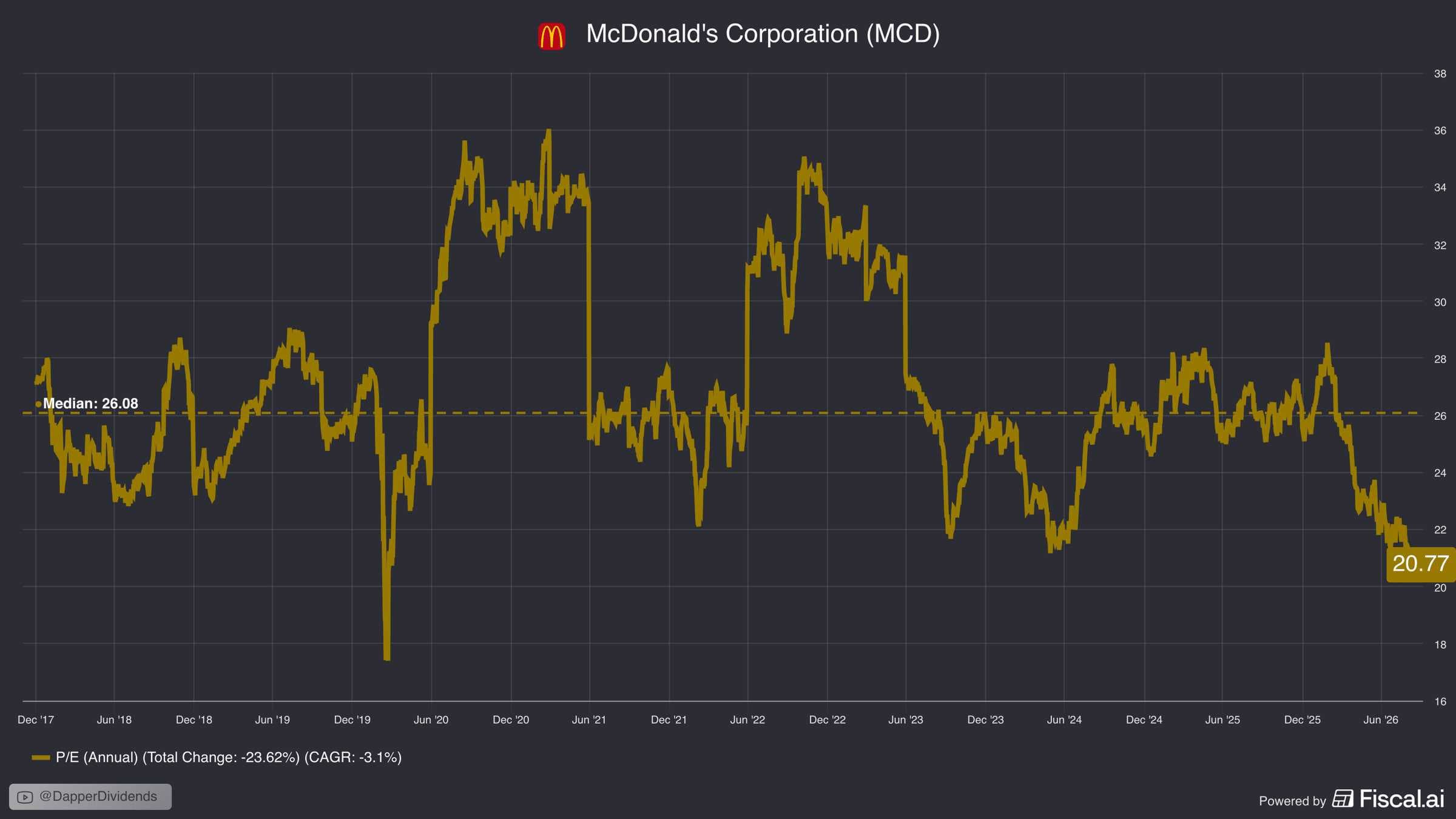
17 days after selling McDonald's ($MCD), I bought it back. But not because I'm lovin' the food… I first started buying MCD during the COVID crash in our taxable "overflow" account, at as low as $132, and ended up with 11 shares at a cost basis in the mid-$180s. Then our 20-year-old roof took storm damage, and we needed a new one, so we sold all of our McDonald's at $279 to help pay. But what surprised me most was that I missed owning it! This past Friday, I was working at the DeKalb, IL post office, and I could see a McDonald's from where I was. Every single time I looked up, people were going in and coming out. Then around lunch, two postal employees came back carrying McDonald's bags and drinks. That did it. On my lunch break, I sold some VTI and started a McDonald's position again. What's funny is that I almost never eat there. The only time I really do is at the airport, when we leave the house in a hurry and need something quick and cheap before boarding. But I don't have to be a customer. I just have to notice everybody else is. One thing I'm really lovin' is how former McDonald's CEO Harry Sonneborn famously said, McDonald's isn't in the burger business. It's in the real estate business. About 95% of the restaurants are run by franchisees who pay McDonald's rent and royalties, and McDonald's owns most of the land they sit on. That's why it has a very high 46% operating margin and 49 straight years of dividend raises (soon to be 50 years and a Dividend King this fall). One of McDonald's tasty twists is negative shareholder equity on paper, which sounds scary. It's not for two reasons: First, they've paid out more in dividends and buybacks over the years than they kept, and that's what drives the number below zero. Second, and what I find fascinating, is that all of McDonald's real estate is on the books at what they paid for it. So let's say they bought a corner lot for $700K in 1976, and it's worth $20 million today — the balance sheet still says $700K. McDonald's has a massive amount of hidden net worth that no ratio I know of shows. But I do have a bias I'm working through. Part of me wants to wait for $180 again, but that's dumb. The company earns more now than it did when my average cost was in the $180s. A more profitable business shouldn't sell for the same price it did five years ago. So instead of anchoring to an old price, I'm looking at what I'm paying for the earnings today: P/E, or price-to-earnings (showing how many dollars you're paying for each dollar of earnings), is about 20.8. Its average over the last nine years is about 26, so currently you'd pay $20.80 for every $1 of McDonald's earnings. Free cash flow yield, which shows you the exact percentage of actual cash a company makes compared to what its stock costs, is 4.3%. Its median is 3.15%. Dividend yield is 2.9%. Its 5-year average is 2.3%. By all three, this is the cheapest McDonald's has been in years. So, why is it down? U.S. traffic went soft. Lower-income consumers are pushing back on prices, and CEO Chris Kempczinski said on the last call: they don't have a strategy problem; they simply didn't execute at the level they needed to in the second quarter. I give him credit for honesty, but that's a strike against him, and I think his leash just got a lot shorter. And if you haven't seen the video of him eating the Big Arch burger, you have to watch it here. He got roasted because it looks like the man has never held or eaten a burger before! If things don't turn around soon, I think they'll replace him. But there's another thing you might not know: McDonald's corporate can recommend a price, but the franchisees don't have to follow it. Kempczinski said U.S. restaurants haven't consistently executed the discount strategy, and only about 60% to 65% of the system had put in the "under $3 menu," which is supposed to include 10 items. Thousands of independent owners, each doing their own thing. It's like herding cats, for better or worse. Turning around McDonald's is like turning around the aircraft carrier I served on, the USS John C. Stennis (CVN-74). It can't change direction like a small boat. It's slow, but once it turns, it turns. These things take time, and that's why I'm buying with confidence. What pushed me into buying was that parking lot in DeKalb that looked packed every time I looked at it. But the data says something different. U.S. same-store sales rose just 0.8% last quarter, and every bit of that came from higher checks — people spending more per visit — while fewer customers actually walked in. Placer.ai measured McDonald's U.S. visits down 4.5% from a year ago. So the lesson is that a busy lot doesn't tell you if it's busier than last year, and it turns out it wasn't. And on top of that, according to Inc., about 36% of McDonald's visitors come from areas where the median household income is under $50,000. Those are the people getting squeezed hardest right now, and they're the same customers McDonald's fumbled with its value menu. That looks like a broke-customer problem and a management problem, and both are fixable. I've been hearing since high school in the 1990s that McDonald's is finished. The Super Size Me documentary. Fitness fads. Fast casual dining. Now it's GLP-1s. It's 2026, and McDonald's is still growing, still profitable, and still the biggest restaurant company on earth. This looks like another in a long line of cycles, not a broken or dying business. Two things I'm watching, and if these break, I’ll reconsider adding more: U.S. guest counts. They need to stop falling and turn positive over the next few quarters. If traffic is still negative a year from now with a new value menu fully rolled out, then I was wrong, and it's structural. The October dividend raise. This would be year 50, and a solid raise of around 5% tells me management is confident. A token raise of 1% to 3% would be a warning. My plan: I'm buying in my Roth IRA, and I intend to never sell. Tax-free compounding, theoretically forever. In the $250s, I keep adding. The lower it goes, the more aggressively I buy. I don't use it. But I'm lovin' it. How about you? This is from the FREER weekly newsletter, which you can check out here 👉 https://dapper-dividends.kit.com/posts/i-never-eat-there-but-i-just-bought-the-stock
1,508 views
9 Comments
Jason @retiredjay · 23hEdited
Where did you get the info that their real estate is on the books for the purchase price? Thats a really interesting fact that makes a huge difference in their balance sheet. Easily 10s of billions of dollars. Edit.... So I just spoke with ChatGPT (as a 48 year old, thats a hilarious statement to me 🤣) and learned thats a pretty common practice. Thats a really interesting piece to consider when investing in a business. Thanks, Russ. You've piqued my interest in researching real estate holdings of my favorite companies! 👍
Tido @tidoatta · 7h
Excellent read. Your language is so very easily understood and digestible.
Carlyle @financial_twilight · 8h
Good take Russ. I had a couple shares of $MCD for I would say 6-7 years. Eventually sold out cause I wasn’t planning on adding more and wanted to consolidate the portfolio.
Damian @neuroticshrimp · 11h
I really like your reasoning, thanks for putting on my radar
See the full comment section 👀Sign up for the full Blossom experience!