Learn to separate the noise
Today is an unfortunate day for Nvidia, its shareholders, and arguably for American technology leadership. I am truly disheartened and disappointed.
My reaction to Jensen Huang’s resignation is not to dismiss governance, security, or personal-conduct concerns. Those issues matter. But they should be separated clearly and analyzed on their own merits — not collapsed into one emotional public spectacle.
A few thoughts:
- Jensen Huang is not a national-security enforcement officer.
He is an engineer, founder, AI chip architect, and CEO who built one of the most important technology companies in the world. Nvidia’s role in the AI era is not accidental. It was built over decades through technical vision, perseverance, and extraordinary strategic execution.
- If there were legitimate security concerns, they should have been handled with precision.
If certain companies, individuals, or counterparties were deemed suspect, then the appropriate response should have been clear guidance, formal restrictions, enhanced screening, and timely communication from the relevant authorities. A CEO cannot reasonably be expected to independently know in advance that every person or company he interacts with may later become the subject of government concern.
Megaspeed is not on the list of sanctioned companies. Even when this became an issue over a year ago, Megaspeed was not added to to the sanctioned list of companies nor the woman in question. So it remains a personal issue. Not national security after the fact and after a year Nvidia stopped doing business with them.
- The board failed to properly separate the issues.
There is a major difference between:
- personal misconduct;
- corporate-governance concerns;
- counterparty-screening failures;
- export-control compliance;
- national-security enforcement;
- and the actual operating fundamentals of Nvidia’s business.
These are different issues requiring different remedies.
- A more measured response may have been available.
Rather than forcing a permanent leadership rupture, the board could have considered alternatives such as:
- a defined suspension period;
- enhanced conduct requirements;
- a formal oath or code-of-conduct commitment;
- mandatory security briefings;
- stricter personal and corporate counterparty screening;
- strengthened compliance oversight;
- and clearer separation between personal relationships, business access, and national-security-sensitive matters.
- Personal transgressions should not automatically be confused with business fundamentals.
Consensual personal relationships, however embarrassing or disappointing, are not the same as fraud, product failure, market-share collapse, customer loss, or technological decline. Investors should be careful not to confuse reputational noise with economic reality.
- As an investor, the central question is always: what changes economically?
- Does this change Nvidia’s product roadmap?
- Does it change demand for AI compute?
- Does it change CUDA’s ecosystem advantage?
- Does it change hyperscaler dependence on Nvidia systems?
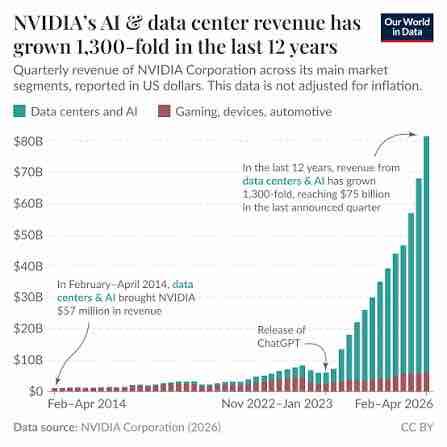
- Does it change Nvidia’s data-center growth trajectory?
- Does it change the company’s technological lead today, tomorrow, or over the next several years?
Those are the questions that matter.
- Nvidia’s fundamentals remain extraordinary.
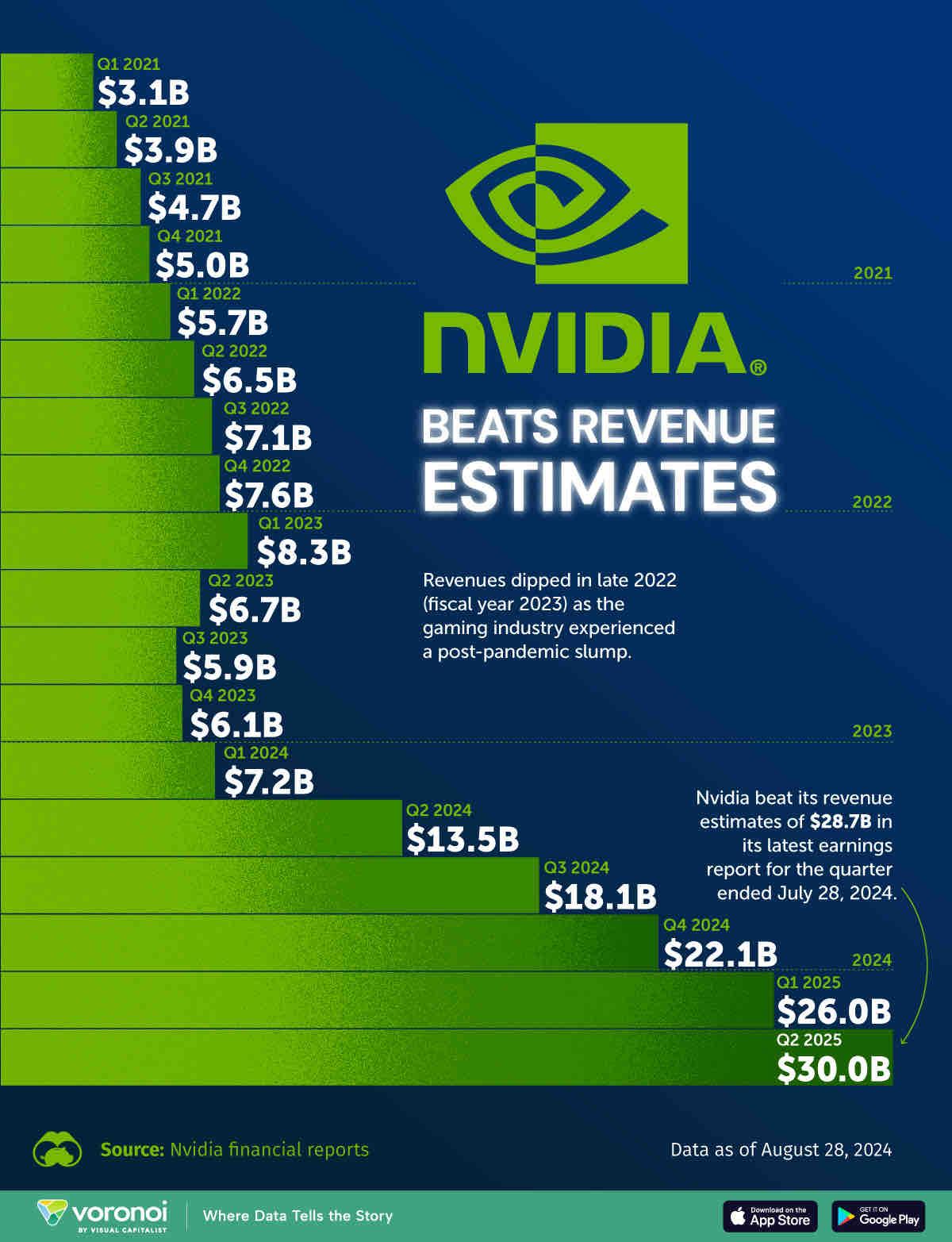
The company still sits at the center of the AI infrastructure buildout. Its chips, systems, networking, software ecosystem, and developer base remain foundational to the global AI economy. The world’s dependence on Nvidia did not disappear because of a leadership scandal.
- But founder leadership matters.
Jensen Huang was not a generic CEO. He was the strategist, founder, visionary, and cultural force behind Nvidia from the early 1990s onward. Losing that kind of leader is not trivial. Nvidia can certainly continue in the short term based on the strategy already in motion, but over the long term, the question becomes whether the company can maintain the same level of technical imagination and strategic boldness without him.
- The real risk is not immediate collapse. It is long-term institutional, cultural drift and vision decay.
Many once-dominant technology companies remained successful after their defining leaders or eras passed — but gradually became less inventive, less daring, and more bureaucratic. That is the concern investors should watch. Dell, IBM, Intel, AMD, and countless others that have become commodities from bureaucratic administrative oversight vs continuous innovation leadership.
- The U.S. should want its greatest technology companies to succeed.
AI may be the most important technological race of our lifetime. Nvidia is one of America’s most critical assets in that race. If there are security concerns, address them. If there are governance failures, correct them. If there are compliance gaps, close them. But destroying or weakening key technically innovative leadership without exhausting proportional remedies does not serve shareholders or national interests.
- Jensen Huang’s China argument also deserves serious consideration.
One strategic view is that U.S. advantage comes from keeping the world dependent on American chips, American platforms, and American software ecosystems. If China, developers, and global AI companies build around Nvidia hardware and CUDA, that dependence itself can be a form of American leverage.
- The counterargument is also serious.
Advanced chips can strengthen competitors and adversaries. Export controls may be necessary in some cases. But they must be applied coherently, consistently, and with full understanding of second-order consequences — including the possibility that overrestriction accelerates foreign self-sufficiency and pushes markets away from American technology.
- For investors, the lesson is simple: separate signal from noise.
Break the issue into components:
- What is personal?
- What is legal?
- What is regulatory?
- What is reputational?
- What is operational?
- What is economic?
- What is temporary?
- What is permanent?
Only after separating those layers can you determine what actually matters to the business.
At this moment, I see a great deal of noise, politics, scandal, and public appetite for a fall from grace. What I do not yet see is evidence that Nvidia’s economic engine, competitive position, or central role in the AI buildout has fundamentally changed.
That does not mean the issue is irrelevant. It means investors must remain disciplined.
The question is not whether the headlines are dramatic. They are.
The question is whether the long-term economics of the business have changed. Nvidia currently holds 80% plus market share. The market is expected to quadruple on a conservative basis from here and Nvidia will likely own only 50% market share but that alone is a massive multiple of the business investor should do the math on.
And on that question, I believe Nvidia remains one of the most important companies in the world — even if this moment represents a deeply unfortunate loss of founder leadership at a critical time in the AI era.
Today, is truly an unfortunate day. I never thought I would see another Steve Jobs type sacking.
For the record, I am not advocating for Nvidia stock or investing advice. I am advocating for understating noise and how to isolate the issues and what is in fact an investment issue vs otherwise.
Conduct your own due diligence and research.