Ottawa’s $540B Tax Bill: What It Means for you 🇨🇦
—
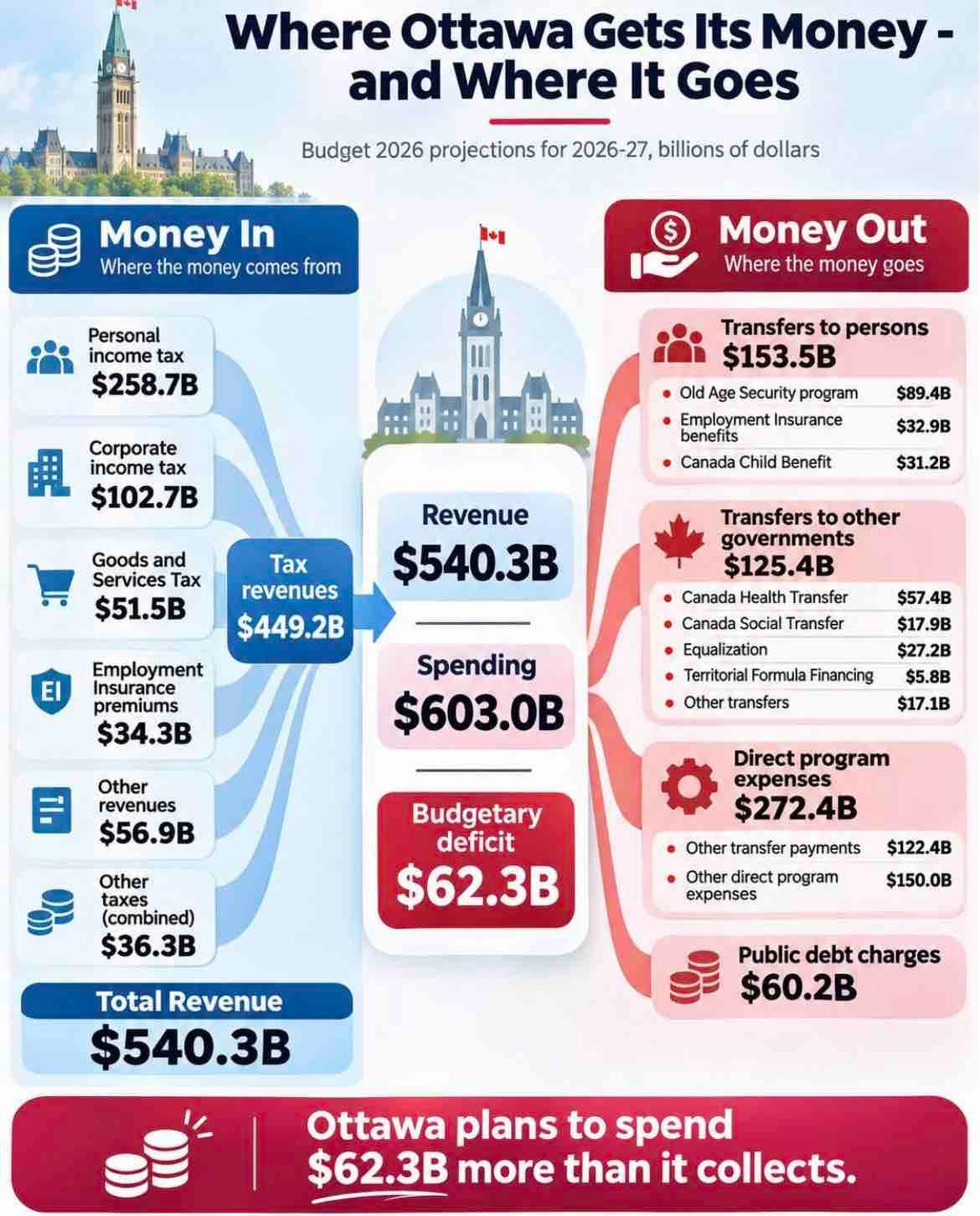
Looking at 🇨🇦 Ottawa’s 2026–27 fiscal numbers gives a huge reality check on where tax dollars come from, and why tax-smart investing matters more than ever for Canadians:
1. Where the Money Comes From ($540.3B Total Revenue)
- Personal Income Taxes: $258.7B (almost half of every dollar collected!)
- Corporate Income Taxes: $102.7B
- GST: $51.5B
- Other Revenue: $127.4B
2. The Spending Gap ($602.6B Total Expenses)
- Even after collecting $258.7B directly from individuals, Ottawa still faces a $62.3B deficit (about 1.8% of GDP).
- Whether you believe government needs to rein in spending or invest more in healthcare, defence, and infrastructure, one truth remains:
The money has to come from somewhere, preferably a real plan rather than vague promises of "future economic growth."
3. Investor Takeaway
Shifting more revenue toward consumption taxes (like the GST, which visitors also pay) and easing corporate taxes would help Canadian businesses stay globally competitive.
Meanwhile, with personal taxes carrying nearly 50% of the federal load, sheltering your investments inside TFSAs, RRSPs, and FHSAs, and keeping fees ultra-low, is the single best way to protect your after-tax returns!
Did you know?
- Ottawa collects $48 out of every $100 in federal revenue directly from individual taxpayers, making your TFSA, RRSP, and FHSA the most valuable tax shields you own?
- in a non-registered account, eligible Canadian dividends (from banks, pipelines, and utilities) are taxed at a much lower rate than regular salary or GIC interest thanks to the federal dividend tax credit?
If you were Finance Minister for a day, would you cut spending, shift toward a higher sales tax, or leave things as they are?
—
This is for informational and educational purposes only.