Something to keep note of when trading options
If you trade options, don’t look at premium alone.
Here’s the framework I use:
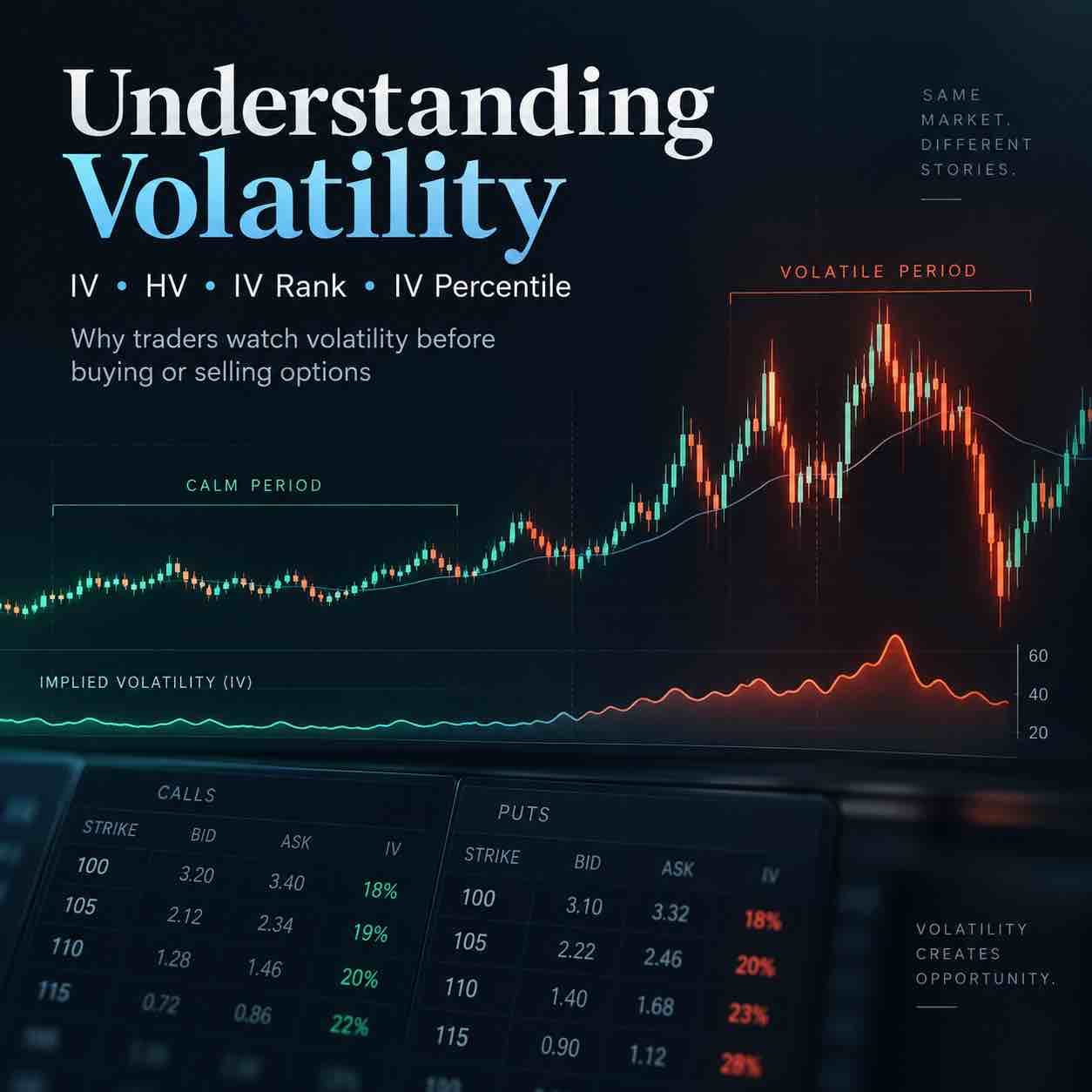
Historical Volatility (HV) = how much the stock has actually moved.
Implied Volatility (IV) = how much movement the options market is pricing in.
IV Rank = where current IV sits between its recent high and low.
IV Percentile = how often IV has been lower than it is today.
General idea:
High IV + high IV Rank + high IV Percentile = options are relatively expensive.
That can favor option sellers.
Low IV + low IV Rank + low IV Percentile = options are relatively cheap.
That can favor option buyers.
But volatility is only part of the picture.
Delta tells you how sensitive the option is to the stock price.
Gamma tells you how quickly delta changes.
GEX helps show how dealer hedging may affect the market.
In positive gamma environments, dealer hedging can help dampen moves.
In negative gamma environments, dealer hedging can amplify moves.
Call walls and put walls can also act as important price zones.
Call walls may behave like resistance.
Put walls may behave like support.
None of these indicators should be used alone.
The best setups come from combining:
IV
HV
IV Rank
IV Percentile
Delta
Gamma
GEX
Call/Put Walls
Premium received
Upcoming catalysts
The goal is not just to predict direction.
The goal is to understand whether the option is cheap or expensive, how sensitive it is, and how the broader options market may affect price movement.