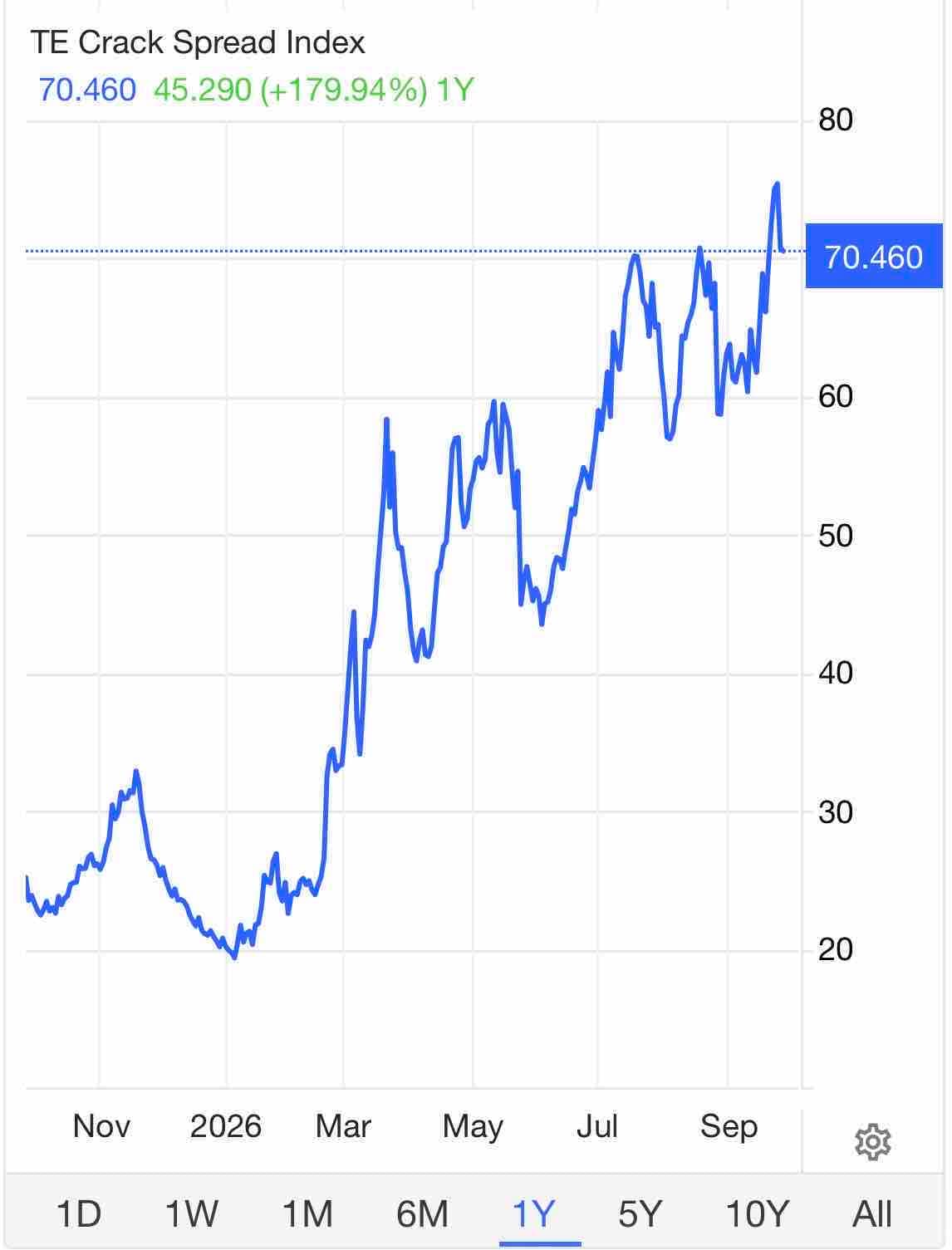
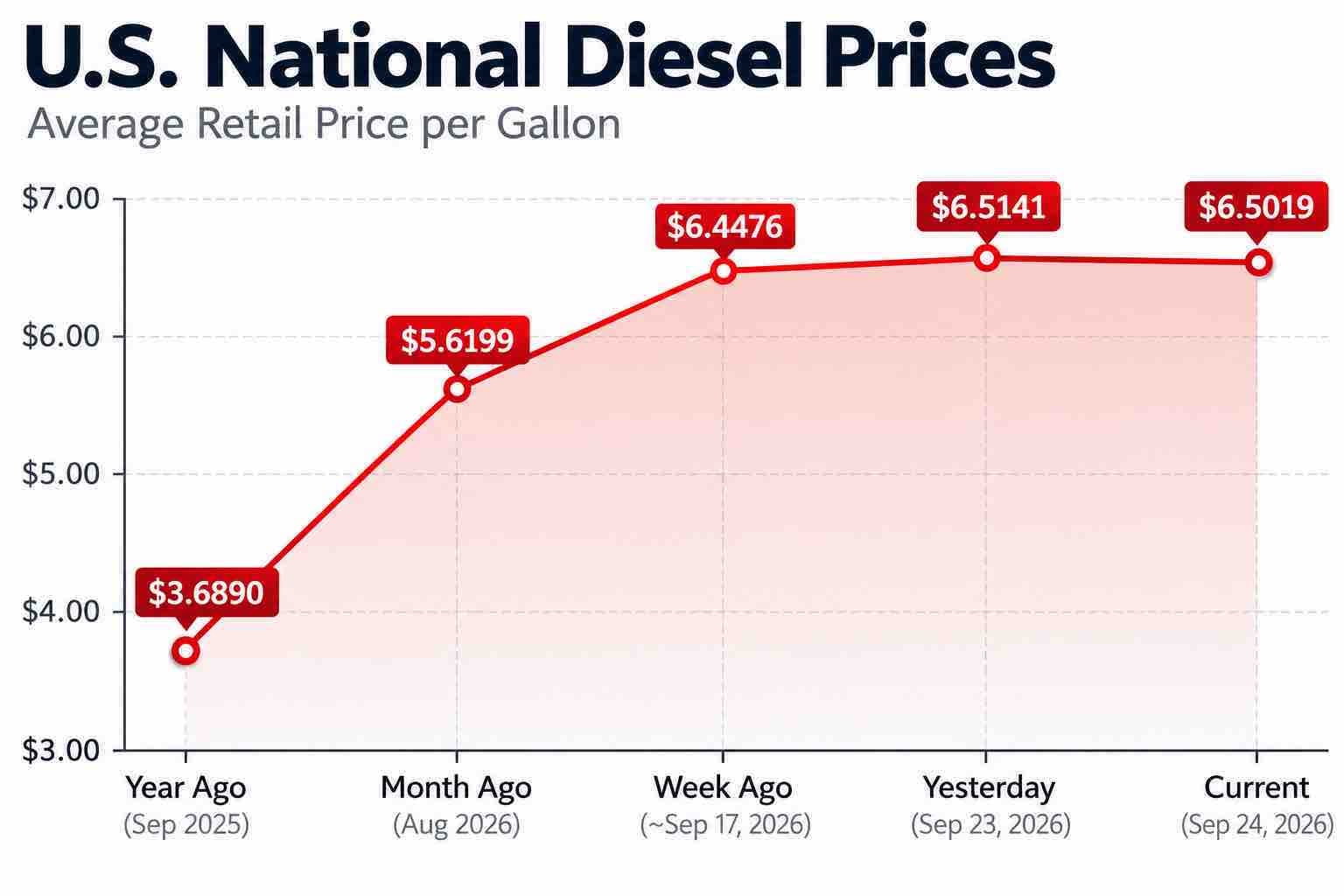
So the CPI index which is the most widely followed measure of consumer inflation is divided into Core (80%) and Non-core (20%) components both combined are referred to as “Headline” CPI. The Core CPI doesn’t include Food and Energy costs mostly because their prices are the most volatile and usually fluctuations are short-term. So far the impact of the war has mainly been concentrated in the headline CPI, while the core has been flat or actually improving for the most part. In the last print Core inflation was 2.4% while headline (including food & energy) was 3.4%, as you probably know and what drove that headline up was the 16.3% increase in energy costs due to the war. Now this changes drastically when we see extended periods of elevated diesel prices which usually has little direct impact on consumer purchasing, but a world of indirect impact on cost of food, goods and products. If Diesel prices stay elevated for Q4 that has a major impact on all forms of retail supply chains and the 3 T’s of the economy Trucks, trains and tractors…. Which leads to accelerated inflation on other lines of the CPI basket on top of energy. (Not as much of an issue when normal gasoline prices are up) So, why is diesel rising much faster all of a sudden even though oil prices are going down?! Because we now have a new emerging energy crisis on our hands creating a perfect storm… A global shortage of refined diesel due to four major drivers disrupting global refining capabilities worldwide: 1. Refinery outages due to conflicts in the Middle East and Russia putting refineries out of service. 2. China is prioritizing domestic demand and putting limitations on exports of diesel. 3. That limited supply and refining capacity from Middle East, Russia and China has left the rest of the world all bidding for US diesel and now US exports are draining domestic supply and that’s why Trump has been considering a diesel export ban. 4. Refiners are already maxed out with utilization rates hitting 98% in late August, the highest since 2018 so there is no spare capacity to close the gap. The crisis is so severe that crack spread which is the price difference between a barrel of crude oil and the petroleum products like gas and diesel refined from it moved +180% from $25 to $70 in one year. (Diesel actually has a much higher crack spread than the average… it’s more than $100+ for Diesel) Refineries are so stretched at the moment with demand so high that they are buying crude oil for $92/barrel and selling the produced diesel for roughly $202/barrel based on today’s prices and that’s exactly why diesel prices are going up while crude is going lower…. The fewer remaining operational refineries can’t meet demand nearly fast enough. The strait of hormuz is no longer the main choke point, the energy problem has evolved and is going to stick for quite some time in my opinion. Want to see how good of a year US refineries are having just check YTD performance of their stocks to see for yourself… $VLO$MPC Knowing this crisis is going to continue to evolve and forecasting the impacts on markets. De-leverage, de-risk and hedge is my ongoing strategy until further notice. (And maybe add some $CRAK 😅) Sorry for the doom and gloom post, but I think it’s important information to understand as we all navigate the volatility. DYOR!
664 views
9 Comments
Kyle T@kyletfreedom58 · 3d
Thanks for the reminder that something more serious is on its way... Courtesy of you-know-who
Marsia @gnomishness · 3d
I was feeling a bit sad yesterday selling my lovely, high beta stocks, but seeing even you talking about de-risking makes me feel a lot better. Thanks Moe!