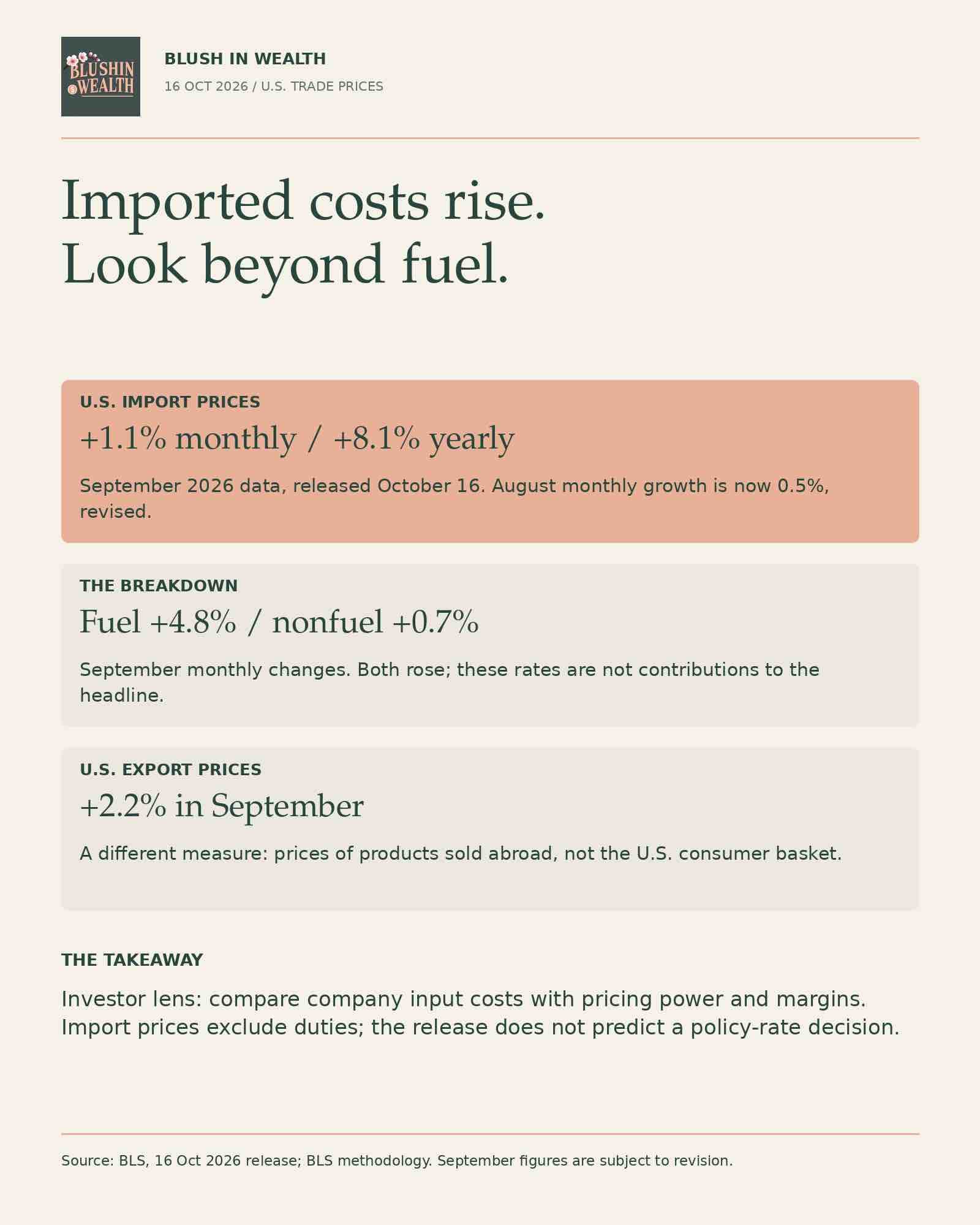
IMPORTED COSTS RISE—LOOK BEYOND FUEL
The October 16 BLS release reports that U.S. import prices rose 1.1% in September and 8.1% over the preceding 12 months. August’s monthly increase is now 0.5%, a revised figure. This measures September prices, not October activity.
The composition matters. Fuel import prices increased 4.8% during September, while nonfuel import prices rose 0.7%. Both categories increased, so the headline cannot be explained by fuel alone. These category growth rates are not percentage-point contributions and should not simply be added together. U.S. export prices also rose, by 2.2% during September—a different side of international trade.
For investors, the practical angle is company-level cost management. Higher imported input costs can squeeze margins if businesses cannot offset them through productivity, sourcing changes or selling prices. That is an analytical channel, not proof that every importer will lose profit. Product mix, contracts, currency exposure and customers’ ability to absorb price increases can produce different outcomes.
Two measurement limits prevent overreading the release. Import and export price indexes exclude duties, so this is not a tally of tariff payments or a complete landed-cost measure. They also measure different transactions from the consumer-price basket. A trade-price change need not appear one-for-one, or immediately, in household prices. The indexes are not seasonally adjusted and can be revised after publication.
The takeaway: compare company margins and pricing commentary with the relevant exposure. One release does not settle the inflation outlook or determine monetary policy.
Education only; not financial advice. Investing involves risk.
#BlushInWealth #FinanceNews #ImportPrices #GlobalInvesting #FinancialLiteracy