Staying the Course: Why Market Volatility Shouldn't Derail Your Investment Strategy 📈
Investors often see short-term market volatility as the enemy. When markets decline, the natural reaction is to move money to the sidelines and wait for things to calm down.
But history suggests that trying to time the market can create more problems than it solves.
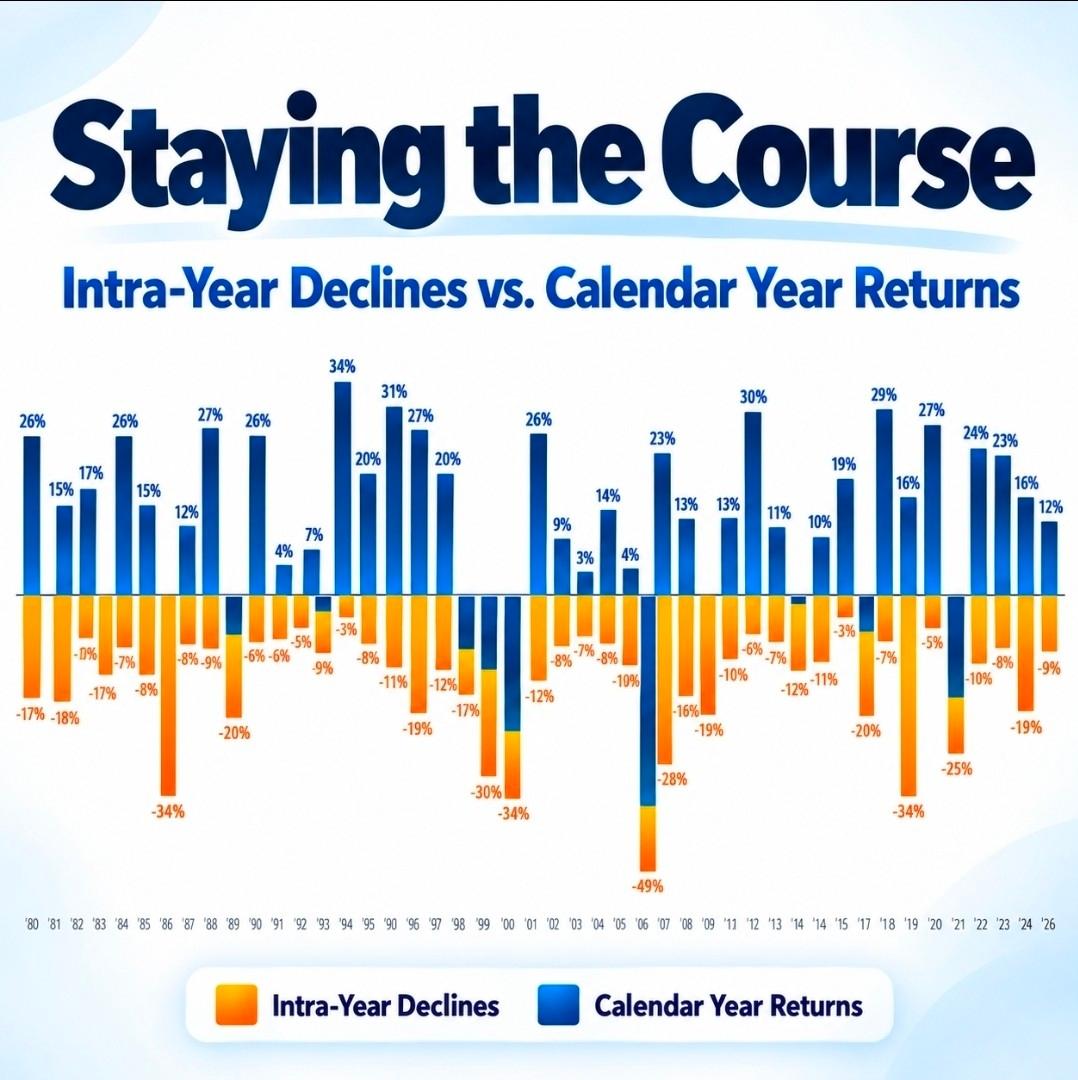
Consider this: Since 1980, the S&P 500 has experienced an average intra-year decline of approximately 14%. Yet despite these pullbacks, the market has finished the calendar year in positive territory more often than not.
Moving to the sidelines creates three challenges:
1. Timing the market twice. You need to make two correct decisions: when to get out and when to get back in.
2. Missing the rebound. Some of the strongest market recoveries can occur when investors least expect them.
3. Sacrificing long-term growth. Missing a recovery can mean losing not only the initial rebound but also the potential compounding of those gains over time.
The takeaway?
Volatility is a normal part of investing. The key isn't necessarily to react to every market decline, but to maintain a disciplined approach aligned with your long-term financial goals.
Sometimes the most important investment decision is knowing when not to make one.
Time in the market often matters more than timing the market.