Today BMO launched something NEW! The BMO MSCI All Country World Index ETF (ZALL) brings developed and emerging markets together in one simple portfolio, including Canada. So what does that actually mean? Well, now investors can own the world in one global equity ETF. ZALL is the first Canadian-listed ETF designed to track the MSCI ACWI Index, giving investors exposure to Canada alongside developed and emerging markets. Canada currently represents about 3% of the portfolio, with the rest invested across global markets. And because the portfolio reflects each market’s relative size, those weights naturally evolve as global markets change over time. For Canadian investors, that means broad global diversification, without the traditional home-country bias, all in one portfolio. A few quick tidbits: 🔹️47 markets across 23 developed and 24 emerging markets 🔹️Approximately 2,500 large- and mid-cap companies 🔹️Exposure to approximately 85% of the global investable equity opportunity set 🔹️The first Canadian-listed ETF designed to track the MSCI ACWI Index, which includes Canada 🔹️0.18% management fee Will you consider adding ZALL to your portfolio as an alternative to typical all equity ETFs, to avoid home country bias? Learn more: https://bmogam.com/ca-en/products/exchange-traded-fund/bmo-msci-all-country-world-index-etf-zall/read more
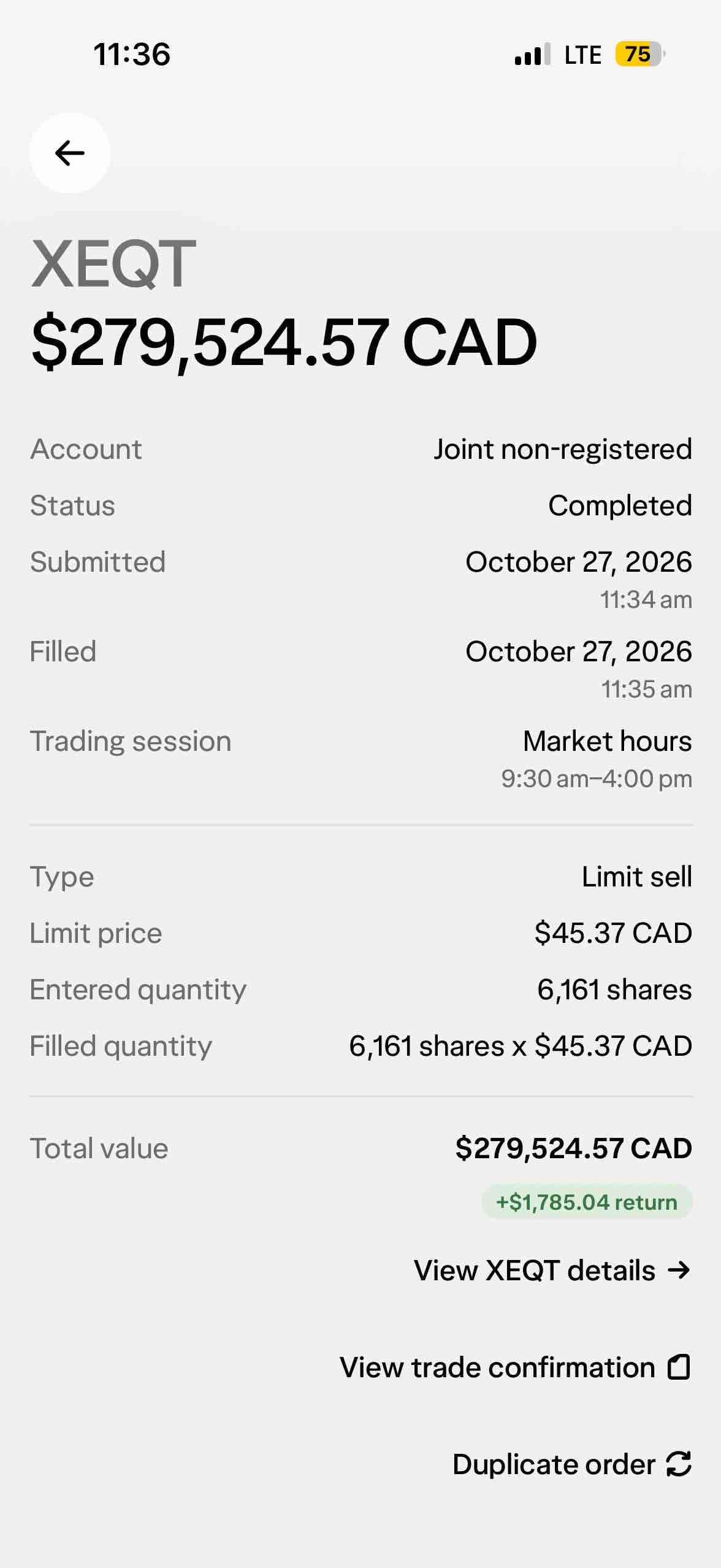
I don’t understand why people are so afraid of CRA and paying taxes on swing trading or day trading. If you have a $1,000+ profit sitting right in front of you, why wouldn’t you take it? You’re willing to wake up every day, go to a miserable 9 to 5 job, and give a huge chunk of your hard earned money to the government, but when it comes to making money in the stock market, suddenly everyone is terrified of paying taxes? 🤦♂️ STOP BEING AFRAID OF TAXES! Paying taxes on a profit means you made money. Obviously, you want to keep as much of it as legally possible, but paying taxes on a gain is better than sitting on an unrealized profit that could disappear tomorrow. Take me, for example. I could have lump-sum invested in $XEQT at $45.54 and watched my account go up thousands one week and down thousands the next, without actually locking in any profit. Or I could swing trade the volatility and walk away with $6,000 in realized profits. The market has been going sideways for months. A lot of people haven’t made much progress at all, while those who bought during the March dip had a better opportunity to get ahead. Meanwhile, swing traders have had opportunities to profit from the ups and downs. I’m not saying swing trading is easy or that every trade will be a winner. There are risks, and taxes are part of the game. But if you can consistently trade profitably, manage your risk, and still come out ahead after taxes, why wouldn’t you? The goal is to make money, not to avoid making money because you’re scared of the tax bill. Pay your taxes, keep your profits, learn from your trades, and keep building your wealth. 💰📈 LET’S MAKE SOME MONEY! ☝️🤑read more
A Little Perspective on ETF Overlap I think sometimes we get so caught up in the idea of perfect diversification that we forget investing is also about conviction. I have no issue with investors deliberately doubling down on areas they believe have long-term potential, as long as they understand the risks. For example, holding $XEQT as a foundation and adding $VFV or $HXQ to increase exposure to US equities and technology isn’t necessarily a mistake. It can be a conscious decision. I think the more important question is whether you understand what you own, why you own it, and what you’re choosing to overweight. Personally, I don’t believe every overlap needs fixing or every portfolio needs another ETF to fill a perceived gap. Investing isn’t about building the prettiest portfolio on paper. It’s about building one you understand, believe in and can stay committed to when markets get uncomfortable. There’s a difference between owning something intentionally and owning it without understanding why. read more
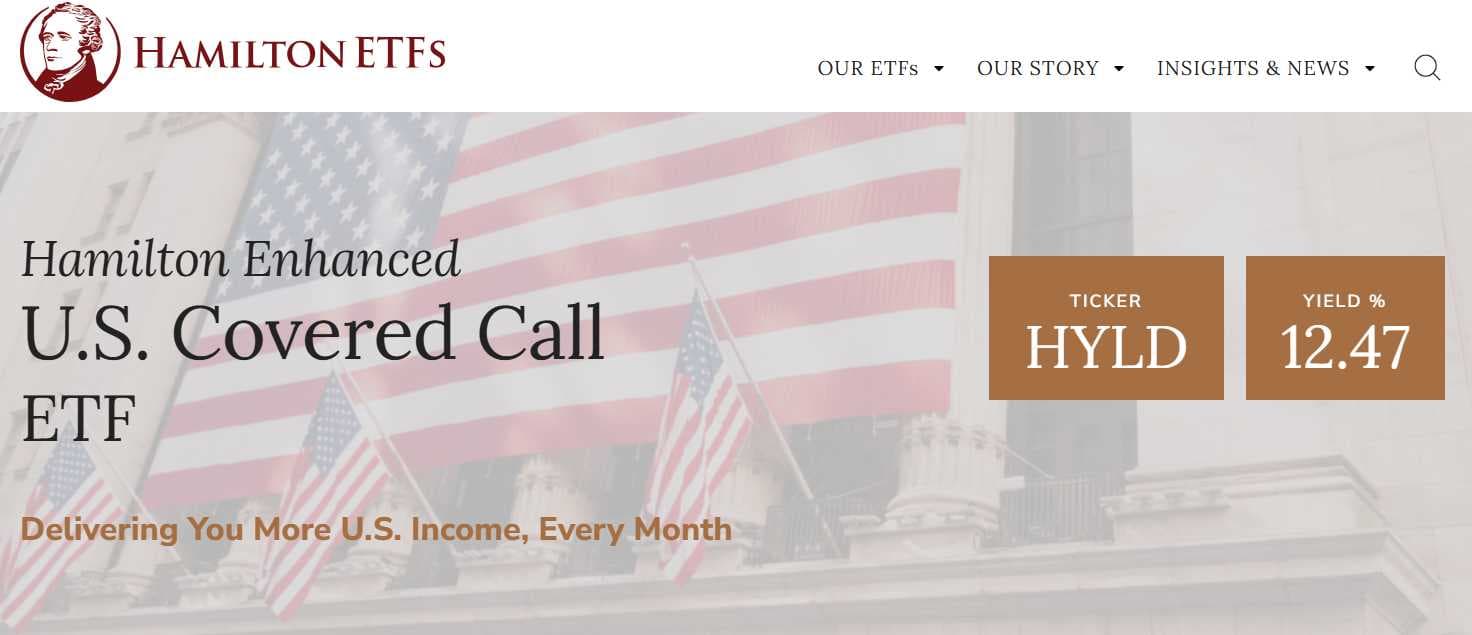
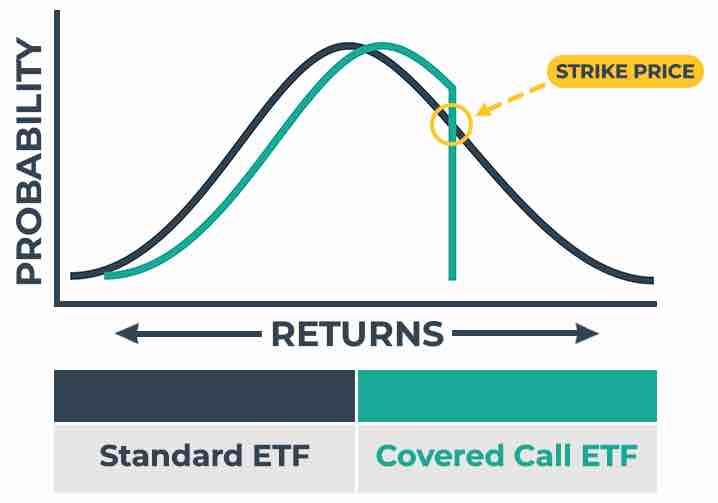
$HYLD holds 9 underlying ETFs ($SDAY$QDAY are the most recent additions) with 150 stocks in total. So why does it have the concentration of just 38? That’s what caught my attention when I dug into ALL its holdings. When I calculated HYLD’s effective number of stocks, I got just 38. In other words, despite holding 150 individual stocks, the weighting makes it behave more like a portfolio of 38 equally weighted stocks. And the concentration gets less income like and more growth like.... The top 10 stocks make up 40.7% of HYLD. The top 20? 65.6%... And the bottom 50 stocks? JUST 4% of the portfolio. So yes, HYLD owns a lot of stocks. But the number of holdings doesn't tell you much without looking at how they're weighted in the portfolio. Then theres the sector exposure...... Technology accounts for roughly 39% of the portfolio, with names like NVIDIA, AMD, Broadcom, Micron and Palantir among its major holdings. There's nothing inherently wrong with owning these companies. However, it does raise an interesting question about how diversified HYLD really is. Is it a diversified high income ETF...... or is it essentially a concentrated U.S. growth portfolio with leverage and a covered-call strategy layered on top? I dug into all of this in my latest HYLD ETF deep dive, along with its 12.5% yield, distributions, performance, fees, leverage and risk and answered some of the questions you asked. And I also built a custom benchmark to see how HYLD stacks up against a portfolio with similar characteristics AND leverage. https://youtu.be/dgUcuQmB48k If you were buying HYLD primarily for its monthly income, would this level of concentration change how much you'd be comfortable holding in your portfolio?read more
Hamilton's $HYLD is a beast of a fund, just like $HDIV . After getting the communities questions to help form the structure of HDIV's deep dive, I thought ... I HAVE to do it with $HYLD too. Since HYLD is a fund of funds and rather complex... here is what I am going to share (that way you don't ask what will be answered): - Performance attribution of sorts - Benchmarking w/ and w/o levereage - volatility and drawdowns - Fund history of changes - Distributions - ETF structure and total underlying holdings - Concentrations - Fund risks - Total costs and long term affect on performance What would you like to know about this fund? Is there something that's not obvious about the fund that you feel needs discussed? As always, EVERYONE is more than welcome to pipe in with their personal questions. The more diverse group of investors with questions, the better and broader the deep dive will be😁 I'll be filming tomorrow after work, so if I miss your questions after then, my apologies. As always, HAPPY investing everyone and let the questions FLY!!!!read more
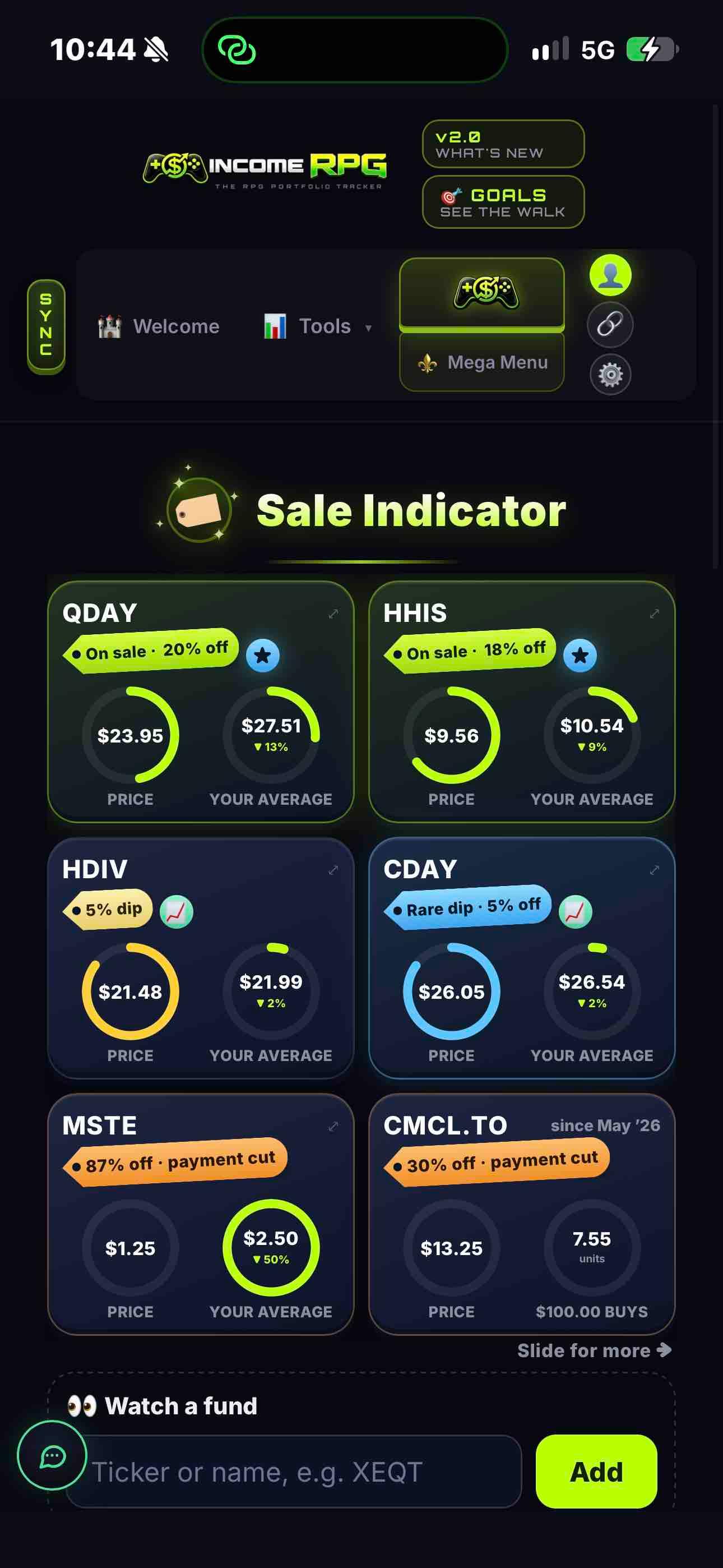
Crazy yet exciting times! Markets are BEAR mode. Great times to load up on tech especially. Anthropic IPO causing waves? GTA VI release causing waves? Unfaithful CEOs? War? What else have you heard? Either way. I’m buying $QDAY & $HHISread more
$XEQT is the largest holding in all my investment accounts. I’ve chosen it to be the foundation of each one. I’ve never regretted a single buy and I’ve never sold a share. What’s your $XEQT average cost per share? Will you reduce your allocation of $XEQT in retirement or buy more?
How is $MSTE the #9 most bought security on Blossom? The NAV erosion here is insane and the payout has dropped 86% from it's high in May 2025. (1.5 years) If you re-invested all of the distributions back into this ETF your total return would be -63% since inception If you did not re-invest the distributions your total return would be -29% since inception By the time you pay the base management fee, fund admin/operating, GST/HST, Leverage interest and trading expense ratio, I am seeing total fees above 1.8%. Just to get your own money sent back to you. The only way this ETF outpaces NAV erosion is if Bitcoin prices (and MSTR) slowly move higher. If we see a big jump in prices, MSTE won't even be able to capture the full move. I understand it's role in the marketplace I am just blown away by it's popularity here on the platform. Even for an income focused investor, I don't understand the appeal. What am I missing here? read more
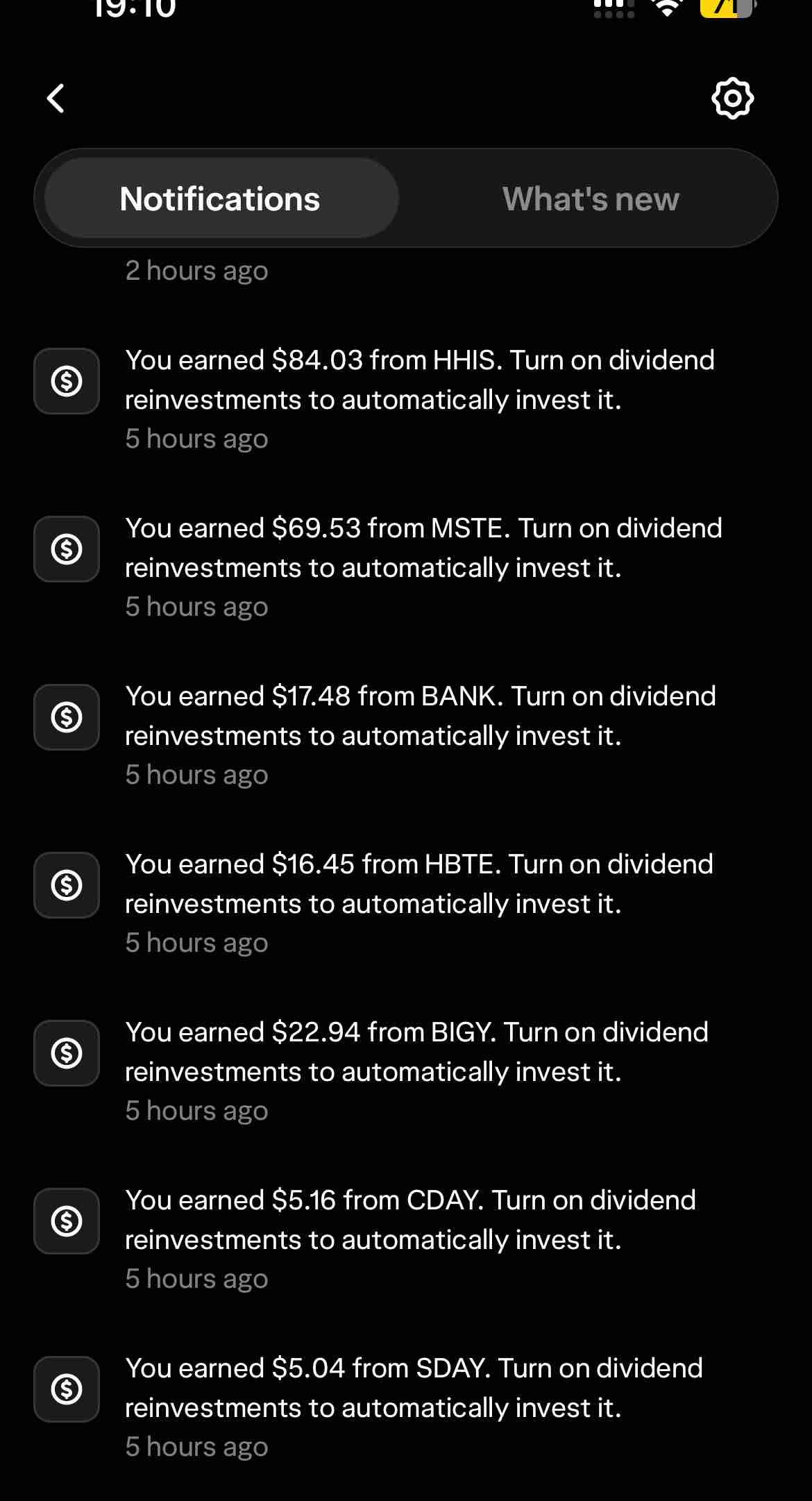
I know some of you here are earning more in dividends than I am, but I still want to share my appreciation for this community. Thanks to the people here at @blossom, I’ve received so much valuable advice, ideas, and encouragement. It’s amazing to see how generous everyone is in sharing their knowledge and experiences. Now that I’ve reached my TFSA contribution limit, I can’t add any more money for now. However, I’ll continue reinvesting all the dividends I receive each month. My next target is to reach approximately $500 per month in dividend income. I’m currently at $260 per month, which means I’m already 52% of the way there! Slowly but surely, one dividend at a time. Thank you, everyone, for being part of this journey! Tip - don't be afraid of these reddays grab more while you still can. $HHIS$BIGY$MSTE$HBTE$BANK$CDAY$SDAY #followmenowread more
I set limit buys & then if they execute & keep going down in cost I don’t over think it. The main point for me isn’t perfect timing but rather it’s setting a goal to keep a certain amount of money working for me while I also have another bucket just sitting there to pay bills regardless of market moves .. Everyone has their own style but for me I’m passive, I’d rather live life than focus on total optimization of every cent. Do whatever works for you 🙏🏻
BMO has recently come out with ZALL which is a global allocation ETF. We now have several global strategies including this, the *EQT series and factor based. Honestly I like them all and it's kind of hard to choose just 1. So my proposal is 33% *EQT for example XEQT 33% all world which is only ZALL at the moment unless you want to go with something like VT but that's in USD and this is in CAD 33% factor for example FEQT This gives you a 100% equity portfolio diversified globally with the benefit of 3 different strategies. I would expect them to all perform more or less in line with each other but I think it's cool to be diverse in this way as well I obviously wouldn't recommend triggering taxes in non registered accounts just to rebalance to something like this but in registered accounts this isn't a problem What do you guys think? are you tempted to add some diversity or are you staying the course? For me I'd consider employing this especially as part of January's rebalancing with the new contribution limits. I do however like the control of owning the underlying holdings instead of the all in one but at the same time holding all the underlying would be a ton of different funds and in non registered accounts would make tax time an unnecessary nightmare for anyone who does their ownread more
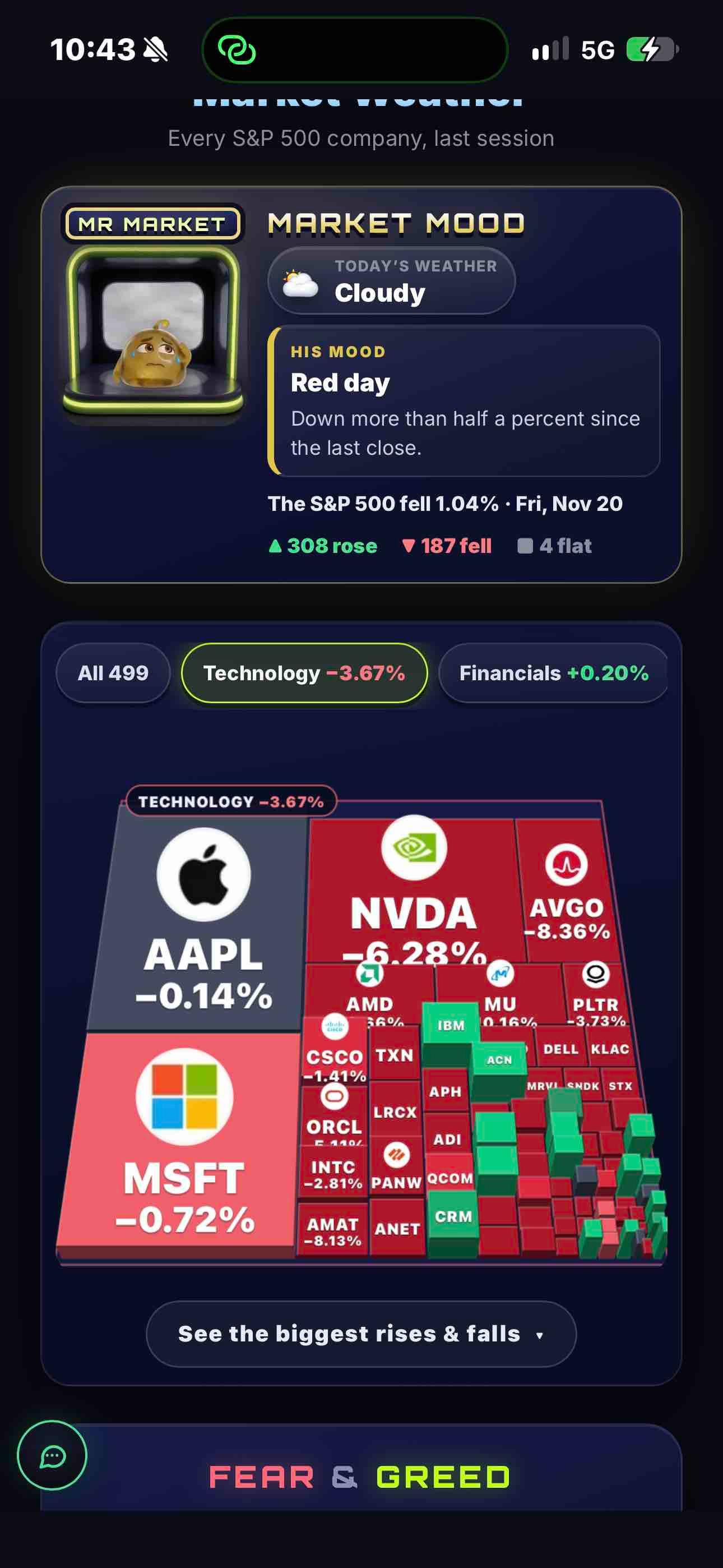
The S&P 500 dropped 3.7% and the Nasdaq 5.3%. This is the actual Friday the 13th and Black Friday combined! Days like today are a good opportunity to check in with yourself and think about how comfortable you really are with market volatility. It's easy to say you're comfortable with risk when everything is green I actually moved some money around and picked up a few more shares of $NVDA But for my next couple of paycheques, I'm sticking to my usual XEQT and VDY plan. Something I've noticed about my own journey is how much my risk tolerance has changed. When I first started investing, I leaned towards bonds and market-linked GICs. They did well, but growth was slower. Now, after becoming more invested and consistent, I'd consider myself a medium-to-high-risk investor. Even days like today don't have me questioning my long-term goals. I'm curious, especially about newer investors: Has your risk tolerance changed since you started investing? And more importantly, did anyone go shopping today happy investing, and happy weekend. 🌸 read more
While we're watching a sea of red across our portfolios, India's stock market has been moving in the opposite direction! The Nifty 50 gained 1.12%, while Japan's Nikkei fell 5.06% and South Korea's Kospi dropped 5.21%. I have quite a few people in my circle who invest in the Indian market, so naturally, I got curious and did some digging on why it's green! 1. Foreign investment: Foreign investors poured a record US$12.21 billion into Indian equities in November, according to Reuters. 2. Banking stocks: Indian banking stocks led the rally, with the banking sector gaining 5.9% over the week. Private banks alone helped lift the Nifty by 1.1% on Friday. 3. AI sell-off: As investors reassessed expensive AI-related stocks globally, some capital rotated towards Indian equities, particularly banks offering attractive valuations. 4. Oil Prices: Brent crude fell approximately 23% in November, helping India as a major oil importer by easing pressure on import costs and inflation. $XEQT already gives me global diversification, but individual countries like India make up a relatively small portion of its overall holdings. So I'm curios Have you considered adding OR do you have India exposure through ETFs like $ZID$XID or $INDA and beyond India, are there other countries or regions you've considered investing in through international ETFs or individual stocks? I'm not planning to add anything new just because one country had some green returns lol, just curios to know what everyone is investing in happy investing and happy Saturday 🌸 -Rread more
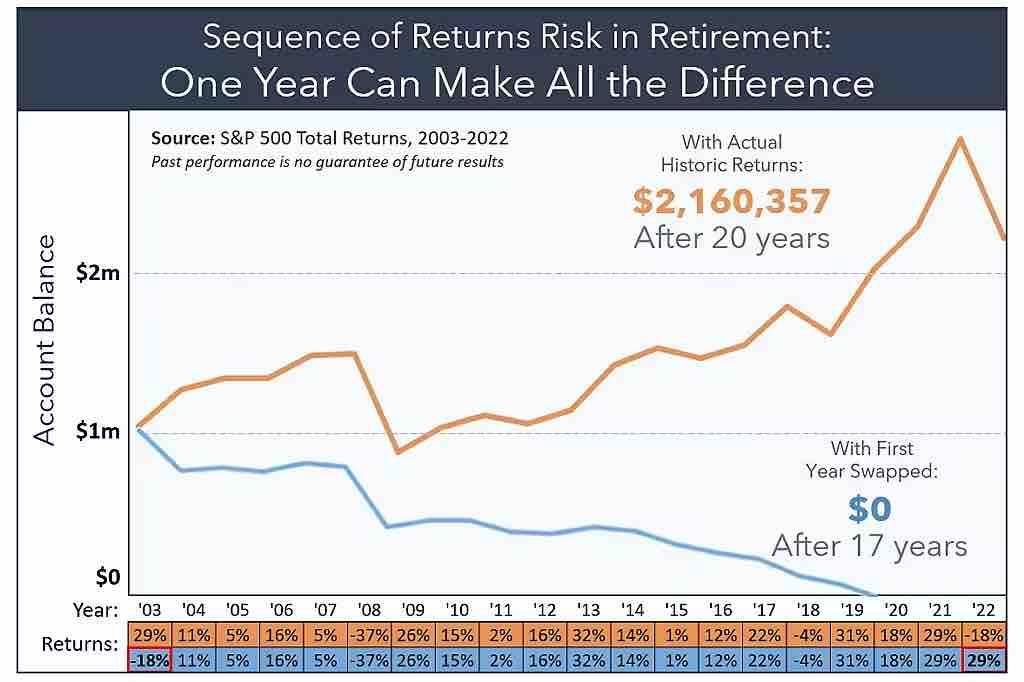
THE "35% COVERED CALL YIELD" THAT ISN'T A YIELD: WHY SPENDING 1/3 AND REINVESTING 2/3 CAN STILL RUN DRY For retirees and people about to retire I hope you don’t get suckered into unecessary risk. Let’s use Blossom’s popular HHIS as the example, but the math applies to any cc fund built the same way: momentum stocks, plus leverage, plus covered calls minus fees. PART 1: THE 35% IS A DISTRIBUTION, NOT A YIELD - Harvest's website shows a "current yield" of 34.88%. Their brochure defines it as the latest monthly payout times 12, divided by market price: $0.27 x 12 = $3.24, divided by $9.29. - That measures what the fund pays out, not what it earns. - A real dividend comes from company profits. A distribution is whatever cash the fund sends you: profits, option premiums, sales of holdings, or your own money handed back. - The price fell from $12.00 at launch to $9.29. The payout stayed $0.27, so the "yield" rose from 27% to 35%. A rising yield on a falling price is a warning sign, not a raise. PART 2: WHAT THE 35% IS MADE OF (FUND REPORTS) - 2025 (first year): $2.80 paid per unit. Return of capital was $1.76 (63%), capital gains $0.99 (35%), other income $0.05 (2%), eligible dividends zero. - First half of 2026: $1.62 paid. Return of capital was $0.80 (49%) and capital gains $0.82 (51%). - Option income is mostly labelled capital gains, so that slice is covered calls plus profits from selling holdings. - Harvest's own documents say: "If a Fund earns less than the amounts distributed, the difference is a return of capital." - First half of 2026: the fund earned $0.82 a unit and paid $1.62. The $0.80 shortfall matches the return of capital, and the price fell to cover it. - 2025 looked better: it earned $2.92 and paid $2.80. But only about $1.10 was realized. The other $1.70 or so was paper gains from a hot market. - Real stock dividends were tiny, about $0.04 to $0.06 a unit per period. PART 3: WHAT THE FUND CAN EARN PER $100 (ESTIMATES) - Dividends: about $1. Growth names pay almost nothing. - Option premiums: about $7 to $12. This assumes calls on about a third of holdings at 1.5% to 2.5% a month. You give away the big gains on that slice. - Price growth after the calls: $0 to $3 in a typical year, and negative in a bad one. - Fees and interest: about $2. - Net: about $6 to $12, call it $9. ***The fund pays $35, so about $26 a year is your OWN money coming back. The engine covers one fifth to one third of the payout.*** - Options don't create new money. They turn future gains into cash today and give up the best gains to do it. PART 4: WHERE THE FEES HIDE - The website says "Management fee 0.00%," then notes in small print that the fund is "subject to fees of the underlying ETFs." - HHIS owns about 20 Harvest single-stock ETFs. Each charges its own fees and each is leveraged about 25%. - ETF Facts show a MER of 1.85% plus 0.15% trading costs, about 2.0% all-in. The MER includes HHIS's share of the underlying ETFs' expenses. - The ETF Facts say the MER "would have been higher" without waivers. Sister fund HHIH shows 0.99% after waivers and 1.35% before, so HHIS's true cost could be about 2.4%. - Proxy for the 1.85%: - Management fee plus tax: about 0.45%. - Interest on the 25% borrowing: about 1.0% to 1.25% (I assumed a 4% to 5% rate). - Admin and other: 0.15% to 0.4%. - By my estimate, interest is more than half. - On $500,000, 2% is $10,000 a year. A plain index fund costs $500 to $1,000. - If the fund earns about 11% before costs, fees and interest take about one fifth of it. ***Not in the MER: upside given away to the calls, and extra losses from leverage in falling markets.*** PART 5: HOW THE MONEY RUNS OUT - Buy $100,000. Spending 1/3 of the 35% payout is about $11,600 a year, or 11.6% of your starting money. The old safe rule is about 4%. - Reinvesting the other 2/3 doesn't help much. Those units fall with the rest. - Raise spending 2.5% a year for inflation, assume a constant annual return, and $100,000 RUNS OUT: - 6%: about 10 years - 8%: about 12 years - 10%: about 14 years - 12%: about 19 years - 13%: about 24 years - 14%: indefinitely - With no inflation raises, 8% returns lasts about 15 years and 10% about 21. - Retire at 65 on 8% to 10%, and the money is gone between 77 and 70. - If the payout floats and is cut when the price falls, the account won't hit zero but your income shrinks. Either way the retiree loses. PART 6: WHY 14% FOR 35 YEARS IS UNREALISTIC - The plan needs about 14% a year, after fees, to last the entire 35 years. - The US market has averaged about 10% over the very long run. The fund would need to beat it by about 4 points a year, after 2% in costs. - To my knowledge, no broad US ETF 35-year stretch has come close to 14%. The best were roughly 11% to 13%. - The fund holds the same kinds of stocks as the market, with calls capping the upside. Nothing in the design points to a 4-point edge. - Roughly 9 in 10 professional managers trail their benchmark over 15 years or more, and this fund starts 2% behind. - HHIS earned about 20% a year until April 30, 2026, the best of times for its stocks. Since then the annualized return since launch has fallen to about 11.7%, and it is still dropping. - Trouble can show up fast inside the basket. The Harvest SoFi ETF launched at $12.00 in September 2025. Its NAV was $5.38 by June 30, 2026, after $2.28 in payouts. PART 7: THE ODDS (ROUGH ESTIMATE) - Assume a 10% average return with about 25% yearly swings. HHIS had monthly moves from -9% to +11% in 2025. - Swings drag down compounding. Gain 50%, lose 50%, and you have 75 cents on the dollar. The long-run compounded return is about 7%, and the plan needs 14%. - Over 35 years, that gap is roughly 1.5 standard deviations. The odds are about 1 in 14. At a 12% average they are about 1 in 6, and at 8% about 1 in 40. - Of 100 retirees following the plan, roughly 3 to 16 would still have money at year 35. This ignores sequence risk, which makes the above worse. PART 8: SEQUENCE RISK - Two retirees start with $100,000 and spend $11,600 a year. Both get returns of 30%, +10% and +30%, in a different order. - A gets the crash first and has about $56,800 after 3 years. B gets the crash last and has about $71,400. - That is the same returns and the same spending, with a $14,600 difference. You can't buy cheap units with money you already spent. - A real case: $100,000 in at about $12.23 on Jan 1, 2026, with 1/3 spent and 2/3 reinvested, is worth roughly $88,000 today, plus about $7,400 spent. That is down about 5% in a year that felt like 35%, with the unit price down about 25%. PART 9: THE ENTITLEMENT TRAP - Many retirees using CC funds now receive more than they earned in their best working year. That feels like proof it works. - A paycheque came from an employer who owed it to you. A distribution is your own money returned, plus whatever the fund earned. The fund owes you nothing and can cut the payout at any time. - The only number that matters is total account value, this year versus last year, after spending. PART 10: WHAT TO EXAMINE OBJECTIVELY - Judge any income fund by total return after fees (price change plus payouts, minus costs), not by false claims of “yield”. - Set realistic spending from your whole portfolio at about 4% to 5%. - Limit the risk to a fund like this to 5% to 10% of the portfolio. - Hold two to three years of spending in cash or short-term bonds, so you never sell a falling fund to pay bills. - Each year, ask whether your account is worth more or less than a year ago, after spending. - Talk to a fee-only planner who isn't paid by the product. BOTTOM LINE A 35% distribution isn't a 35% return. It is a spending rate wrapped in a monthly cheque. The goal isn't a big cheque this year. It's a cheque that still arrives when you are 90. General education, not personal investment advice. Figures are as of Nov 20, 2026 and change monthly. Estimates are labelled.read more