Myth busting: young people should be 100% in stockOn paper, this makes sense. You are young, you have decades ahead of you, so take the most risk and earn the most return. But like most things in investing it depends the person. The best portfolio on paper is useless if you cannot stick with it in real life. What actually happens to a lot of young investors with an all-stock portfolio is: The market crashes and they panic sell. In a 2021 study, MIT found that 10% of people panic sold their entire portfolio during a crash. The median panic seller produced negative or zero return after panic selling in their 12 year study. 31% of panic sellers NEVER invested in stocks again. So be honest with yourself, if you are in that 10% then having a less risky portfolio might mean that you won’t panic sell. That might be the right portfolio for you. The portfolio that wins is the one you actually stay in for thirty years, not the one with the highest theoretical return. (Not to mention the stress you’ll save yourself)4 reactions • 4 comments
@tati_trades • 1d
THE HEADLINES FLIP EVERY WEEK.PRICE ONLY ANSWERS ONE QUESTION. This whole year has been one long rotation. Money leaves one group, piles into the next, and the headlines swear they know why every single time. Monday it's "AI is dead," Friday it's "AI is back," and the street trader ends up buying the top of the story and selling the bottom of it. It took me years to trust this: price doesn't care about the headline. A stock moves for one reason, more buyers than sellers, or the other way around. Supply and demand. The news is just the noise people stack on top of it. "Price doesn't read the news. It answers one question: who wants it more." That's the whole idea behind my guide, The Trader's Rulebook. It's how I read supply and demand and stay disciplined when the headlines are screaming, written plain so you use it on a Monday instead of just nodding at it. I don't give it away. But put the price next to what one panicked exit costs you, and it's a gift. It's for the ones who actually want to get good at this. Everyone else can keep scrolling for the next hot take. Not investment advice🐝1 reactions • 0 comments
@elau.invests • 2d
Question for the dividend crowd: when you consolidated funds, did you miss the extra distributions, or did the simplicity win? I gave up a little monthly income for one clean core holding. No regrets so far. The whole series is on my profile — tap my name.1 reactions • 1 comments
@carpinocapital • 1d
Patience Don’t go all in right now. Add to names that the stock price has dropped 10+% and the fundamentals haven’t changed. For example: $AMD has strong fundamentals but terrible technical set up… you’d be better off with a DCA approach in this environment when sentiment is low. Some companies might suffer from this more than others when the fundamentals start to deteriorate as well. For example companies with negative CF and/or not profitable: $ORCL $IREN $GOOGL $NBIS Those companies can come back for sure but you have to pay attention to the fundamentals and the quarterly conference calls to make sure. Stay strong 💪🏽 3 reactions • 1 comments
Happy Wednesday Blossom! 🌸 With how volatile the market has been lately, I've actually decided to hide my portfolio values on both Wealthsimple and Blossom for now. As I mentioned in a previous post, I've been trying to log off a little more, step back and stop checking every little market movement. Just look at the swings we've had. On Monday, the S&P 500 jumped 4.7% and the Nasdaq gained 6.5%. Fast forward to today, and both were back in the red, with the S&P 500 closing down 0.3% after being down as much as 3.2% during the day. It's a reminder of just how quickly sentiment can change. I've also noticed I've been getting a little too caught up in the excitement of buying opportunities. Every time something goes on sale, I start thinking about whether I should put more money in. Part of me thinks investing more now will somehow accelerate the future I'm working towards. But there's a difference between investing your monthly surplus and moving money around, deviating from your regular DCA schedule and waiting for your next paycheck. i''ve done quite a bit of that since October! I've even caught myself cutting back on little things I enjoy, like grabbing a coffee or ordering takeout, just so I can put more money into the market. I want to build wealth, but I also want to enjoy my life along the way!!! I'm not saying I won't buy the dip again. I'm just reminding myself that not every opportunity needs to be acted on. Sometimes discipline is simply sticking to your regular contributions, keeping some cash available and letting your investments do their thing. How are you navigating the volatility lately? happy investing 💚🌸read more
Don’t go all in right now. Add to names that the stock price has dropped 10+% and the fundamentals haven’t changed. For example: $AMD has strong fundamentals but terrible technical set up… you’d be better off with a DCA approach in this environment when sentiment is low. Some companies might suffer from this more than others when the fundamentals start to deteriorate as well. For example companies with negative CF and/or not profitable: $ORCL $IREN $GOOGL $NBIS Those companies can come back for sure but you have to pay attention to the fundamentals and the quarterly conference calls to make sure. Stay strong 💪🏽 read more
Question for the dividend crowd: when you consolidated funds, did you miss the extra distributions, or did the simplicity win? I gave up a little monthly income for one clean core holding. No regrets so far. The whole series is on my profile — tap my name.
The older you become, the more you realise that financial freedom is not necessarily about owning expensive houses, driving luxury vehicles, or travelling every month. It is about having enough resources to make decisions without constantly worrying about the next paycheck. It is being able to leave an unhealthy situation, handle an unexpected expense, take a break when necessary, and support the people you love without destroying your own financial stability.
Everyone wants the kind of wealth that takes decades to build. Few are prepared for what those decades actually feel like. Days like today aren’t an interruption to the wealth building process. They’re part of it. No matter how many market cycles I’ve lived through, these moments still hurt. Revisit your thesis. Anchor yourself in ground truth not market sentiment. Separate what has fundamentally changed from what simply feels different. Have the humility to question your conviction and the discipline to manage your leverage. Markets can take a painfully long time to reconcile perception with reality. Being right eventually means nothing if you can’t afford to be wrong temporarily. Tomorrow, give yourself permission to step away from the market and appreciate the things in your life that no market crash can take from you.read more
I’m Stacking $XEQT My average cost on $XEQT is $33.00 per share. And I keep stacking. I’m not trying to catch the bottom. I’m not waiting for confirmation that the market has recovered. I’m buying because my investment thesis isn’t based on what the market does this week, this month or even this year. It’s based on where I believe the market will be 10, 15 and 20 years from now. Every dip gives me another opportunity to accumulate. Every purchase adds to the number of shares I own. And over time, those shares become a bigger part of the wealth I’m building. My longer-term plan is to eventually have $XEQT represent 80% of my portfolio, with 10% held in cash. But that’s not a transition I’m rushing. I still have roughly another decade of accumulation ahead of me, and I’m giving my investments time to do what investments are supposed to do. I don’t need to know what the market will do tomorrow. I need to remain consistent with a plan that makes sense for the future I’m building. The headlines will change. Market sentiment will change. My strategy doesn’t have to. Why search for the needle in the haystack when you can buy the haystack. I’m stacking. ❤️ read more
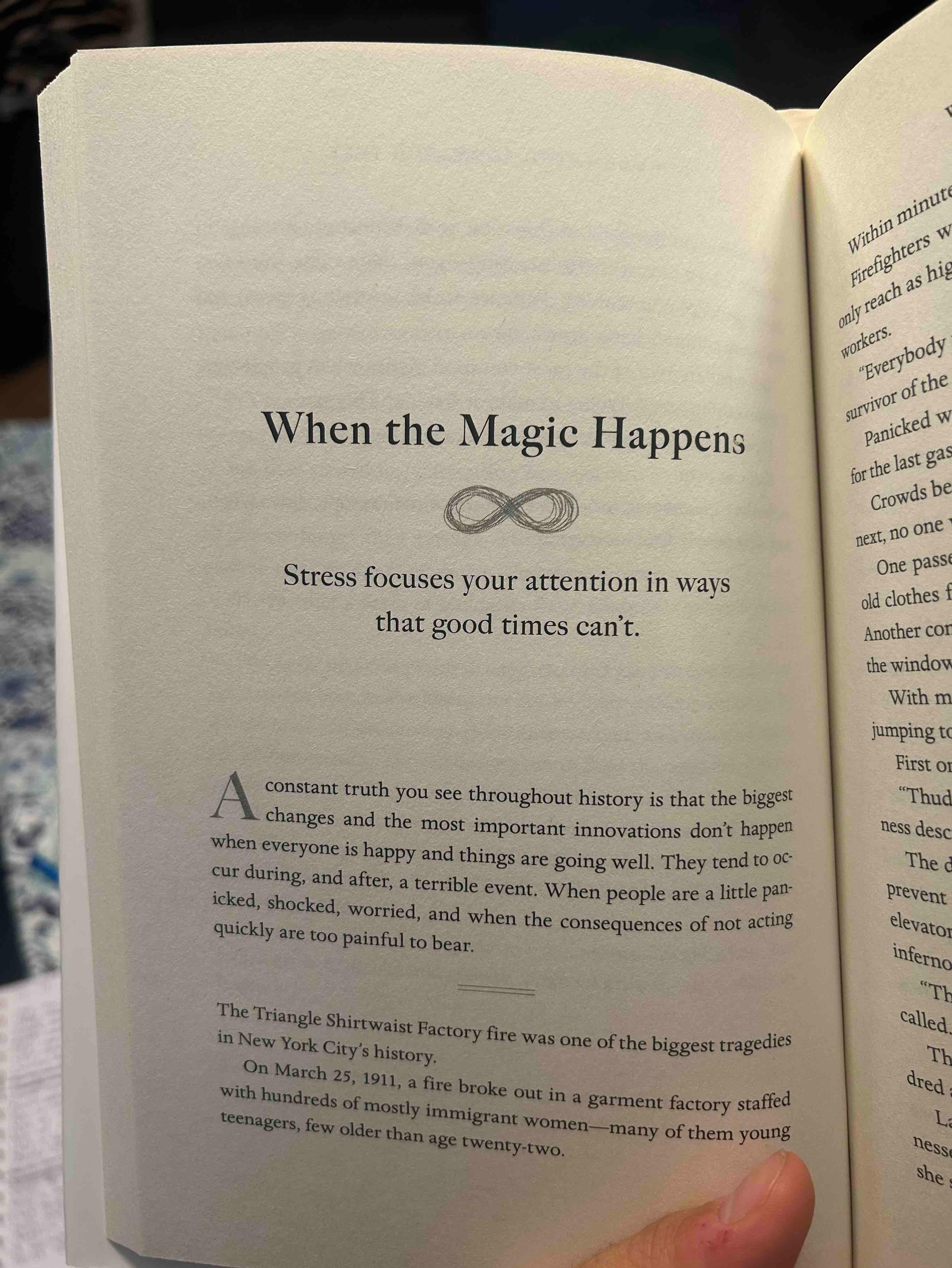
Ch.10: When the magic happens The magic never happens at the start. It happens after years of boring progress. Most great outcomes look like overnight success from the outside. From the inside, they are years of showing up with almost nothing to show for it. Investing works the same way. The first few years of compounding look disappointing. Your money grows slowly, and it feels like nothing is happening. Then one day the curve bends, and the growth becomes exponential. The problem is most people quit during the boring part. They quit right before the magic starts, because they expected it to happen sooner. The lesson Housel is trying to teach is simple. If you want the magic, you have to survive the long stretch where nothing looks magical. Keep saving and investing. Don’t panic and let compound interest do its thing. read more
— According to Morningstar, investors are looking for more than investment recommendations. They want clarity, confidence, and guidance that helps them stay focused on their long-term goals, especially during periods of market uncertainty. Morningstar highlighted these findings while discussing how advisors can use its Direct Advisory Suite, a platform designed to help financial professionals analyze portfolios, build investment plans, and better serve clients. While the article is aimed at advisors, the insights are equally valuable for investors. Good to know: 1. Many investors underperform their own investments because they buy and sell based on fear and greed rather than sticking to a plan. 2. A simple, diversified ETF such as $XEQT, $VEQT, $XGRO, or $VGRO already provides exposure to hundreds or thousands of companies around the world, reducing the need to constantly chase the next "hot" stock. Three takeaways for investors: 1. Understand what you own Whether you own broad-market ETFs like $XEQT, $VEQT, $ZSP, or dividend-focused funds like $VDY, know the role each investment plays in your portfolio. 2. Tune out the noise Markets will always have reasons to be optimistic or concerned. Long-term investors are usually rewarded for staying focused on their goals rather than reacting to headlines. 3. Keep it simple The best portfolios are often the ones investors can stick with. Complexity doesn't always lead to better results. The biggest lesson? The best investment strategy isn't necessarily the most sophisticated. It's the one you understand, believe in, and can maintain through changing market conditions. What investment lesson took you the longest to learn? — This is for informational and educational purposes only. read more
On paper, this makes sense. You are young, you have decades ahead of you, so take the most risk and earn the most return. But like most things in investing it depends the person. The best portfolio on paper is useless if you cannot stick with it in real life. What actually happens to a lot of young investors with an all-stock portfolio is: The market crashes and they panic sell. In a 2021 study, MIT found that 10% of people panic sold their entire portfolio during a crash. The median panic seller produced negative or zero return after panic selling in their 12 year study. 31% of panic sellers NEVER invested in stocks again. So be honest with yourself, if you are in that 10% then having a less risky portfolio might mean that you won’t panic sell. That might be the right portfolio for you. The portfolio that wins is the one you actually stay in for thirty years, not the one with the highest theoretical return. (Not to mention the stress you’ll save yourself)read more
When I posted this 7 days ago, there was a voice in my head taunting me. Like, what if you're wrong? What if it goes to zero? Remember Enron? But I just bought anyway and well, while it is nothing more than a lucky guess, I did feel a sense of intuition. I mean come on. You're telling me that a company that brought in $115.84 BILLION in one quarter (more than $AAPL, mind you) is trading at that low of a PE? This whole thing seemed like a game of chicken or a sort of coup d'état. How could you throw out a founder-CEO like that when he is the one who built the company out of nothing? Love him or hate him, the dude literally is A GENIUS. In the end, $NVDA's board blinked, and Jensen is back. Moral of the story is follow your gut - if you're willing to take the risk, and I definitely am.
PRICE ONLY ANSWERS ONE QUESTION. This whole year has been one long rotation. Money leaves one group, piles into the next, and the headlines swear they know why every single time. Monday it's "AI is dead," Friday it's "AI is back," and the street trader ends up buying the top of the story and selling the bottom of it. It took me years to trust this: price doesn't care about the headline. A stock moves for one reason, more buyers than sellers, or the other way around. Supply and demand. The news is just the noise people stack on top of it. "Price doesn't read the news. It answers one question: who wants it more." That's the whole idea behind my guide, The Trader's Rulebook. It's how I read supply and demand and stay disciplined when the headlines are screaming, written plain so you use it on a Monday instead of just nodding at it. I don't give it away. But put the price next to what one panicked exit costs you, and it's a gift. It's for the ones who actually want to get good at this. Everyone else can keep scrolling for the next hot take. Not investment advice🐝read more


 @lucas.seminario • 1d
 @tati_trades • 1d
 @carpinocapital • 1d