Bear Markets crush income
I know there are a lot of people who believe they are protected from sequence of returns risk or significant market downturns because of the income their portfolios generate.
If we think about a portfolio's ability to generate sustainable income over the long term is dependent on the value and earning capacity of the underlying assets. If you have a $1 million portfolio yielding 10%, you're receiving $100,000 a year in distributions. If the value of that portfolio declines to $500,000 and the yield remains at 10%, you're now receiving only $50,000 a year. While a decline in portfolio value doesn't automatically mean distributions will be reduced, if the fund maintains that $100,000 annual distribution, you're now withdrawing 20% of your remaining portfolio value each year. The question then becomes whether that distribution is sustainable.
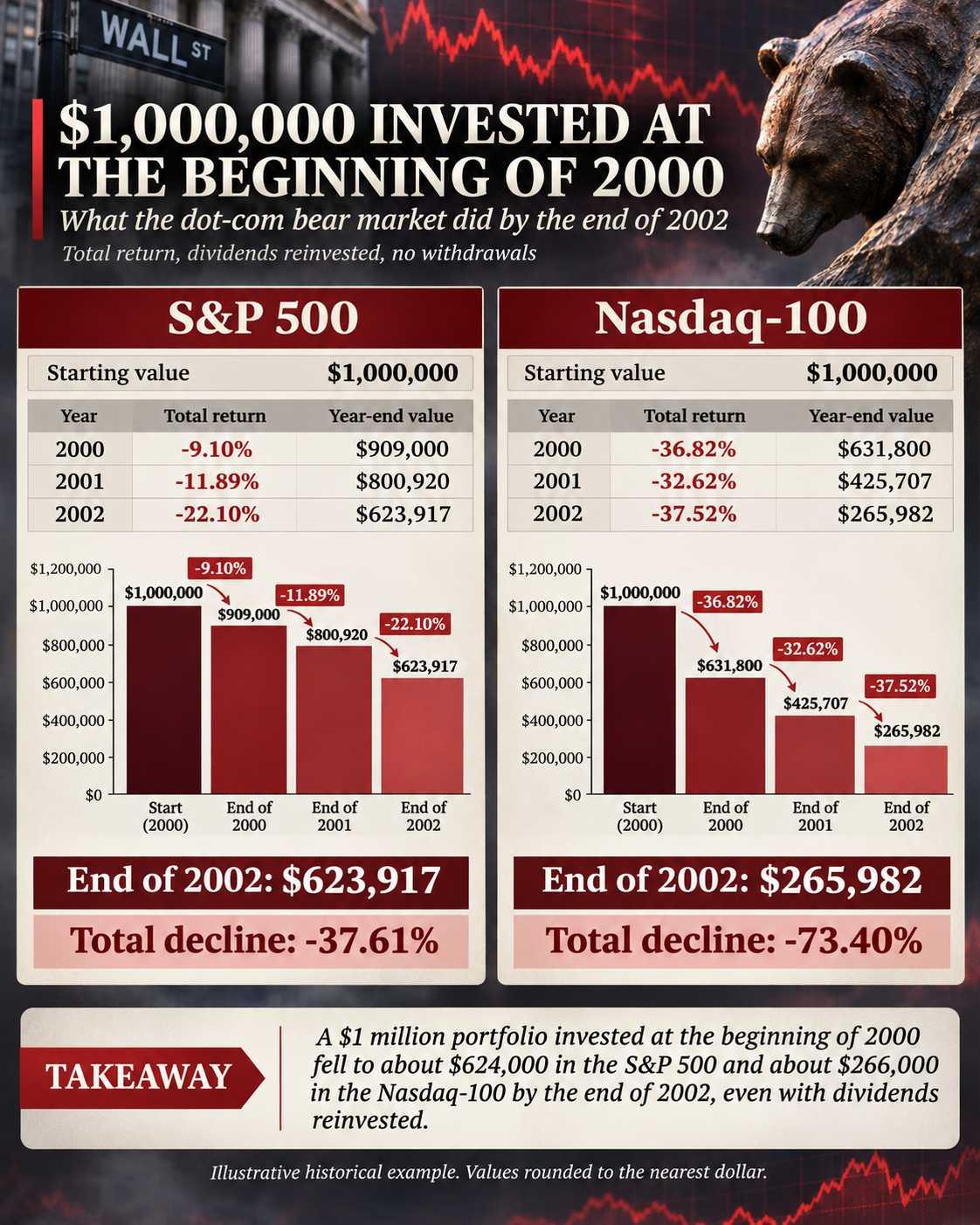
But lets put the the distributions to the side if we look back at the US indexes, a $1 million portfolio invested at the beginning of 2000 would have declined to approximately $624,000 in the S&P 500 or $266,000 in the Nasdaq-100 by the end of 2002. If you had a more concentrated portfolio or were leveraged it could have been more.
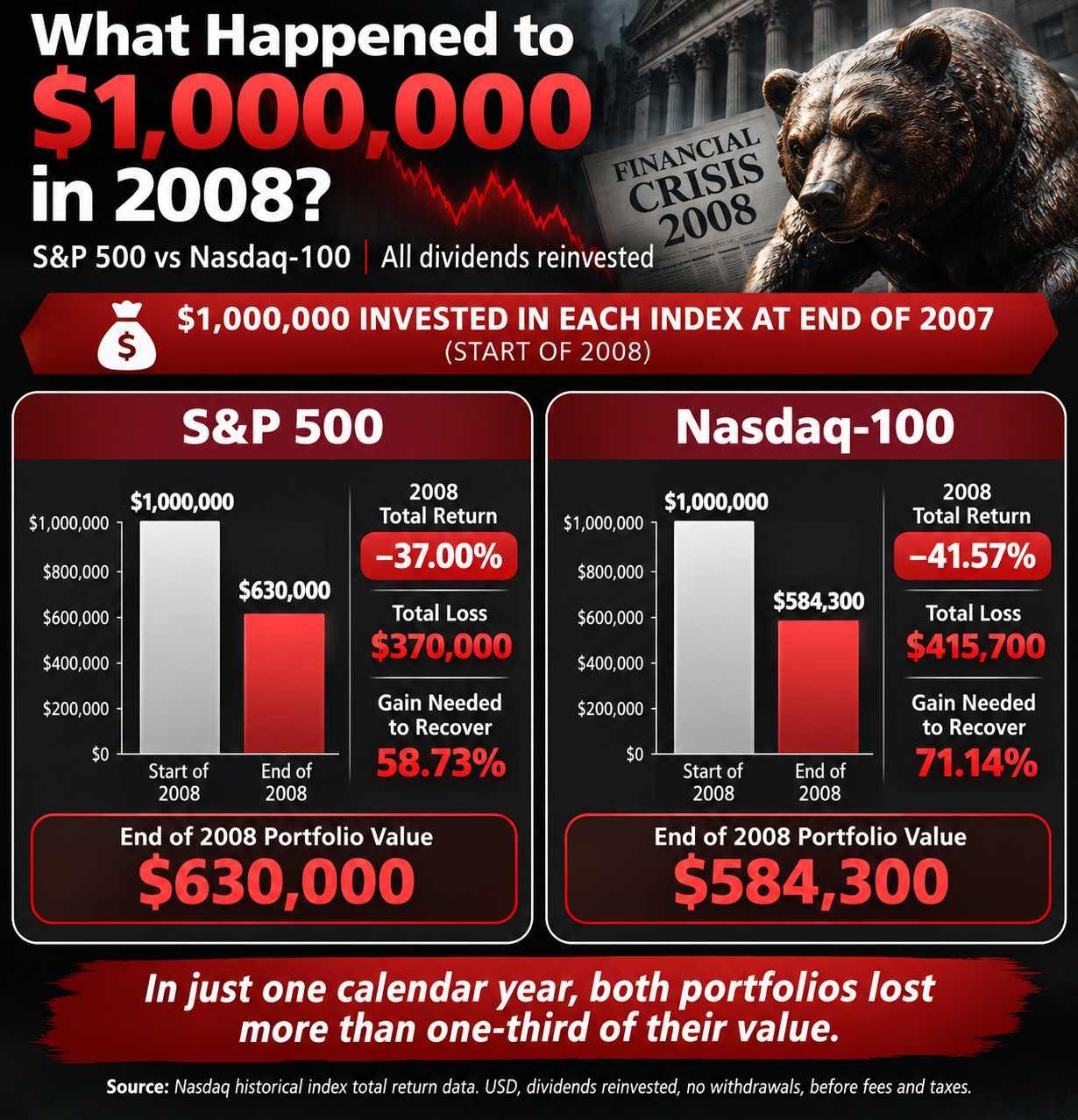
If we look back at 2008, it was a similar story. A $1 million portfolio invested at the beginning of the year in the S&P 500 would have declined to $630,000, while the same investment in the Nasdaq-100 would have declined to approximately $584,300 in a single calendar year.
Both of these scenarios assume that you reinvested all your dividends and didn't withdraw a single dollar from your portfolio. If you were retired and relying on your portfolio to fund your living expenses, the impact on your remaining portfolio value and its ability to recover could have been significantly worse.
Receiving distributions instead of selling shares does not eliminate sequence of returns risk. Regardless of how you generate your retirement income, you are still dependent on the underlying assets and their ability to sustain those withdrawals over time.
Since 1980, the S&P 500 has experienced an average intra-year decline of approximately 14%. Market corrections are a normal part of investing and should be expected. What we experienced between 2000 and 2002 and again in 2008 were considerably more severe market downturns. If we see that level of a sell off then you can expect the amount of income your portfolio can generate will decline.