ETF Types for Beginners 🤩
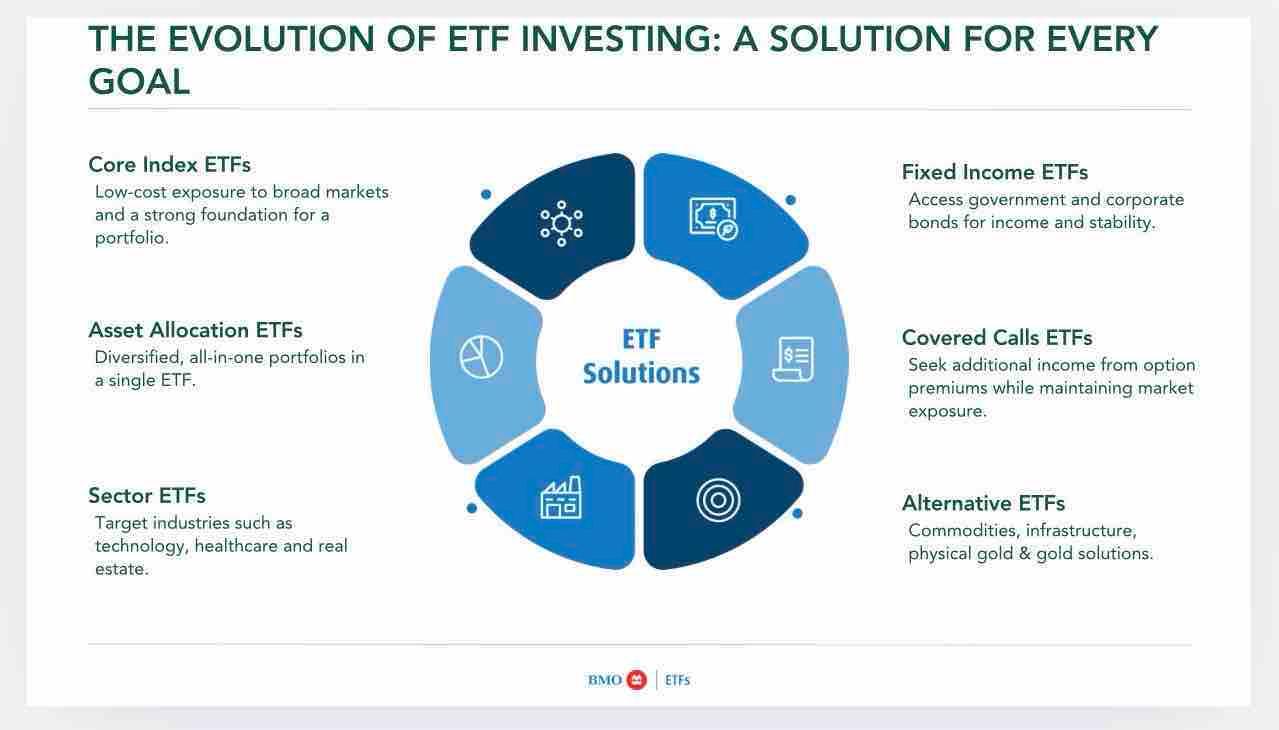
Attended the Wealth Summit this last weekend and Zayla from BMO gave an incredible overview of the different types of ETFs and how they can serve different investing goals!!
Wanted to share this on Blossom too for any beginner investors who might not know just how many different types of ETFs there are 👀
1. Core Index ETFs 📈
Track a broad market index, giving you exposure to lots of companies in one investment.
Examples:
* VFV — Tracks the S&P 500 (500 leading US companies)
* XIU — Tracks 60 of Canada’s largest companies
2. Asset Allocation ETFs 🧺
All-in-one ETFs that hold a mix of stocks and/or bonds so you don’t have to build and rebalance your own portfolio.
Examples:
* XEQT — 100% stocks, diversified globally
* VGRO — Roughly 80% stocks and 20% bonds
3. Sector ETFs 🏢
Focus on specific industries if you want more exposure to a particular sector.
Examples:
* XIT — Canadian technology companies
* XRE — Canadian real estate investment trusts (REITs)
4. Fixed Income ETFs 💰
Invest in bonds (essentially loans to governments or companies) to generate income and potentially reduce portfolio volatility.
Examples:
* ZAG — Canadian government and corporate bonds
* VAB — A diversified mix of Canadian bonds
5. Covered Call ETFs 💸
Hold stocks while using an options strategy to generate additional income. Often popular with income-focused investors, although the trade-off is that some potential upside is given up.
Examples:
* ZWC — Canadian high-dividend stocks with a covered call strategy
* ZWB — Canadian banks with a covered call strategy
6. Alternative ETFs 🪙
Give you exposure to investments beyond traditional stocks and bonds, like gold or commodities.
Examples:
* CGL — Exposure to physical gold
* XEG — Canadian energy companies (an example of a sector ETF offering energy exposure, rather than a direct commodity investment)
I think when people first start investing, they often hear “just buy ETFs” without realizing there are SO many different kinds, each serving a completely different purpose.
Also worth remembering that just because something is an ETF doesn’t automatically mean it’s diversified or low risk!
Thought this was a super helpful breakdown so sharing the slide here for anyone who’s still learning 🫶