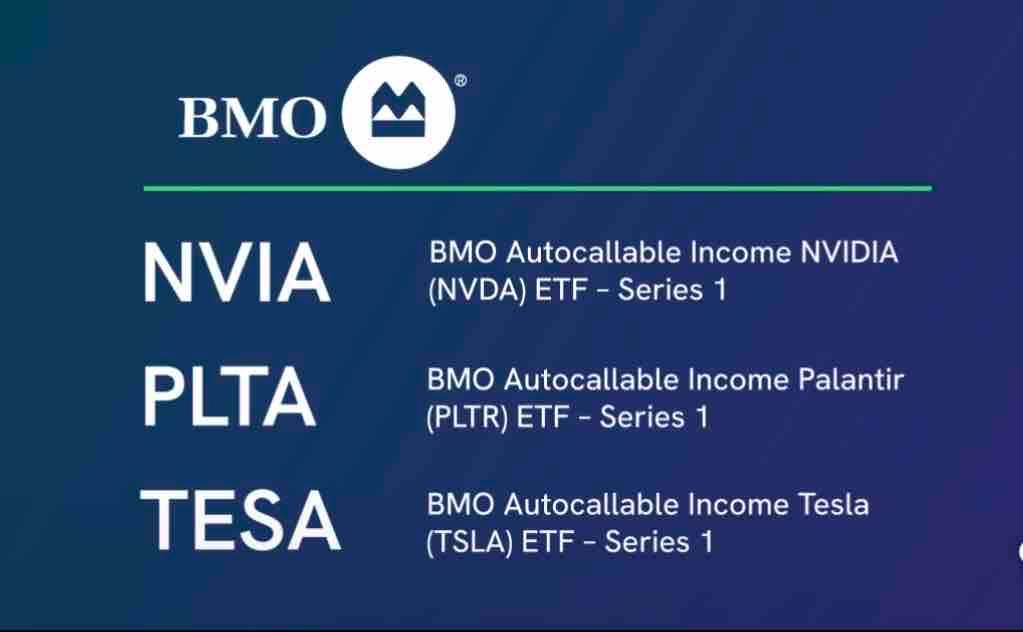
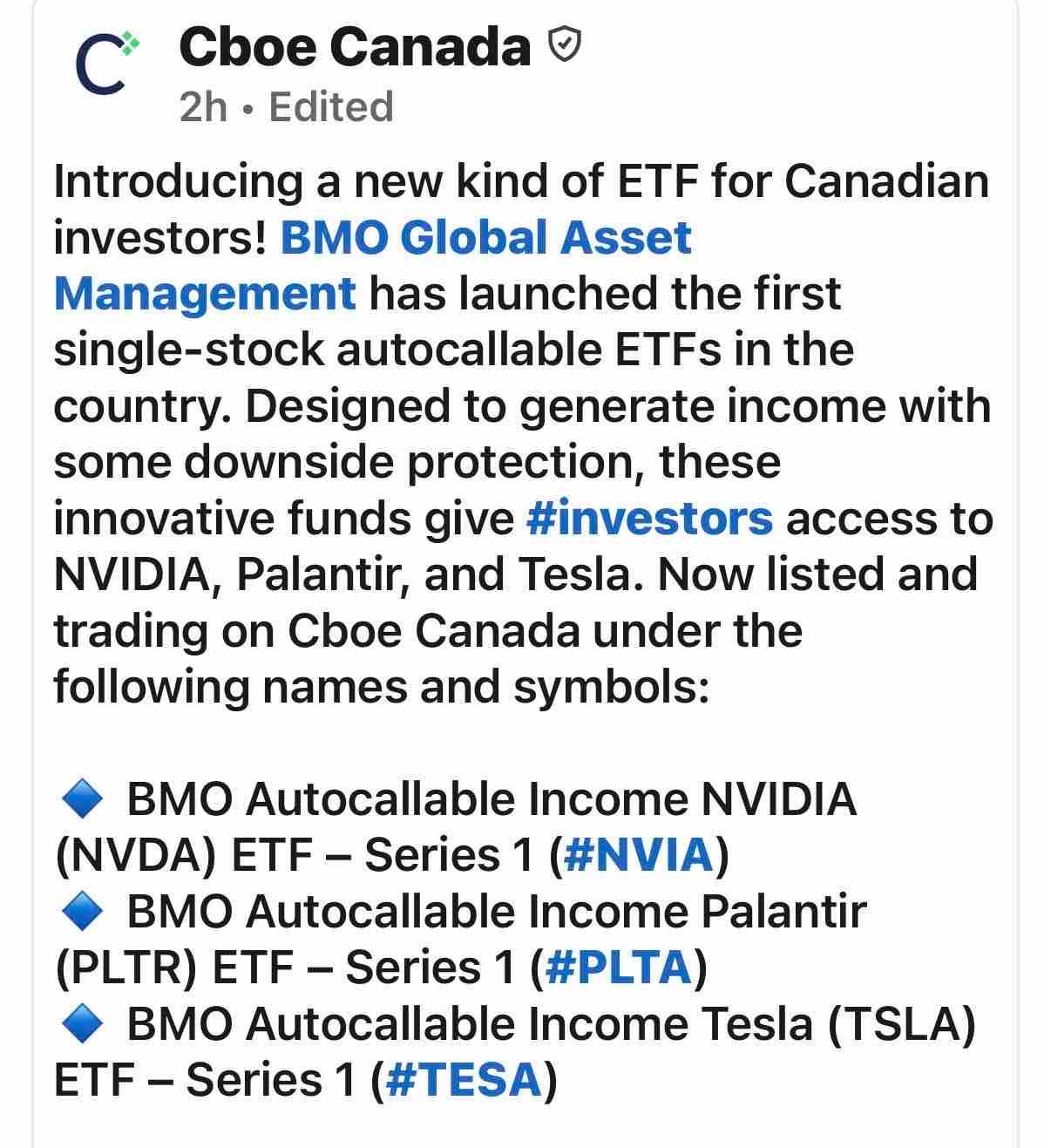
Innovation of ETFs keeps moving forward! Autocallable ETFs aim to provide regular income with a specific level (range) of downside protection. They use structured investments designed to pay regular income as long as certain market conditions are met. If the underlying holding (stock in this case) reach specified levels, the investment may be automatically redeemed early (“called”). The catch? High advertised yields - as always - come with trade-offs. Payments aren’t guaranteed, upside is often limited, and if markets fall below certain thresholds, investors can face significant losses. They’re more complex products—so not the same as traditional dividend ETFs. As always - but to visit provider and ETF website directly for full details. AWARENESS ≠ ENDORSEMENT Always do what’s best for you. 👍
These products seem like the buffer ETFs of income ... Not my cup of tea.
Ed
@edsam · 19d
Addressing a real problem in a yield hungry market 👍
Michael Conroy
@conroy119 · 19d
Interesting... I took a quick look to understand these products. Quite complex in nature. Essentially, you're betting the underlying stock will trade sideways or decline moderately over a multi-year period, while collecting conditional income. The risk/reward seems pretty asymmetric. Your upside is limited to the coupon payments, with the potential for an early autocall to cut those short. Meanwhile, if the stock falls below the downside protection barrier at maturity, you're exposed to the entire decline, not just the amount beyond the barrier. So you're sacrificing virtually all the stock's upside potential while retaining substantial downside risk. On a single stock, no less, with fees and embedded structuring costs on top. I'm struggling to see the appeal from a long-term, risk-adjusted total-return perspective. Or even for an income focused investor who doesn't want that downside risk.
See the full comment section 👀Sign up for the full Blossom experience!