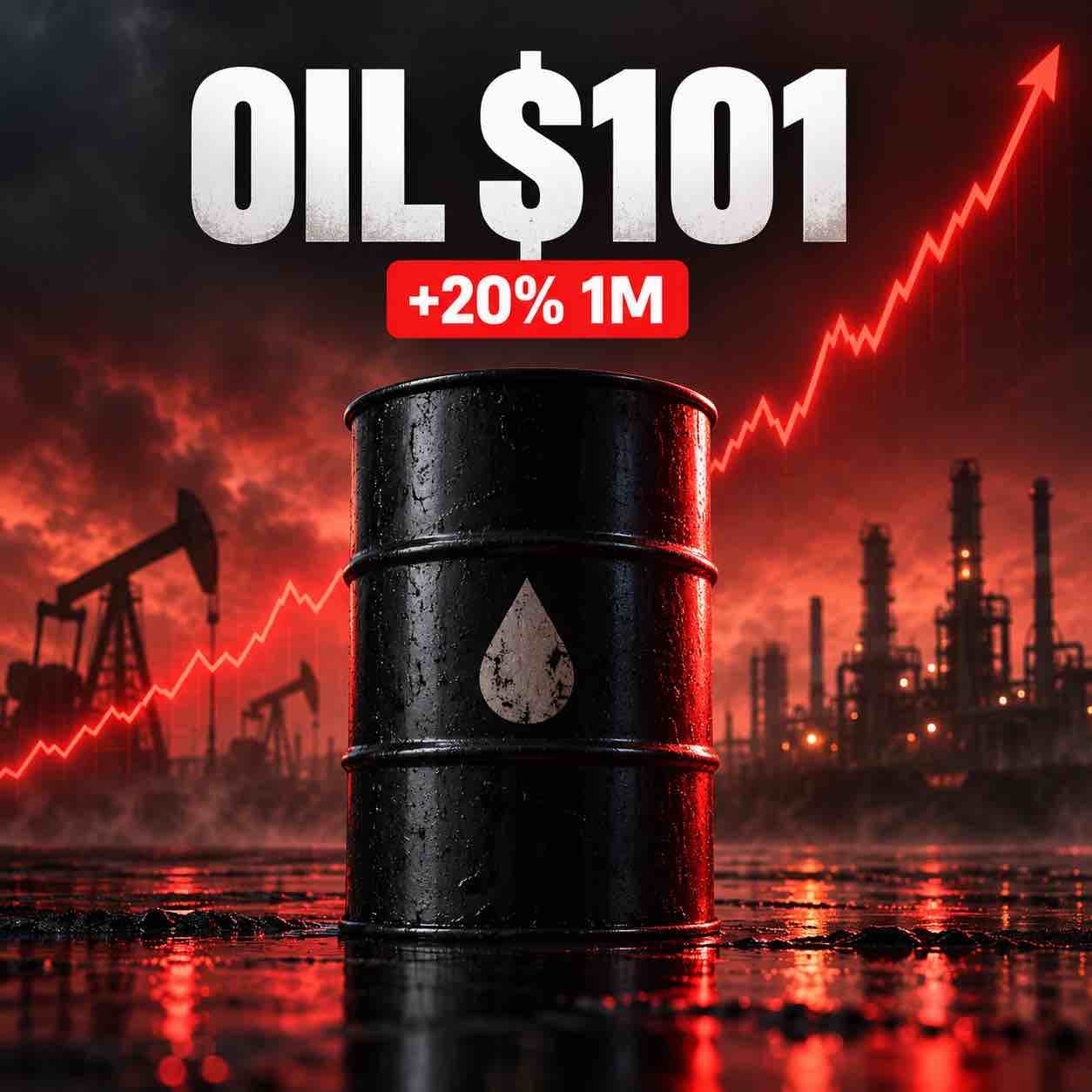
Crude oil is trading around $101 per barrel, up roughly 20% over the past month, as the war with Iran shows little sign of ending. The consequences are spreading. Airlines are reportedly cancelling cheaper flights, Saudi Aramco has cancelled some European cargoes, and JPMorgan says it no longer has a clear baseline forecast for oil because of the conflict. The latest inflationary pressure appears to be increasingly supply-driven. Higher interest rates cannot create more oil or repair disrupted supply routes. However, they can weaken demand and prevent rising energy costs from spreading into wages and prices across the broader economy. The Fed can contain the secondary effects of an oil shock, but it cannot resolve the shortage causing it. The next major decision belongs to Trump. Republicans are entering the midterms as underdogs, giving the administration a political incentive to pursue de-escalation if elevated energy prices continue hurting consumers. Iranian officials have also received visas for the upcoming UN summit in New York. This is not proof that negotiations are approaching—the United States has obligations as the UN’s host country—but it keeps a potential diplomatic channel open. For now, I remain cautious on the broader market. Prolonged energy inflation could pressure growth stocks, consumer-facing companies and the wider economy, although energy producers may continue to benefit. I have trimmed some of my short-term $NBIS position and locked in profits. I am maintaining my long-term holdings because my underlying thesis on the company has not changed. Tomorrow, I will share the price levels where I would consider accumulating again.
396 views
0 Comments
Join the conversation with 500,000+ other investors 💸
Create an account to get access to everything Blossom has to offer!
📊 Personalized algorithm based on your investing style, experience level and interests
📈 Powerful portfolio and dividend tracking tools
👀 See what top creators and others in the community are investing in