Is now the time to buy BTC? Yes, it was all the rage last year .. I even averaged up and had a decent gain but I didn't take profits as always at the peak. It's a miniscule allocation of my overall portfolio, I can not imagine the hardcores who put all their savings into $MSTE . I bailed late 2025 steep in losses on all MSTR related products and gave myself a new start over for the betterment of my portfolio. There are other ways to make money than holding out hope for the moonshot BTC. Of course time will tell if BTC is talk of the town again. If so, I'll have a little bit of the action. 🤣
For those crypto wizzes- is crypto (specifically BTC) a buy right now? As someone who doesn’t understand BTC or crypto very much, but still wants to be apart of the gains, how are you approaching the crypto market currently? $BTC$ETH$SOL$XRP$IBIT$BMNR
Did my last Upper Brass shift today! After two weeks of working every single day, I can finally say I have TOMORROW OFF ( they are forcing me 😂 ). And I reached my goal of 10,000 XRP before the week ended! 🎯 Another $100 into $XRP and, of course, $160 into $XEQT Tomorrow: class + my interview! I’m so excited 🤏
I didn’t even realize the government sent us money on August 10 , I put 70$ into more $XRP Now I’m only 57 away from my 10,000 $XRP goal! 🚀💰 So today is my last shift before my 1 day off in two weeks 😂, half of what i make will go to achive this and the other half to $XEQT
https://coinmarketcap.com/cmc-ai/chainlink/latest-updates/ $GLNK$LINK ⛓️Just broke above $9 - $9.10 resistance area!! Chainlink is navigating a pivotal moment, balancing high-level regulatory engagement with strong on-chain momentum. Here are the latest headlines: ‼️‼️White House Crypto Summit (19 August 2026) – President Trump and top regulators will meet with Chainlink and other industry leaders ahead of a key Senate vote. 🚨🚨Record Holder Count & Price Surge (15 August 2026) – LINK's unique holder base hit 3.96 million, fueling a rally toward the critical $9 resistance level. 🚀🚀Strategic $1.1M Token Buyback (15 August 2026) – The Chainlink Reserve added 127,740 LINK, reinforcing long-term token economics and signaling confidence.read more
I'm just getting into investing, and I think crypto has a bright future ahead. For the wise investors: Is it better if I invest in a major currency like Bitcoin or Ethereum, or would an crypto ETF be a better option? If so, which ETF would you recommend?
🚨 Bitcoin's worst-case scenario might actually be bullish, according to a trader. The call: a dump to $55,000-$56,000, followed by a massive bull run. Anyone waiting for $30K-$40K to buy back in could be sidelined forever. What do you think? Not financial advice. Do your own research. #followmeread more
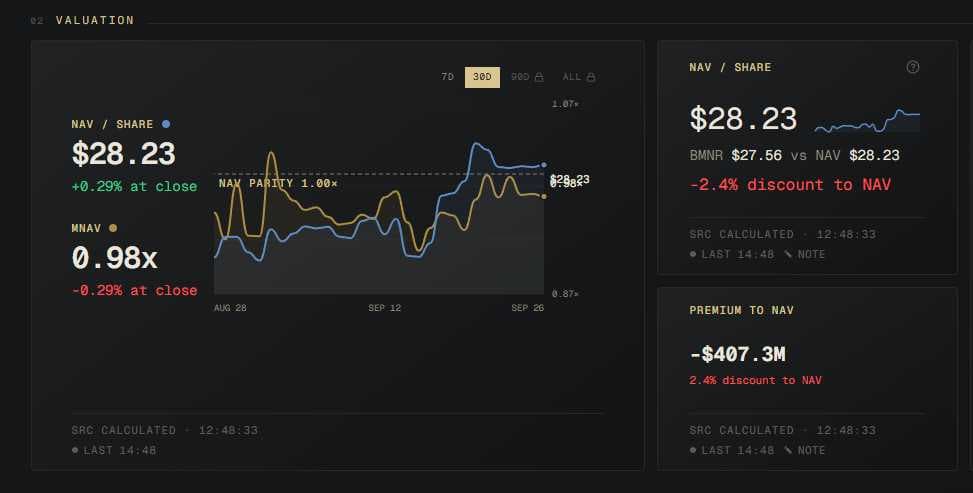
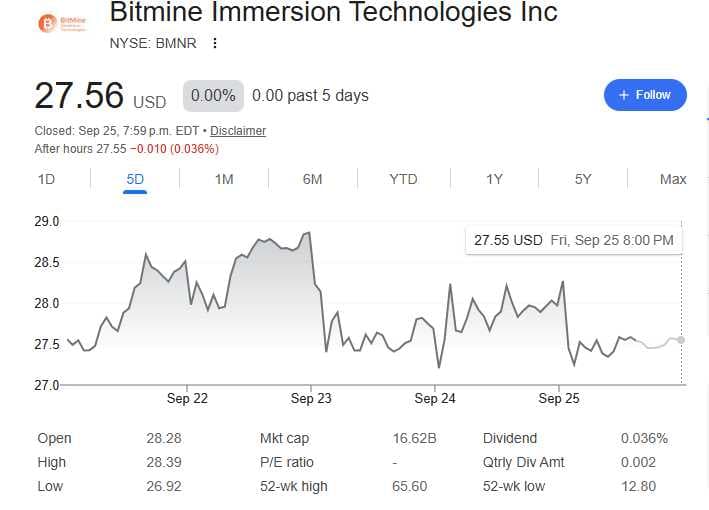
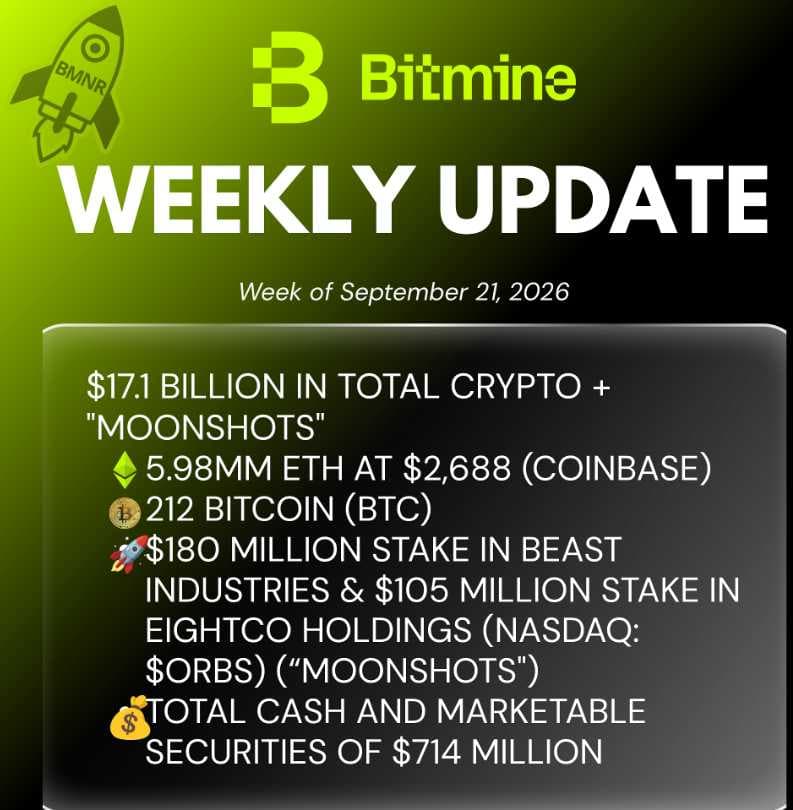
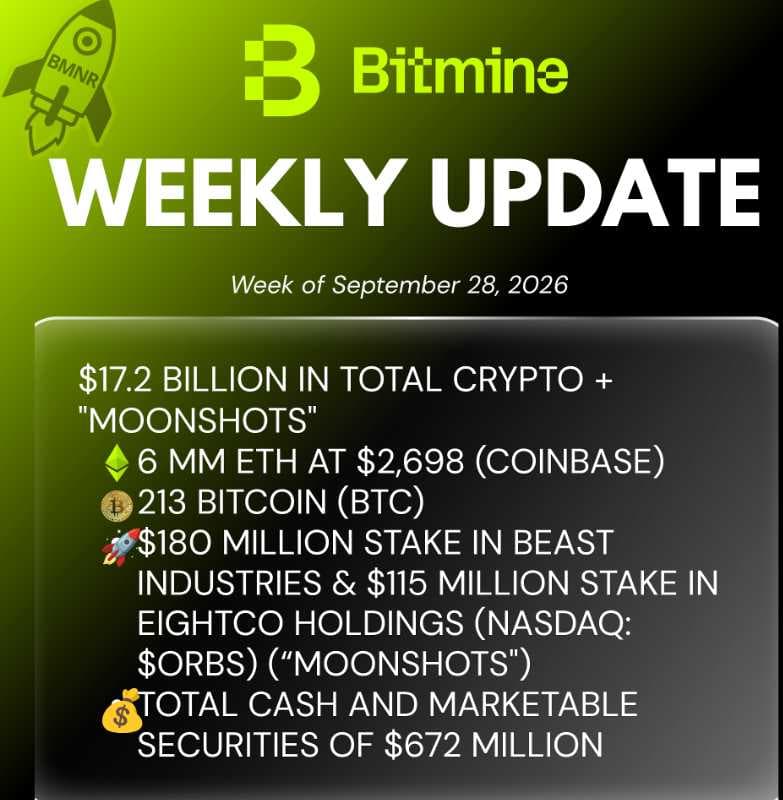
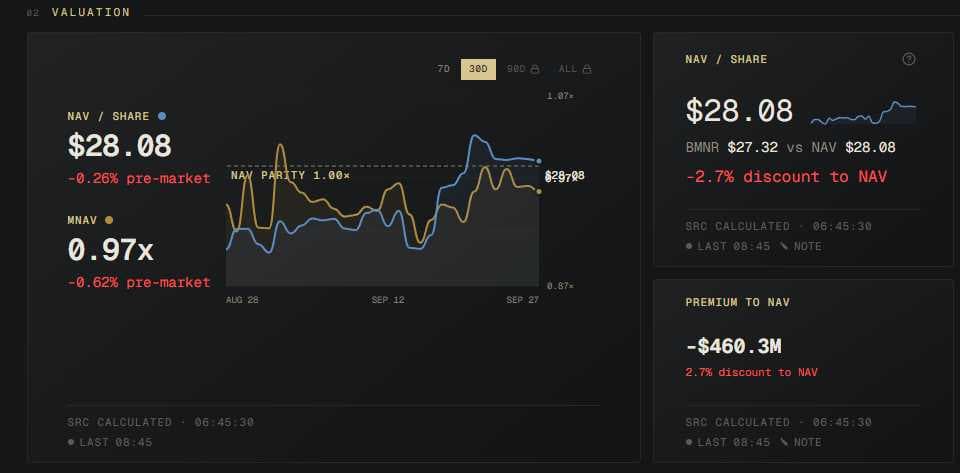
There are a lot of individual Ethereum headlines right now that may not seem especially important on their own. But when you start putting them together, I think they’re starting to paint a pretty interesting picture. For most of its history, ETH has largely been viewed as a volatile cryptocurrency whose value ultimately depends on whether someone is willing to pay more for it later. Ethereum became the dominant smart-contract platform, and the network has maintained continuous operation since launching. But I think a different investment thesis is beginning to emerge. Traditional finance is slowly moving on-chain. Stablecoins are growing, real-world assets are being tokenized, financial applications are being built on public blockchains, and major financial institutions are increasingly offering products that give investors exposure not only to ETH itself, but also to staking rewards. This is where BitMine’s thesis becomes interesting. BitMine is the largest publicly traded corporate holder of Ethereum, with an ETH treasury strategy built around accumulating and staking ETH. BMNR’s thesis is that Ethereum could become one of the primary settlement layers for the future financial system. That doesn’t mean Ethereum has to become the only settlement network, and it doesn’t have to replace the traditional financial system. It simply has to capture a meaningful share of future activity around stablecoins, tokenized assets, smart contracts, collateral, payments and financial settlement. If that happens, ETH starts to look somewhat different. It isn't simply a token used to pay transaction fees. ETH is the native asset used to economically secure Ethereum through proof-of-stake. And we are starting to see some interesting developments around that idea. Ethereum network activity has recently climbed to a five-month high. Fidelity, which manages roughly $7.8 trillion in assets, has filed to add staking to its Fidelity Ethereum Fund, FETH. The proposal would potentially allow Fidelity to stake up to 100% of the ETH held by the fund. This follows BlackRock and Morgan Stanley introducing Ethereum investment products that incorporate staking, another sign that staking is increasingly moving from crypto-native infrastructure into traditional financial products. Under Fidelity’s proposed structure, FETH would retain 85% of the gross staking rewards for shareholders, while roughly 15% would go toward staking-related fees. After fund expenses, the remaining net staking rewards would be distributed to investors in cash, at least quarterly. Then you have SharpLink, the second-largest corporate holder of Ethereum and the second-largest publicly traded corporate ETH treasury. SharpLink recently announced that it was putting approximately $200 million of ETH through Lido, Ethereum’s largest liquid-staking protocol. Instead of simply holding ETH on its balance sheet, SharpLink can stake that ETH through Lido and receive wstETH, a liquid token representing a staked-ETH position. The underlying staked ETH continues earning staking rewards, while wstETH can potentially be used elsewhere within Ethereum’s financial ecosystem. It can be used as collateral or deployed into other DeFi strategies to potentially generate additional yield. SharpLink described this as making its Ethereum more productive. BitMine and SharpLink are also both heavily institutionally owned. Fintel shows hundreds of institutional investors holding positions in the two companies, with institutional ownership representing a significant portion of each company’s outstanding shares. One of the latest notable additions is Norway’s Government Pension Fund Global, the world’s largest sovereign wealth fund, which disclosed a position of approximately 6.15 million shares of BitMine Immersion Technologies, valued at roughly $81.9 million. This shows that publicly traded Ethereum treasury companies are increasingly finding their way into traditional institutional portfolios. The ethereum investment thesis itself appears to be changing. The older thesis was fairly straightforward. More activity on Ethereum meant more demand for blockspace, which generally meant higher transaction fees. Since Ethereum burns the base portion of transaction fees, increased activity could lead to more ETH being destroyed. Whether ETH supply actually grows or shrinks depends on the balance between new ETH issued to validators and ETH burned through transaction fees, but the burn mechanism became an important part of the bullish argument. Ethereum's scaling strategy has complicated that thesis. Ethereum has deliberately moved toward a rollup-centric architecture, where Layer 2 networks process large numbers of transactions and then settle or post data back to Ethereum. At the same time, upgrades have dramatically reduced the cost for Layer 2 networks to use Ethereum.That's great if the goal is to build infrastructure capable of supporting dramatically more economic activity. But it also means more transactions do not necessarily translate into proportionally more fees or more ETH being burned. That creates a different valuation question. Instead of only asking: How much fee revenue does Ethereum generate? The emerging thesis asks: What is the economic value of ETH if Ethereum becomes an important settlement and security layer for very large amounts of on-chain assets? Imagine a future where hundreds of billions or eventually trillions of dollars of stablecoins, tokenized securities, real-world assets and other financial instruments use Ethereum or Ethereum-based Layer 2 networks. Staked ETH would be part of the economic security protecting Ethereum's consensus layer, while ETH would continue serving as the network's native asset for staking, transaction fees and collateral throughout parts of the broader Ethereum ecosystem. That could create a very different way of thinking about its value. If ETFs, treasury companies, institutions and long-term investors increasingly acquire ETH and then stake it, that ETH is not permanently removed from circulation. Staked ETH can eventually be withdrawn, and liquid-staking products such as wstETH can make staked positions transferable. But staking can reduce the amount of ETH that is immediately liquid and available for sale at any particular moment. At the same time, those holders receive staking rewards for helping secure the network. So you could potentially have two trends developing at the same time: More economic activity relying on Ethereum for settlement and security, while a larger amount of ETH is being held or staked by longer-term owners. If demand for ETH accelerates again, that supply structure could matter. There may also be another source of future activity that is starting to gain some attention: AI agents. The idea is that stablecoins and smart contracts could eventually allow autonomous software to make payments, interact with financial applications and settle transactions without a person manually approving every transaction. An AI agent could potentially receive stablecoins, pay for services, interact with smart contracts and settle transactions automatically. If that type of activity grows, the number of economic actors using blockchain networks could expand beyond people and financial institutions to include software itself. Again, none of this guarantees Ethereum wins that market, and it doesn't mean ETH is mispriced today. Ethereum still has to prove that growing usage and settlement activity ultimately creates enough economic value for ETH itself. And that brings me back to the question in the title. Is Ethereum being priced correctly today, or is the market still valuing ETH primarily as another volatile cryptocurrency? Because if the current crypto bear market eventually ends at the same time that traditional finance continues moving on-chain, institutional staking continues growing, more ETH is accumulated by long-term holders and Ethereum increasingly becomes infrastructure for stablecoins, tokenized assets and financial settlement, then the next cycle could look different. It may not simply be another crypto rally. The market could eventually begin asking a different question: What is the native asset securing and supporting a financial network handling trillions of dollars of economic activity actually worth? We don't know the answer yet. But if Ethereum gets anywhere close to fulfilling that thesis, ETH may eventually be valued very differently than it is today. read more
Like any good conspiracy, there has to be at least a little bit of truth buried somewhere underneath it. So get your tin foil hats on, because this one is actually pretty interesting. Let's start with what we know is true. On Wednesday, August 19, a pretty important meeting is expected to take place at the White House involving some of the biggest names in crypto, prediction markets and AI. President Trump is expected to attend, along with executives associated with Coinbase, Ripple, Gemini, Robinhood, Polymarket and Kalshi, among others. CFTC Chairman Mike Selig is also expected to be there, and Treasury Secretary Scott Bessent and Commerce Secretary Howard Lutnick have reportedly been mentioned as possible attendees. The meeting isn't just a random gathering of crypto CEOs either. It is expected to help kick off a policy dialogue around some of the biggest questions still hanging over the U.S. digital-asset industry: crypto regulation, market structure, prediction markets and how the existing financial regulatory system should deal with all of this stuff. And the timing is worth paying attention to. The very next day, August 20, the CFTC's new Innovation Advisory Committee is holding its first meeting. The agenda for that meeting is already public, and the first session is literally called: “Crypto’s Regulatory Evolution: From Uncertainty to Clarity.” The CFTC says the discussion will cover the absence of a comprehensive federal crypto market-structure framework, overlapping regulatory jurisdictions, regulation by enforcement, how uncertainty has affected investment and innovation, and what regulators can do to provide greater clarity. Now we can put on the tin foil hat. At roughly the same time this meeting was announced, a story started spreading across social media claiming that an alleged “Trump insider” had just opened a $105 million Bitcoin long and had a 100% trading win rate. The implication was pretty obvious: What does this person know? So do a little investigating. There is in fact a very large trader on Hyperliquid who has developed something of a cult following online. The wallet is commonly known as pension-usdt.eth, and unlike a lot of crypto stories, we don't have to simply take someone's word for its trading history. Hyperliquid is an on-chain trading platform, which means the wallet and its trading activity are publicly visible. And this trader is legitimately impressive. One tracking service, Owly, currently shows the wallet with 109 closed trades and an 85.32% win rate. Do the math and that works out to roughly: 93 winning trades and 16 losing trades. So right away we can throw out one part of the viral story. The internet has repeatedly claimed this mysterious trader has a 100% win rate. It doesn't. But a 85% win rate over more than 100 closed trades is still pretty damn impressive. We don't need to make it 100% to make the story interesting. And this isn't someone making $500 bets from their basement. The wallet regularly moves tens of millions of dollars into leveraged Bitcoin and Ethereum positions. This trader also has some spectacular winning streak. By June, the wallet had reportedly put together 23 consecutive profitable trades. One of the trades during that run involved closing a massive 60,000 ETH short for approximately $5.8 million in profit. That's probably where some of the mythology around this trader comes from. Twenty-three wins in a row eventually becomes “this guy never loses,” which eventually becomes “100% win rate,” which apparently eventually becomes “Trump's insider.” Welcome to the internet. The really interesting part isn't whether this trader wins every trade. We already know that isn't true. The interesting part is that this is a real wallet, controlling real money, making extremely large directional bets, with a historically very strong trading record. And now the viral claim is that this trader has taken an approximately $105 million Bitcoin long just days before one of the more important crypto-policy meetings we've seen at the White House. That's where the conspiracy begins and conspiracy can be fun. We have an important White House crypto meeting on August 19. With some of the largest crypto and prediction-market companies in the United States expected to be represented. The President is expected to attend, and you have the CFTC beginning its new Innovation Advisory Committee meeting the following day with an agenda specifically focused on moving crypto regulation “from uncertainty to clarity.” And floating around in the background is a mysterious whale with an 85%+ historical win rate reportedly sitting on a gigantic Bitcoin long. Does the trader know something? Maybe. Or maybe an extremely successful crypto trader simply thinks Bitcoin is going higher. The facts are interesting enough that you don't actually need to make anything up. read more
BlackRock, Fidelity, Morgan Stanley, Franklin Templeton, Bank of America/Merrill, VanEck and WisdomTree are all now publishing research or guidance around adding relatively small Bitcoin or crypto allocations to traditional portfolios. Generally, the discussion is somewhere in the 1–4% range, depending on the investor, portfolio and risk tolerance. If Bitcoin moves from a default allocation of 0% to even 1–3% across a meaningful portion of traditional portfolios, the amount of capital seeking exposure to a fixed-supply asset could be enormous. That could end up being one of the biggest institutional catalysts Bitcoin has ever had. All this is happening and retail demand appears relatively low,while institutional adoption continues to expand through spot ETFs, new investment funds, model portfolios and increasingly explicit portfolio-allocation guidance. The next major Bitcoin cycle may look very different from the ones that came before it. It is hard not to be bullish.