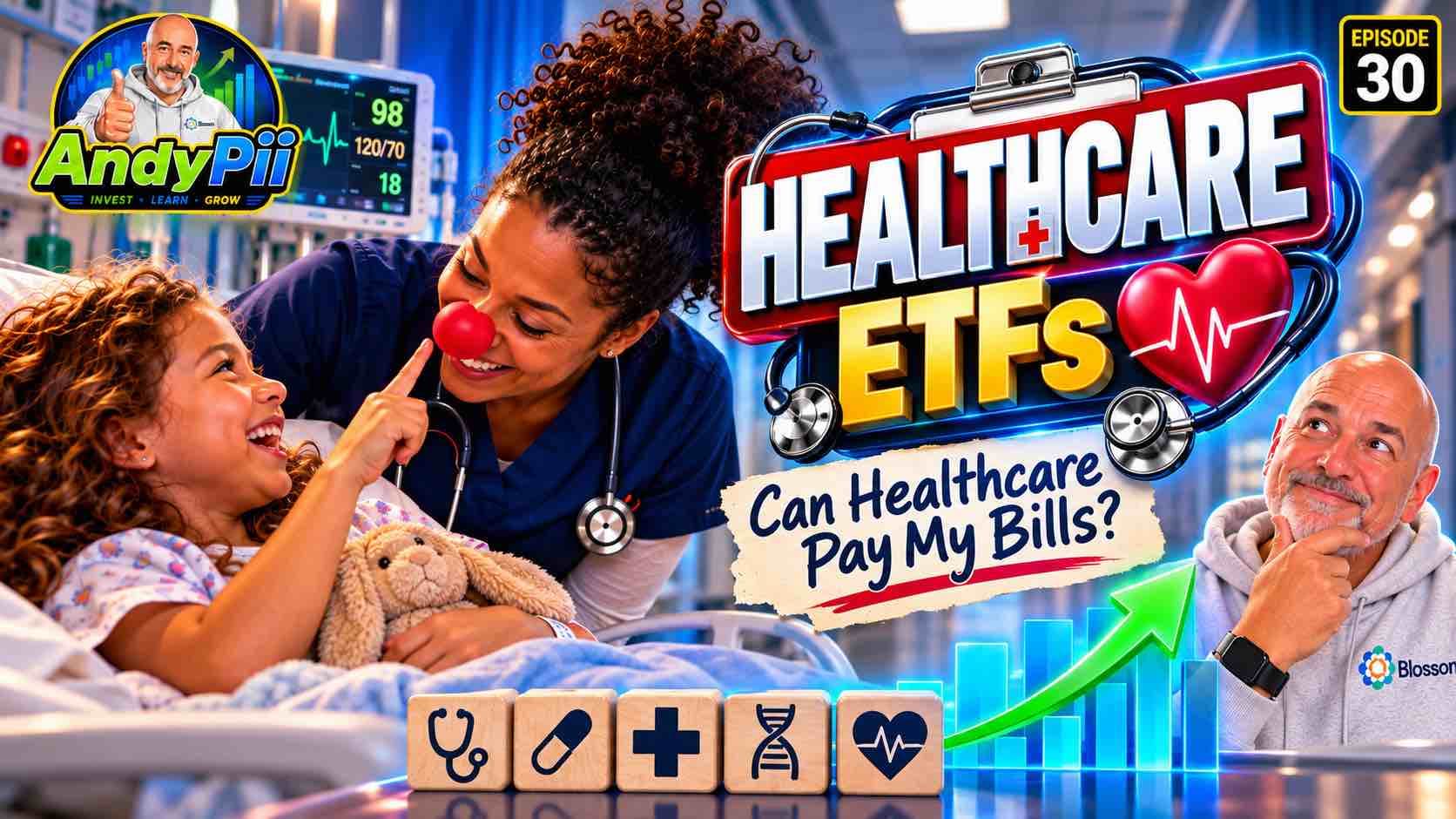
Some talk has picked up on the worry of how to handle the large number of elderly people that the world is going to have. This rise is starting as soon as 2030. I don’t think it’s a financial market that can really fail because the demand for it is going to be hard to meet with how much will be required. I have chosen to invest in $AGNG because it has a large focus on the biotech behind supporting an ageing population. It also has worldwide exposure, which is nice. The second stock I have chosen to invest in is $WELL because of its dominance in the health care real estate market. It has exposure centrally in the USA, but also throughout all of North America and the UK. We are already seeing its demand now with waitlists for long term care where people don’t get in before they die. The infrastructure behind the Silver Tsunami is a huge opportunity.
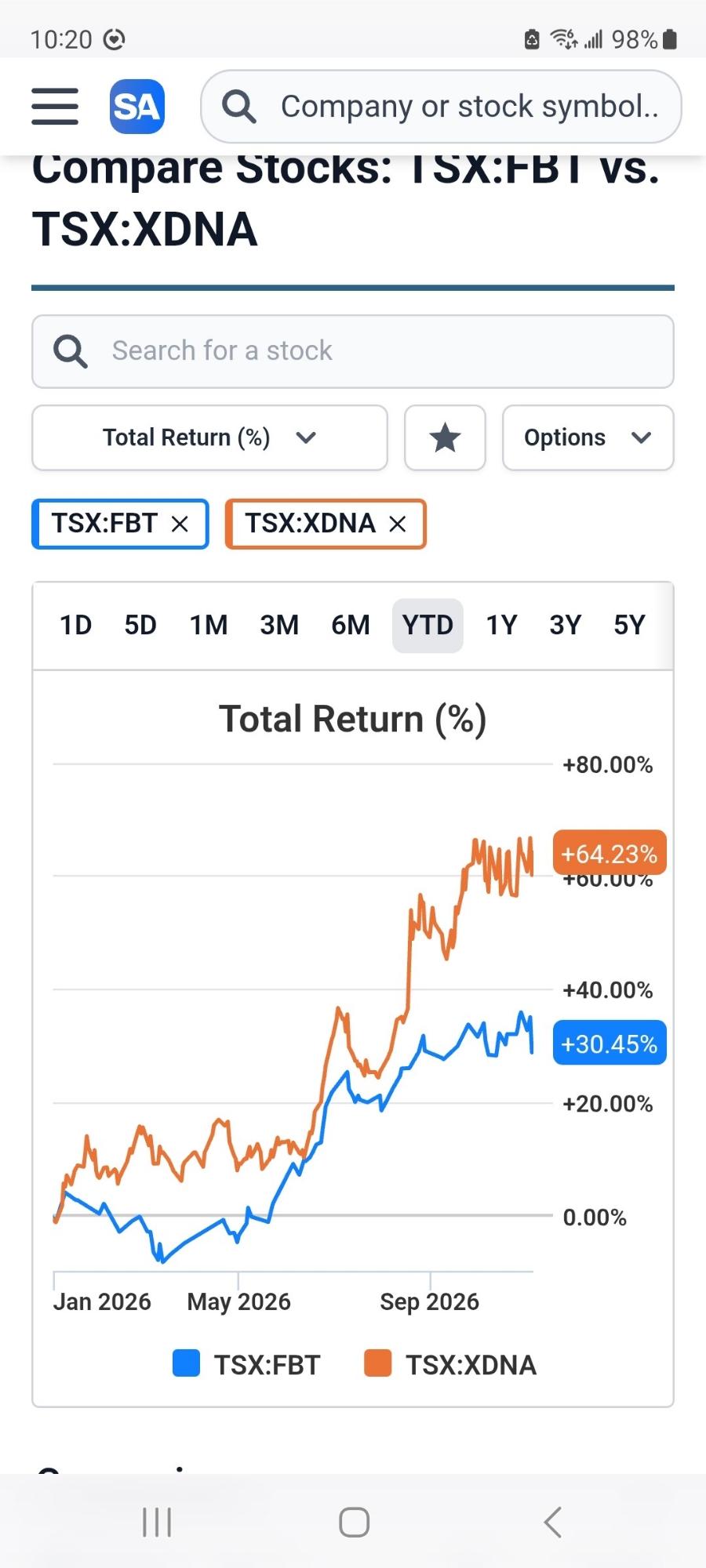
Found these ETF's about a year ago. They have been doing really well YTD, as the whole sector has also. Holding both does not have much overlap. Interesting etfs to hold if your looking for a healthcare holding. Check them out. $XDNA $FBT
Been looking at $TMDX. The part I’m trying to figure out is the planes. They sell the system that keeps an organ viable for transplant and can handle getting it to the hospital. I can see why a transplant center would want one team handling both. Revenue +41% last quarter, but operating margin went from 16.2% to 13.9%. Some of that is trial spending and expansion. Around $91 I’m still watching. I want to see whether they can do more cases with the network they’ve already built.
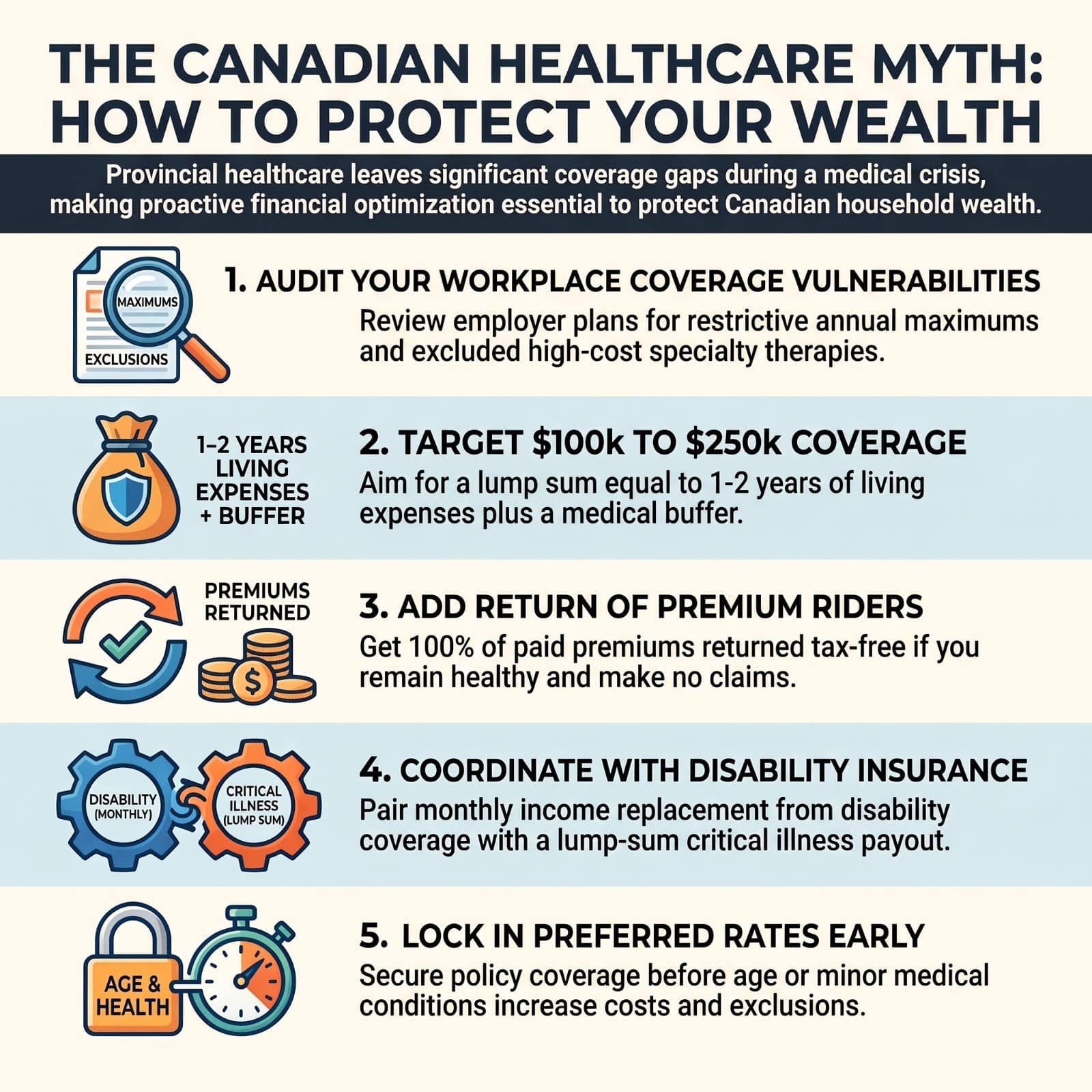
🚨 "Free healthcare" in Canada? Think again. Most Canadians believe OHIP and provincial health plans cover everything if they get sick. But the reality is that nearly 2 in 5 Canadians will face a cancer diagnosis in their lifetime—and provincial healthcare doesn't cover: ❌ Outpatient prescription medications and breakthrough therapies. ❌ Travel costs to specialized treatment centers. ❌ Your mortgage, car payments, and bills when you take time off work. ❌ Lost income when your spouse takes leave to become your full-time caregiver. Without a plan, families are forced to drain their TFSAs, raid RRSPs, or rack up high-interest debt just to get through treatment. That's why proactive Canadians use Critical Illness Insurance: 💰 An immediate, tax-free lump-sum payout ($100k - $250k+) directly to you upon diagnosis. 🏥 Complete freedom to seek second opinions, access experimental treatments, or pay off debt. 🔄 Return of Premium (ROP): If you stay healthy and never make a claim, you can get 100% of your money back! 👉 Have you ever checked how much your workplace benefits cover for major illnesses? Drop your thoughts below! #CriticalIllness #HealthInsuranceCanada #LivingBenefits #PersonalFinanceCanada #CancerAwareness #FinancialPlanningCanada #LifeInsuranceCanada #WealthProtection #CanadianHealthcare #DisabilityInsuranceread more
$OSCR announced a new partnership with HealthEx. Members can now securely connect their medical records to the Oscar app, allowing its AI assistant, Oswell, to provide more personalized healthcare guidance. I love seeing Oscar continue to build out the technology side of its business.
Another interesting development for $OSCR shareholders… Oscar Health is entering South Carolina’s ACA marketplace in 2027, starting with six counties. Management is targeting expansion into another 400 to 600 counties by 2029. I think there’s still a HUGE growth opportunity here, especially if Oscar can keep medical costs under control as it expands. Lots of room to grow.
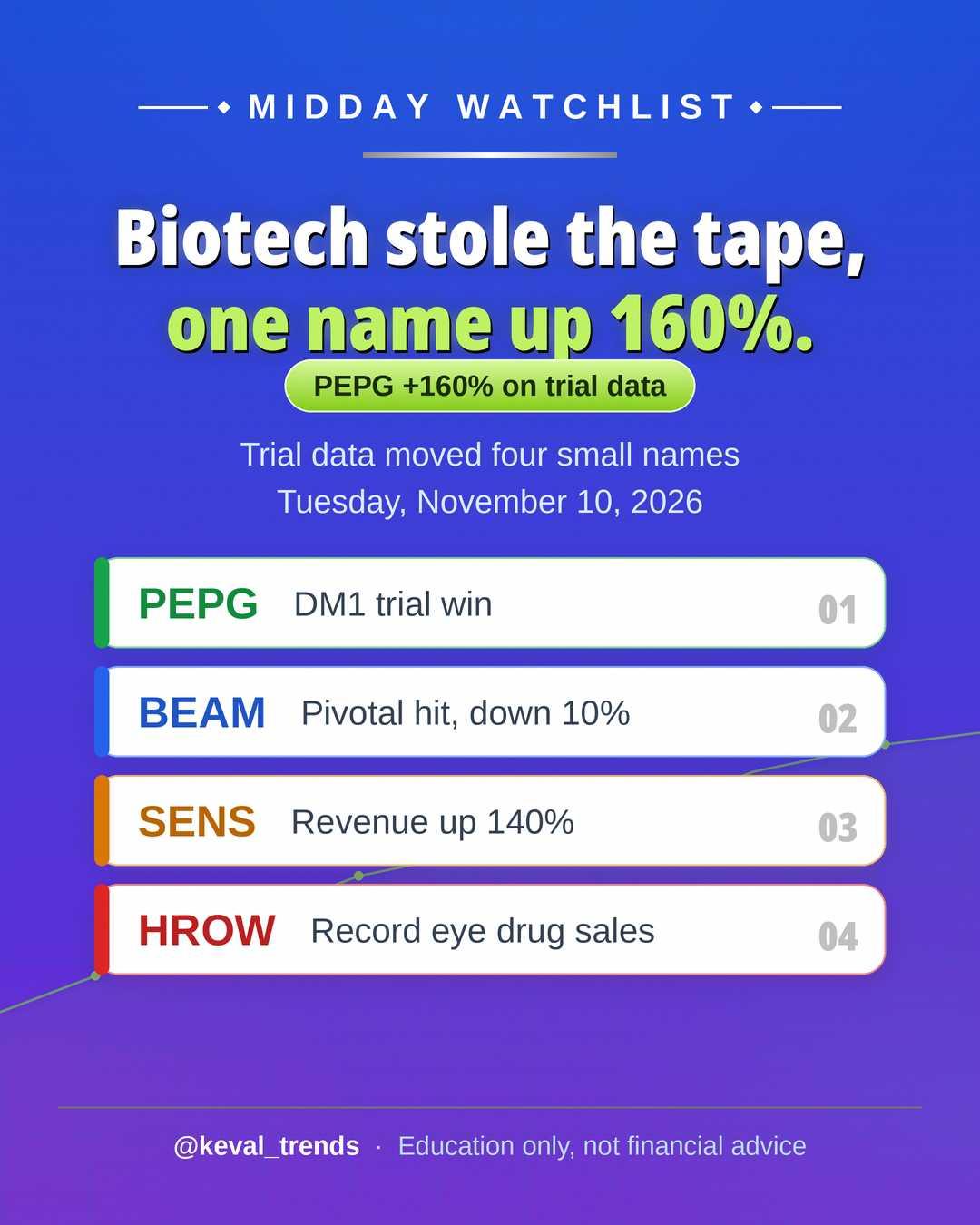
Biotech stole the midday tape while the rest of the market slid on hot CPI. One small drugmaker jumped about 160% on trial data. Another hit its pivotal endpoint and still fell about 10%. Here are 4 worth researching. 👇 📌 The Watchlist 1. PepGen | $PEPG: Develops oligonucleotide therapies for rare genetic diseases. Its DM1 drug showed 46.5% splicing correction in the 10 mg/kg cohort, the best result reported so far, and the safety board advanced the trial to the highest 12.5 mg/kg dose. 2. Beam Therapeutics | $BEAM: Builds base editing genetic medicines. Its sickle cell therapy risto-cel met its pivotal trial endpoint, 12 months free of severe pain crises, and Beam plans a BLA filing as early as year end 2026. Shares still fell about 10% midday. 3. Senseonics | $SENS: Makes long term implantable glucose monitors for people with diabetes. Q3 revenue hit a record $19.6M, up about 140% year over year, and it raised full year guidance to $68M to $70M for the third time. Shares rose about 30%. 4. Harrow | $HROW: Sells branded eye care drugs. Q3 revenue rose about 39% to a record $99.3M, led by VEVYE at $39.7M, up 75% year over year. Shares rose about 12% midday. 📌 The Part Worth Saving A trial readout is a reason to research a stock. It is not a reason to buy blindly. Look for: - Data on enough patients to mean something, not a handful - Cash to survive until the next readout - A clear next step, like a filing date or a Phase 3 plan - What the market already priced in before the news The best question: When a stock falls on good news, is the market doubting the data or the price it already paid? Education only, not financial advice.read more
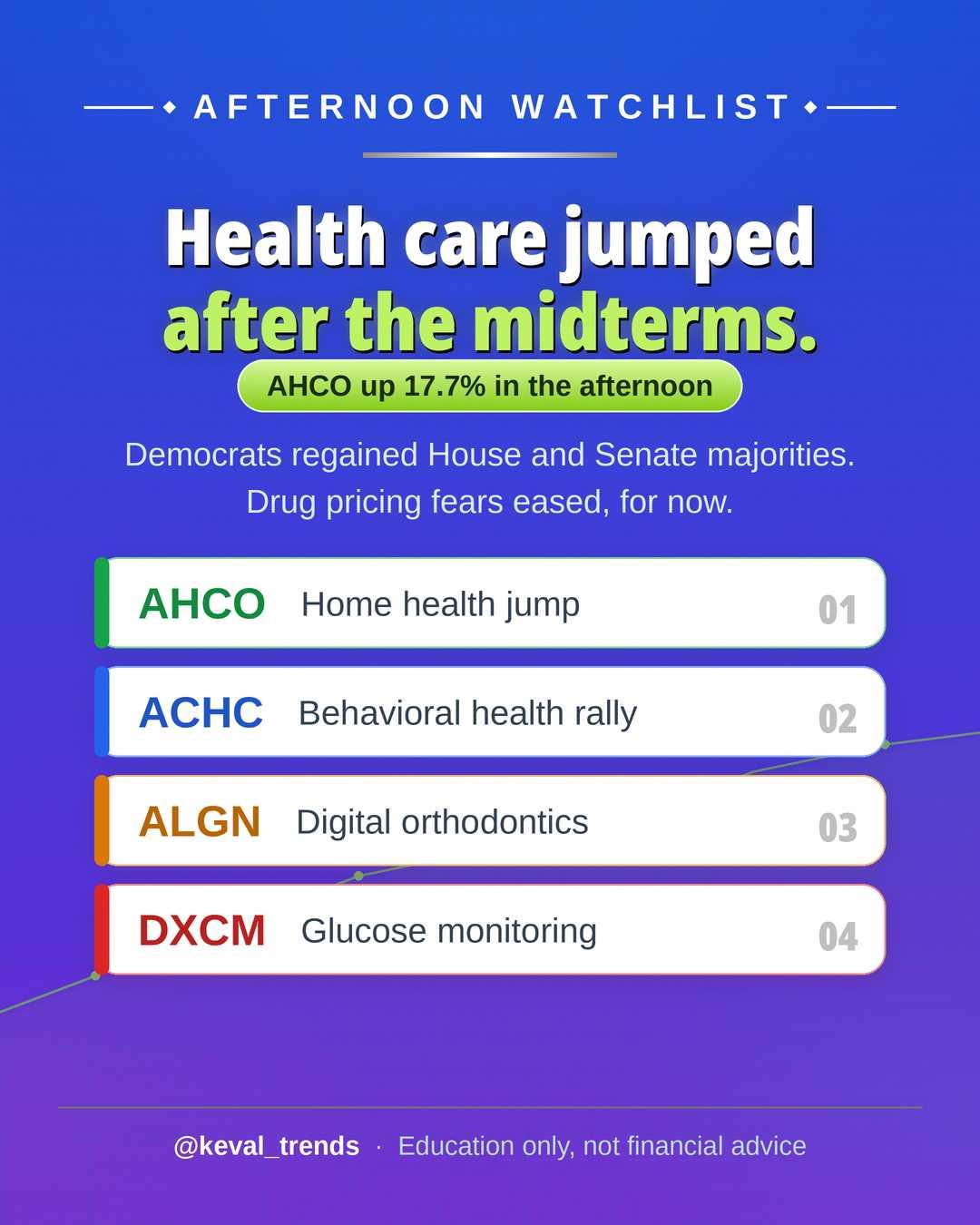
Health care stocks jumped into the afternoon after Democrats regained majorities in the House and Senate. Analysts said drug pricing legislation is unlikely to dominate the new agenda, and existing Medicare price negotiations expand automatically each year, easing near term policy risk for the sector. Here are 4 worth researching. 👇 📌 The Watchlist 1. AdaptHealth | $AHCO: Home medical equipment and home health provider. Shares jumped 17.7% in the afternoon session, after its third quarter raised full year revenue guidance to $2.88 billion to $2.90 billion. 2. Acadia Healthcare | $ACHC: Behavioral health care provider running psychiatric hospitals and outpatient programs. Shares jumped 10.5% in the afternoon session with the wider health care rally. 3. Align Technology | $ALGN: Digital orthodontics company focused on clear aligner treatment. Shares jumped 9.8% in the afternoon session as health care names moved higher. 4. DexCom | $DXCM: Continuous glucose monitoring systems for people with diabetes. Shares jumped 6.5% in the afternoon session, a smaller move than the other three but part of the same rally. 📌 The Part Worth Saving A policy relief rally is a reason to research a stock. It is not a reason to buy blindly. Look for: - Real revenue and cash flow, not just a one day relief move - What reimbursement or pricing rules actually change next - Whether the jump holds after the first session - A business that can grow even if the policy story fades The best question: Which of these four would you research first, the biggest mover or the steadiest business? Education only, not financial advice.read more
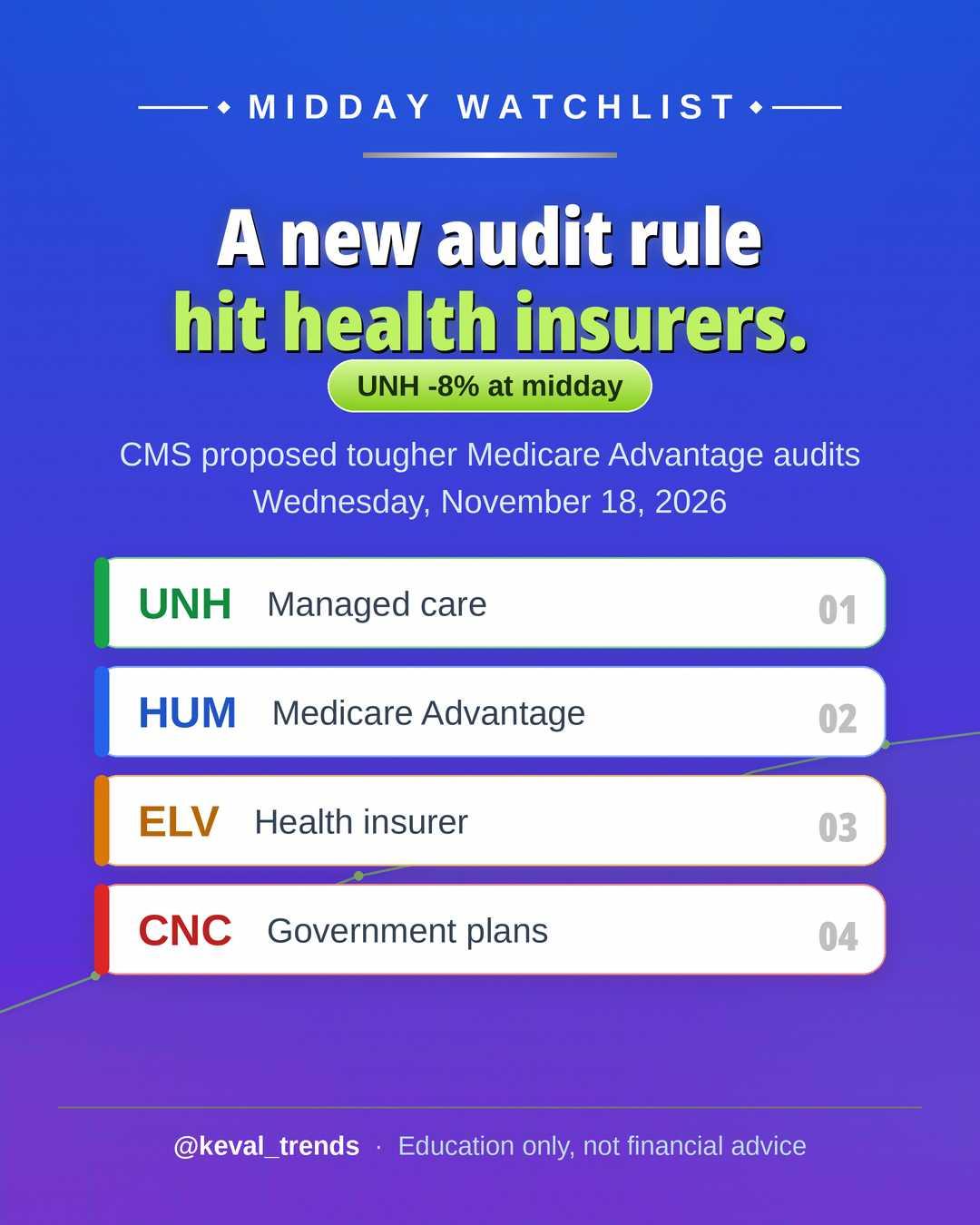
Washington just changed the math for health insurers. On November 16, Medicare proposed a sweeping audit rule for Medicare Advantage plans. At midday the whole managed care group was sliding, and the Dow fell about 1.2% toward 50,000. Here are 4 worth researching. 👇 📌 The Watchlist 1. UnitedHealth Group | $UNH: The largest Medicare Advantage insurer in the US. It fell about 8% at midday after dropping 5.4% on Tuesday, with the proposed audits reaching back to payment year 2018. 2. Humana | $HUM: Medicare Advantage is central to its business, with about 7 million members. It fell about 9% at midday, the biggest S&P 500 loser of the day. 3. Elevance Health | $ELV: One of the largest US health insurers, with a large Medicare Advantage book. It fell about 6% at midday as the whole managed care group slid. 4. Centene | $CNC: A major managed care insurer focused on government health programs. It fell about 6% at midday on the same audit fears. 📌 The Part Worth Saving A regulatory headline is a reason to research a stock. It is not a reason to buy blindly. Look for: - How much of each insurer's revenue comes from Medicare Advantage - What the proposed audits could claw back, and over how many years - Whether the company has reserved for audit exposure yet - What the comment period, open until January 19, could change The best question: which insurer can still earn its margins if the audits recover about $9 billion a year across the industry? Education only, not financial advice.read more
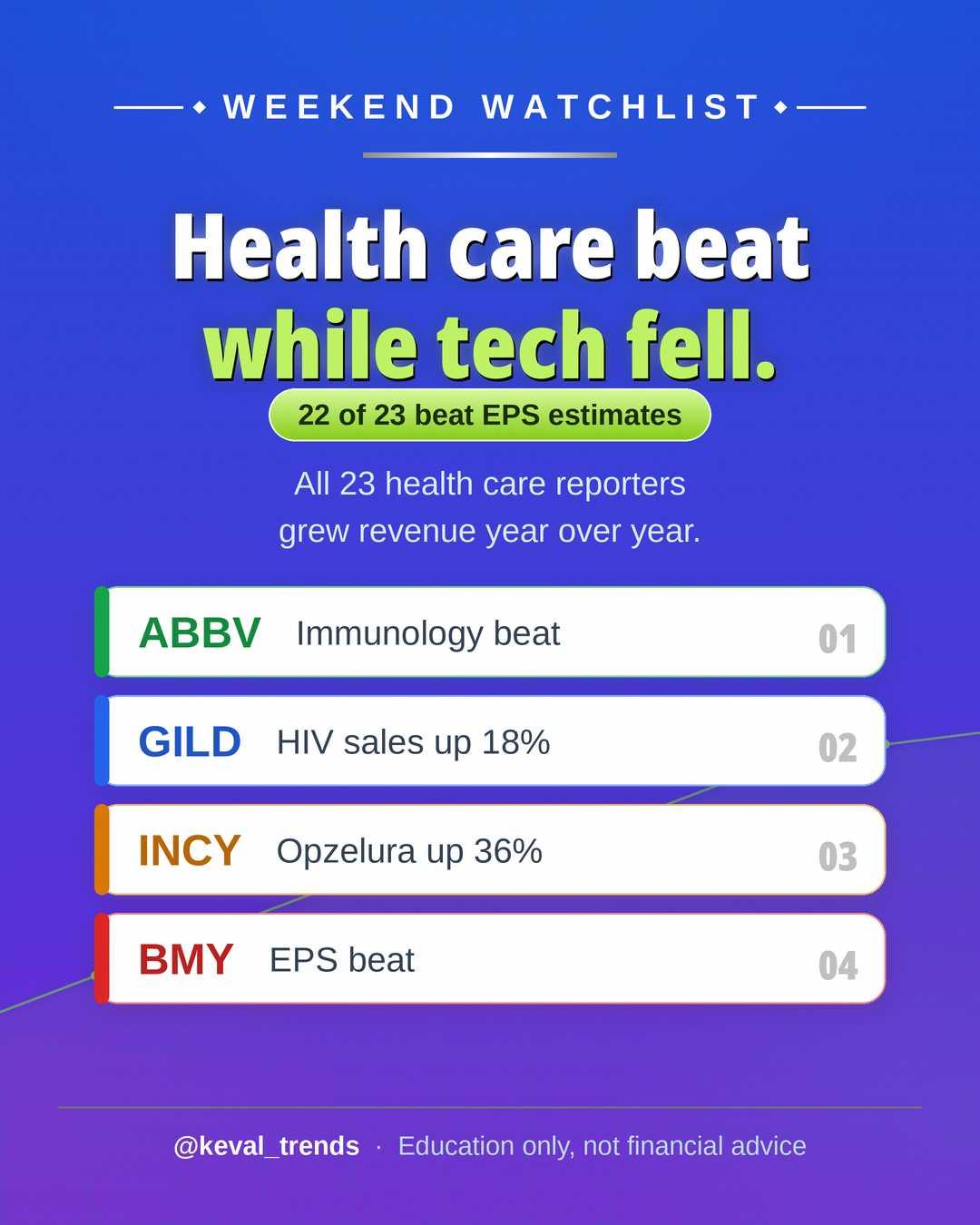
Tech had a rough week. Health care earnings did not. Of 23 S and P 500 health care companies reporting last week, 22 beat EPS estimates and all 23 grew revenue year over year. Here are 4 worth researching. 👇 📌 The Watchlist 1. AbbVie | $ABBV: Drugmaker known for immunology and neuroscience medicines. Q3 revenue was $17.40 billion, up 10.3 percent year over year, adjusted EPS was $3.82, and it raised 2026 adjusted EPS guidance to $13.95 to $13.99, with Skyrizi sales up 22.7 percent to $5.78 billion. 2. Gilead Sciences | $GILD: Maker of HIV and antiviral medicines. Q3 revenue was $8.30 billion, up 7 percent year over year, adjusted EPS was $2.55, and it raised full year 2026 product sales guidance to $31.0 billion to $31.3 billion, with HIV sales up 18 percent to $6.2 billion. 3. Incyte | $INCY: Biotech focused on cancer and immune diseases, led by Jakafi and Opzelura. Q3 total revenue was $1.56 billion, up 14 percent year over year, and it raised 2026 total net sales guidance to $5.21 billion to $5.30 billion, with Opzelura sales up 36 percent to $255 million. 4. Bristol Myers Squibb | $BMY: Drugmaker with cancer, immunology and heart medicines. Q3 revenue was $13.07 billion, up 7 percent year over year, and adjusted EPS was $1.35, topping the $1.09 estimate. 📌 The Part Worth Saving A beat is a reason to research a stock. It is not a reason to buy blindly. Look for: - Revenue growth with the beat, not cost cuts alone - Guidance raised, not just a one quarter beat - One time charges separated from the core business, like Incyte's Vega acquisition charge - Patent and pricing risks still in view, like Gilead's disclosed Biktarvy Medicare price cut starting in 2028 - What the next report must repeat for the beat to hold The best question: Which of these beats looks repeatable next quarter, and which was a one time lift? Education only, not financial advice.read more
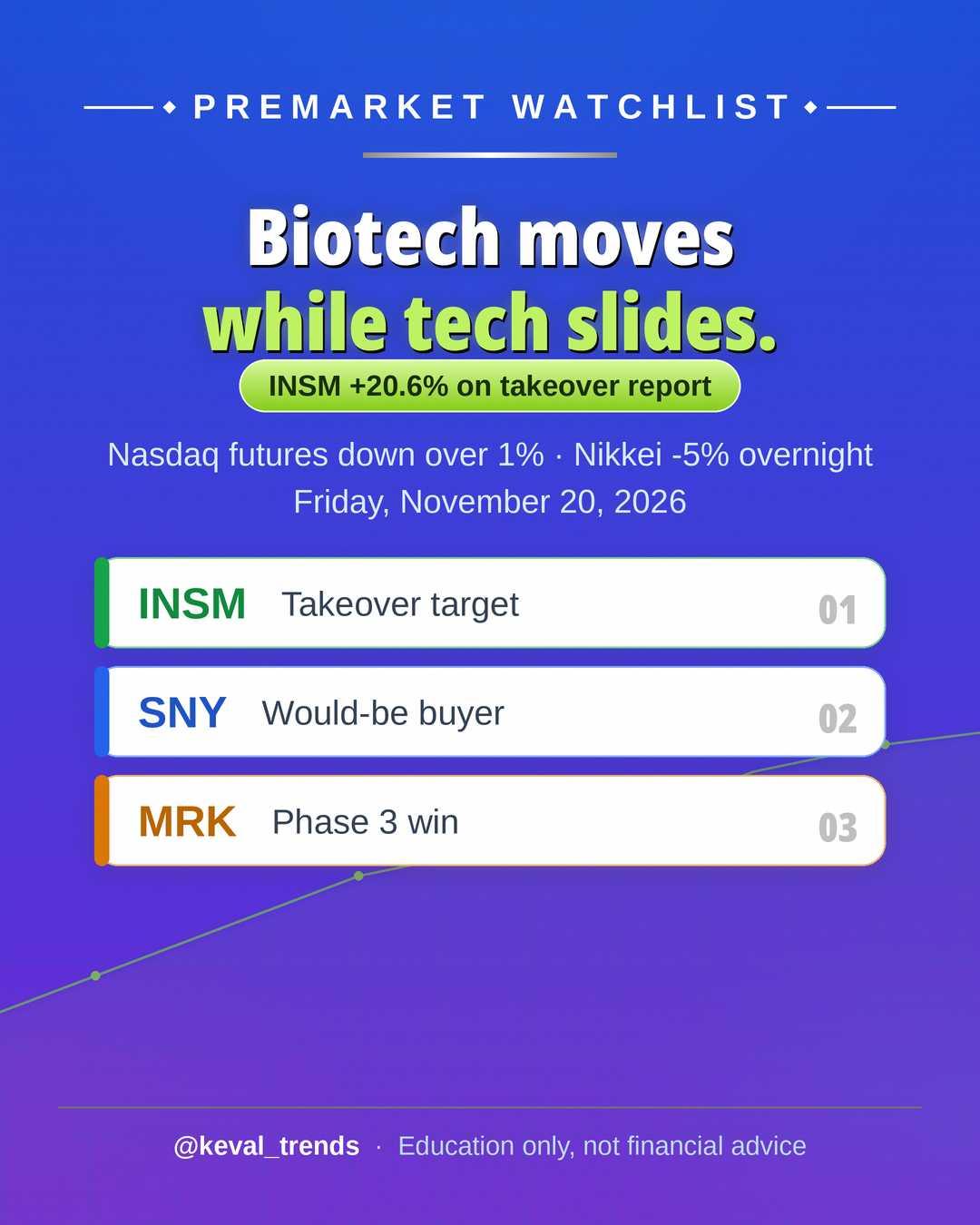
Tech is sliding into the weekend. Nasdaq futures are down over 1% and Japan's Nikkei fell 5% overnight. But biotech is moving the other way this morning. A takeover report and a cancer trial win are doing the talking. Here are 3 worth researching. 👇 📌 The Watchlist 1. Insmed | $INSM: Makes respiratory drugs Brinsupri and Arikayce. Bloomberg reported Thursday that Sanofi is weighing a takeover, possibly the biggest biopharma deal since Pfizer's $43 billion Seagen buy in 2023. Shares jumped 20.6% Thursday to $144.46. 2. Sanofi | $SNY: The would-be buyer, hunting for growth before its Dupixent blockbuster loses patent protection around 2030. Dupixent sales rose nearly 35% to 5.7 billion euros in the third quarter, close to 40% of Sanofi's revenue. Its shares fell about 2% Thursday on the report. 3. Merck | $MRK: Announced Friday its Phase 3 TroFuse-015 trial met its survival goal in advanced stomach and esophagus cancer, the first TROP2 drug to show a survival benefit in this setting. The trial enrolled 473 patients who had already tried two or more treatments. Shares slipped about 3% after the news, with a missed secondary goal in focus. 📌 The Part Worth Saving A takeover report is a reason to research a stock. It is not a reason to buy blindly. Look for: - Whether the buyer confirms the talks, and at what price - Real revenue behind the target, not just a pipeline story - What the buyer gives up to pay for it - Trial results with full data, not just a headline win The best question: If the deal never happens, would you still want to own the target at today's price? Education only, not financial advice.read more
I’ve been looking at $XLV going into the midterms, and what interests me most is the uncertainty around the setup. Historically, buying XLV around the end of September in midterm years and holding through the end of November has worked pretty well 2002: +9.1% 2006: +0.2% 2010: -0.8% 2014: +9.0% 2018: +0.8% 2022: +14.8% That’s 5 out of 6 positive periods, with an average return of about +5.5%. What makes the setup interesting to me is that healthcare tends to be a defensive area when there’s a lot of uncertainty, and midterms usually bring plenty of that. You also have questions around regulation, Medicare, drug pricing and healthcare policy hanging over the sector. Once the election is over, some of that uncertainty gets removed, and historically the broader market has often responded well after midterms. So my thinking is pretty simple, uncertainty now could create the setup, and more clarity after the election could be the catalyst. The sample size is obviously small, so I’m not treating the 83% hit rate like a guarantee. I just think it’s an interesting historical pattern to have in mind given where we are right now. read more
What are people's thoughts on $ABCL? Was doing good for a few months, now down nearly 6% this week. New menopause drug is almost in final phase. Is this a good time to buy more?
While the AI chips were falling apart this week, down 13.5%, one sector quietly did the opposite. Healthcare was the only one of the three big groups I track that closed green, up 3.5%, while software fell 7.3%. The money that left the AI trade did not leave the market. It went defensive. And it went to quality. The three healthcare names leading my board all closed above their weekly central line, with relative strength at the top of the board: AbbVie at 285.4, UnitedHealth at 401.4, and Eli Lilly at 1,257.0. After eight weeks of going nowhere, healthcare turned into the leader in the exact week the chips broke. This is the rotation hiding under the headlines. The levels I watch on each of these, and the point where the read is wrong, will be in my newsletter tomorrow. Not investment advice 🐝