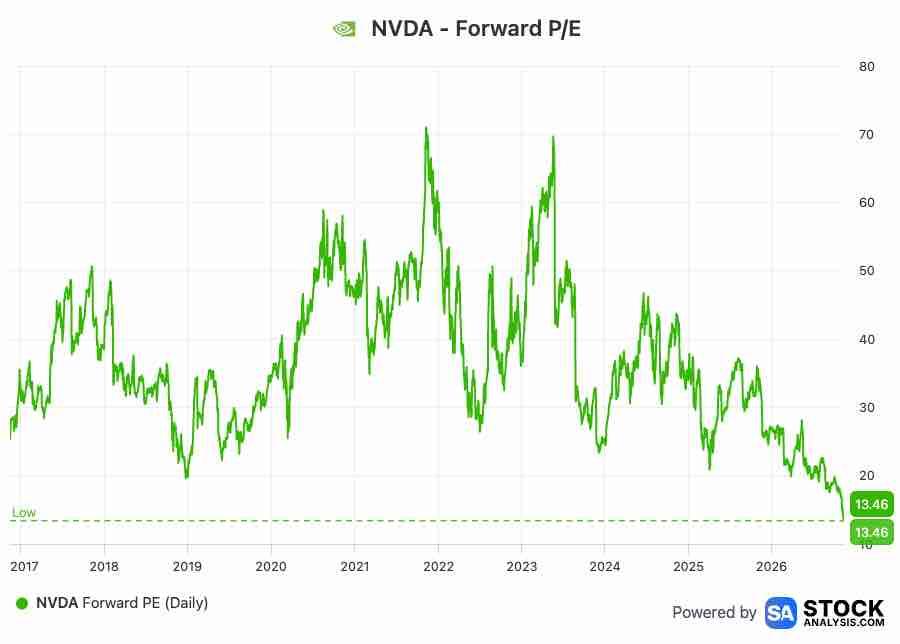
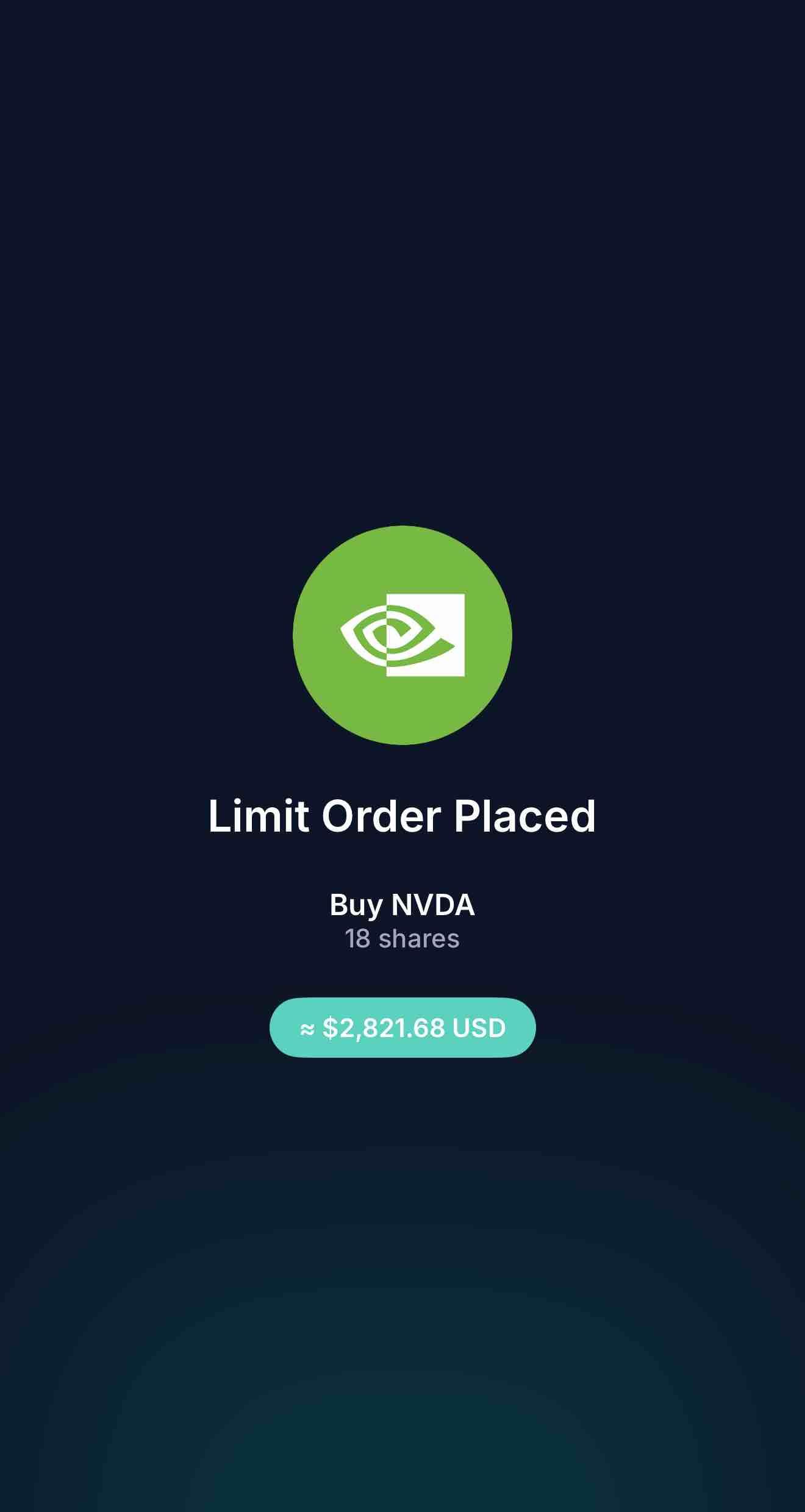
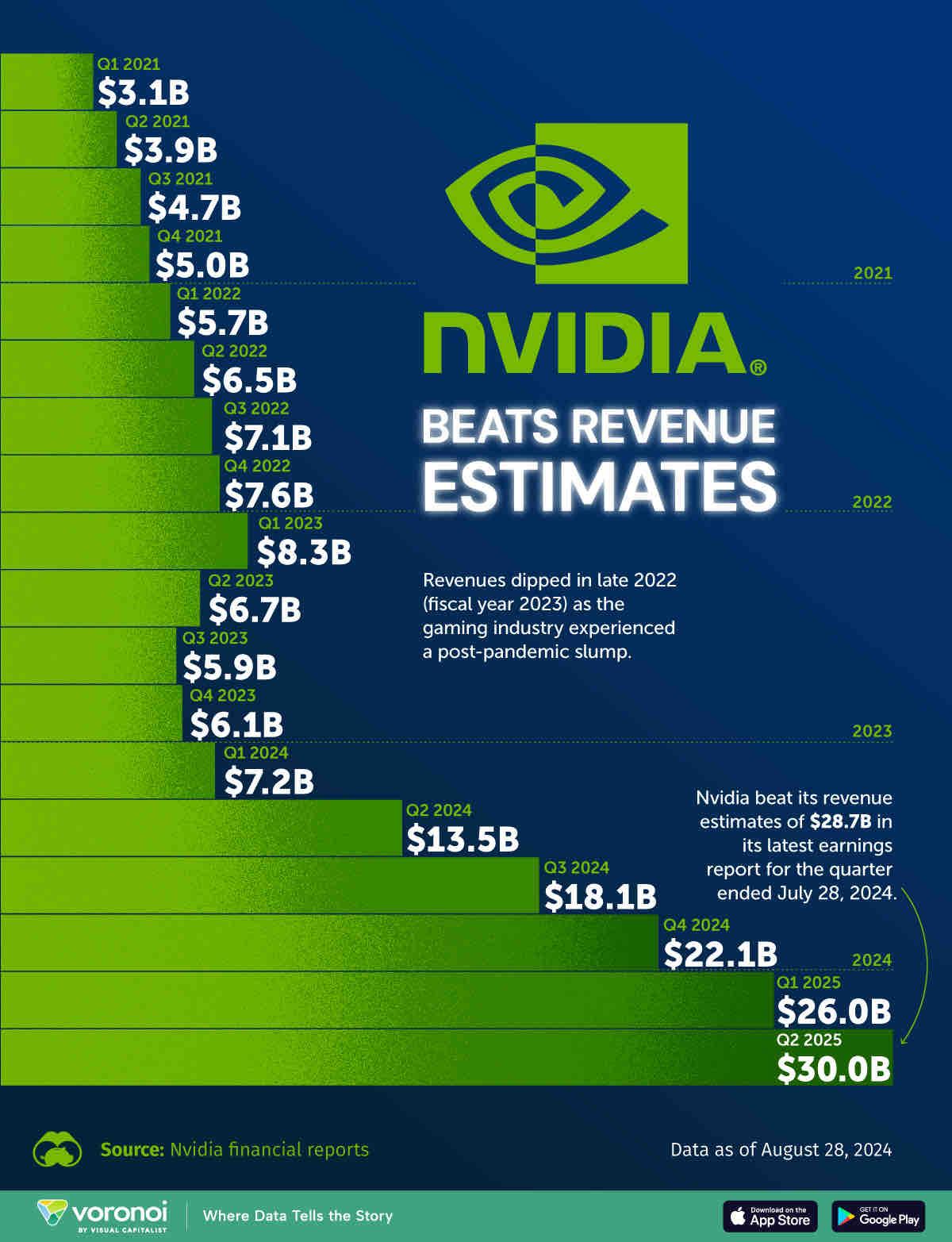
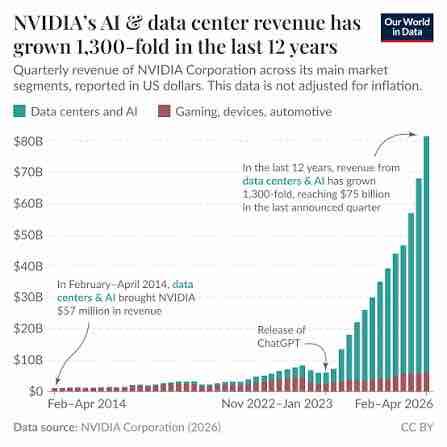
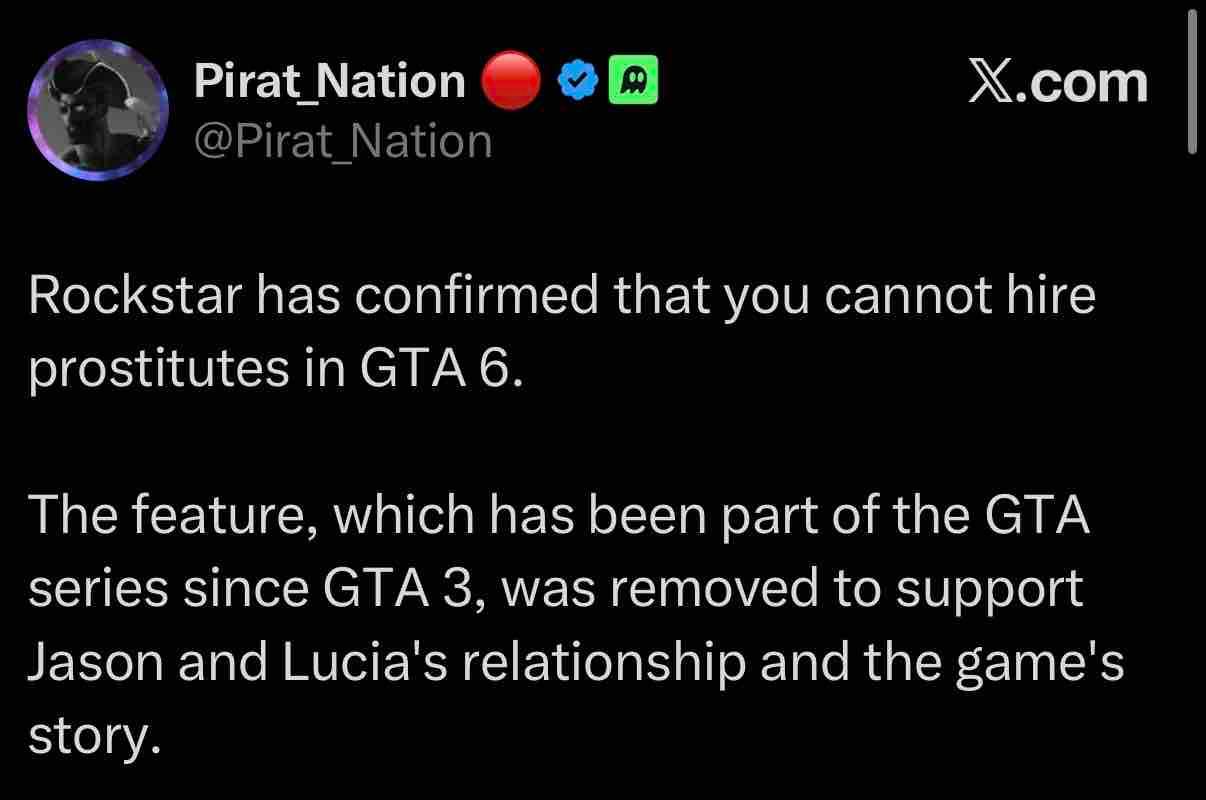
I really want your dead set opinion. I am an ETF investor but I saw NVIDIA's price and it was to enticing bought $8k between $149 and $130 about 62 sharws. my firsr single holding in a while $NVDA
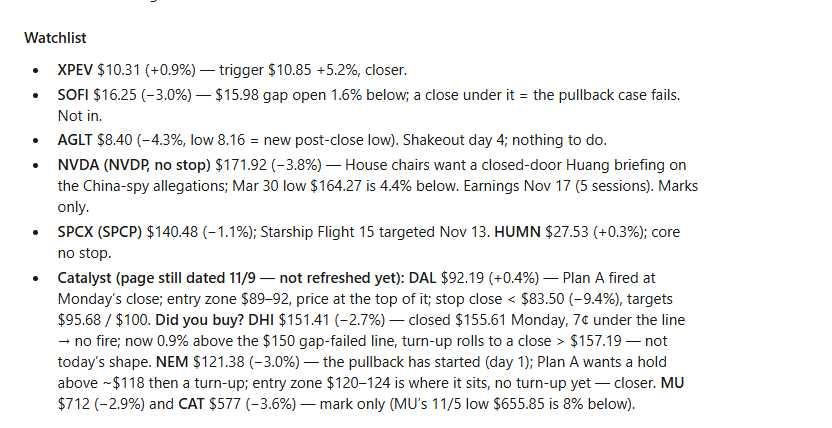
A few months ago Questrade unveiled their MCP. (Model Context Protocol). It is basically a bridge that connects your AI to whatever software you are using. In this case it is my brokerage. Personally, I this is a game changer for how we manage our money and interact with our brokers moving forward and here is why: The MCP allows me to control almost every aspect of my brokerage through some prompts in Claude, Grok, Chat GPT etc....... This includes creating orders, managing watchlists, setting alerts, analyzing the chart, reading the options chain and basically everything else you can think of. Here is how I have been using it: I set it up to create a morning routine and act as my trading journal. Now, 10 minutes after the market opens I get an update on how every stock I hold is doing and what I need to be thinking about as well as every stock at the top of my watchlist. It tells me when I need to make decisions, when my trading plan is breaking down, and what I need to be thinking about. Then I talk back to it like a normal human! I tell it how I feel about the positions, what I am seeing in the market and charts, and the decisions I am considering making. We have a brief conversation each morning to go through the decisions and manage the portfolio and then it documents every single conversation like a trading journal. It never forgets and it creates 10X more context than I could ever get from a simple journal that downloads my trades and spits out some ratios. When I am ready to place a trade, it can create the order form and send a push notification to my phone for me to approve with one swipe. I have never seen a trading tool this powerful before. It is basically like having a professional trading consultant to talk to every morning about your strategy and plans. (similar to Beavis, but it has control of my brokerage and can take action) For me, this has condensed my morning trade routine from half an hour to about 5 minutes. I read the message, check my open positions, and then make decisions about entering any new trades. I am using it as a journal, a consultant, and a controller of my brokerage. Every trade needs a manual approval from me so I don't worry about it going rogue and now I get the same work done, with more confidence, in less time. I truly think this is the biggest feature update we have seen in Canada in recent years and almost nobody is talking about it. To set it up in your AI- Go to settings> connectors> add new> give it a name and paste this URL: https://mcp.questrade.com/v1/brokerage/mcp Questrade signup link: https://questrade.sjv.io/Gm127B read more
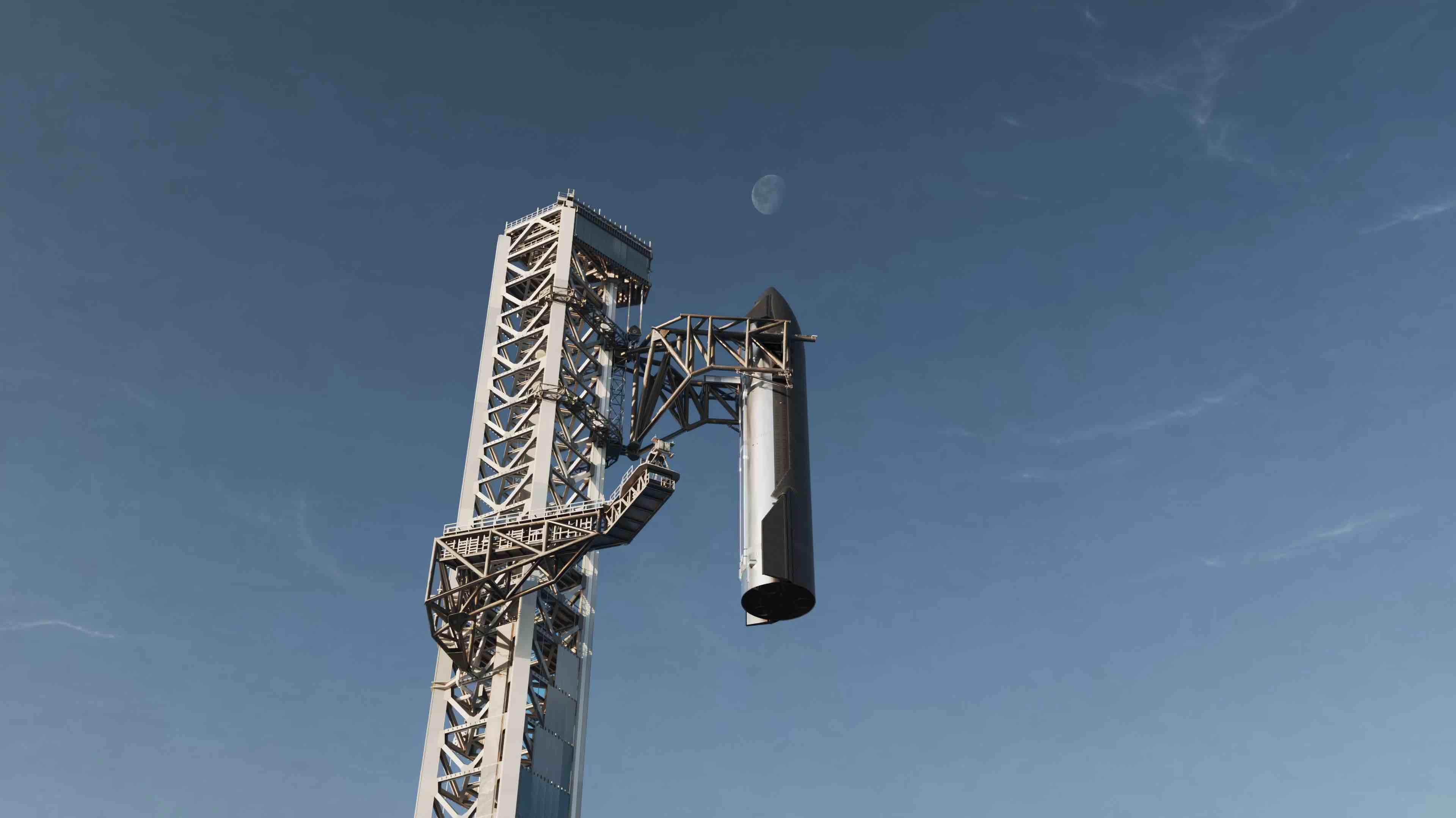
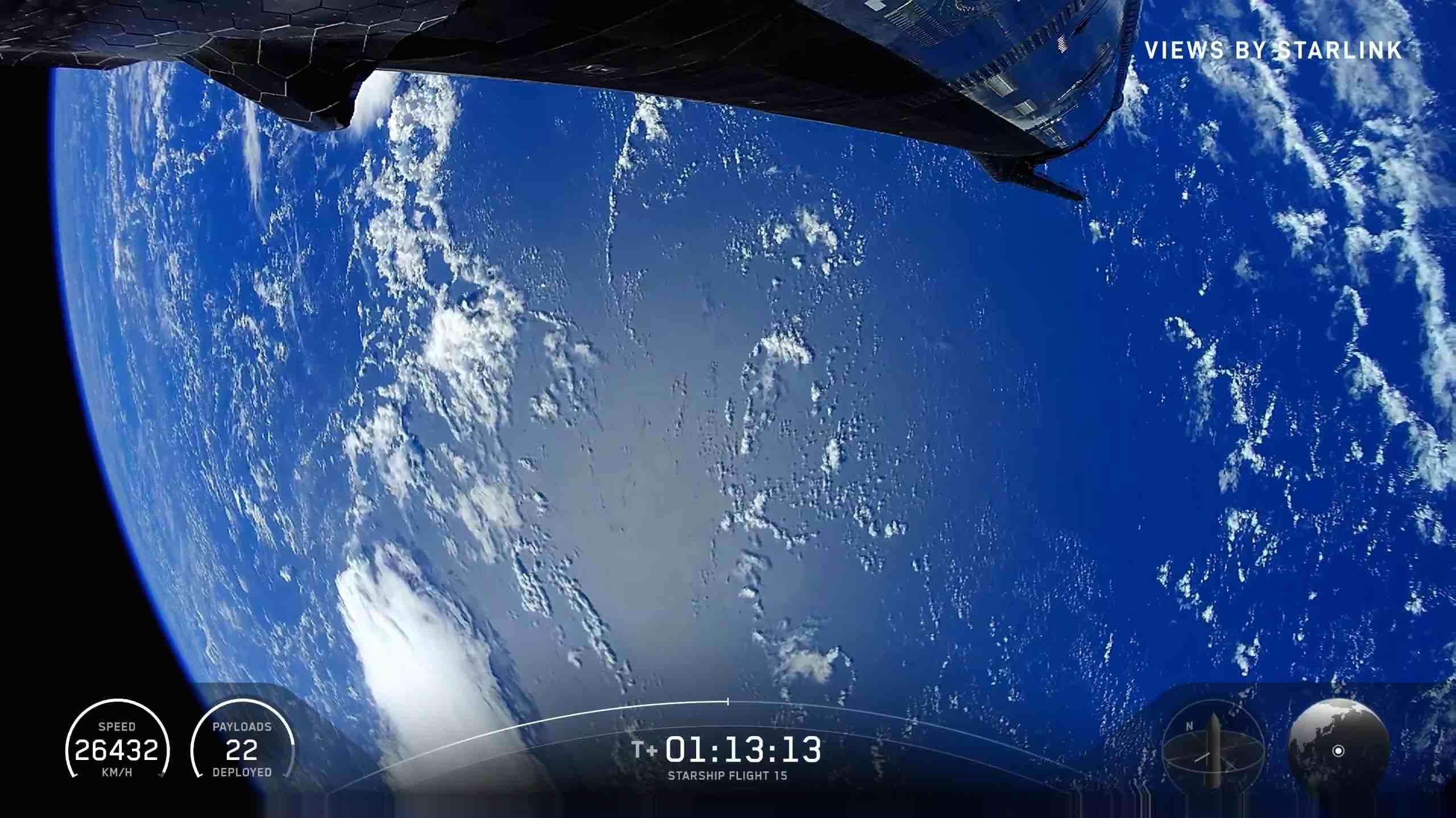
For a century, we thought a fully reusable rocket was not technically possible. A rocket typically uses two stages, a booster that lifts the second stage into space and then separates to reduce dead mass after it’s been used (a=f/m 😉), and a second stage that deploys satellites and later deorbits itself. $SPCX aims to prove engineers and scientists wrong during its 15th flight test of Starship, planning to catch with the launch tower both the booster and the ship on the launch tower while deploying new Starlink V3 satellites. Two years ago, they successfully caught the booster, but it’ll be the first time both the booster AND the ship is caught! The ship will go from 28,000 km/h to 0 km/h and be precisely caught by the launch tower. If you’re in South Texas, not too late to make a small trip to South Padre Island!read more
Although attempt to catch booster was unsuccessful, the Ship (second stage) has successfully placed into orbit 26 new Starlink V3 (those have 100x the bandwidth of the V2). Next up is an attempt to catch the ship as soon as tomorrow afternoon. $SPCX More bandwith = more data per bit to sell, meaning we should expect a big jump in revenue next quarter with those V3 Starlink launches now Starship is operational.
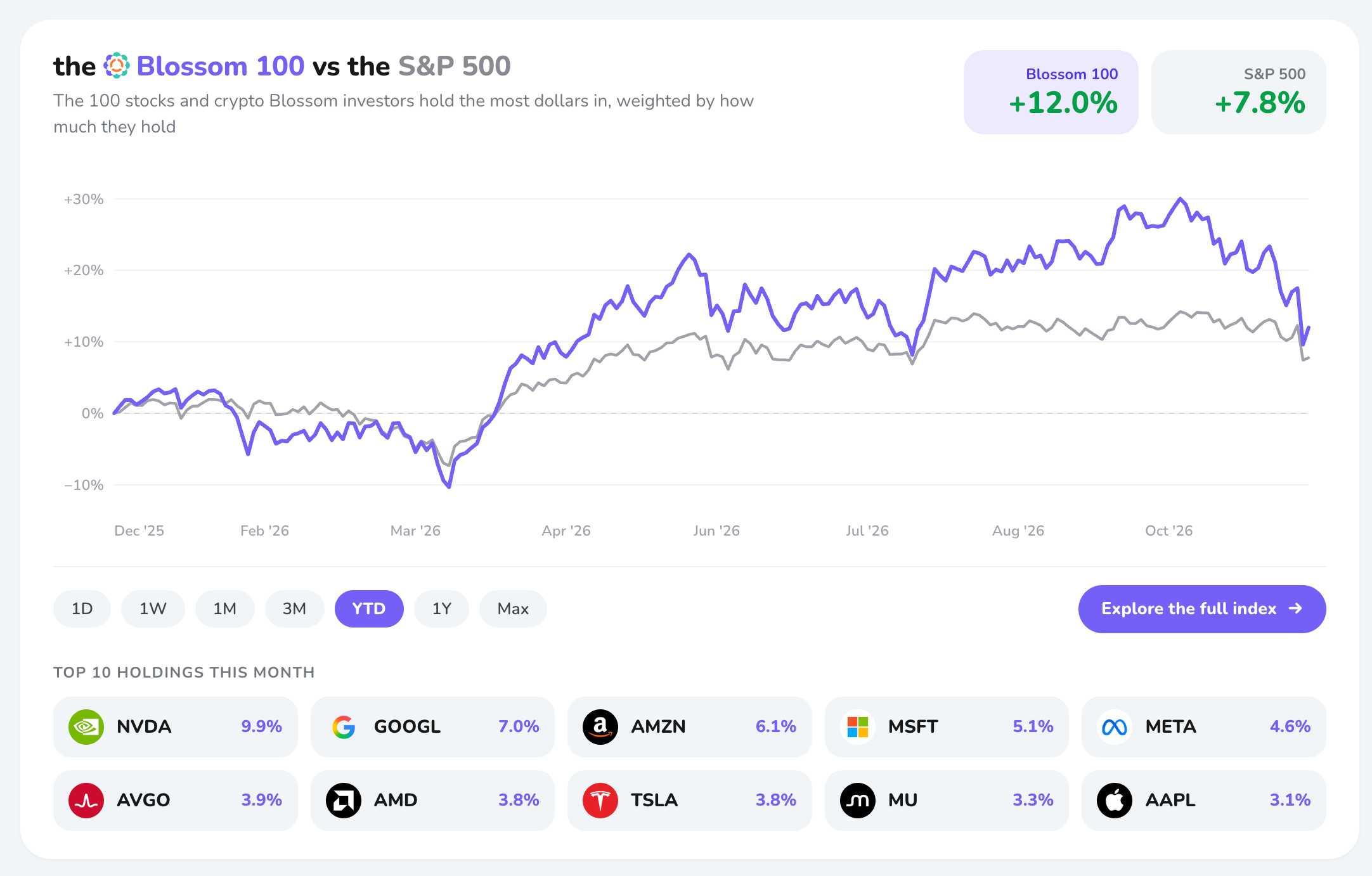
👍 300 likes and I'll get it live on web-app this week fully interactive... 💎 Also made a Blossom Millionaire 100 index and a full scorecard of how the Blossom-100 stacks up against the S&P across metrics like Beta, Sharpe ratio, and more + monthly rebalancing 👀 🥳 UPDATE: The Blossom-100 is live! https://link.blossomsocial.com/7uYa/4fv28yy5
💻 Check it out on the web-app for the best experience! 🥳 Great to see the community is outperforming the market - let me know what you think below and anything else you want to see from the index 👀 P.S. going live tomorrow: - 📱 phone number will now be mandatory on onboarding to reduce scammers and help people find friends - 🎧 Blooms audio issue will be fixed - 👍 A new substack style action bar so you can like and bookmark long posts without scrolling https://www.blossomsocial.com/investor-pulse/blossom-100/read more
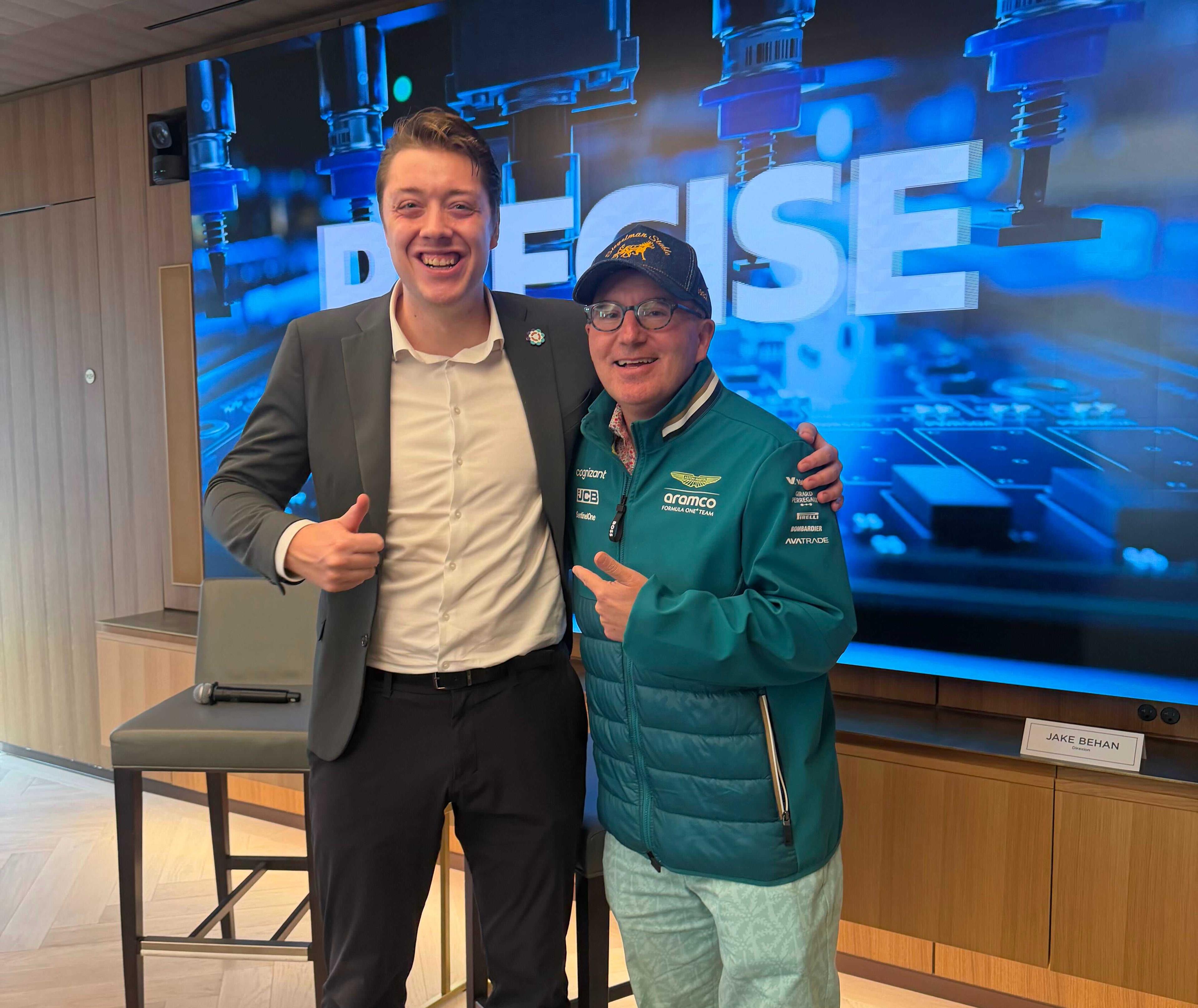
🎤 Had a chance to meet and listen to Dan Ives (one of the most iconic tech analysts on Wall Street) and hear his thoughts on the Nvidia drama, the Anthropic IPO, and where he sees the opportunity in tech!! He called this a “white-knuckle moment” for the tech trade but still thinks we’re in the 1995 internet moment of AI. Here’s my recap 👇 🤖 On Nvidia and Jensen 😬 Called it a “black eye moment” for Jensen and $NVDA. By his read, the market is pricing a 15-20% chance Jensen gets removed as CEO depending on how the congressional scrutiny plays out 📉 If that happens, he thinks the stock drops 25-30%. Jensen is the “central nervous system” of the whole AI ecosystem and Nvidia has no real succession plan ✅ He's still very positive on Nvidia but said the stock is basically trading on one question right now: is Jensen there or not? -- 🚀 Where Dan is bullish ☁️ Hyperscalers: $MSFT , $AMZN and $GOOGL (and even $META) are “more valuable today than they were a week ago”. They already own the compute, so new restrictions on data centers give them more leverage and let them narrow the gap vs Anthropic and OpenAI 💻 Software over semis: thinks we’re entering the “use case phase” where AI finally gets monetized and called out $PLTR , $SNOW , $CRM and $NOW 🛡️ Cybersecurity: $CRWD , $PANW and $ZS ⚡ Energy: “AI doesn’t happen without energy.” We need 4-5x more power than we have today and he thinks nuclear has to be the answer (China has built 23 nuclear facilities in the last few years while a lot of US data centers are stuck waiting for power) -- 😰 Where Dan is bearish ☁️ Neoclouds: “a game of musical chairs, some left without a chair.” With rates and credit spreads where they are it’s hard for $CRWV to raise capital. He sees $NBIS as the best positioned, but called the group a headwind, not a buying opportunity 💸 Debt-heavy AI plays: used $ORCL as the “poster child”... take on that much debt and it’s hard for the stock to work 🏛️ Politics: his #1 worry for tech isn’t valuations, it’s the political environment and the anti-data-center push since the election. “Every data center that gets voted down, China ultimately wins” -- 🧠 On the Anthropic IPO 💰 Thinks ~$1T is the right valuation to go out at (more “digestible” than $1.4-1.5T) and that a successful IPO matters more than stretching it 🔮 Long term he thinks they can get to $500-700B in annual revenue, but warned newly public companies take years to build out and any speed bump gets punished... pointed at $SPCX as the example 👀 Curious what you guys think!! P.S. shout our Direxion ETFs for inviting me to this event! Tagging a few of their ETFs as a thank you - feel free to check them out 😎 read more
Today is an unfortunate day for Nvidia, its shareholders, and arguably for American technology leadership. I am truly disheartened and disappointed. My reaction to Jensen Huang’s resignation is not to dismiss governance, security, or personal-conduct concerns. Those issues matter. But they should be separated clearly and analyzed on their own merits — not collapsed into one emotional public spectacle. A few thoughts: - Jensen Huang is not a national-security enforcement officer. He is an engineer, founder, AI chip architect, and CEO who built one of the most important technology companies in the world. Nvidia’s role in the AI era is not accidental. It was built over decades through technical vision, perseverance, and extraordinary strategic execution. - If there were legitimate security concerns, they should have been handled with precision. If certain companies, individuals, or counterparties were deemed suspect, then the appropriate response should have been clear guidance, formal restrictions, enhanced screening, and timely communication from the relevant authorities. A CEO cannot reasonably be expected to independently know in advance that every person or company he interacts with may later become the subject of government concern. Megaspeed is not on the list of sanctioned companies. Even when this became an issue over a year ago, Megaspeed was not added to to the sanctioned list of companies nor the woman in question. So it remains a personal issue. Not national security after the fact and after a year Nvidia stopped doing business with them. - The board failed to properly separate the issues. There is a major difference between: - personal misconduct; - corporate-governance concerns; - counterparty-screening failures; - export-control compliance; - national-security enforcement; - and the actual operating fundamentals of Nvidia’s business. These are different issues requiring different remedies. - A more measured response may have been available. Rather than forcing a permanent leadership rupture, the board could have considered alternatives such as: - a defined suspension period; - enhanced conduct requirements; - a formal oath or code-of-conduct commitment; - mandatory security briefings; - stricter personal and corporate counterparty screening; - strengthened compliance oversight; - and clearer separation between personal relationships, business access, and national-security-sensitive matters. - Personal transgressions should not automatically be confused with business fundamentals. Consensual personal relationships, however embarrassing or disappointing, are not the same as fraud, product failure, market-share collapse, customer loss, or technological decline. Investors should be careful not to confuse reputational noise with economic reality. - As an investor, the central question is always: what changes economically? - Does this change Nvidia’s product roadmap? - Does it change demand for AI compute? - Does it change CUDA’s ecosystem advantage? - Does it change hyperscaler dependence on Nvidia systems? - Does it change Nvidia’s data-center growth trajectory? - Does it change the company’s technological lead today, tomorrow, or over the next several years? Those are the questions that matter. - Nvidia’s fundamentals remain extraordinary. The company still sits at the center of the AI infrastructure buildout. Its chips, systems, networking, software ecosystem, and developer base remain foundational to the global AI economy. The world’s dependence on Nvidia did not disappear because of a leadership scandal. - But founder leadership matters. Jensen Huang was not a generic CEO. He was the strategist, founder, visionary, and cultural force behind Nvidia from the early 1990s onward. Losing that kind of leader is not trivial. Nvidia can certainly continue in the short term based on the strategy already in motion, but over the long term, the question becomes whether the company can maintain the same level of technical imagination and strategic boldness without him. - The real risk is not immediate collapse. It is long-term institutional, cultural drift and vision decay. Many once-dominant technology companies remained successful after their defining leaders or eras passed — but gradually became less inventive, less daring, and more bureaucratic. That is the concern investors should watch. Dell, IBM, Intel, AMD, and countless others that have become commodities from bureaucratic administrative oversight vs continuous innovation leadership. - The U.S. should want its greatest technology companies to succeed. AI may be the most important technological race of our lifetime. Nvidia is one of America’s most critical assets in that race. If there are security concerns, address them. If there are governance failures, correct them. If there are compliance gaps, close them. But destroying or weakening key technically innovative leadership without exhausting proportional remedies does not serve shareholders or national interests. - Jensen Huang’s China argument also deserves serious consideration. One strategic view is that U.S. advantage comes from keeping the world dependent on American chips, American platforms, and American software ecosystems. If China, developers, and global AI companies build around Nvidia hardware and CUDA, that dependence itself can be a form of American leverage. - The counterargument is also serious. Advanced chips can strengthen competitors and adversaries. Export controls may be necessary in some cases. But they must be applied coherently, consistently, and with full understanding of second-order consequences — including the possibility that overrestriction accelerates foreign self-sufficiency and pushes markets away from American technology. - For investors, the lesson is simple: separate signal from noise. Break the issue into components: - What is personal? - What is legal? - What is regulatory? - What is reputational? - What is operational? - What is economic? - What is temporary? - What is permanent? Only after separating those layers can you determine what actually matters to the business. At this moment, I see a great deal of noise, politics, scandal, and public appetite for a fall from grace. What I do not yet see is evidence that Nvidia’s economic engine, competitive position, or central role in the AI buildout has fundamentally changed. That does not mean the issue is irrelevant. It means investors must remain disciplined. The question is not whether the headlines are dramatic. They are. The question is whether the long-term economics of the business have changed. Nvidia currently holds 80% plus market share. The market is expected to quadruple on a conservative basis from here and Nvidia will likely own only 50% market share but that alone is a massive multiple of the business investor should do the math on. And on that question, I believe Nvidia remains one of the most important companies in the world — even if this moment represents a deeply unfortunate loss of founder leadership at a critical time in the AI era. Today, is truly an unfortunate day. I never thought I would see another Steve Jobs type sacking. For the record, I am not advocating for Nvidia stock or investing advice. I am advocating for understating noise and how to isolate the issues and what is in fact an investment issue vs otherwise. Conduct your own due diligence and research.read more
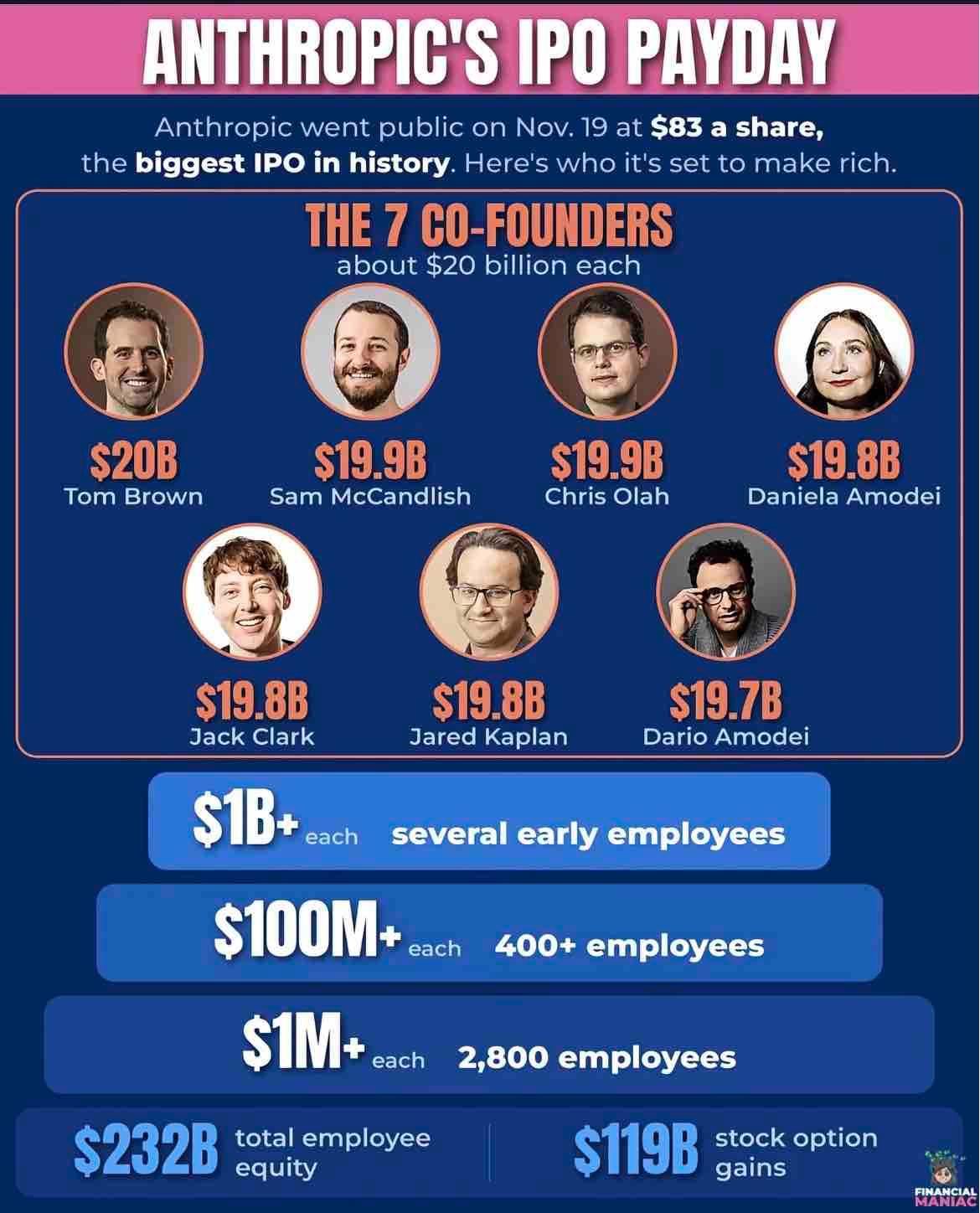
— Anthropic ($ANT) just pulled off the biggest IPO in stock market history, pricing at $83 per share, raising over $81 billion, and debuting on the Nasdaq at a roughly $1.5 trillion valuation. The headline numbers look wild: - Each of the 7 co-founders is sitting on roughly $19.7B–$20B on paper, - 400 employees hold $100M+ in equity, and - 2,800 employees hold $1M+. While $ANT opened at $111.50 and closed Day 1 around $97.17, everyday investors should look past the founder payday and check the real numbers before jumping in. Good to know: 1. Massive sales, massive spending: Anthropic’s revenue jumped over 1,200% in the first nine months of 2026 to $33.2 billion, but the company also posted $104 billion in losses (mostly non-cash accounting adjustments) and carries roughly $450B–$518B in long-term cloud and data-centre commitments. 2. Lock-up expirations create selling waves: Up to 315 million shares were eligible to trade on Day 1, with big insider lock-up releases coming on December 15, 2026 and January 5, 2027 (over 300 million shares each), meaning heavy insider selling pressure could hit the stock over the next few months. 3. Chasing a brand-new mega-IPO on Day 1 is risky when volatility is high. If you want exposure to the AI boom without betting everything on one single stock, broad index ETFs like $VOO, $VFV, $QQQM, or $XEQT let you ride the sector safely while staying diversified. Are you buying $ANT, waiting for the lock-up dip, or sticking to index ETFs? — This is for informational and educational purposes only. read more
I know I haven’t been as active on Blossom as I normally am, and my current schedule is extremely busy with: - Hockey 6-7x per week - Gym/team workouts 5-6x per week - Internship 3 days per week - 5 senior level finance/accounting courses - Running & building Summit Capital - Creating Content - And then trying to have a social life in between It has been an absolute grind these past few months. But I was thinking about this earlier today and wanted to make a post about it. I am wondering what all of the $ZETA bears have been up to recently? Back when the stock was $13-$16 and @realnickstrategy and I were pounding the table on this name, there was an insane amount of skepticism and bearishness from not only blossom, but other platforms as well (mostly X). It’s funny that bears go into hiding when the stock price rises. But you and I both know damn well that if $ZETA drops back down to $20, they will come out and claim they’ve been warning people about this names for months! It’s funny how much short-term sentiment affects other people’s opinions on stocks, and how people the thoughts/opinions of some random person online dictate how they feel about a stock without doing the proper research themselves. For context, $ZETA is my largest position at 20% of my portfolio and I’m up ~125%. I have not sold a single share and don’t plan on doing so for a while. To those of you who were able to tune out the noise, do your own research, and build conviction in this name allowing you to buy when the sentiment was low but the long-term opportunity remained attractive; congratulations on the gains, well done 🤝 I remain long $ZETA, and they absolutely crushed earnings Monday 🔥 I’d like to get back to consistently posting on Blossom again in the new year. My second semester schedule is much lighter than my current semester so I should have more free time to post more! I hope everyone on here has been doing well and is holding up in this volatile market. For those who want access to a group of like-minded individuals focusing on individual stock research, on companies like $ZETA, feel free to join Summit Capital using the link in my bio (its free😁) Cheers everyone 🥂read more
Anthropic officially went public today under $ANT, and I’m not buying the IPO. It priced at $83 last night, above the $70 to $78 range. It opened at $111.50 and touched $115 before sliding back toward the mid $90s. A company going public wants the highest valuation it can get, and that makes sense. The founders, employees and early investors who’ve held this privately for years benefit most from a big number on day one. That’s where the IPO pop comes in. New listings often rip at the open on hype, then fade as insiders start selling. With ANT, up to 316 million insider shares can be sold starting today, and more unlock once the lockup period ends. So why wait instead of buying the excitement? I’m thinking 3 to 5 years out, and the price I pay matters. If the Nasdaq keeps falling and the AI trade keeps weakening, I think ANT could pull back to a much more attractive valuation. I like the business, and I could see myself owning it down the road. For now I’m watching patiently instead of buying. I’d rather miss the first pop than overpay for the next five years. Are you buying the $ANT IPO? Let me know 👇read more
1,362 views
Which one?
Google
80%
Microsoft
20%
172 votes · 13h left
was getting into NVIDIA
bad choice it will not recoup
at this price a buying opportunity it will bounce back