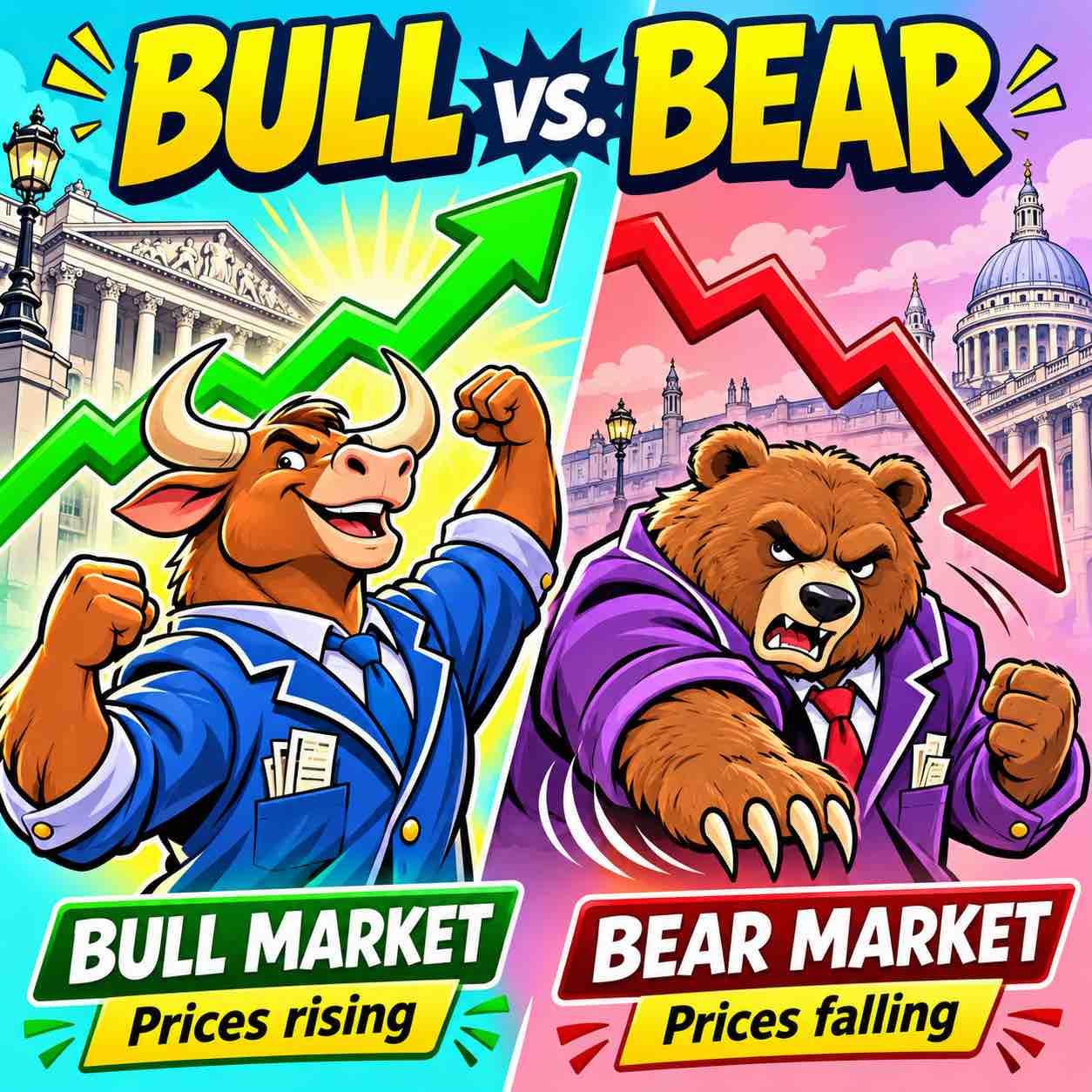
🐻 Bear v 🐂 Bull - why these names?
Why do investors use two animals to describe the stock market? 🧐
(AI ⚠️)
The terms are more than 300 years old, with roots in London’s early financial markets.
🐂 What is a bull market?
A bull market is a sustained period of rising prices, usually accompanied by investor optimism and confidence. A gain of 20% or more from a recent low is a common benchmark, though there’s no universal definition. Someone who is “bullish” expects prices to rise.
🐻 What is a bear market?
A bear market is a sustained period of falling prices, typically marked by pessimism and uncertainty. The usual benchmark is a drop of 20% or more from a recent peak. Someone who is “bearish” expects prices to fall.
Trust me: you haven’t seen anything like an angry bear that comes out hibernation like in 2000 & 2008.
Why a bull and a bear?
The familiar explanation is how the animals attack: a bull thrusts its horns upward, while a bear swipes its paws downward. It’s a handy memory aid, but the historical origin is less certain.
The bear came first
“Bear” was used in a financial context by 1709 among traders around London’s Exchange Alley. The term comes from “bearskin jobber,” a nod to the old proverb about selling a bear’s skin before you’ve caught the bear.
In share trading, it described someone selling shares they didn’t yet own, hoping to buy them at a lower price before having to deliver them. That’s the basic idea behind short selling: the trader profits if prices fall.
Then came the bull
“Bull” appears in financial usage by 1714, describing someone buying in anticipation of higher prices. Why this animal became the bear’s opposite is unclear. One theory points to bull baiting and bear baiting, both familiar spectacles in England at the time.
The words first described traders and their positions. Over time, they became labels for the market’s overall direction.
Quick way to remember: bulls look for prices to rise; bears expect them to fall.
Sources: Santander Asset Management; World Wide Words; Liberty Street Economics (New York Fed).