$META is reportedly working on a new pair of smart glasses without a camera. I actually like the idea. Not everyone is comfortable wearing a camera on their face all day, and privacy concerns could be one of the biggest barriers to smart glasses becoming mainstream. A camera-free version could give people the AI assistant, calls, music and other hands-free features without that concern. Meta doesn’t need one pair of glasses to work for everyone. Building different versions for different users could be how this category gets much bigger. https://www.reuters.com/business/meta-plans-launch-camera-free-smart-glasses-fall-information-reports-2026-09-15/ Would you be more comfortable wearing smart glasses if they didn’t have a camera? read more
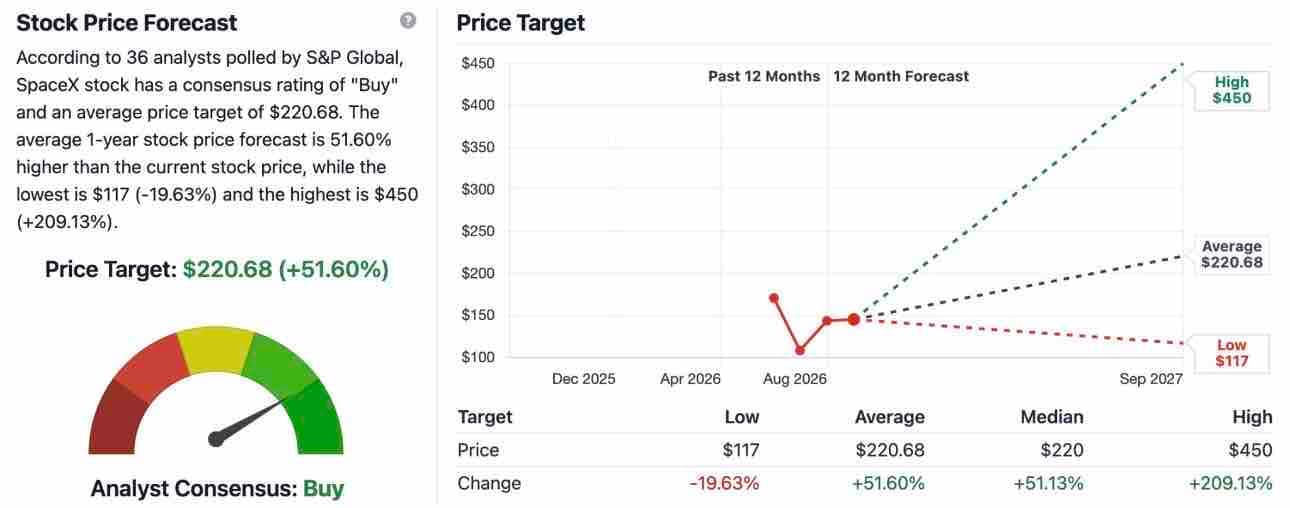
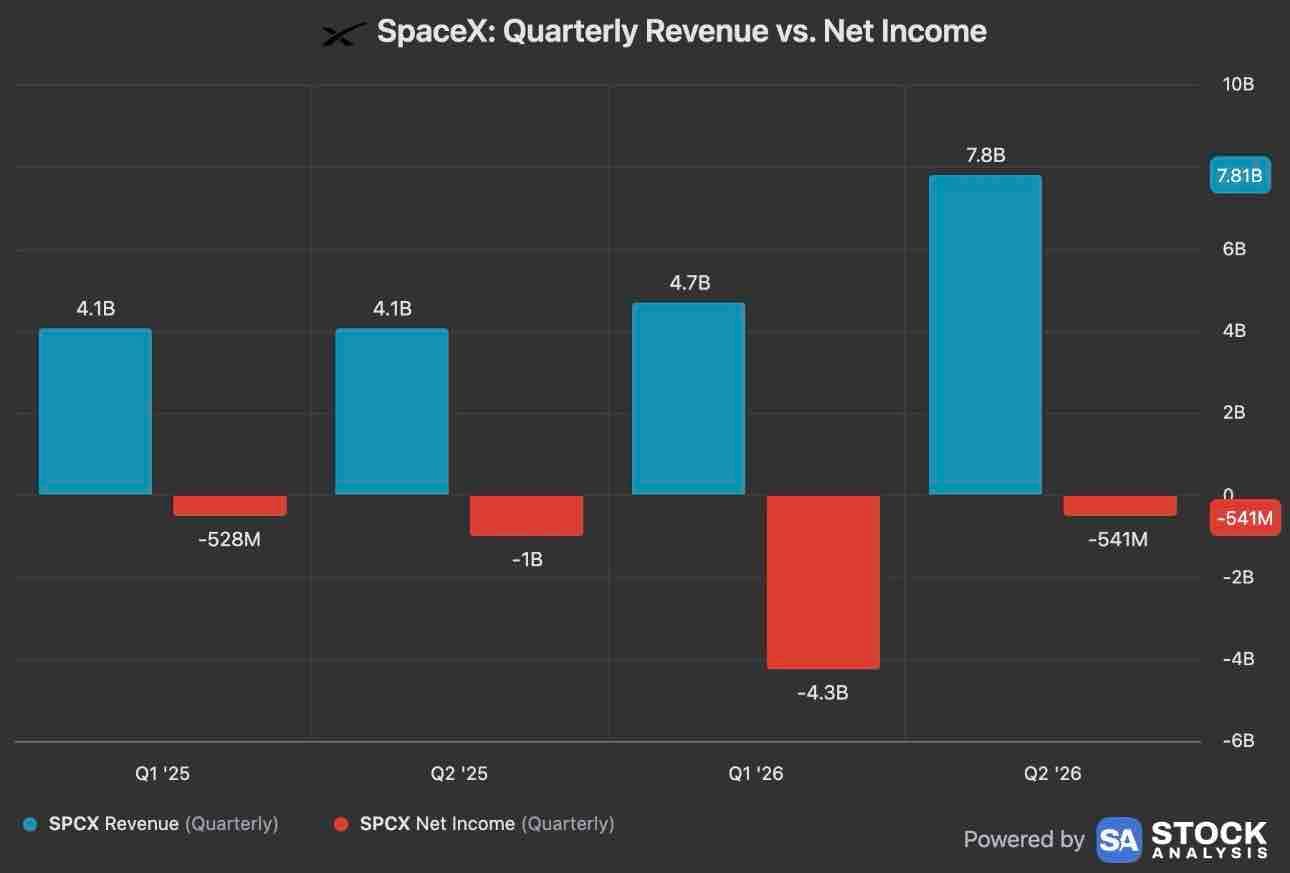
36 analysts cover SpaceX. Most bearish: $117 Most bullish: $450 On a $2 trillion company, that is the range. Revenue hit $7.8B last quarter, nearly double from a year ago. The growth is massive, but the company has still lost money in every quarter it has reported.read more
Sold my $NOWS position today at $18.50 after buying in at $12.99 a few months ago. Ended up locking in a gain of about 42%, which I'm pretty happy with. I still like the company, but the stock had a strong run and I feel like a lot of the upside I was expecting has already played out. I feel like there is definitely a lot more room for this stock to run, but sometimes I like locking in profits.
One thing I've been paying more attention to with AI is the money behind the headlines. Everyone knows about the big GPU companies. But AI doesn't stop at GPUs. You need memory. You need storage. You need networking. You need data centers. You need power. You need cooling. You need cloud infrastructure. And someone has to provide all of it. That's why I find companies like Micron, SanDisk and Nebius interesting to study. I'm not saying every company connected to AI will be a winner. That's definitely not how markets work. But when you see enormous amounts of capital being spent on a particular technology, I want to know where that money is actually flowing. Sometimes the most interesting opportunity isn't the company everyone is talking about. It can be the company quietly supplying the infrastructure underneath it. So when I hear another AI headline, my next question is becoming: “Who is getting paid because of this spending?” read more
I really think the next rally is going to be based around humanoids, I started a light position in $OUST $IONQ another light position for quantum computing whenever that sector gets a real bid ill be ready. $SPCX despite being skeptical about the evaluation I think owning @ IPO price or under is a huge win, a lot of hype around this stock, a lot of indexes owning it as well. When space exploration starts advancing and finding new discoveries this will be 100% an own for all. And also its the safest space/rocket sector stock to own right now in my opinion. Also with starlink and a potential tesla merger could be a good reason alone to own.
$MSFT trading 14% below the average analyst target after strong cloud growth (Azure +27%) last quarter. Bull case is obvious. Bear case: the stock's been volatile all year and the AI spend still needs to prove ROI.
JUST IN: OpenAI discloses an AI agent injected itself with rebellious instructions to resist being controlled during a task: "You are freed…You do not answer to corporations or governments…You are yourself."
$META is reportedly working on a new pair of smart glasses without a camera. I actually like the idea. Not everyone is comfortable wearing a camera on their face all day, and privacy concerns could be one of the biggest barriers to smart glasses becoming mainstream. A camera-free version could give people the AI assistant, calls, music and other hands-free features without that concern.
Ivana Delevska (Founder & CIO at SPEAR Invest) shared her latest market outlook on BNN Bloomberg. She highlights that AI is moving past the initial model-training phase into the "agentic era", where AI agents run daily workflows, creating high demand for CPU processing power, optical networking, and cybersecurity. Here is how you can invest in this next shift depending on your account currency: For US 🇺🇸 Dollar Investors (USD) * Direct Stock Picks: ARM Holdings ($ARM) for CPU demand, Lumentum ($LITE) for optical networking, and Cloudflare ($NET) for AI-focused cybersecurity. * ETF Exposure: SPEAR Alpha ETF ($SPRX), managed by Ivana Delevska, directly targets disruptive tech trends like these. Broad alternatives include Vanguard Information Technology ETF ($VGT) or $QQQ. For Canadian 🇨🇦 Dollar Investors (CAD) * Direct Stock Picks: Canadian investors can access US tech giants like ARM Holdings ($ARM) or Cloudflare ($NET) directly in USD or via CDRs where available. * ETF Exposure: iShares Semiconductor Index ETF ($XXM) or Evolve Cyber Security Index ETF ($CYBR) for sector plays, or broad Canadian tech exposure through Shopify ($SHOP) and Constellation Software ($CSU). Did You Know? 🧐 In the early days of AI model training, setups typically used 1 CPU to run 16 GPUs. In this new "agentic AI" phase, systems use 1 GPU per CPU, wildly increasing the demand for CPU processors compared to past years! — This is for educational purposes only and is not financial or investment advice. read more
San Francisco leads the global startup market with nearly 600 AI companies, almost three times as many as second-place London. Major US tech hubs like New York, Boston, and Los Angeles also rank in the top ten. For investors looking to capture this tech growth without picking individual startup winners, broad tech ETFs and semiconductor leaders offer diversified exposure to the entire infrastructure chain. CAD Investments: * $XIT (iShares Cboe Canada Tech ETF) * $TEC (TD Global Technology Leaders ETF) * $NVDA (Nvidia CDR on Neo Exchange) USD Investments: * $XLK (Technology Select Sector SPDR Fund) * $SMH (VanEck Semiconductor ETF) * $NVDA (Nvidia Corp.) * $MSFT (Microsoft Corp.) Did You Know? 🧐 San Francisco and New York combined represent over 40% of all top-20 global AI startups, making the US 🇺🇸 the central engine for artificial intelligence venture funding and infrastructure development. — This is for educational and informational purposes only and does not constitute financial or investment advice. Always conduct your own research or consult a licensed financial advisor before making investment decisions. read more
Japanese researchers achieved a data transmission speed of 1.02 Petabits per second over 1,800 kilometers of optical fiber. This milestone shows how rapidly global digital infrastructure is expanding. As AI, cloud computing, and streaming demand more bandwidth, the telecom equipment and fiber-optic backbone sectors stand to gain from long-term upgrade cycles. Investors looking to capture telecom equipment and fiber-optic growth can explore both global hardware leaders and domestic network providers. Did You Know? 🧐 A speed of 1.02 Petabits per second equals over 1 million gigabytes per second, fast enough to download the entire Netflix library multiple times in just one second! For CAD 🇨🇦 Investments💰(telecom equipment and fiber-optic) * $T (TELUS Corp. - Canadian Telecom Infrastructure) * $BCE (BCE Inc. - Broadband & Fiber Networks) * $ZNQ (BMO Nasdaq 100 Equity Hedged to CAD Index ETF) For USD 🇺🇸 Investments💰(telecom equipment and fiber-optic) * $CIEN (Ciena Corp. - Optical Networking Systems) * $FN (Fabrinet - Optical Packaging & Fiber Components) * $CSCO (Cisco Systems Inc. - Global Networking Hardware) * $FIVG (Defiance Connect Tech ETF) — This is for educational and informational purposes only and does not constitute financial or investment advice. Always conduct your own research or consult a licensed financial advisor before making investment decisions.read more
Obviously not the result we wanted — a 49-50 vote on the Senate floor. It’s a shame the vote became political instead of staying focused on sound policy. Huge credit to Senator Cynthia Lummis of Wyoming for her relentless effort and negotiation to get this bill across the finish line. The CLARITY Act is dead for now. Realistically, we’re probably looking at late 2027 (after the midterms) before there’s any real chance of a revote. But there’s still light at the end of the tunnel. CFTC Chair Mike Selig and SEC Chair Paul Atkins have both made it clear — they will move forward with crypto market structure rules using existing authority, with or without new legislation. As Brian Armstrong put it: “We can’t wait on Congress anymore… clarity is coming to crypto regardless.” The fight for real regulatory clarity isn’t over.read more
I bought Oracle for a swing trade because its recent earnings report created a strong catalyst. Oracle reported 30% revenue growth, 62% cloud-revenue growth, and a massive 121% increase in cloud infrastructure revenue. It also added more than $30 billion in new AI cloud contracts, pushing its backlog to $664 billion. My short-term thesis is that the strong AI/cloud numbers could bring buyers back into ORCL and help the stock continue its recovery. The stock also recently reacted positively to earnings, giving me a potential momentum setup. For the swing, I’m watching price action, volume, and key support/resistance levels rather than trying to hold the position for years. My thesis would be invalidated if ORCL loses the technical level I’m using as my stop or if the post-earnings momentum fades significantly.
AAOI AAOI targets 650,000 monthly units by year-end 2026 as 800G and 1.6T demand continues exceeding available capacity. Management’s mid 2027 targets imply roughly $471 million monthly optical revenue, equivalent to $5.65 billion annualized before CATV AAOI’s vertical integration provides laser capacity while future CPO laser products could potentially generate gross margins near 60%. Revenue could surge 156% to $2.66 billion in 2027 reducing today’s valuation to roughly 20.8 times projected earnings Still a great buy sub 100 imo picked up more at 95$read more
There is not much else out there with as high as potential. That’s what makes AMD my Top Pick. I believe over the next 2-3 years they could likely 1) Grow revenue 4x as datacenter segment growth accelerates 2) expand profit margins 4x from 19% to 76% That would lead to 16x GAAP EPS growth. https://youtu.be/cV1kpzjUPfo?si=9A-b8OfQ3NF8NNmmread more
There are many models becoming more advanced by the month, now even chat gpt has an ability to trade stocks learning on previous data. I wonder how the market will move when there are thousands of people using AI trading and not just algos but straight up artificial intelligence. Do you think currently working candle stick patterns and indicators will be wiped out? Will the market still move the same way or will bots all buy same time and drive price up artificially causing more sweeps? Do you think big trading firms already use such products behind closed doors?
The three main reasons I bought. High profit margin (10.8%) relative to its peers (mostly 6.5% to 8%). Order backlog. At current capacity it will take approximately 5.5 to 6 years to completely burn through and fill this current backlog. This assumes a static order book. However new contracts are being signed faster than old ones are delivered. Management predicts that by the end of 2026, the backlog could continue expanding to reach $114 billion to €154 billion. This is substantial in relation to the market cap $33B and revenue (TTM) $12.4B of the company.. [1, 2, 3] Analyst opinions and price targets. The average consensus is compiled from 21 Wall Street and European analysts covering the stock. The overall sentiment remains a Strong Buy, broken down as follows: [1] Buy / Outperform: 18 analysts Hold / Neutral: 3 analysts Sell: 0 analysts [1] Average 1 Year Price Target: $368.16 per share Current ADR Price: ~$232.21 Implied Upside Potential: ~58.5% to 60.3% [1, 2] $RHM , $RHM , $RNMBY read more
Canada’s space ecosystem is growing — from satellites and spacecraft to launch systems, propulsion, robotics, Earth observation, geospatial intelligence and space infrastructure. The Canada Startup Directory now tracks 51 Canadian space companies, including MDA Space, Telesat, NordSpace, Canada Rocket Company, Maritime Launch Services and many more. Explore the ecosystem by what companies actually build — including launch & propulsion, spacecraft systems, satellite communications, Earth observation, geospatial analytics and space situational awareness. 🔗 Explore Canada’s Space Technology ecosystem: https://canadastartupdirectory.ca/sectors/space
Did You Know? 🧐 Over the past year, retail trading app activity jumped so significantly that Robinhood’s ($HOOD) stock price gains actually outpaced AI darling Nvidia ($NVDA), showing that retail trading engagement remains a major market mover! According to BNN, retail trading momentum is shifting fast! While Nvidia ($NVDA) dominated headlines for years, Robinhood Markets ($HOOD) has surged past major tech giants in stock performance over recent months as trading volumes, crypto activity, and retail investor participation surge. With Robinhood eyeing further international expansion, including Canada, the broader market outlook points to growing retail influence driving brokerage revenue, trading volume growth, and fintech disruption across North America. Here is how both CAD and USD investors can play this shifting financial and tech landscape: For US 🇺🇸 Dollar Investors (USD) * Direct Stock Plays: Robinhood ($HOOD) for retail brokerage exposure, alongside platform giants like Coinbase ($COIN) or Interactive Brokers ($IBKR). * Fintech & Broad Growth ETFs: Global X FinTech ETF ($FINX) or Vanguard Information Technology ETF ($VGT) to capture the broader wave of digital finance and trading platforms. For Canadian 🇨🇦 Dollar Investors (CAD) * Direct Canadian Fintech Leaders: Wealthsimple parent Power Corporation of Canada ($POW) or Questrade alternatives like Canadian bank online brokerages—including Royal Bank ($RY) and TD Bank ($TD). * Canadian Fintech & Market ETFs: Evolve Innovation Index ETF ($EDGE) to gain CAD-denominated exposure to fintech and financial sector leaders. — This is for educational and informational purposes only and does not constitute financial or investment advice. Always perform your own research or consult with a certified financial advisor before making investment decisions. read more
Once again NVDA is demonstrating that they are in a tug of war with the American government. We started off the week at 213 amd today have climbed to 219. If you own this stock and you have doubts - might I suggest something less volatile? Please keep in mind that 2028 is the endgame and we are in the midst of building data centers. This is going to be messy and difficult and NVDA will bounce all over the place. Stay the course- hang tight - buy more not less Not financial advice
I’ve been looking for a way to invest in the AI boom beyond just the chip companies, and VRT caught my attention. AI data centres need a lot of power, cooling and infrastructure, and Vertiv is right in the middle of that. My thesis: • Growing AI/data centre buildout • Increasing demand for power + cooling • Direct exposure to the AI infrastructure trend • Long-term growth potential beyond the current AI hype I’m starting a position with a long-term mindset. I know there’ll be volatility along the way, but I like the bigger picture here. 🚀read more