Blossom Social
  • Home
  • Markets
  • Learn
  • Portfolio
  • Insights
  • Beevis
  • Investor Pulse
  • Saved posts
  • The Weekly Buzz
  • Settings
For You
Following
News
What's happening?

Image

GIF

Chart

Poll

Portfolio

Trade

Stock
See more
  • AboutBlossomNavigationAbout Blossom
  • User profile pictureETFs & Index Investing
  • User profile picturePassive Income & Covered Calls
  • User profile pictureBeginner Investors
  • User profile pictureDividend Stocks
  • User profile picturePersonal Finance

Blossom — Social Investing Community: Real Portfolios, Trades & Market Insights

User profile picture
Phil @diversifiedfill
User profile picture

ETFs · 7m

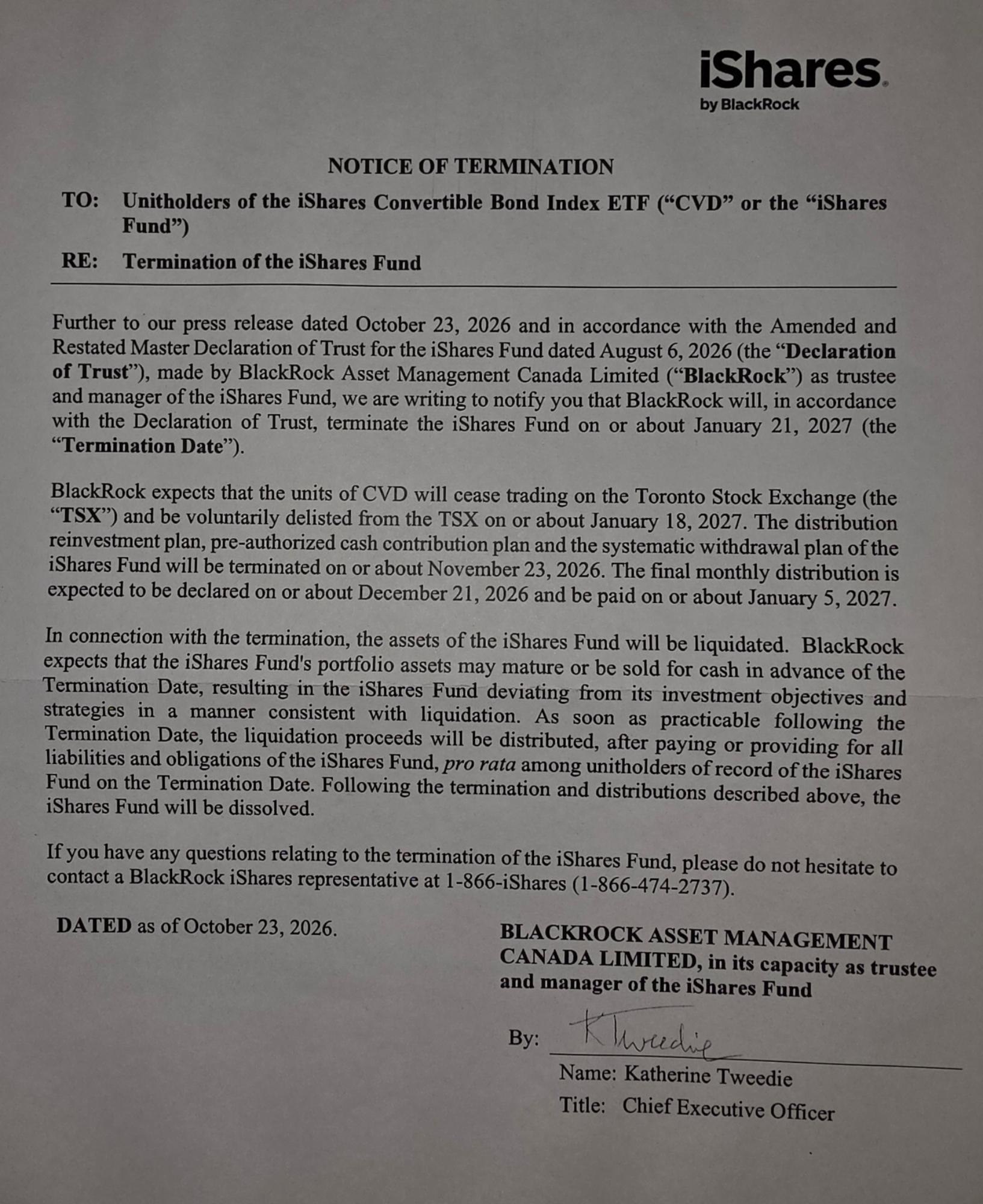
Blackrock's iShares CVD being liquidated
Symbol CVD is Blackrock iShares Convertible Bond Fund which has about 84 million of total investments in it. I originally bought it about 15 years ago and I am currently underwater on it but I have been happily collecting the interest from this ETF inside of my LIRA over this entire time.

There is no explanation in the letter as to why it is being liquidated. Since I recently retired and converted my LIRA to a LIF, the proceeds will just go straight into my cash wedge. So, it makes that particular decision very easy, at least. 💁

I think I will hold onto this ETF right until the bitter end in January just because I am curious as to how the liquidation value compares to its trading price. 🤔

Blackrock's iShares CVD being liquidated
8 views
User profile picture
Harvey Specter
linked brokerage badge
@harveyspecter
User profile picture

Stock Analysis · 🔥 Hot

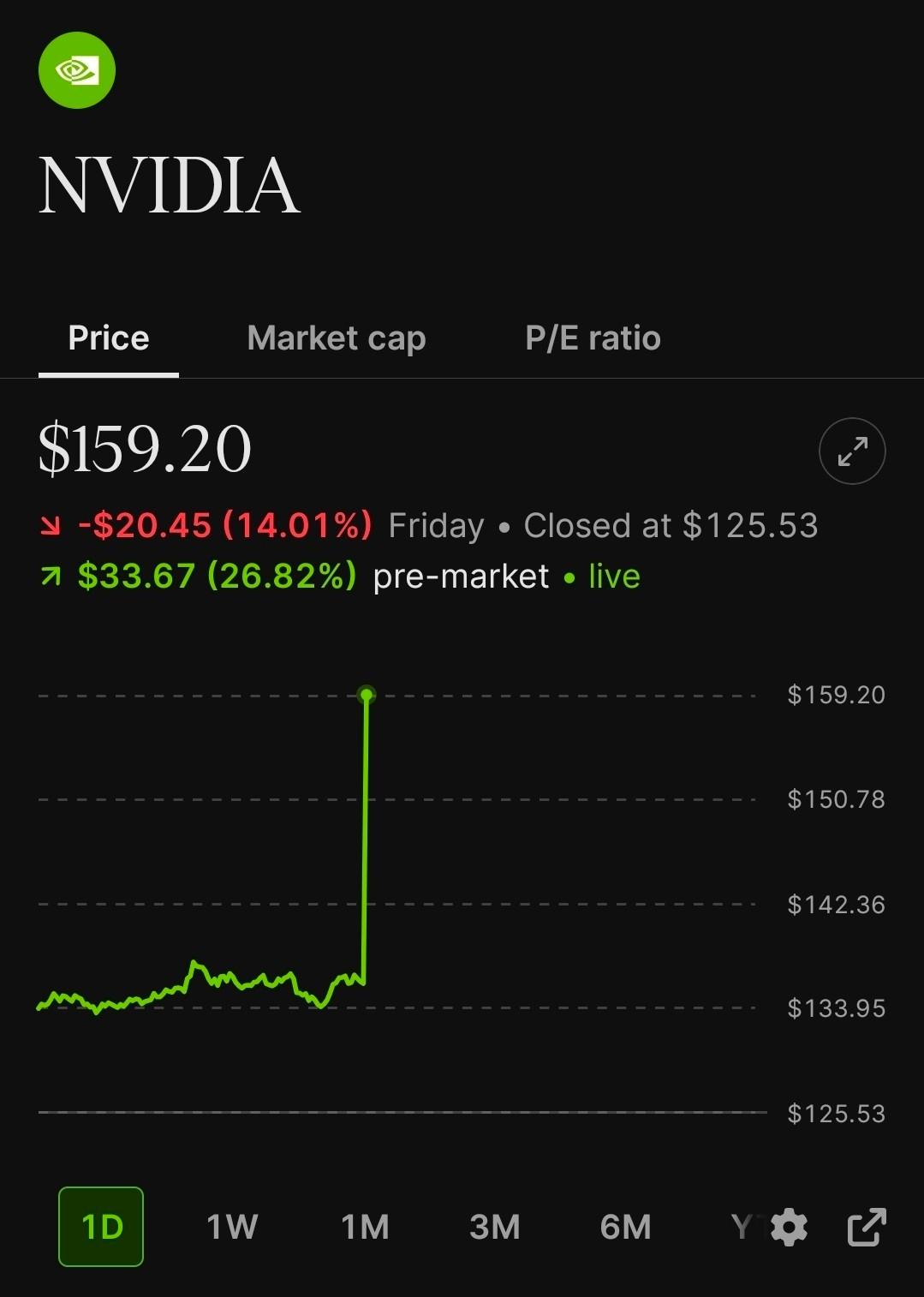
Nvidia update 🔥
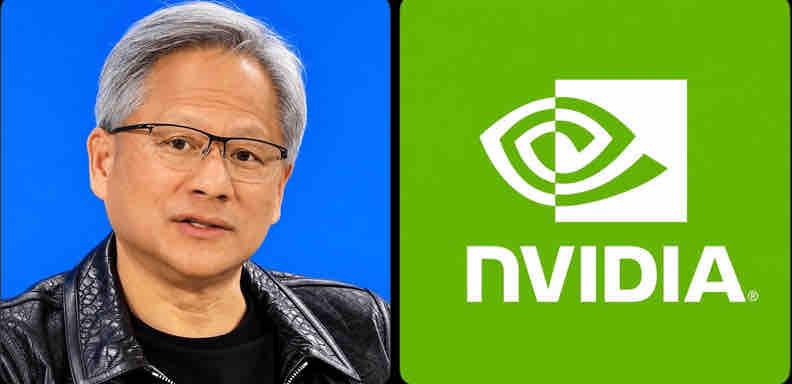
Nvidia $NVDA reinstates Jensen Huang as CEO and President.
Nvidia update 🔥
NVDA logo

-14.01%

0.0% held

1,558 views
User profile picture
Moe
verified badge
@moementumfinance
User profile picture

Beginner Investors · ⭐ Featured

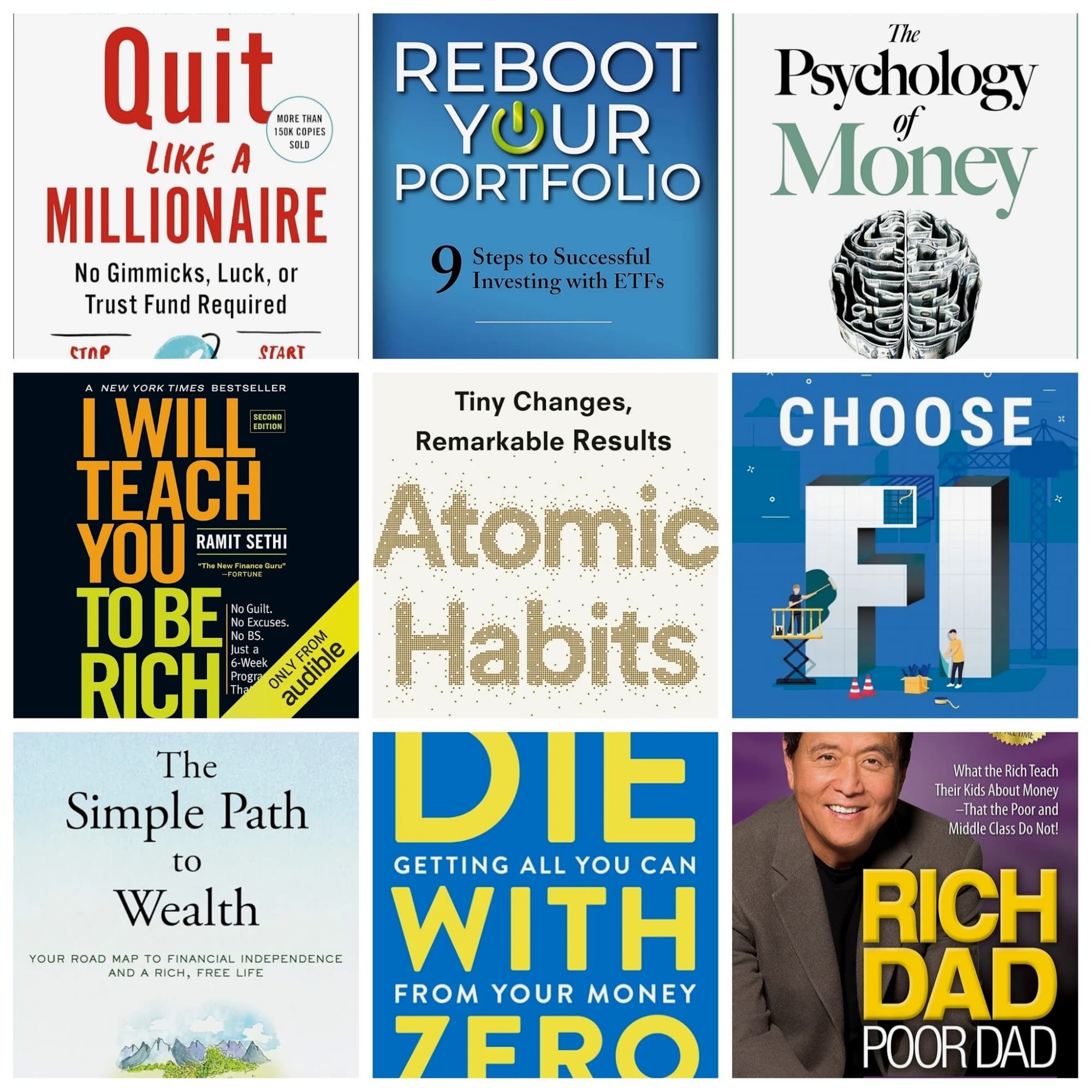
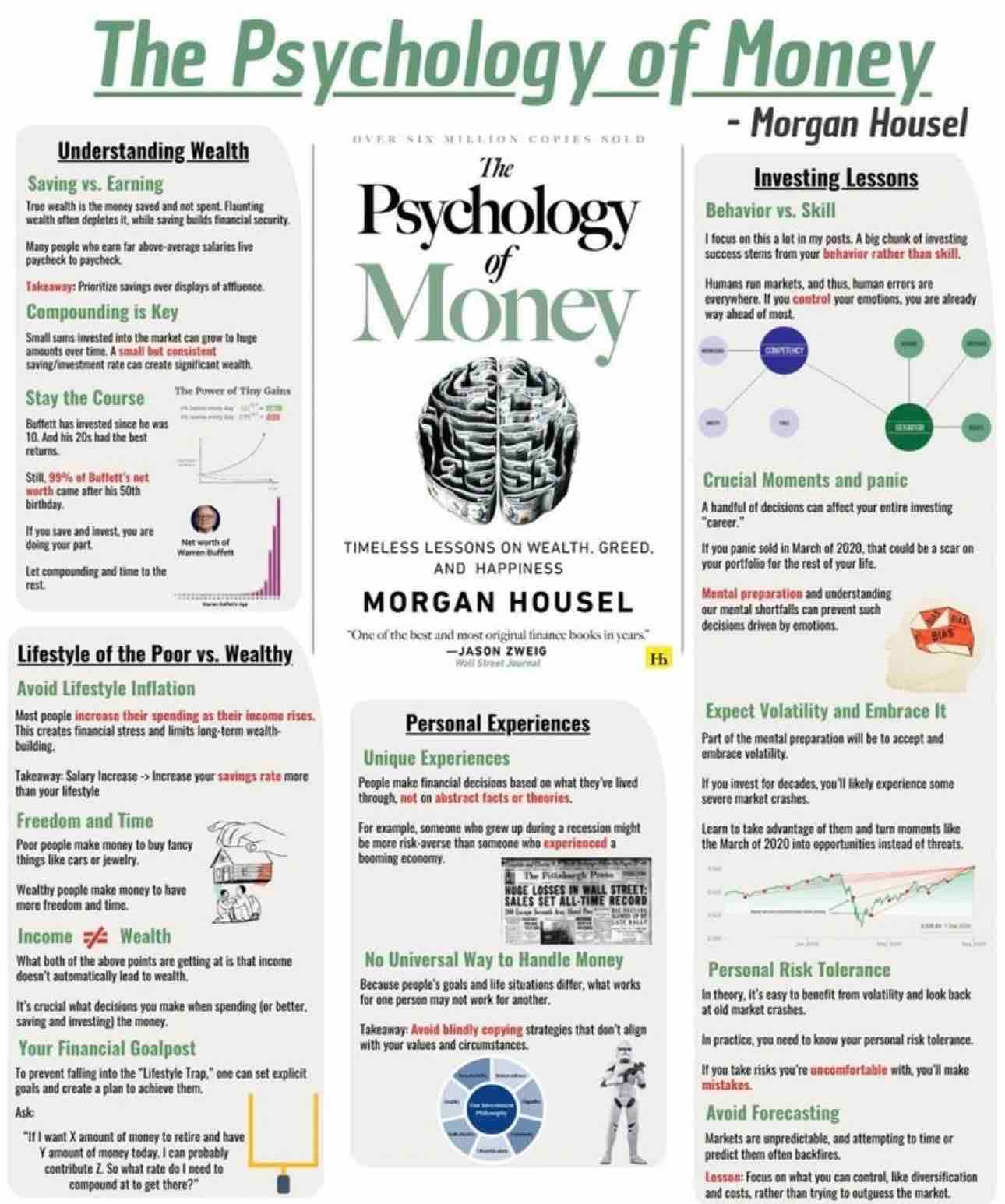
Money, Investing & Self Development Books 📚
Here are my top 9 most favorite books on the topics of money, investing, and the psychology related to it. 🙂 I have also shared my short takeaways from each of these books:

✅ Reboot Your Portfolio (Dan Bortolotti): By simply "owning the market" through globally diversified index funds, you will almost certainly enjoy better performance than the vast majority of investors who buy actively managed funds or try to pick their own stocks. Over the long term, index funds offer the highest probability of achieving your investment goals.

✅ Atomic Habits (James Clear): If you can get 1% better each day for one year, you’ll end up thirty-seven times better by the time you’re done. Focus on making tiny adjustments to your behavior, as small changes lead to lasting improvements.

✅ Die with Zero (Bill Perkins): Maximize meaningful and memorable experiences in your lifetime when you are healthy and have the capacity to do so. Invest in experiences that yield long-lasting memories and pay you regular "memory dividends".

✅ The Simple Path to Wealth (JL Collins): Build a financial cushion (F-You Money) to give you a choice, and invest through low cost, broad-market, diversified index funds.

✅ Rich Dad, Poor Dad (Robert Kiyosaki): Use your money to acquire assets instead of liabilities.

✅ Choose FI (Chris Mamula, Brad Barrett, Jonathan Mendonsa): Achieving Financial Independence requires a plan, much like building a house, but it is not a one-size-fits-all approach and you can tailor it based on your own journey.

✅ Quit Like A Millionaire (Kristy Shen, Bryce Leung, JL Collins): Spend your money on experiences that last a lifetime that on material stuff and consumer debt.

✅ The Psychology of Money (Morgan Housel): Managing your emotional impulses and learning how to behave in face of challenging money decisions, play a crucial role in your financial success.

✅ I will teach you to be rich (Ramit Sethi): Develop a "Conscious Spending Plan" that aligns with your values and financial goals.

📚 Learn More: https://youtu.be/KIXOYvKgtnw

➡️ What are your favorite money/investing/self-development book recommendations?
read more
Money, Investing & Self Development Books 📚
188K views
User profile picture
Andy Passive Income
verified badge
@AndyPii
User profile picture

Passive Income · 10m

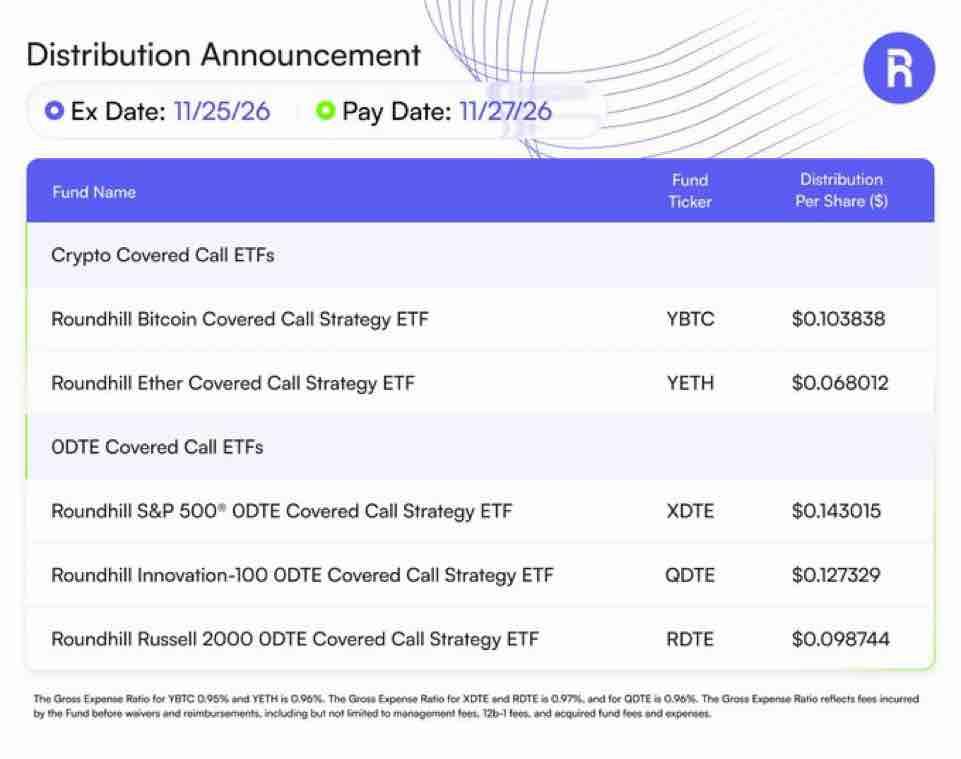
Roundhill index & crypto etfs weekly distribution
🔒Ex-date Wednesday 💰Paydate Friday

$YBTC $YETH $QDTE $XDTE $RDTE
Roundhill index & crypto etfs weekly distribution
YBTC logo

+3.51%

0.3% held

YETH logo

+6.24%

0.1% held

QDTE logo

+7.20%

0.1% held

XDTE logo

+4.92%

0.4% held

4 views
User profile picture
Luis
linked brokerage badge
@luiyo
User profile picture

Macro & Markets · 22h

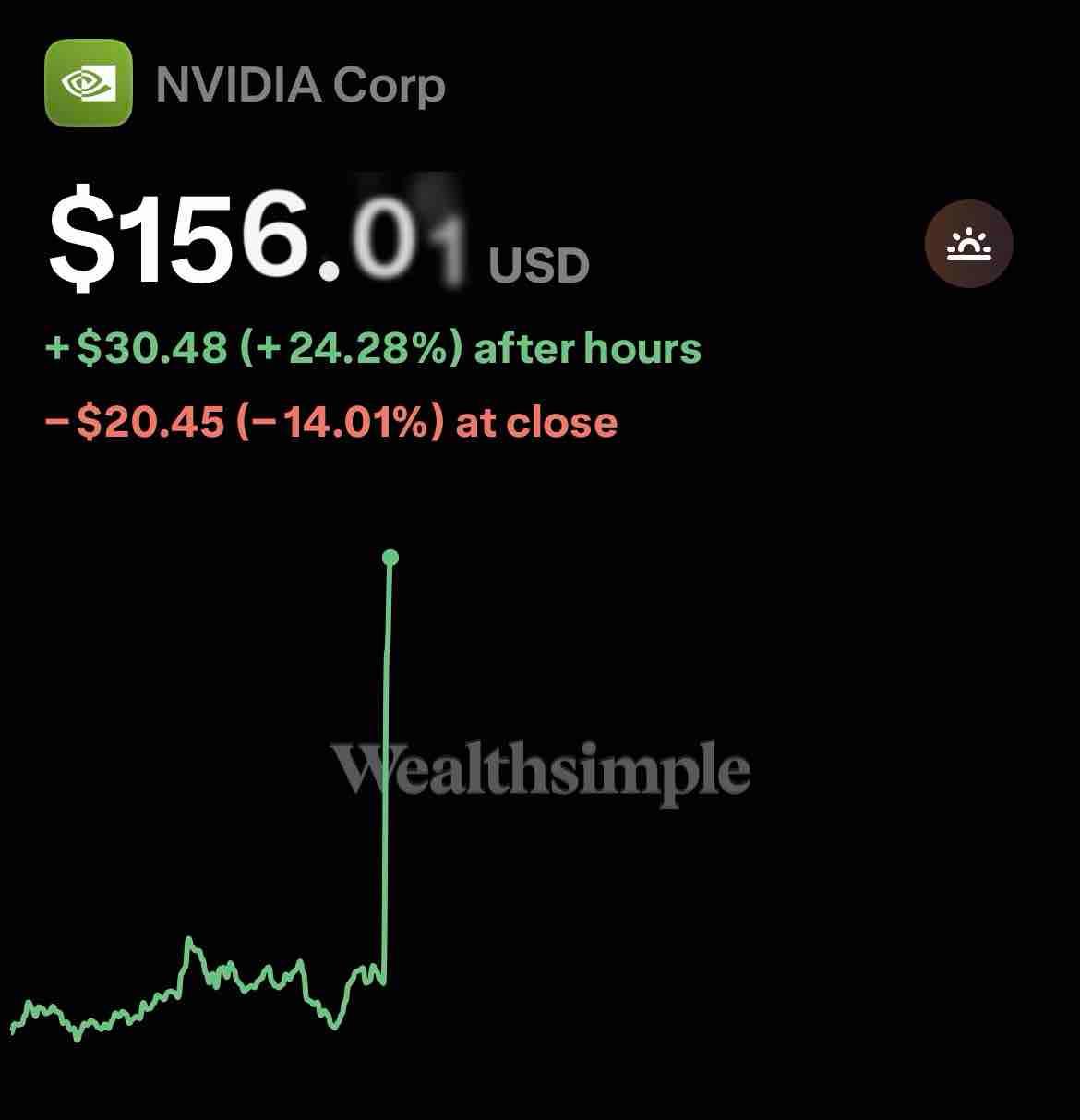
JENSEN IS BACK!!
$NVDA is up a whopping 25% on the news that Jensen Huang is back as CEO of Nvidia.

Nothing was found, no evidence of wrongdoing and all is good in the World.

Glad I never sold a share. 🫡
JENSEN IS BACK!!
NVDA logo

-14.01%

11.6% held

1,318 views
User profile picture
Andy Passive Income
verified badge
@AndyPii
User profile picture

Passive Income · 13m

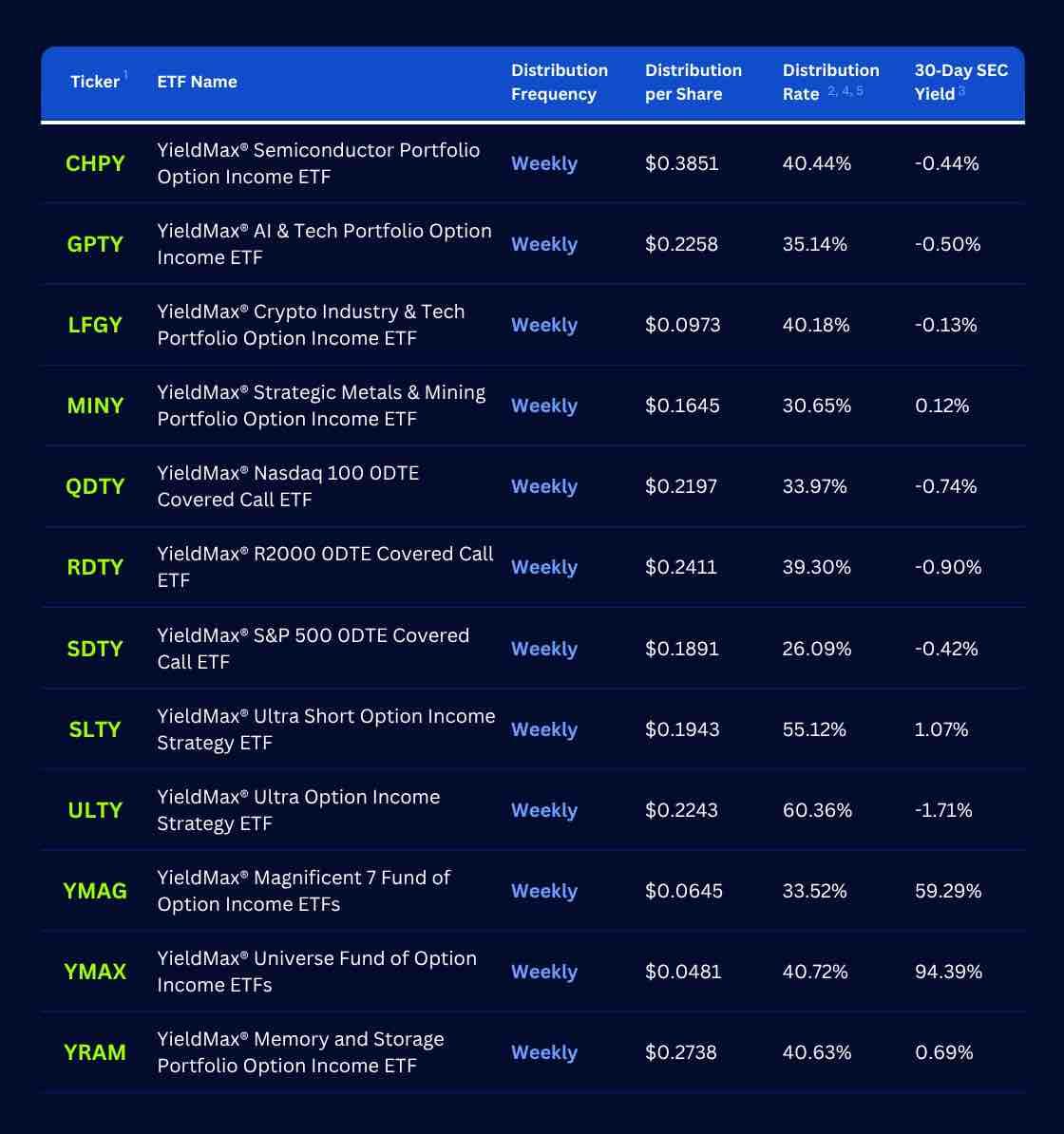
Yieldmax Group 1 weekly distribution
🔒Ex-date Wednesday💰Paydate Thursday

$LFGY $ULTY $SLTY $YMAX $YMAG $CHPY $GPTY $QDTY $RDTY $SDTY $MINY $YRAM

https://www.globenewswire.com/news-release/2026/11/24/3409096/0/en/yieldmax-etfs-announces-weekly-distributions-for-group-1-etfs.html
Yieldmax Group 1 weekly distribution
LFGY logo

+8.71%

0.0% held

CHPY logo

+13.01%

0.0% held

YMAX logo

-0.16%

0.0% held

ULTY logo

+3.18%

0.3% held

8 views
User profile picture
The Market Matrix
verified badge
@themarketmatrix
User profile picture

Macro & Markets · 🔥 Hot

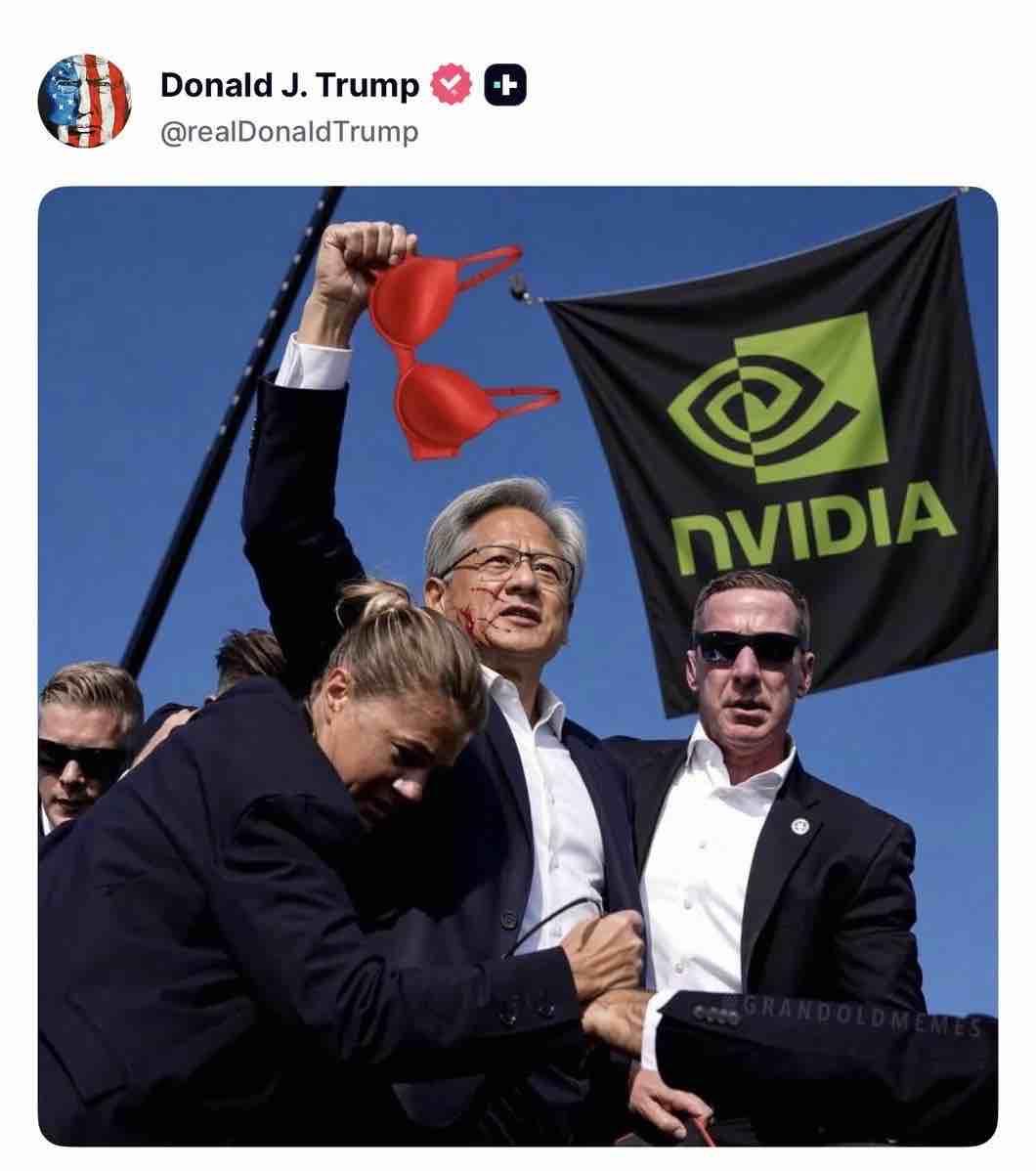
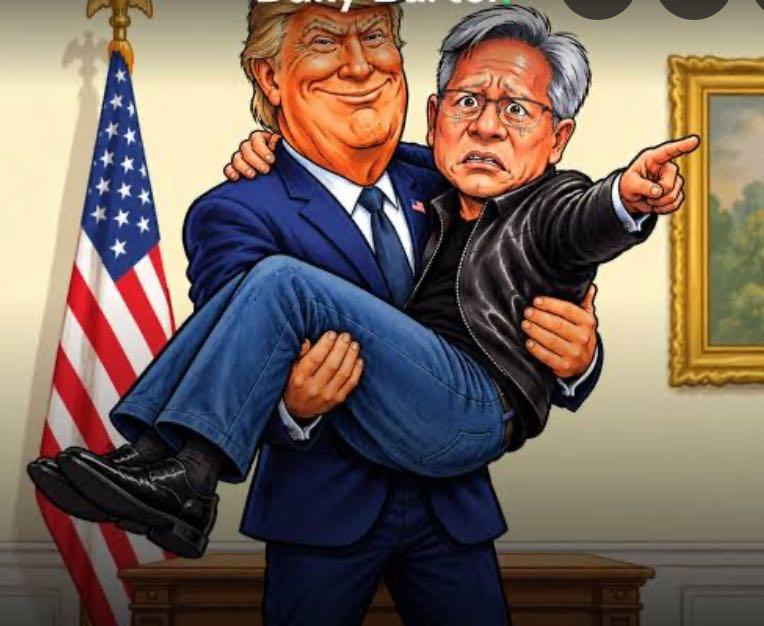
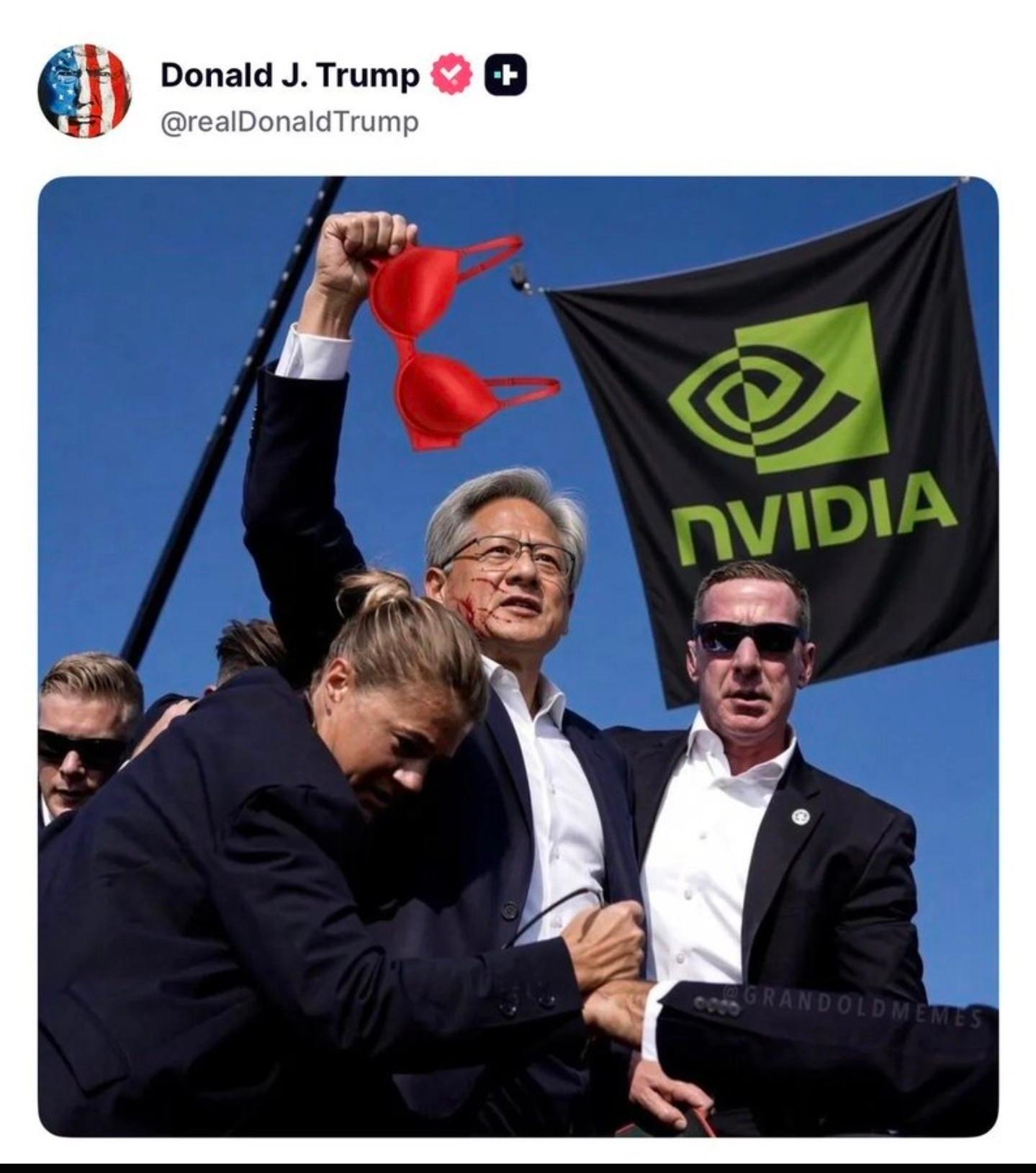
Donald Trump and Jensen's Humorous Moment with NVDA
Whether you like him or not.

Donald Trump has to be one of the funniest President the United States has ever had.

Jensen’s holding a bra 😭

$NVDA
Donald Trump and Jensen's Humorous Moment with NVDA
NVDA logo

+30.73%

0.0% held

416 views
User profile picture
Retired
linked brokerage badge
@retired
User profile picture

Personal Finance · 🔥 Hot

Volatility Is The Tax We Pay For Long Term Growth
Crazy times!

Red days are loud, and it’s completely normal to feel unsettled when the market takes a sharp dive.
Here is the perspective I keep coming back to: volatility isn’t a flaw in the system, it’s the price of admission for long-term growth. We’ve seen 10% to 15% pullbacks before, and historically, non-recessionary corrections take an average of just four months from the bottom to reclaim all-time highs.

When headlines get noisy, I focus on what I can actually control:

✅ Zooming out from daily charts to my 10+ year timeline
✅ Staying consistent with my automated contributions (buying great assets on sale)
✅ Keeping my cash buffer intact so I’m never forced to sell at a loss

Staying the course isn’t about ignoring the nerves, it’s about not letting temporary fear derail a long-term plan.

What helps you stay grounded and confident when the market gets choppy? Drop your go-to habit below. 👇
read more
Volatility Is The Tax We Pay For Long Term Growth
XEQT logo

+4.00%

69.9% held

6,786 views
User profile picture
L G@junky12
User profile picture

Beginner Investors · 2d

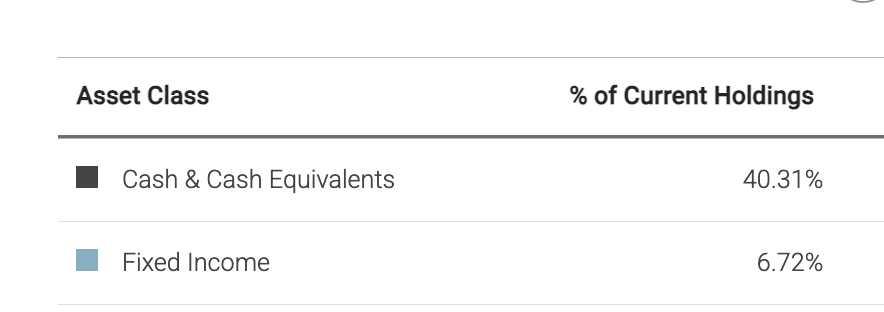
Why are you holding so much cash?!
People were shocked when I told them we were holding 40+% of our portfolio in cash. Before retiring in May '25 we were building our cash wedge to dip into when markets corrected like it's doing now, but we wanted extra to take advantage of a downturn and also to reduce our market exposure and risk.

We started trimming our high flyers, not reinvest our dividends/interest payouts because of these concerns - Iran war, Ukraine war, Tariff wars, sticky inflation, rates starting to increase, massive AI debt buildout, retail investors borrowing at a rapid pace with Margin, Heloc, Investment loans, incredible market returns over the last few years.

A small few of us on Blossom have been sounding the alarm on these concerns and building a similar cash wedge as us. @lecorb @etf.go @ian_s @scottsinvesting @clantosa and several others.

Maybe time to start deploying soon.......would you wait for a further drop or slowly start deploying now? Since Oct 25th we are -3.2% and +13.8% YTD.

Not investment advice.
Why are you holding so much cash?! — image 1 of 2
Why are you holding so much cash?! — image 2 of 2
824 views
profile-placeholder
JDKinvests
linked brokerage badge
@growthstocks54
User profile picture

Community · 15m

Market Opportunities Amid Drawdowns: Stocks to Watch
Some carnage in the markets, but large drawdowns are creating interesting opportunities.

A few areas where I’ve been adding:

Space: $ASTS $RKLB (particularly ASTS)

AI buildout: $CRDO $FPS $MU and started a new position in $NBIS on recent pullback.

Researching: $CBRS unique wafer-scale chips with massive on-chip memory bandwidth, targeting ultra-fast AI inference. Major OpenAI/Amazon relationships and a path to tripling revenue next year w/ strong balance sheet. Down 77% from peak / 55% from IPO.

Fintech: $SOFI

Many of these look increasingly interesting at current levels, though execution risk remains. Long-term thinking and avoiding leverage helps in markets like this.

Not advice.
read more
ASTS logo

+10.29%

4.8% held

RKLB logo

+9.27%

3.1% held

CRDO logo

+22.63%

1.9% held

FPS logo

+12.78%

0.0% held

18 views
User profile picture
Ash
new to blossom badge
@learn123
User profile picture

Passive Income · 27m

Best Dividend ETF for Steady Income Inquiry
What is a best dividend etf for steady income ( bi-weekly or monthly) without Nav erosion?
10 views
User profile picture
Nanah
linked brokerage badge
@wilondja1999
User profile picture

Beginner Investors · 🔥 Hot

NVDA
Trump just posted this meme; Jensen is holding a bra.😆🤧
NVDA
NVDA logo

+32.41%

14.2% held

376 views
User profile picture
Paul B@paul_b
User profile picture

Beginner Investors · 1d

So now cash is not trash…. Hmm
So many people have been chanting “Cash is trash” and “your uninvested money is costing you”. Oh and my favorite…. “Scared money don’t make money”.

Just NPC’s in a hype the market video game….

Having some cash on hand to invest is feeling pretty good right now.

Nothing wrong with having money reserved and available to deploy when the market goes on sale.

Be careful when listening to people who act like they know everything. Anyone can look smart when things are going their way.

Dollar cost averaging for the long term is always awesome but don’t be played by these influencers hyping their can’t lose stocks.


Peace ☮️

read more
VOO logo

-3.50%

0.0% held

SCHD logo

-0.70%

0.0% held

BRK-B logo

-0.36%

0.0% held

534 views
User profile picture
Mia McGrath
linked brokerage badge
@miamcgrath
User profile picture

Macro & Markets · 🔥 Hot

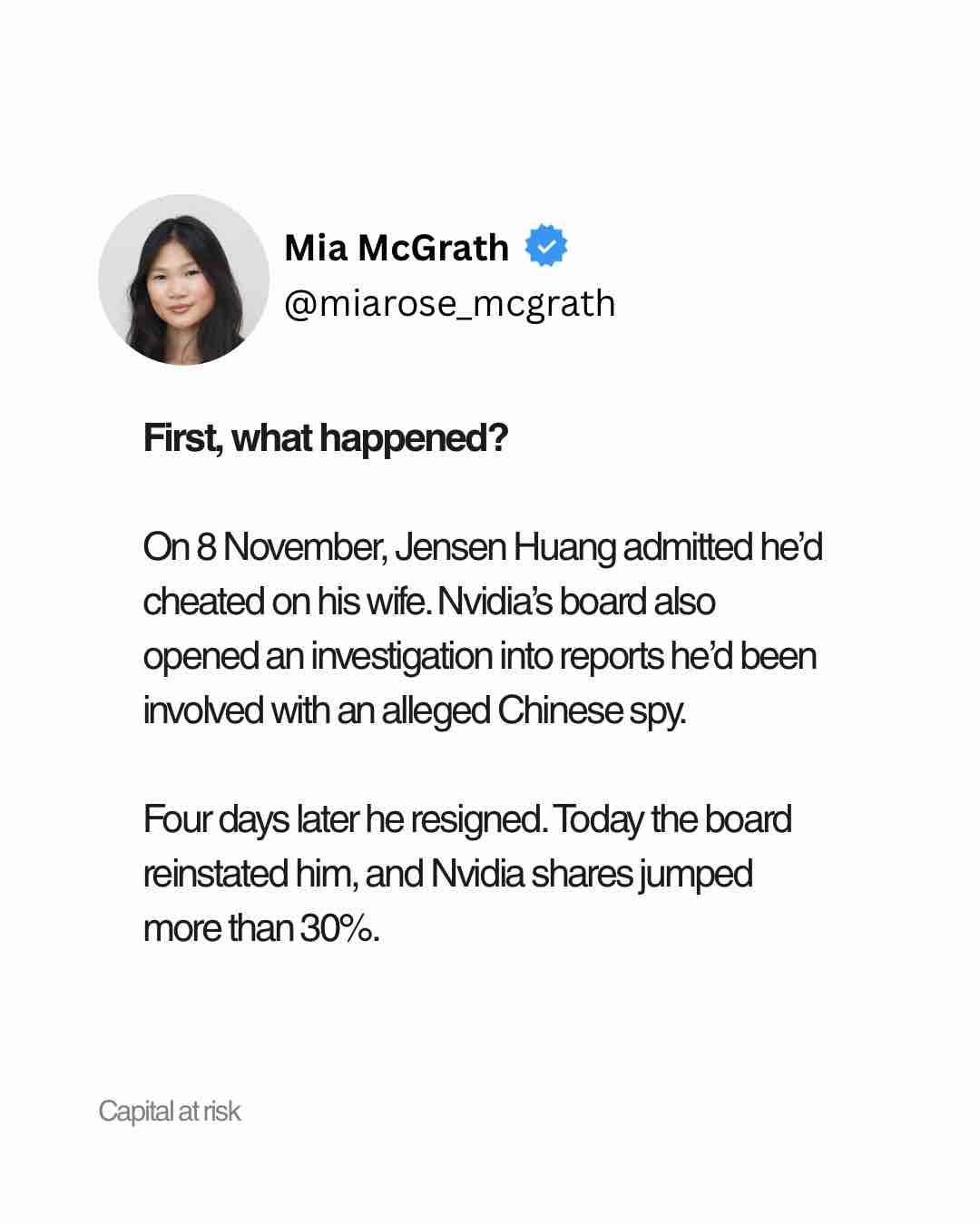
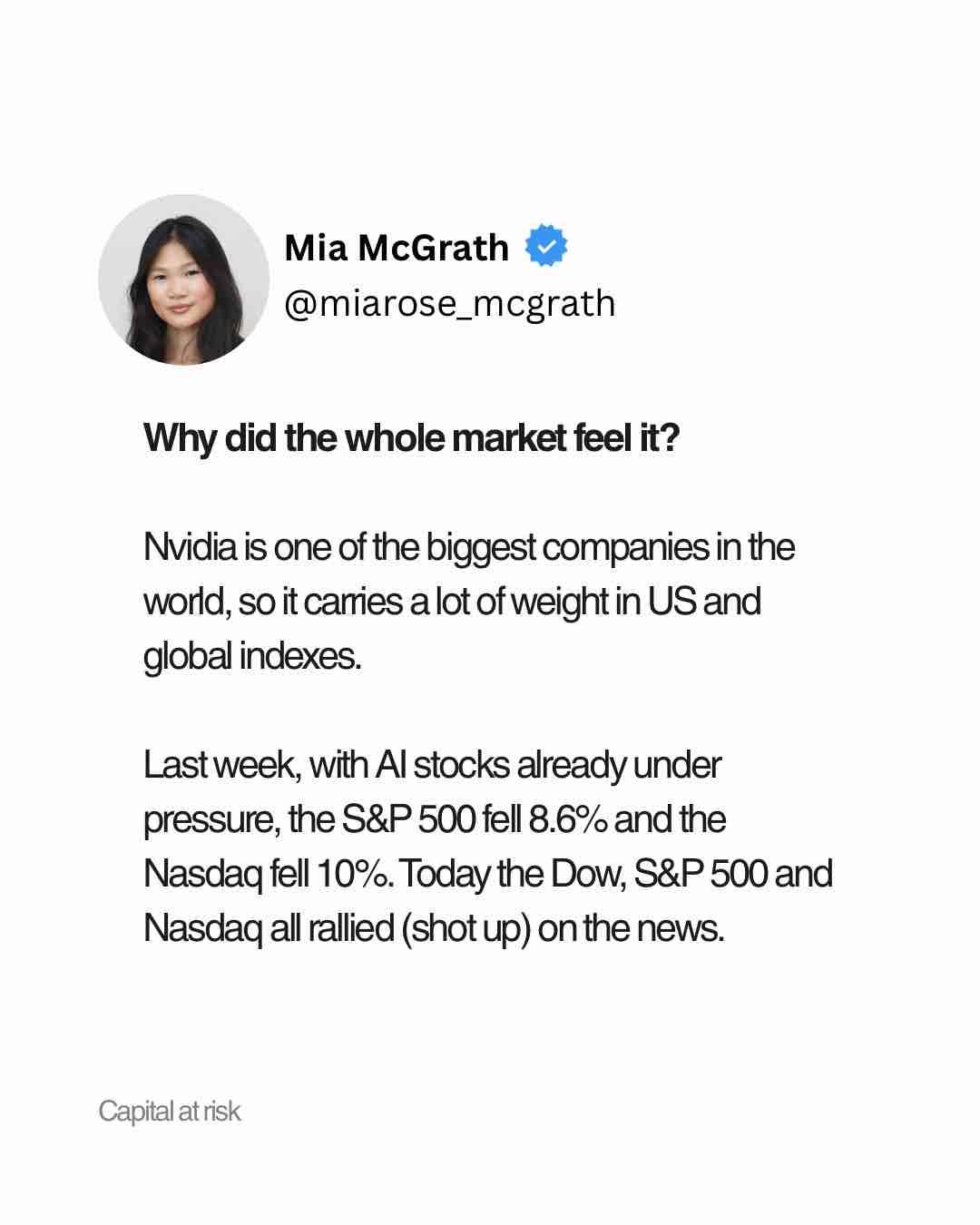
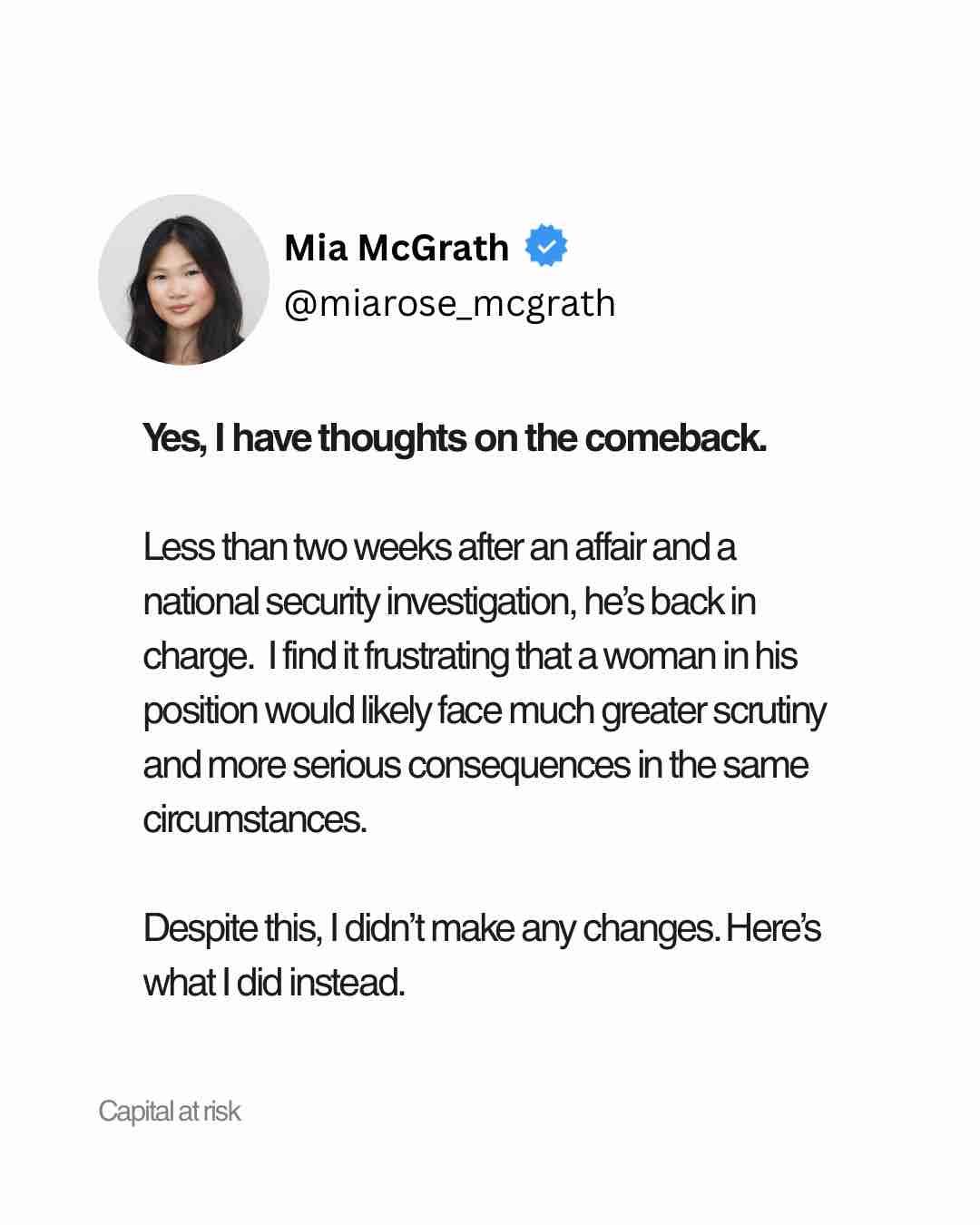
Nvidia CEO is back
Here’s what I’m doing next.
Nvidia CEO is back — image 1 of 5
Nvidia CEO is back — image 2 of 5
Nvidia CEO is back — image 3 of 5
Nvidia CEO is back — image 4 of 5
+1
3,352 views
User profile picture
Zain @zains
User profile picture

Beginner Investors · ⭐ Featured

Beginner’s Guide to Stock Market Terms
One of the best parts about the Blossom community is how open everyone is sharing knowledge and experiences.

To make things easier for anyone just starting their investing journey, here’s a simple glossary to help understand and simplify various terms.

Common Terms:

Dividend: A share of a company’s profits paid to shareholders, usually quarterly.

Ex-Dividend Date: The cutoff date by which you must own a stock to receive its next dividend.

ETF (Exchange-Traded Fund): A fund that holds multiple stocks or bonds, traded like a single stock.

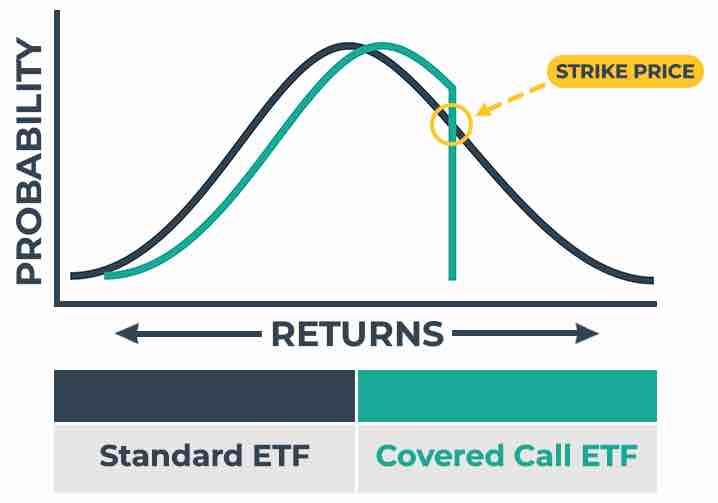
Covered Call ETF: An ETF that owns stocks and sells call options to generate extra income (higher yield, limited / capped upside).

Earnings Report: A company’s quarterly financial performance summary.

EPS (Earnings Per Share): A company’s profit divided by its number of shares.

Market Cap: A company’s total value (share price × number of shares).

ACB: The total amount you’ve paid for an investment, including the purchase price plus any fees or commissions.

Book Value: The value of a company according to its financial statements (assets minus liabilities).

Yield: Annual dividend as a percentage of the stock/ETF price.

Liquidity: How easily an asset can be bought or sold without impacting its price.

Volatility: The degree of price fluctuations in a stock or market.

Index: A benchmark of stocks (e.g., S&P 500, Nasdaq, TSX).

Bull Market: A period of rising stock prices and optimism.

Bear Market: A period of declining stock prices and pessimism.

False Breakout: When a stock’s price moves above (or below) a key level, making it look like a new trend is starting, but then quickly reverses back.

P/E Ratio: Price-to-earnings ratio (stock price ÷ EPS), used to assess valuation.

Blue Chip: Well-established, financially strong companies with a track record of stability.

Diversification: Spreading investments across assets to reduce risk.

Broker: A platform or firm that facilitates buying and selling investments.

Limit Order: An order to buy/sell a stock at a specific price or better.

Market Order: An order to buy/sell a stock immediately at the current market price.

Bid/Ask Spread: The difference between the highest price buyers offer and the lowest price sellers accept.

Dollar-Cost Averaging (DCA): Investing a fixed amount regularly to reduce the impact of market swings.

Capital Gain/Loss: Profit or loss from selling an investment for more/less than its purchase price.

IPO: When a company first sells shares to the public.

Index Fund: A fund designed to mirror the performance of a market index.

Short Selling: Selling borrowed shares, hoping to buy them back cheaper.

Margin: Borrowing money from a broker to buy investments, which amplifies gains and losses.

Margin Requirement: The minimum amount of your own money (equity) you must maintain in a margin account to open or keep a leveraged investment position.

Margin Call: A demand from your broker to deposit more funds or sell assets because your account equity has fallen below the required margin level.

Time Horizon: The length of time you plan to hold an investment before needing the money. Short horizons = more risk-sensitive, long horizons = more room to ride out volatility.

Stock Split / Reverse Split: A split increases the number of shares (e.g., 2-for-1) while lowering the price per share. A reverse split reduces the number of shares (e.g., 1-for-10) while raising the price per share. Your overall value doesn’t change just the math.

Long (Being Long): Buying a stock or asset because you expect the price to go up.

Short (Being Short): Selling a stock you don’t own because you expect the price to go down, so you can buy it back cheaper later.

TER: The total yearly cost of owning a fund, including the management fee plus other costs like administration, audits, and legal fees.

MER: The annual cost that a fund charges for management (includes any leverage costs if used).

Management Fee: A portion of the MER that goes directly to the fund managers for running the fund.

Withholding Tax: A tax deducted on dividends/distributions from foreign investments (e.g., U.S. dividends to Canadian investors face a 15% withholding in TFSA/Non-Registered accounts).

Total Returns: The full picture of an investment’s performance, including both price gains and dividends/distributions.

CAGR: The average yearly growth of an investment over time.

NAV: The price of one share of a fund (stock or etf)

NAV Depreciation: When the fund’s share price goes down over time.

Mutual Fund: A pool of money from many investors used to buy a mix of stocks, bonds, or other assets.

Bond: A loan you give to a company or government, and they pay you back with interest.

Asset: Anything valuable you own that can generate money.

Portfolio: Your collection of investments.

Option: A contract that gives you the right (but not the obligation) to buy or sell a stock at a set price.

Future: A contract to buy or sell something at a set price on a future date.

REIT: A company that owns real estate and pays investors income from rent.

Alpha: A measure of how much better (or worse) an investment did compared to the market.

Beta: A measure of how much an investment moves compared to the market.

Sharpe Ratio: A way to see if returns are worth the risk taken.

Hedging: Protecting your investments from risk.

Rebalancing: Adjusting your portfolio back to your target mix of assets.

FCF: Free Cash Flow

Understanding these terms makes investing far less intimidating.

If anyone feels other terms should be included, please share in the comments.

I’ll update this post so we can build a complete beginner-friendly resource together!


*Sorry tagged a few etfs for reach 🫣
read more
XEQT logo

7.0% held

HHIS logo

8.0% held

VFV logo

0.0% held

MSTE logo

7.9% held

ULTY logo

5.6% held

VOO logo

0.0% held

348K views
User profile picture
Twenty-five And Invested
linked brokerage badge
@25andinvested
User profile picture

Beginner Investors · 1h

Cover up?
A big crash then pop to cover up the fact that $ANT is below IPO price in like 4 days?

I was never an AI beliver, but i do belive it is helping consolidate wealth at the top.

https://youtu.be/BbrOh3Er1Hc?si=pjWL8-qfC1FrzfWf
ANT logo

-1.43%

0.0% held

124 views
User profile picture
Devoted Dividend Investor@devoteddividendinvestor
User profile picture

ETFs · 1h

When an ETF Cuts Its Dividend:
Should You Be Worried?

One of the biggest attractions of dividend ETFs is the income they generate.

But what happens when an ETF suddenly reduces its monthly or quarterly distribution?

For income-focused investors, a distribution cut can be frustrating. However, it doesn’t automatically mean the ETF is a bad investment.

Here’s what I would investigate:

🔎 1. Why was the distribution reduced?
Was it caused by weaker income from the underlying holdings, changing market conditions, or the fund’s distribution policy?

📊 2. What happened to total return?
A high distribution means little if the investment itself keeps losing value.

💰 3. Is the fund preserving its NAV?
Consistent declines in net asset value deserve attention, especially when distributions remain high.

📈 4. Has the investment strategy changed?
Check whether the fund is still doing what originally attracted you to it.

My biggest takeaway: I would rather own an ETF with sustainable distributions and healthy long-term performance than chase a high yield that may not last.

Let’s discuss: Would you continue holding an ETF after a distribution cut, or would that be a reason to reconsider your investment?

Educational content only. Not financial advice.
read more
30 views
User profile picture
Maxwell
verified badge
@maxstocks
User profile picture

Community · 🔥 Hot

🎁 New updates dropped
Bull market isn’t the only gift today!

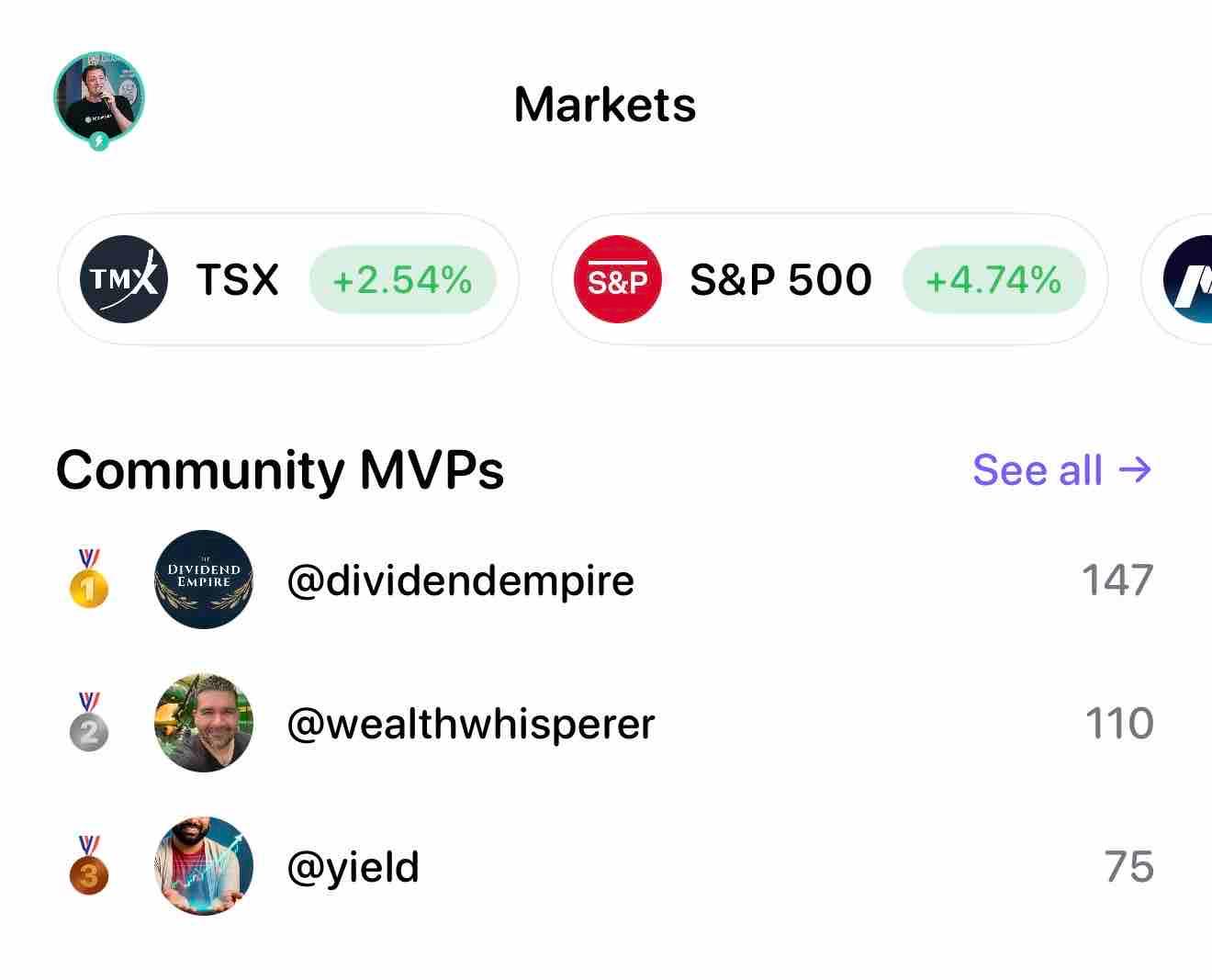
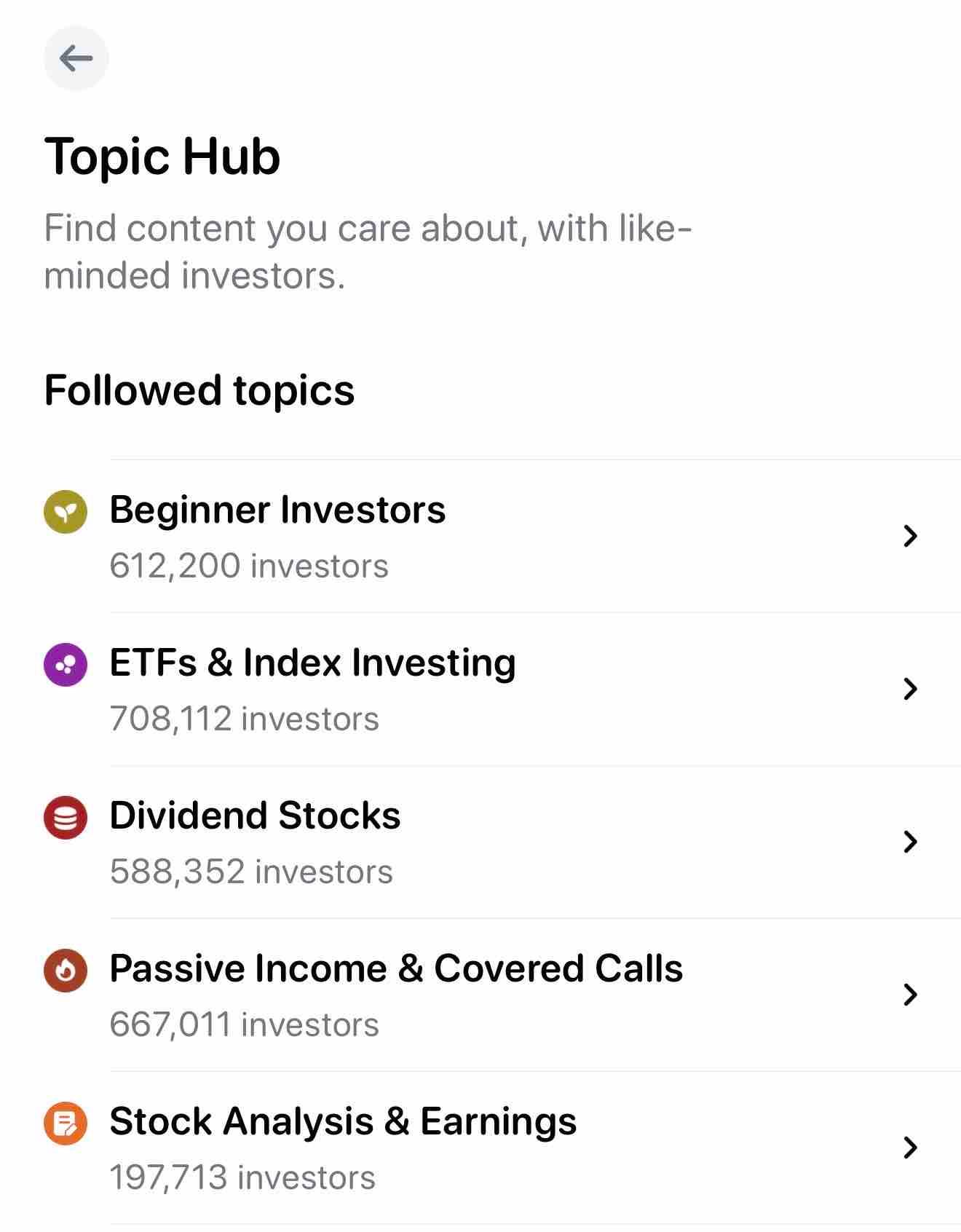
New Blossom update with Community MVPs highlighted in the Markets tab and revamped topics hub with the topics remade to better categorize the types of posts

Posts are also auto re-categorized into the correct topic so no more posting into the wrong topic 😜 A bunch of algo improvements as well for better personalization

For example Dividend Stocks and Passive Income & Covered Calls are now seperated as more distinct categories

Also we’re dropping a MCP and skills marketplace for AI investing on web-app this week and Circles next week 👀 And then Blossom Wrapped!! 🎁

👨‍💻 No rest for team blossom

📲 Update Blossom on the App store to see the new features!
read more
🎁 New updates dropped — image 1 of 2
🎁 New updates dropped — image 2 of 2
724 views
User profile picture
Omar
share holder badge
@wealthwhisperer
User profile picture

Macro & Markets · 22h

The AI Revolution Lives ..
BREAKING: Nvidia stock, $NVDA, surges over +28% after the company reinstates Jensen Huang as CEO, effectively immediately.

The stock has now added +$820 billion in market cap today on the news.

Jensen Huang is officially back!!
NVDA logo

-14.01%

6.4% held

1,724 views
User profile picture
Maxwell Capital@maxwelltrade
User profile picture

Macro & Markets · 2h

$FGL penny play potential!🔥 Keep this one on watch!

$AKAN multi-day runner showing strength again! 👀

$LGHL NHOD 3.63!🔥 Low floater with potential for more upside. Watch for continuation! 🚀
FGL logo

-4.12%

0.0% held

AKAN logo

-39.01%

0.0% held

LGHL logo

-8.14%

0.0% held

14 views
User profile picture
Moe
verified badge
@moementumfinance
Following · 8h
Leaving Canada to Retire in Southeast Asia Soon!!!
What happens when you spend 15 years building a successful business, accumulate millions, but barely understand how to invest your money?

Meet Dave (@where_is_dave_j), a Vancouver entrepreneur who went from keeping over $1 million in GICs and investing in mutual funds to discovering DIY investing, broad-market ETFs like XEQT, and a completely different approach to building long-term wealth.

In this episode of Moementum Finance, Dave shares an incredible journey from growing up with very little, hustling to make money as a kid, and throwing massive rave parties in Vancouver to losing his $35,000 savings trying to open a beach bar in the Philippines. After rebuilding his life in Canada, he started a printing business that grew to millions in sales. But despite his success as an entrepreneur, investing was something he largely neglected for years.

We discuss how he eventually moved away from GICs and mutual funds, discovered the benefits of DIY investing, and built a diversified portfolio centred around XEQT. At 48, he's now planning for early retirement around age 50, with a $2.3 million portfolio in the stock market (of which nearly $1.3 millions is in XEQT), potentially selling his business and home and relocating overseas with his family.

In this episode, we discuss:
📌 Growing up poor, learning the value of money, and finding creative ways to make it as a kid.
📌 Building businesses, throwing massive rave parties, losing $35,000 in the Philippines, and starting over.
📌 Why he kept over $1 million in GICs instead of investing in the stock market.
📌 Moving from mutual funds to DIY investing and working with a fee-only financial advisor.
📌 Why XEQT became his preferred ETF and why he believes in keeping investing simple.
📌 His 65% equities, 20% cash, and around 15% bonds portfolio allocation.
📌 Holding VTI and SCHD in his RRSP and his approach to generating retirement cash flow.
📌 Using cash and bonds as a buffer during market downturns instead of selling equities at a loss.
📌 The 4% withdrawal rule, flexible retirement spending, and the idea of Die With Zero.
📌 His plans to potentially sell his business and relocate to Southeast Asia.
📌 Why he believes starting a business and investing your profits can create a powerful combination of wealth building.

One of my favourite takeaways from Dave's story is that making money and knowing what to do with that money are two very different things. His journey is a great reminder that it's never too late to learn about investing, but the earlier you start, the more time compounding has to work in your favour.

💬 If you had $1 million to invest today, would you put it all into a diversified ETF like XEQT, or would you prefer a combination of stocks, bonds, and cash like Dave? Let us know in the comments!
https://youtu.be/r-2u29gPFdQ
read more
XEQT logo

+3.84%

90.9% held

+0.01%

0.0% held

XSB logo

+0.04%

0.0% held

ZAG logo

+0.15%

0.0% held

1,422 views
User profile picture
Scott S@scottsinvesting
User profile picture

Macro & Markets · 19h

Corporate Governance: Shot in Middle of 5th Avenue
In 2016, Trump said "I could stand in the middle of Fifth Avenue and shoot somebody, and I wouldn't lose any voters, OK?"... The "wouldn't lose any voters" has been proven wrong, but he essentially took corporate governance to the middle of 5th Avenue and shot it dead IMO... The market might love the news today, but a market without corporate governance is a market without trust. Not that it matters to anyone but me, but my macro-U.S. investment thesis is eroding more than it already had today.
Corporate Governance: Shot in Middle of 5th Avenue
1,082 views
User profile picture
Brad Brunton@bradbrunton
User profile picture

Beginner Investors · ⭐ Featured

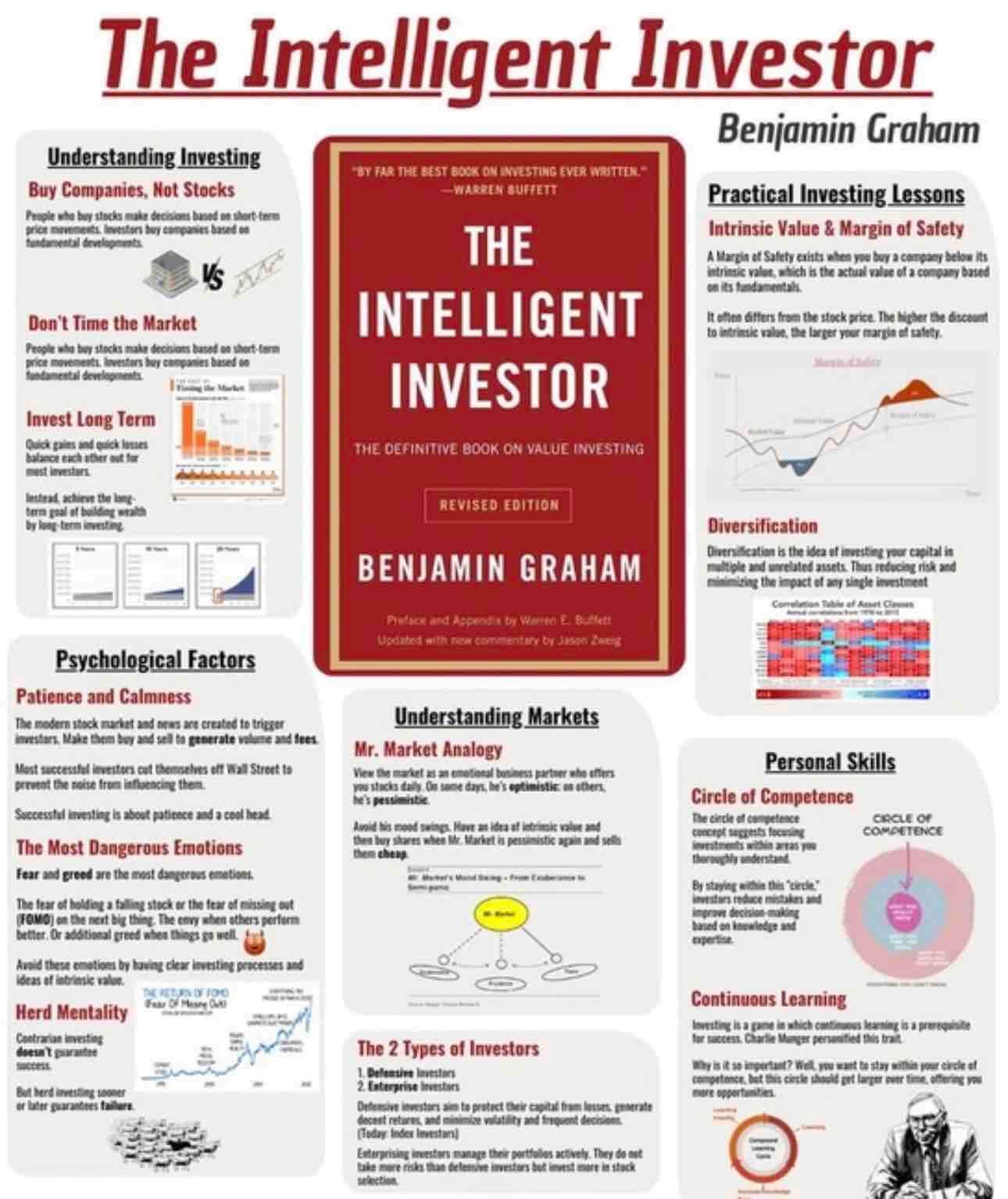
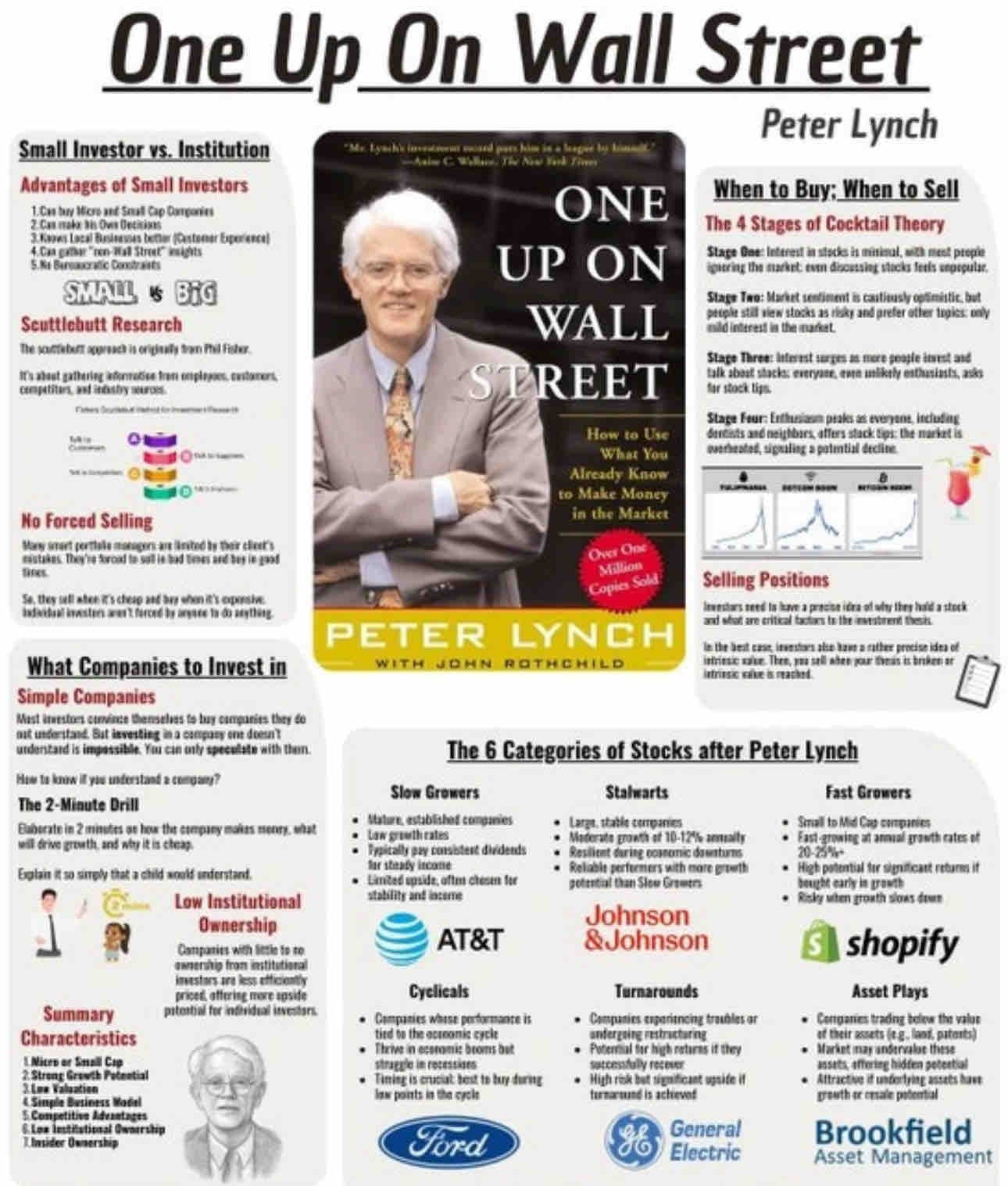
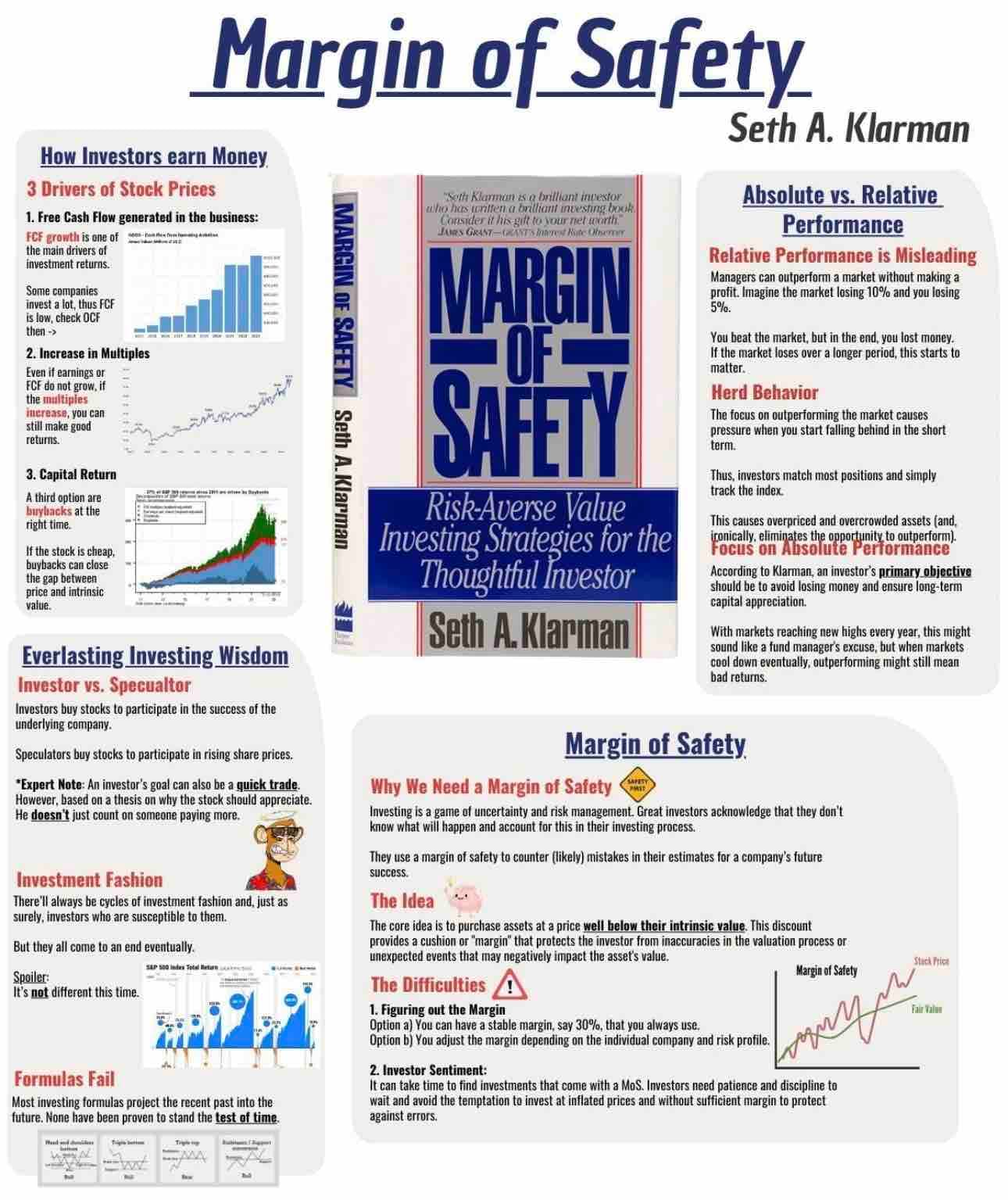
Summaries of some of my favorite investing Books 💯
For those who don’t have the time
Summaries of some of my favorite investing Books 💯 — image 1 of 5
Summaries of some of my favorite investing Books 💯 — image 2 of 5
Summaries of some of my favorite investing Books 💯 — image 3 of 5
Summaries of some of my favorite investing Books 💯 — image 4 of 5
+1
292K views
User profile picture
Blossom
og badge
@blossom
User profile picture

Macro & Markets · 14h

🐝 Daily Buzz: November 23, 2026
📊 Jensen Huang's return set off a monster rally. The Nasdaq surged 6.51% to 24,089.56 and the S&P 500 jumped 4.73%, both their best days since April 2025. The Dow gained 3.01% and Canada's S&P/TSX Composite climbed about 3%. All three U.S. averages had closed Friday in correction.

🤖 Nvidia ($NVDA) soared 31% after the board reinstated Huang as CEO, effective immediately. Trump told CNBC he spoke with the board and convinced them, saying Huang did nothing wrong. Melius, Bernstein and StoneX all upgraded the stock.

💾 The AI complex ripped higher in sympathy. Micron ($MU) added 19%, CoreWeave ($CRWV) skyrocketed 22% and AMD ($AMD) rose almost 7%. The VanEck Semiconductor ETF ($SMH) jumped more than 16% and the Roundhill Memory ETF ($DRAM)had its best day on record.

🔌 Celestica ($CLS) climbed more than 6% as Canadian tech gained 4.7%. The S&P/TSX Global Base Metals index soared 6.9% with spot gold up 2.9% to $3,640.46, a sharp reversal after the TSX fell 8.1% last week, its worst since March 2020.

🧠 Anthropic ($ANT) sat out the rally, falling 1.43% to $87.64 four days after its record Nasdaq debut. Eric Diton of The Wealth Alliance said if a leading AI stock can't rally on a day like this, something isn't right.
✈️ Boeing ($BA) popped over 4% after Trump said he expects China to buy another 250 jets. Gold futures climbed about 4%, silver roughly 5% and copper nearly 3%.

👨🏻‍💻 Researched and written daily by @timemino
read more

Trump says he convinced Nvidia's board to bring Huang back. Should a president be making that call?

No, that's the board's job

Yes, it's national interest

304 votes · 5d left

NVDA logo

+32.49%

0.0% held

MU logo

+19.34%

0.0% held

CRWV logo

+21.99%

0.0% held

AMD logo

+6.46%

0.0% held

3,494 views
User profile picture
Jacob B
linked brokerage badge
@jacobb
User profile picture

Memes · 15h

Markets have been saved
BREAKING: Jensen Huang is officially back as CEO of Nvidia ($NVDA) after taking a week off to play GTA 6 ($TTWO).
Markets have been saved
TTWO logo

-0.15%

0.0% held

NVDA logo

+30.81%

0.0% held

804 views
User profile picture
Marc Beavis
verified badge
@marcb
Following · 3d
Stock or ETF for ANT?
I was chatting with the team at Harvest, asking about their launch of ANTE, the Harvest Anthropic Enhanced High Income Shares ETF, and it got me wondering whether the blossom community is more likely to buy directly into the stocks of these high profile offerings or whether using an ETF with some modest leverage and a covered call overlay is more appealing? There are so many options these days... just curious.
1,340 views
User profile picture
Le Corb@lecorb
User profile picture

ETFs · 2d

High Yield Covered Call ETFs is your money back
THE "35% COVERED CALL YIELD" THAT ISN'T A YIELD:

WHY SPENDING 1/3 AND REINVESTING 2/3 CAN STILL RUN DRY

For retirees and people about to retire I hope you don’t get suckered into unecessary risk.

Let’s use Blossom’s popular HHIS as the example, but the math applies to any cc fund built the same way: momentum stocks, plus leverage, plus covered calls minus fees.


PART 1: THE 35% IS A DISTRIBUTION, NOT A YIELD

- Harvest's website shows a "current yield" of 34.88%. Their brochure defines it as the latest monthly payout times 12, divided by market price: $0.27 x 12 = $3.24, divided by $9.29.

- That measures what the fund pays out, not what it earns.

- A real dividend comes from company profits. A distribution is whatever cash the fund sends you: profits, option premiums, sales of holdings, or your own money handed back.

- The price fell from $12.00 at launch to $9.29. The payout stayed $0.27, so the "yield" rose from 27% to 35%. A rising yield on a falling price is a warning sign, not a raise.


PART 2: WHAT THE 35% IS MADE OF (FUND REPORTS)

- 2025 (first year): $2.80 paid per unit. Return of capital was $1.76 (63%), capital gains $0.99 (35%), other income $0.05 (2%), eligible dividends zero.

- First half of 2026: $1.62 paid. Return of capital was $0.80 (49%) and capital gains $0.82 (51%).

- Option income is mostly labelled capital gains, so that slice is covered calls plus profits from selling holdings.

- Harvest's own documents say: "If a Fund earns less than the amounts distributed, the difference is a return of capital."

- First half of 2026: the fund earned $0.82 a unit and paid $1.62. The $0.80 shortfall matches the return of capital, and the price fell to cover it.

- 2025 looked better: it earned $2.92 and paid $2.80. But only about $1.10 was realized. The other $1.70 or so was paper gains from a hot market.

- Real stock dividends were tiny, about $0.04 to $0.06 a unit per period.


PART 3: WHAT THE FUND CAN EARN PER $100 (ESTIMATES)

- Dividends: about $1. Growth names pay almost nothing.

- Option premiums: about $7 to $12. This assumes calls on about a third of holdings at 1.5% to 2.5% a month. You give away the big gains on that slice.

- Price growth after the calls: $0 to $3 in a typical year, and negative in a bad one.

- Fees and interest: about $2.

- Net: about $6 to $12, call it $9.

***The fund pays $35, so about $26 a year is your OWN money coming back. The engine covers one fifth to one third of the payout.***

- Options don't create new money. They turn future gains into cash today and give up the best gains to do it.


PART 4: WHERE THE FEES HIDE

- The website says "Management fee 0.00%," then notes in small print that the fund is "subject to fees of the underlying ETFs."

- HHIS owns about 20 Harvest single-stock ETFs. Each charges its own fees and each is leveraged about 25%.

- ETF Facts show a MER of 1.85% plus 0.15% trading costs, about 2.0% all-in. The MER includes HHIS's share of the underlying ETFs' expenses.

- The ETF Facts say the MER "would have been higher" without waivers. Sister fund HHIH shows 0.99% after waivers and 1.35% before, so HHIS's true cost could be about 2.4%.

- Proxy for the 1.85%:
- Management fee plus tax: about 0.45%.
- Interest on the 25% borrowing: about 1.0% to 1.25% (I assumed a 4% to 5% rate).
- Admin and other: 0.15% to 0.4%.
- By my estimate, interest is more than half.

- On $500,000, 2% is $10,000 a year. A plain index fund costs $500 to $1,000.

- If the fund earns about 11% before costs, fees and interest take about one fifth of it.

***Not in the MER: upside given away to the calls, and extra losses from leverage in falling markets.***


PART 5: HOW THE MONEY RUNS OUT

- Buy $100,000. Spending 1/3 of the 35% payout is about $11,600 a year, or 11.6% of your starting money. The old safe rule is about 4%.

- Reinvesting the other 2/3 doesn't help much. Those units fall with the rest.

- Raise spending 2.5% a year for inflation, assume a constant annual return, and $100,000 RUNS OUT:
- 6%: about 10 years
- 8%: about 12 years
- 10%: about 14 years
- 12%: about 19 years
- 13%: about 24 years
- 14%: indefinitely

- With no inflation raises, 8% returns lasts about 15 years and 10% about 21.

- Retire at 65 on 8% to 10%, and the money is gone between 77 and 70.

- If the payout floats and is cut when the price falls, the account won't hit zero but your income shrinks. Either way the retiree loses.


PART 6: WHY 14% FOR 35 YEARS IS UNREALISTIC

- The plan needs about 14% a year, after fees, to last the entire 35 years.

- The US market has averaged about 10% over the very long run. The fund would need to beat it by about 4 points a year, after 2% in costs.

- To my knowledge, no broad US ETF 35-year stretch has come close to 14%. The best were roughly 11% to 13%.

- The fund holds the same kinds of stocks as the market, with calls capping the upside.

Nothing in the design points to a 4-point edge.

- Roughly 9 in 10 professional managers trail their benchmark over 15 years or more, and this fund starts 2% behind.

- HHIS earned about 20% a year until April 30, 2026, the best of times for its stocks. Since then the annualized return since launch has fallen to about 11.7%, and it is still dropping.

- Trouble can show up fast inside the basket. The Harvest SoFi ETF launched at $12.00 in September 2025. Its NAV was $5.38 by June 30, 2026, after $2.28 in payouts.


PART 7: THE ODDS (ROUGH ESTIMATE)

- Assume a 10% average return with about 25% yearly swings. HHIS had monthly moves from -9% to +11% in 2025.

- Swings drag down compounding. Gain 50%, lose 50%, and you have 75 cents on the dollar. The long-run compounded return is about 7%, and the plan needs 14%.

- Over 35 years, that gap is roughly 1.5 standard deviations. The odds are about 1 in 14. At a 12% average they are about 1 in 6, and at 8% about 1 in 40.

- Of 100 retirees following the plan, roughly 3 to 16 would still have money at year 35. This ignores sequence risk, which makes the above worse.


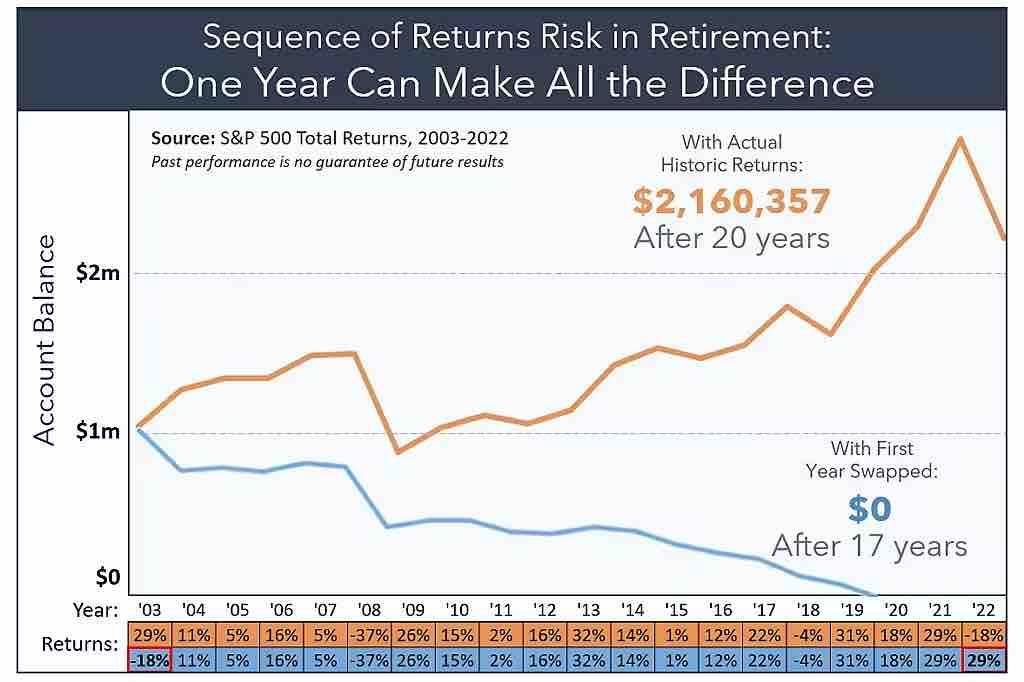
PART 8: SEQUENCE RISK

- Two retirees start with $100,000 and spend $11,600 a year. Both get returns of 30%, +10% and +30%, in a different order.

- A gets the crash first and has about $56,800 after 3 years. B gets the crash last and has about $71,400.

- That is the same returns and the same spending, with a $14,600 difference. You can't buy cheap units with money you already spent.

- A real case: $100,000 in at about $12.23 on Jan 1, 2026, with 1/3 spent and 2/3 reinvested, is worth roughly $88,000 today, plus about $7,400 spent. That is down about 5% in a year that felt like 35%, with the unit price down about 25%.


PART 9: THE ENTITLEMENT TRAP

- Many retirees using CC funds now receive more than they earned in their best working year. That feels like proof it works.

- A paycheque came from an employer who owed it to you. A distribution is your own money returned, plus whatever the fund earned. The fund owes you nothing and can cut the payout at any time.

- The only number that matters is total account value, this year versus last year, after spending.


PART 10: WHAT TO EXAMINE OBJECTIVELY

- Judge any income fund by total return after fees (price change plus payouts, minus costs), not by false claims of “yield”.

- Set realistic spending from your whole portfolio at about 4% to 5%.

- Limit the risk to a fund like this to 5% to 10% of the portfolio.

- Hold two to three years of spending in cash or short-term bonds, so you never sell a falling fund to pay bills.

- Each year, ask whether your account is worth more or less than a year ago, after spending.

- Talk to a fee-only planner who isn't paid by the product.


BOTTOM LINE

A 35% distribution isn't a 35% return. It is a spending rate wrapped in a monthly cheque. The goal isn't a big cheque this year. It's a cheque that still arrives when you are 90.

General education, not personal investment advice. Figures are as of Nov 20, 2026 and change monthly. Estimates are labelled.
read more
High Yield Covered Call ETFs is your money back — image 1 of 2
High Yield Covered Call ETFs is your money back — image 2 of 2
2,048 views
User profile picture
The Market Matrix
verified badge
@themarketmatrix
User profile picture

Macro & Markets · 22h

NVIDIA CEO Returns: Stock Surges 23% Pre-Market
CALL YOUR MOM

CALL YOUR DAD

JESNEN HUANG IS RETURNING AS $NVDA CEO

STOCK IS UP +23% PRE-MARKET 🤯

GOD CANDLE!
NVIDIA CEO Returns: Stock Surges 23% Pre-Market
NVDA logo

-14.01%

0.0% held

1,538 views
User profile picture
Blossom
og badge
@blossom
User profile picture

Macro & Markets · 6d

🐝 Daily Buzz: November 17, 2026
📊 Chips sold off ahead of Nvidia’s report and an NSA network outage added to the jitters. The Dow fell 1.64% to 50,759.42 after being down more than 1,000 points at its low, the S&P 500 dropped 1.03% to its lowest close since July and the Nasdaq slipped 0.74%.

🤖 Nvidia ($NVDA) traded 2% lower ahead of earnings after the bell. The stock got a brief lift when Jensen Huang said he’d be open to returning as CEO if the board thought it served shareholders. Morgan Stanley notes it was the most under-owned large-cap tech stock exiting the quarter.

☁️ Neoclouds took the worst of it. CoreWeave ($CRWV) fell 5%, Iren ($IREN) dropped 6% and Nebius ($NBIS) lost 4.2%. Steve Eisman said Nvidia was effectively a virtual vertical holding company that’s now unwinding, and the neoclouds are about to get ejected from it.

🔨 Home Depot ($HD) slipped nearly 3% despite beating on both lines and posting its best same-store sales growth in four years. Its full year guidance implies fourth quarter EPS of $2.77 against a $2.81 consensus.

🏦 Canadian banks led the TSX lower, with BMO ($BMO) down 2.09%, RBC ($RY) off 1.92% and TD ($TD) falling 1.79%. Waste Connections dropped 7.18%.

🏛️ St. Louis Fed’s Alberto Musalem said the economy may need as many as four more hikes before spring 2027, the most hawkish call yet from a policymaker. The VIX rose for a fourth straight day, jumping as much as 21% to 27.73.

👨🏻‍💻 Researched and written daily by @timemino
read more

Jensen says he’d come back if the board asks. Should they take him back?

Yes, bring him back

73%

No, move on

27%

750 votes · 15h left

NVDA logo

-1.34%

0.0% held

CRWV logo

+0.17%

0.0% held

IREN logo

-3.08%

0.0% held

NBIS logo

-0.32%

0.0% held

7,416 views
User profile picture
Trevor Heslop
verified badge
@trevorheslopinvests
User profile picture

Stock Analysis · ⭐ Featured

Question For Individual Stock Pickers🧐
What’s the most important thing you look for when researching a stock and finding a winner?

What are the things that a stock must have in order for you to own it?

Let me know below, i’m super curious!
PLTR logo

-0.58%

15.6% held

SOFI logo

-0.85%

5.5% held

HIMS logo

+1.79%

5.5% held

NVDA logo

+1.87%

0.0% held

217K views
User profile picture
Joyee Yang
verified badge
@joyeeyang
User profile picture

Milestones · 7d

Is the 4% rule becoming the 4.7% rule? 👀
A little backstory. The 4% rule was introduced by financial planner Bill Bengen back in 1994. The idea is that you can withdraw 4% of your investment portfolio in your first year of retirement, then increase that dollar amount every year to keep up with inflation.

But in 2025, Bengen revisited his research and found that with a more diversified portfolio, the historical starting withdrawal rate could actually be closer to 4.7%.

So what does that mean for your FIRE number?

Let's say you spend $40K a year.

Using the traditional 4% rule, you'd need $1 million invested.

Using 4.7%, you'd need approximately $851K.

That's almost $150K less. Which is a pretty big difference!

BUT before you start lowering your retirement goals, there's something important to consider.

This research looks at historical US market data over a 30 year retirement. If you're planning to retire in your 30s or 40s, your money could need to last 40, 50 or even 60 years.

And yes, inflation is still accounted for. You're just starting with a higher withdrawal amount and increasing that dollar amount with inflation each year.

Personally, I think this is a really interesting reminder that the 4% rule isn't necessarily a one size fits all approach.

So I'm curious, would you feel comfortable using 4.7% to calculate your FIRE number, or are you sticking with the traditional 4%?
read more
3,704 views
User profile picture
BD Investing
verified badge
@bdinvesting
User profile picture

Beginner Investors · 10d

Is Nvidia stock a buy after the Jensen scandal?

‪@canadiantshirt‬ joins BD & Shay to break down the alleged Chinese honeypot, Nvidia's chip deals with China, the midterm "blue tsunami," and what the Strait of Hormuz crisis means for your portfolio.

Adrian, a former AI engineer turned finance YouTuber, goes off-script like never before: whether Nvidia can survive without Jensen, why AMD ripped while Nvidia fell 10%, whether AI regulation could pop the AI bubble, and why Canadian investors with a home bias are making a big mistake. Plus, a rapid fire round that gets heated.

https://youtu.be/onDjB8KQhBo?si=QIx8-GD-mBv_Bdd_
4,536 views
User profile picture
Maxwell
verified badge
@maxstocks
User profile picture

Community · 11d

We made a music video about Jensen
Love this community ❤️ Also I’m lit cause I’m turning 30

https://www.instagram.com/reel/DfqT6IINIji/?xtok=MW5hODIxcHViZ3A1Zg==
3,148 views
User profile picture
LM @retiredyoung
User profile picture

Personal Finance · ⭐ Featured

Preparing for the inevitable.
I am currently 47 years old. Unfortunately in that time frame I have lost a lot of family members. Some (most) were accidents, some to age, some to cancer, and one to suicide. That’s 11 deaths total. Only 1 person out of 11 had a will.
When you are grieving the last thing you want to do is close an estate up.
It’s even harder if nothing has been prepared in advance.
After the initial shock of the death settles (the phase where everyone is usually nice), greed comes through in a most alarming manner. I’ve watched people turn into monsters. Make sure you have a will!!!! or people will fight.

I know most people hate thinking about their death or their spouses death but honestly it’s just a fact of life.

I’ve personally been the executor of 2 estates now.

This is my advice:

1. If your young get life insurance. If you’re retired it’s not worth it.
2. Make sure you have a will.
3. Make sure you have a personal directive.
4. Make sure you have a power of attorney set up.
5. If your married make your spouse the beneficiary of your TFSA and RRSP(has to be done through the account not the will), they will roll into the spouses account without taxation.
6. If you’re married, and you own a house, make sure both names are on the title, joint tenant, NOT tenant in common. This activates right of survivorship on property and doesn’t have to go through the estate.
7. If you’re married, both people should have their name on all the vehicles, joint, otherwise it’s a headache after death.
8. Buy a file folding system. I have a plastic one that has a clasp and handle.
9. Put EVERYTHING in this file folder that would be needed if you died tomorrow.
a) all land titles
B) information on house insurance so it can either be eventually canceled or name changed over.
C) your will (or the location of your will), power of attorney, and personal directive
D) the information for your car, car insurance, and registration on vehicles.
E) information on life insurance.
F) all current year papers needed for filing your taxes. Because the survivor will have to do it and will need that information.
G) where your household bills are. ALL OF THEM, electricity, gas, Netflix, magazine, subscriptions everything you can think of that is in their name. Because you are going to have to cancel them.
H) their credit card information where to contact to cancel the cards
I) birth certificate, SIN numbers, marriage, license, etc.
J) information on all your investments accounts, bank accounts, etc.
K) anything else you can think of for your situation


If you’re married, I’d have one box per person.

When you die, the funeral home will issue many death certificates. And your lawyer will give you copies of the will.
These will be needed to change over any accounts. Everything else goes through the estate which is taxed and the lawyers take their fees so I’d avoid this as much as possible especially if you’re married. This is why having property in both people‘s names is so important because it doesn’t have to go through probate.

I am widowed now and I have my black file folder and my two remaining children know if something happens to me, all they have to do is grab the folder. Everything they need to take care of my estate will be located in this folder.

At the beginning of every year, I open this file up and go through everything to make sure it’s up-to-date.

If you are young and do not own much or can’t afford a will, you can draft one up but it must be handwritten to be classified as a legal document. You cannot type it out!! If you’re not worth much, everything will most likely be sold to pay your bills and cover your funeral expenses. But you can state who your executor will be in your handwritten will.

Disclaimer I’m not a lawyer or an accountant and this is not legal advice. Talk to a lawyer and talk to an accountant. Make sure everything is set up for you and your situation. These are situations that I personally ran into.

Good luck


Also I’ll add in. IF you have a lot of assets make an appointment with your accountant first. They will tell you how to properly set things up. Then take that information to your lawyer.
read more
298K views
Join the conversation with 500,000+ other investors 💸
Blossom
Create an account to get access to everything Blossom has to offer!
  • 📊 Personalized algorithm based on your investing style, experience level and interests
  • 📈 Powerful portfolio and dividend tracking tools
  • 👀 See what top creators and others in the community are investing in
Sign upI have an account